Homemade Pesto Recipe with Clean Ingredients
Homemade pesto recipe that skips the seed oils and fillers in store-bought jars. Clean ingredients, made from scratch for a GLP-1 diet.
Homemade pesto recipe that skips the seed oils and fillers in store-bought jars. Clean ingredients, made from scratch for a GLP-1 diet.
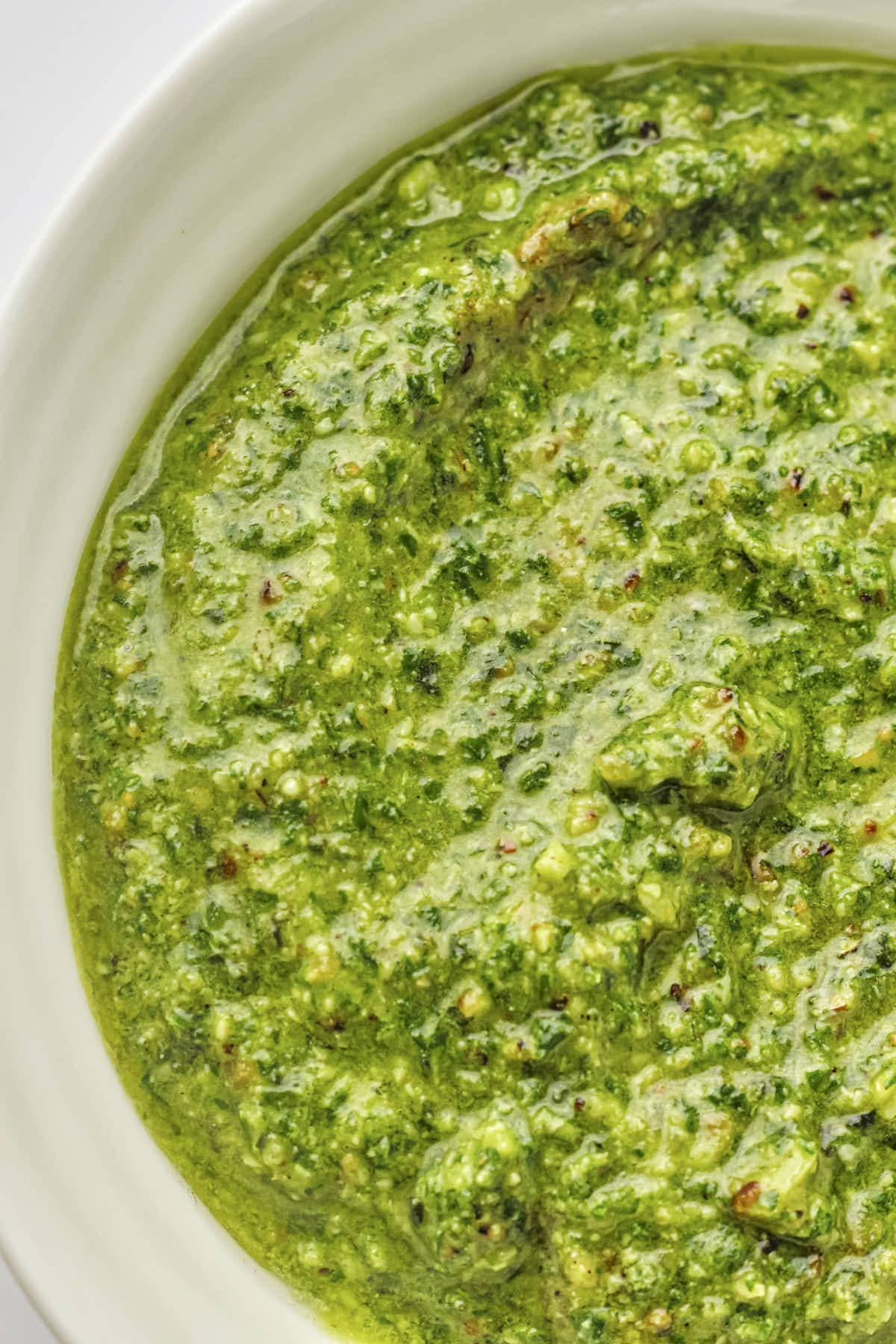
Table of contents
Pesto is one of the easiest sauces in the kitchen to make from scratch. Nothing gets cooked, and the only technique is knowing when to stop pressing the pulse button to preserve some texture. This homemade pesto recipe takes very little effort to avoid the processed ingredients in a jar off the shelf.
Labels in a Cook’s Illustrated pesto taste test listed canola oil, reduced lactose whey, whey protein concentrate, potato flakes, cashews, and yeast extract. Basil, garlic, cheese, nuts, and oil make a sauce without any of them.
Condiments are where processed ingredients slip into your diet without a second thought. In our world of convenience, we don’t naturally consider making most of our foods completely homemade. Success on any diet requires us to replace the bad ingredients that have us on a diet in the first place. I’m rebuilding my sauces and condiments from clean ingredients, one at a time, because better ingredients make a real difference in diet success. Pesto is one of the easiest to rebuild.
My version uses fresh basil, garlic, lemon juice and zest, Pecorino Romano, toasted pine nuts, extra virgin olive oil, salt, and black pepper. The lemon zest and pepper are not traditional, but I like what they do for the flavor and are optional to use.
Why This Homemade Pesto Works
- Clean ingredients. Nine things go in, and you can name every one.
- No cooking and no blanching. The only heat is a quick toast for the nuts.
- Low in carbs. There is no potato flake or sweetener in the recipe.
- Flexible cheese. Any hard cheese in the Parmesan or Pecorino family works.
- Freezer friendly. One batch freezes into single portions in an ice cube tray.
Store-Bought Pesto vs Homemade: Why I Skip the Jar
A jar of pesto is built to be cheap and to last on a shelf, and that changes what goes in it. The oil is usually canola, sunflower, or soybean, the same refined seed oils that fill most packaged food. The cheese gets stretched with whey. Potato flakes and cashews thicken the sauce, and yeast extract and natural basil flavor are added for taste. These are commercial products, engineered more for profit than to be good for you.
| Jarred pesto labels | This pesto | |
|---|---|---|
| Oil | Canola or sunflower oil, often alongside a little olive oil | Extra virgin olive oil |
| Cheese | Parmesan and Romano plus reduced lactose whey and whey protein concentrate | Pecorino Romano |
| Filler | Potato flakes, cashews, added water | None |
| Flavoring | Yeast extract, lactic acid, natural basil flavor | Lemon juice, lemon zest, garlic, black pepper |
I keep seed oils out of my kitchen as a rule, and the jar gives me more reasons. Seed oils and fillers are what a food gets built from when the goal is low cost and a long shelf life. In an NIH study, 20 adults ate an ultra-processed diet and a minimally processed diet matched for calories, sugar, fat, fiber, and sodium.
On the ultra-processed diet, people ate about 500 more calories a day, ate faster, and gained about 2 pounds. They lost about the same amount on the unprocessed diet. A jar with a label like the ones above sits closer to the ultra-processed end of the shelf than a sauce you blend yourself. The NIH write-up has the details.
A tablespoon of pesto is a small thing. It goes on chicken, eggs, pasta, and vegetables all week. Making my own keeps the oils and fillers out of those meals, and I’m remaking condiments one at a time for that reason.
Ingredients
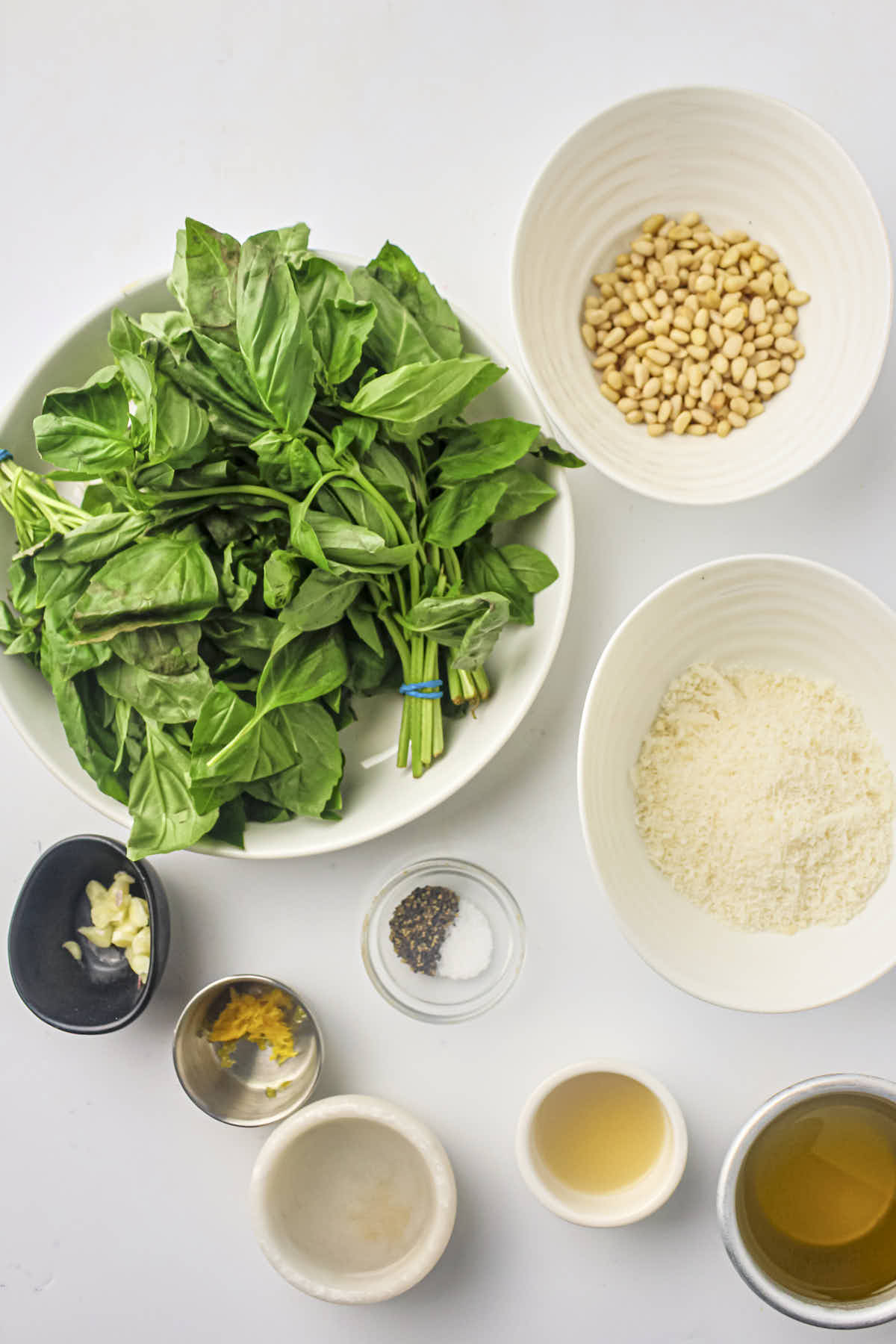
4 cups packed fresh basil leaves (about 3 to 4 ounces)
1/2 cup pine nuts (or walnuts, for a pesto without pine nuts)
4 garlic cloves
1/2 cup finely grated Pecorino Romano
1/2 cup extra virgin olive oil, plus more to loosen the sauce or top the jar
1 tablespoon fresh lemon juice
1/2 teaspoon sea salt
1 teaspoon lemon zest (optional)
1/2 teaspoon freshly ground black pepper (optional)
Ingredient Notes
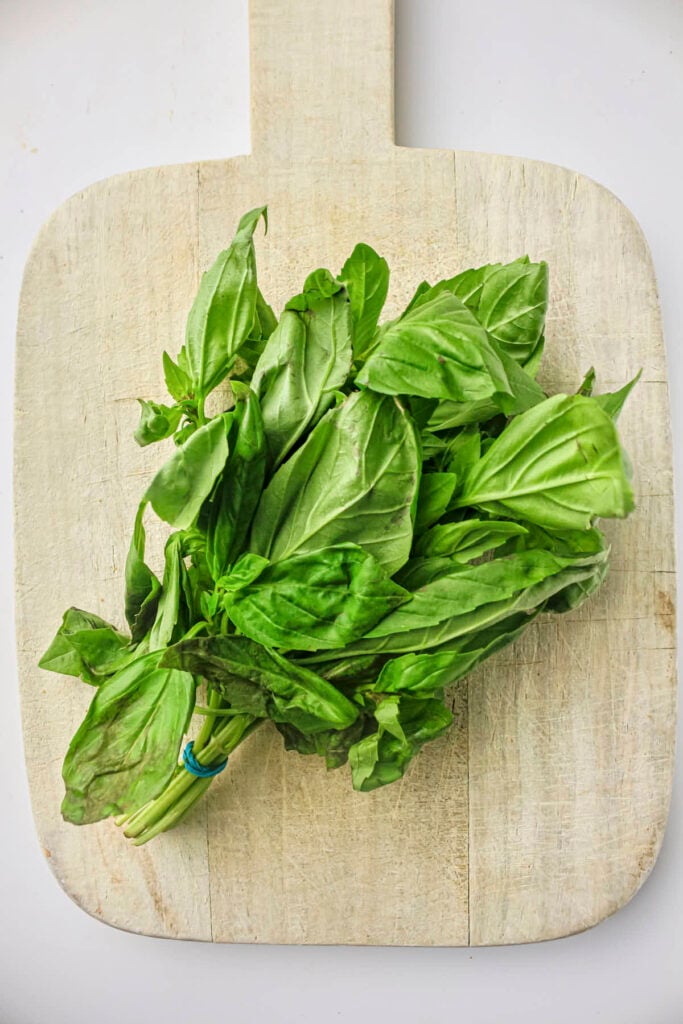
Basil. Young, tender leaves taste sweeter than mature or damaged ones. Pick through the bunch and leave out the stems.
Cheese. I use Pecorino Romano from Sam’s Club, already grated, about $14 for 1.5 pounds, with no anti-caking agent in the bag. Any hard cheese in the Parmesan or Pecorino family works. Pecorino runs saltier than Parmesan, so taste before you add all the salt.
Olive oil. Taste it before it goes in. Basil is not strong enough to cover a bitter or low-quality oil, and the garlic turns the bitterness up. A mild, buttery oil works best.
Lemon zest and pepper. These are my additions to the traditional recipe and are not required.
How to Make Homemade Pesto
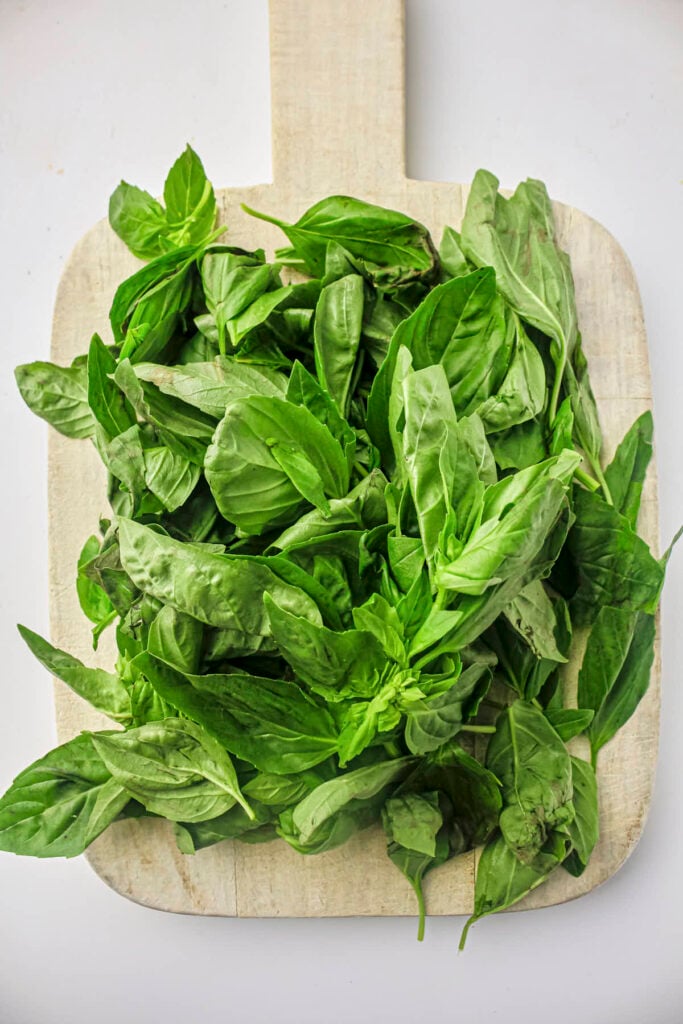
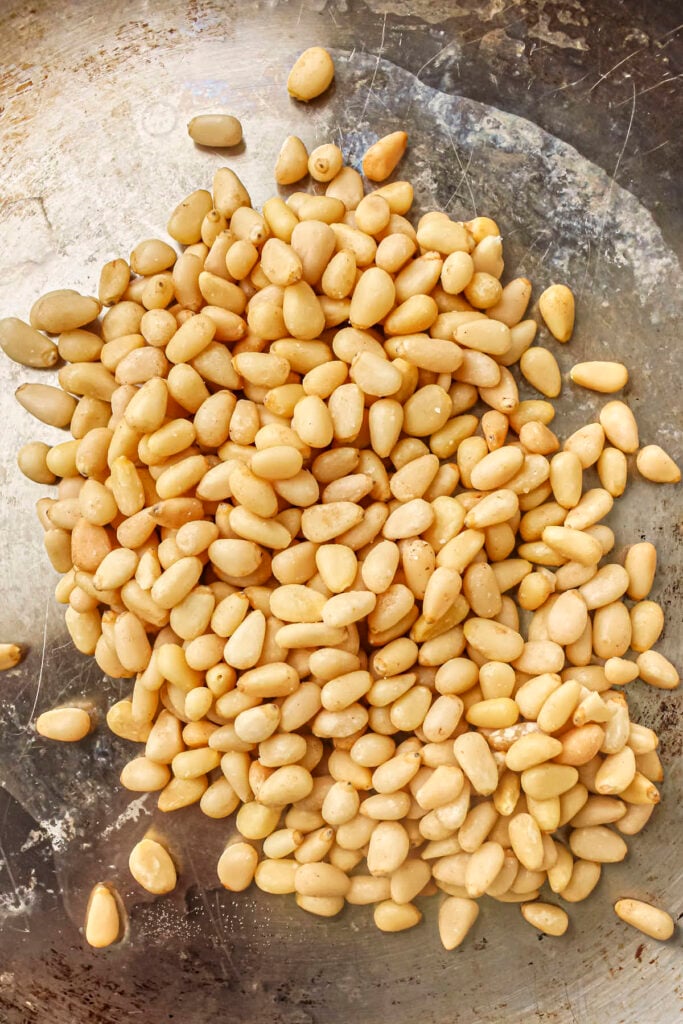
The name comes from the traditional method of crushing the ingredients in a marble mortar with a wooden pestle. A food processor stands in for the mortar here, and the same rule applies: work fast and stop early.
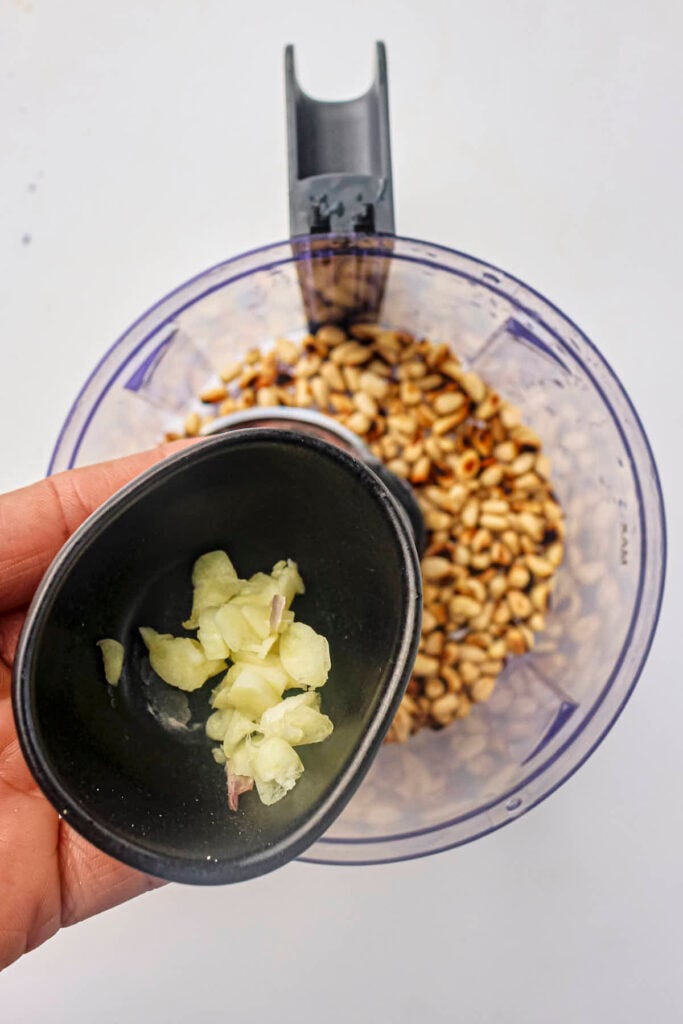
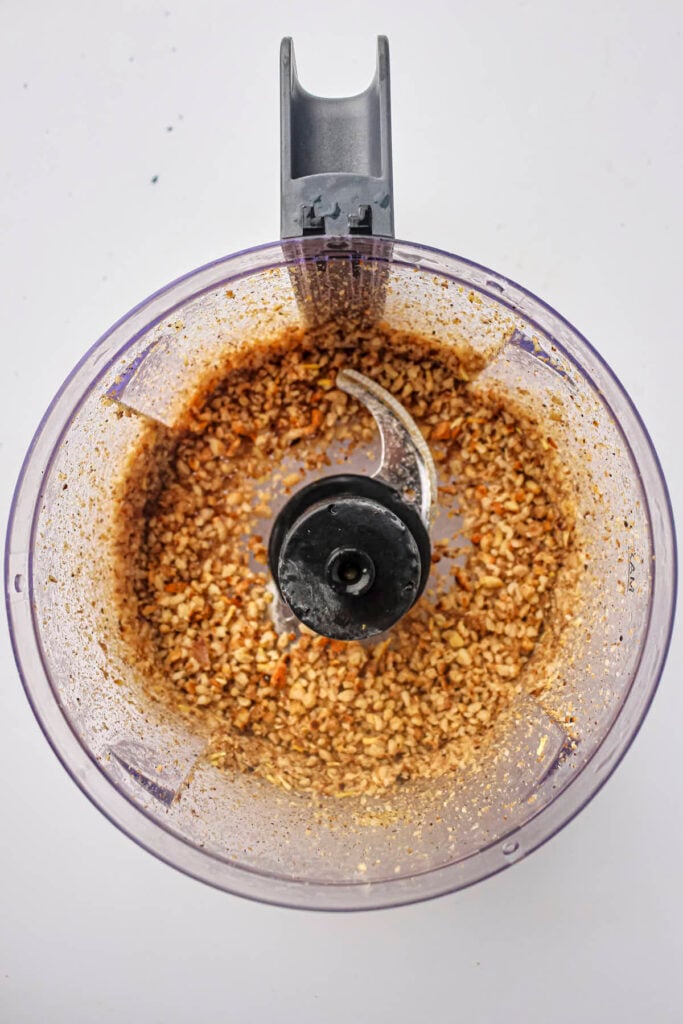
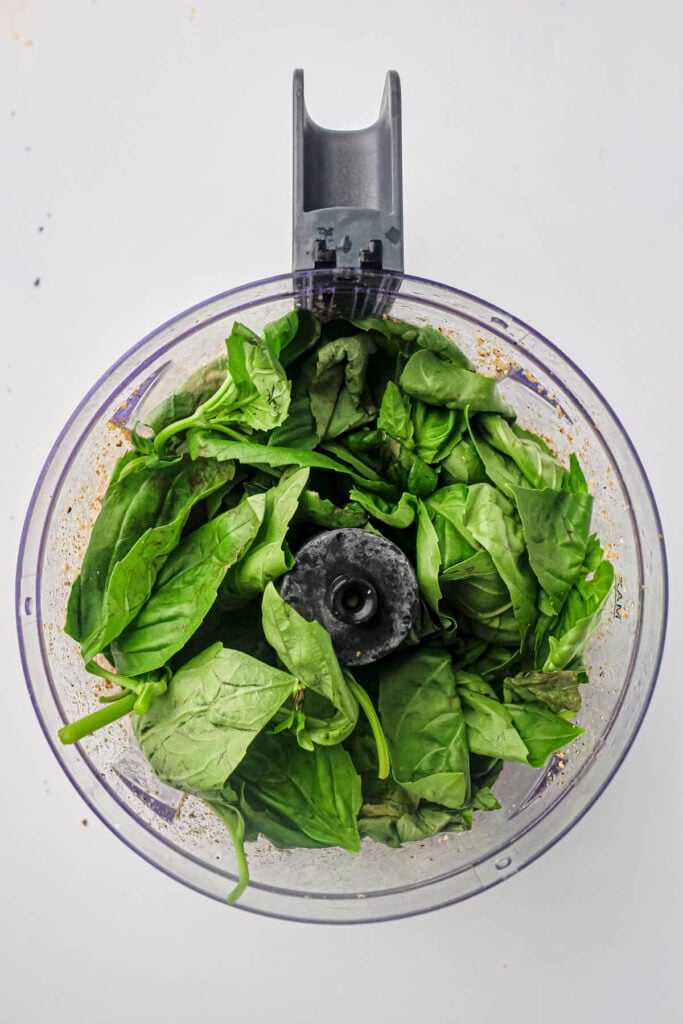
- Dry the basil. Wash the leaves and dry them completely and remove the large stems which add bitterness.
- Toast the pine nuts. Heat a dry skillet over medium-low and shake the nuts for 3 to 4 minutes until light golden. Cool them completely. Over-toasted nuts turn the pesto bitter.
- Chop the base. Pulse the basil, pine nuts, garlic, and salt in a food processor until finely chopped. Scrape down the sides once.
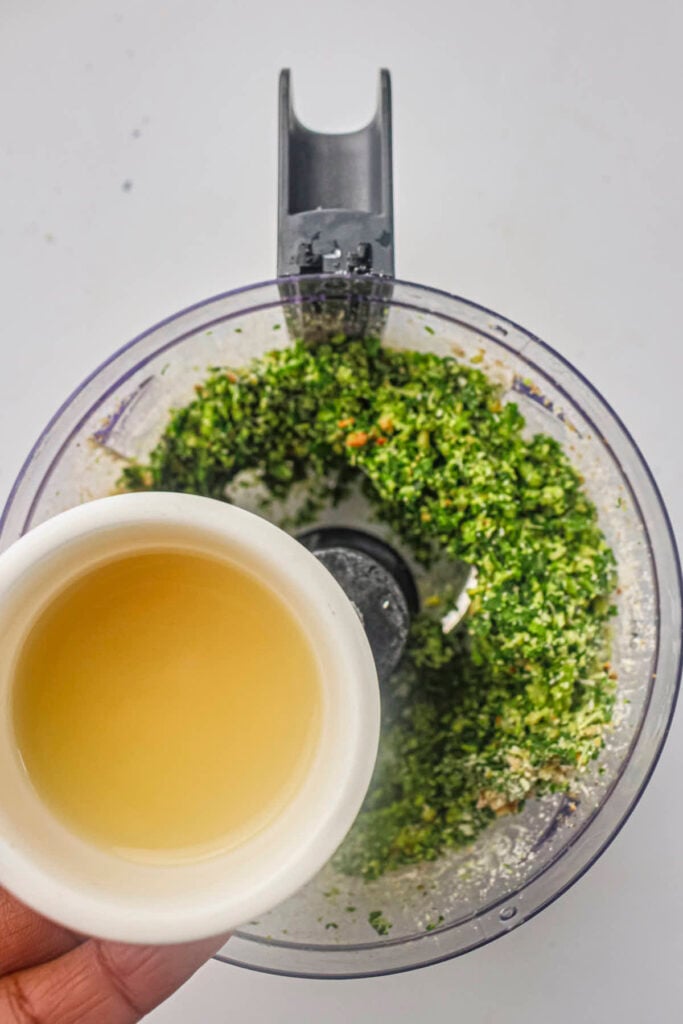
- Add the cheese and lemon. Add the Pecorino, lemon zest, lemon juice, and pepper. Pulse a few times to combine.
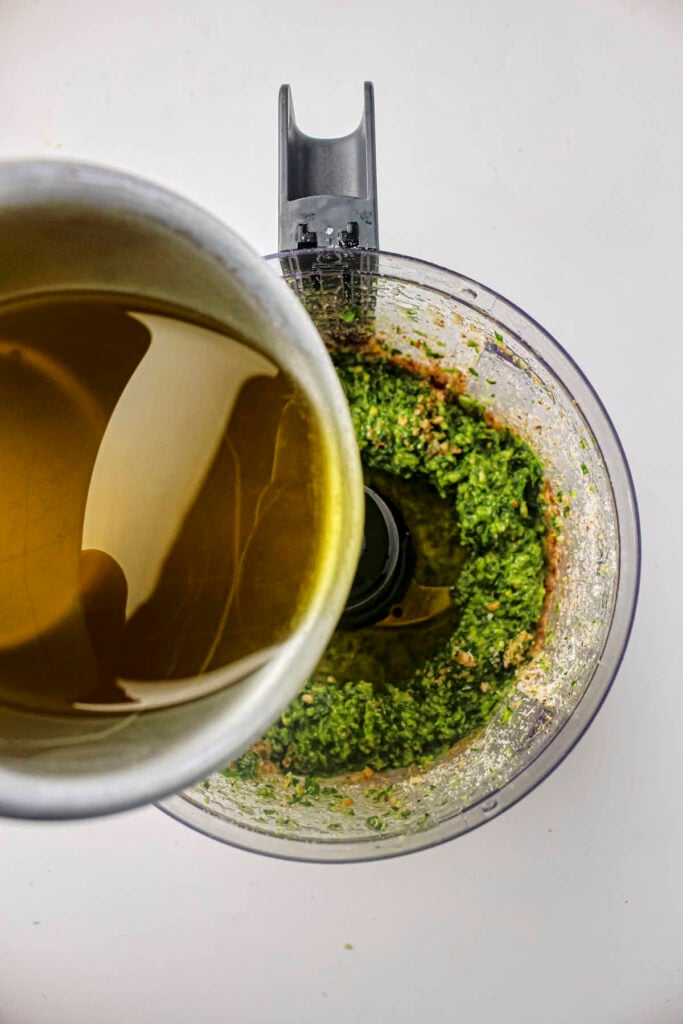
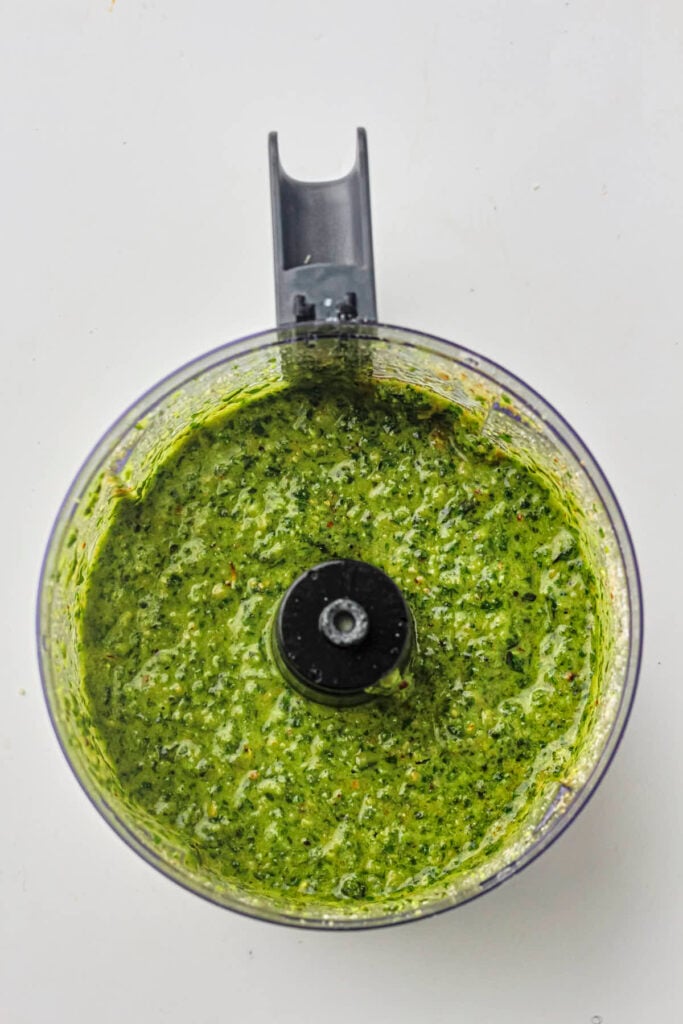
- Stream in the oil. With the motor running, pour in the olive oil slowly and stop as soon as the sauce comes together. A long blend heats the basil and dulls the flavor. Short bursts keep it bright.
- Taste last. Pecorino brings plenty of salt, so adjust the lemon first and the salt second. Loosen with a spoonful more oil if the sauce looks thick.
- Jar it. Spoon the pesto into a clean jar, press it flat, and pour a thin layer of olive oil over the top. Refrigerate right away.
Why Pesto Turns Dark or Bitter
Dark pesto is oxidation. The Pesto Genovese Consortium says the sauce should be made at room temperature and finished as quickly as possible to avoid it. Without blanching, expect the surface to darken in the fridge. The lemon juice helps, and a thin layer of olive oil over the top slows it further.
Bitter pesto traces back to one of four causes, according to Tasting Table. Those are over-processed basil, a strong or poor-quality olive oil, over-toasted nuts, and mature or damaged basil leaves. A mild oil, pale golden nuts, young leaves, and short pulses cover all four.
How to Store Homemade Pesto
Fresh basil and raw garlic in oil is a low-acid, low-oxygen mix. Oregon State University Extension says pesto must be refrigerated and used within 4 days or frozen for long-term storage. The OSU Extension guide names botulism as the reason. Do not leave the jar on the counter or in the pantry.
Pesto freezes well in ice cube trays. Fill a tray, freeze it solid, then move the cubes to a freezer bag. One cube is a single serving.
Pesto Recipe Without Pine Nuts
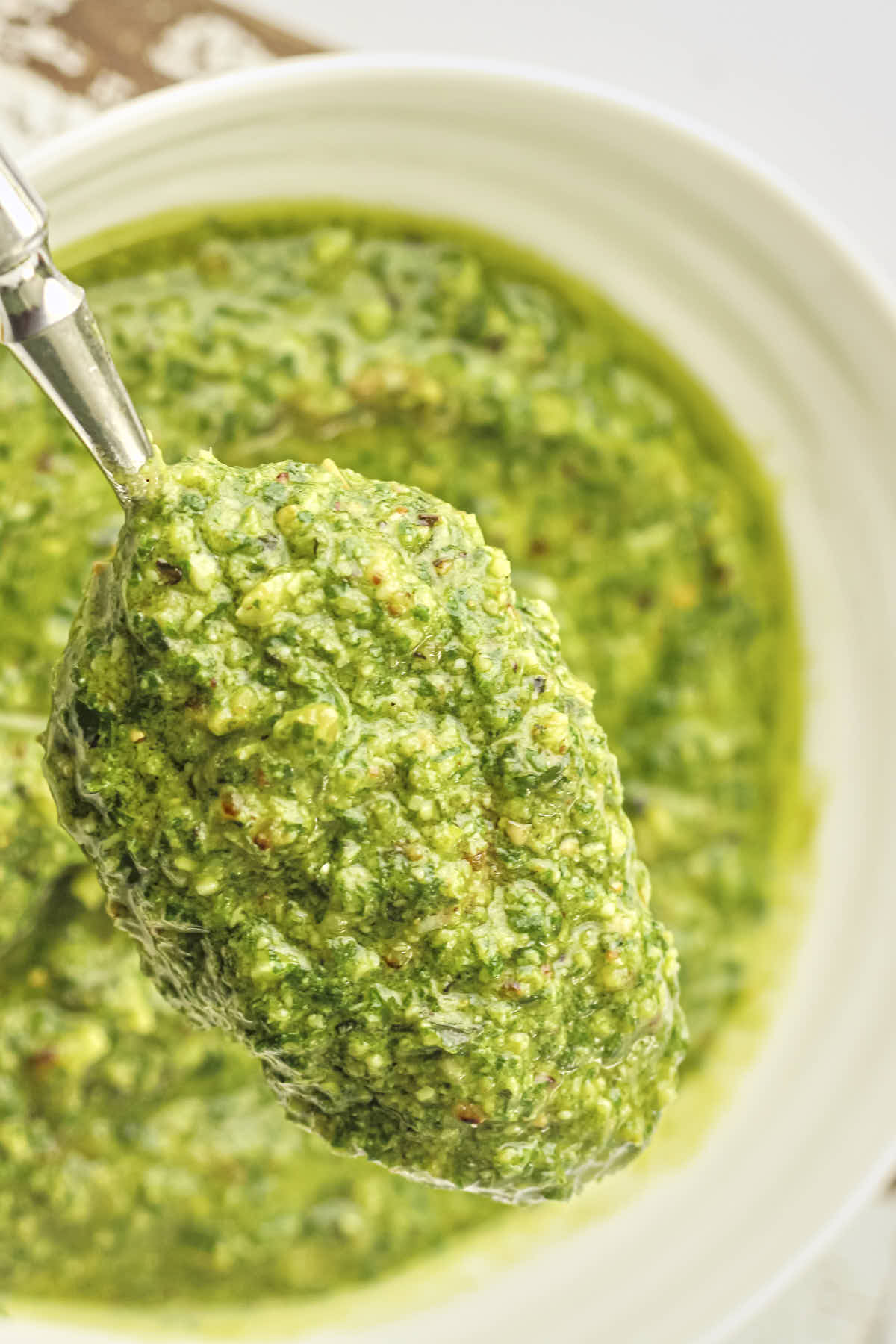
Pine nuts are the most expensive thing in the bowl, and not everyone wants them. Some people notice a bitter or metallic taste after eating pine nuts, and cooks have long swapped in other nuts for that reason. Walnuts are the easiest swap, and Italian sources on the traditional Genoese recipe list pine nuts or walnuts side by side.
For a pesto recipe with walnuts, use 1/2 cup walnut halves in place of the pine nuts. Toast them in a dry skillet over medium-low for about 4 minutes until fragrant, then cool them completely. Everything else stays the same. Walnuts taste earthier than pine nuts, and their skins can add a little bitterness, so keep the toast light.
Arugula Pesto “Rocket Sauce”
Replace the basil with 4 cups of packed baby arugula and keep everything else the same. The sauce comes out peppery and sharp, and the lemon zest and juice lean into that edge. Baby arugula is milder than mature leaves. For a softer version, use half basil and half arugula. Arugula is called rocket in the UK, which is where I get the name from.
Pair Homemade Pesto With These Protein Recipes
- Baked Lemon Chicken Breasts: Spoon a tablespoon of pesto over the chicken or serve with a cup of protein pasta noodles on the side.
- Juicy Steak Lettuce Wraps: Use a drizzle of pesto in each wrap in place of the horsey sauce, and try swapping roasted red pepper strips or slices of marinated artichoke hearts in place of the pickled red onion and the blue cheese.
- High Protein Pasta Salad: Toss the protein pasta noodles with pesto in place of the vinegar and olive oil dressing.
Final Thoughts
Fifteen minutes and a food processor get you homemade pesto made entirely from ingredients you can name and want in your diet. Freeze any extra in an ice cube tray and the next few meals have their sauce ready.
Homemade Pesto Recipe
Ingredients
- 4 cups basil
- ½ cup pine nuts
- 4 cloves garlic
- ½ cup Pecorino Romano
- ½ cup olive oil
- 1 tbsp lemon juice
- ½ tsp sea salt
- 1 tsp lemon zest
- ½ tsp black pepper
Instructions
- Dry the basil. Wash the leaves and dry them completely with a salad spinner and clean towels. Wet leaves thin the sauce and give you watery pesto.
- Toast the pine nuts. Heat a dry skillet over medium-low and shake the nuts for 3 to 4 minutes until light golden. Cool them completely. Over-toasted nuts turn the pesto bitter.
- Chop the base. Pulse the basil, pine nuts, garlic, and salt in a food processor until finely chopped. Scrape down the sides once.
- Add the cheese and lemon. Add the Pecorino, lemon zest, lemon juice, and pepper. Pulse a few times to combine.
- Stream in the oil. With the motor running, pour in the olive oil slowly and stop as soon as the sauce comes together. A long blend heats the basil and dulls the flavor. Short bursts keep it bright.
- Taste last. Pecorino brings plenty of salt, so adjust the lemon first and the salt second. Loosen with a spoonful more oil if the sauce looks thick.
- Jar it. Spoon the pesto into a clean jar, press it flat, and pour a thin layer of olive oil over the top. Refrigerate right away.