The High Protein Pasta Salad I Eat on a Low Carb, GLP-1 Diet
This high protein pasta salad has 20g protein per serving, plus what to add to reach 32g — all without processed ingredients.
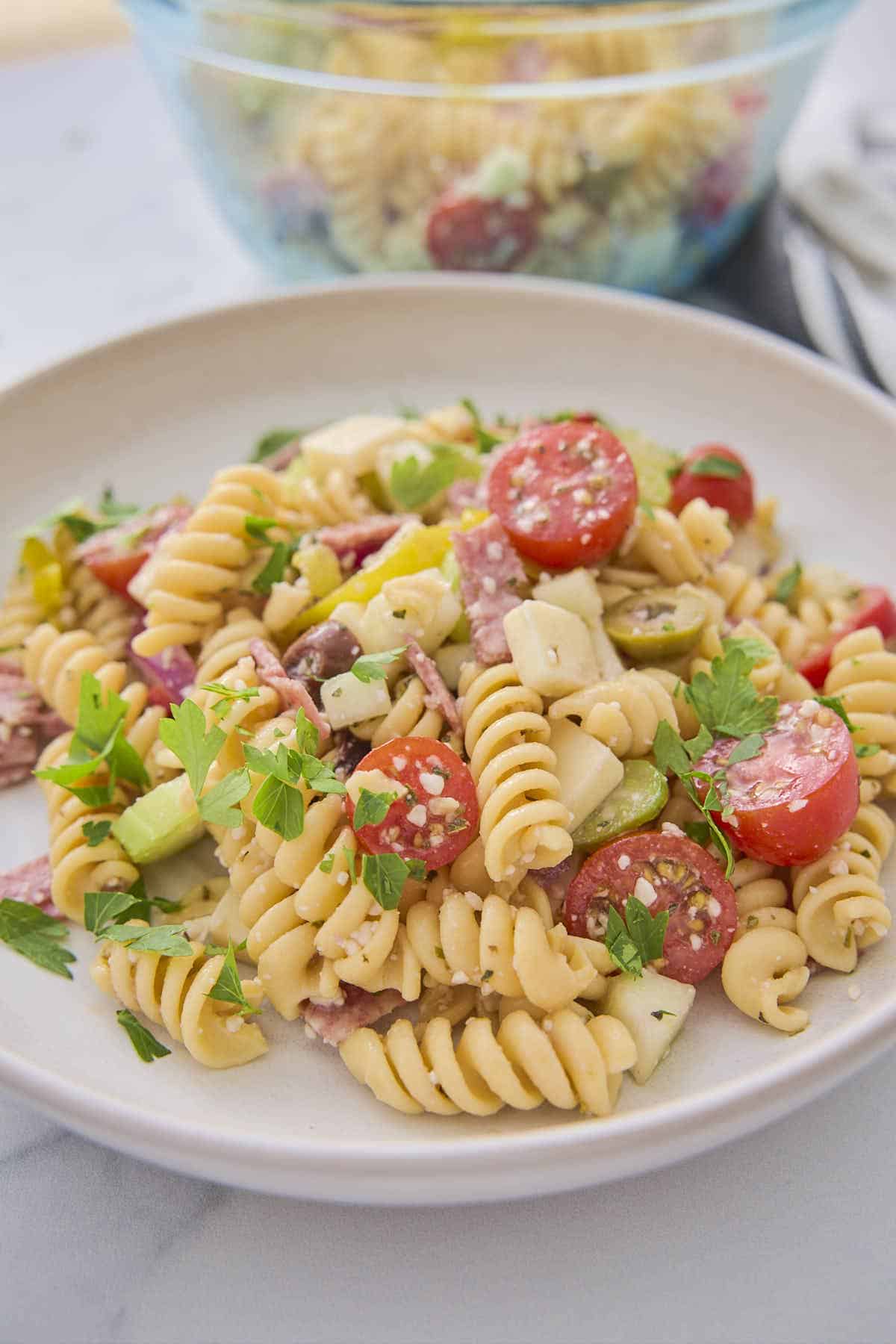
Table of contents
- Why This High Protein Pasta Salad Works
- Pick the Right Protein Pasta (Most of Them Aren’t Just Pasta)
- The Deli Counter Problem: Salami, Cheese, and What’s Actually In Them
- Ingredients
- How to Make High Protein Pasta Salad
- Variations
- Can You Eat Pasta Salad on Ozempic, Wegovy, or Zepbound?
- The Rest of the Honest Math
- More High Protein Recipes and GLP-1 Reading
- Final Thoughts
- Frequently Asked Questions
I love pasta salad. I just haven’t eaten it very much since I started on Wegovy.
Part of that is the store-bought stuff, which I stopped buying once I started reading labels instead of prices. The deli case version is soybean oil mayonnaise with noodles in it. The boxed mixes are worse — that seasoning packet is sugar, maltodextrin, and a preservative list that runs longer than the ingredient list.
The other part is the noodles. I’ve been watching carbs hard, and pasta came off the menu early and stayed off. I tried the alternatives — chickpea, lentil, the pea protein ones — and I didn’t like any of them. Chalky, mushy, and most of them padded with isolates and gums to hold together a protein number they couldn’t hit with actual ingredients.
Then I tried Brami. Two ingredients: durum wheat semolina and lupini beans. It holds its bite, it doesn’t taste like a supplement, and it brings 12 grams of protein and 5 grams of fiber per serving on its own. So I went looking for a way to use it properly.
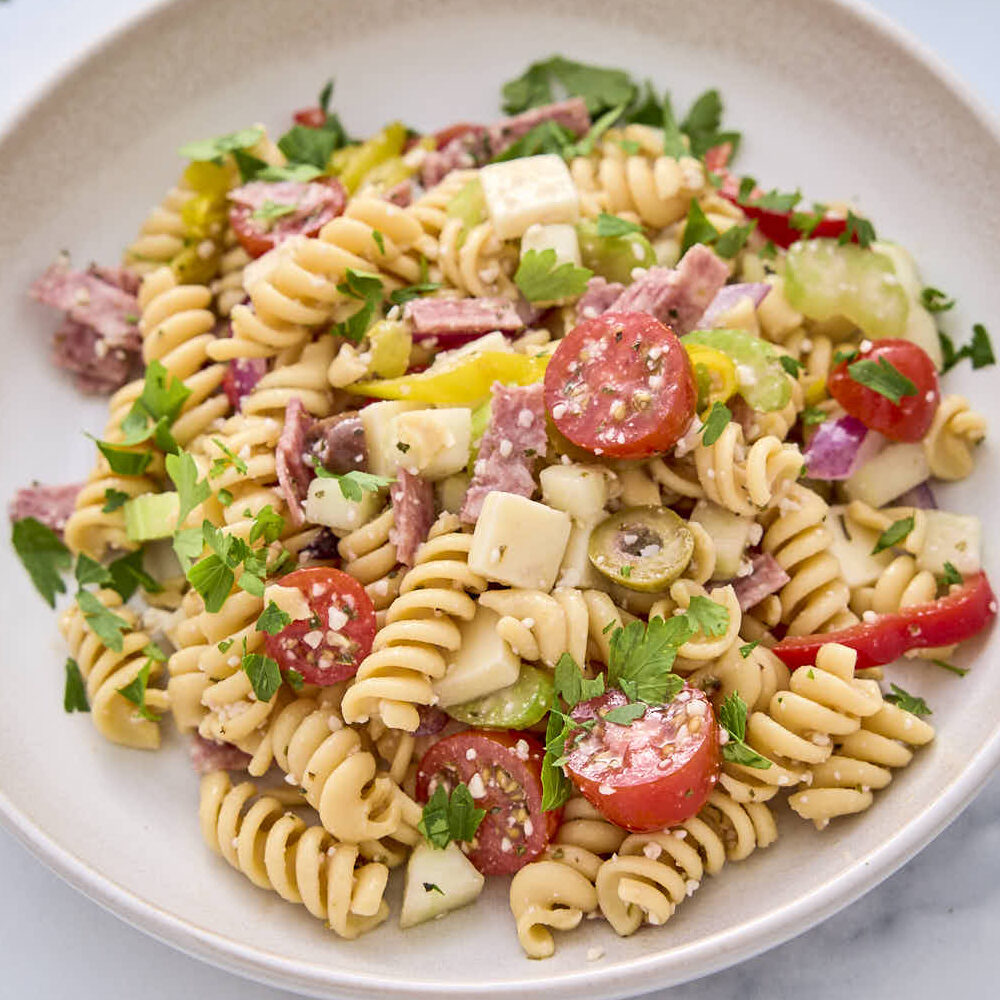
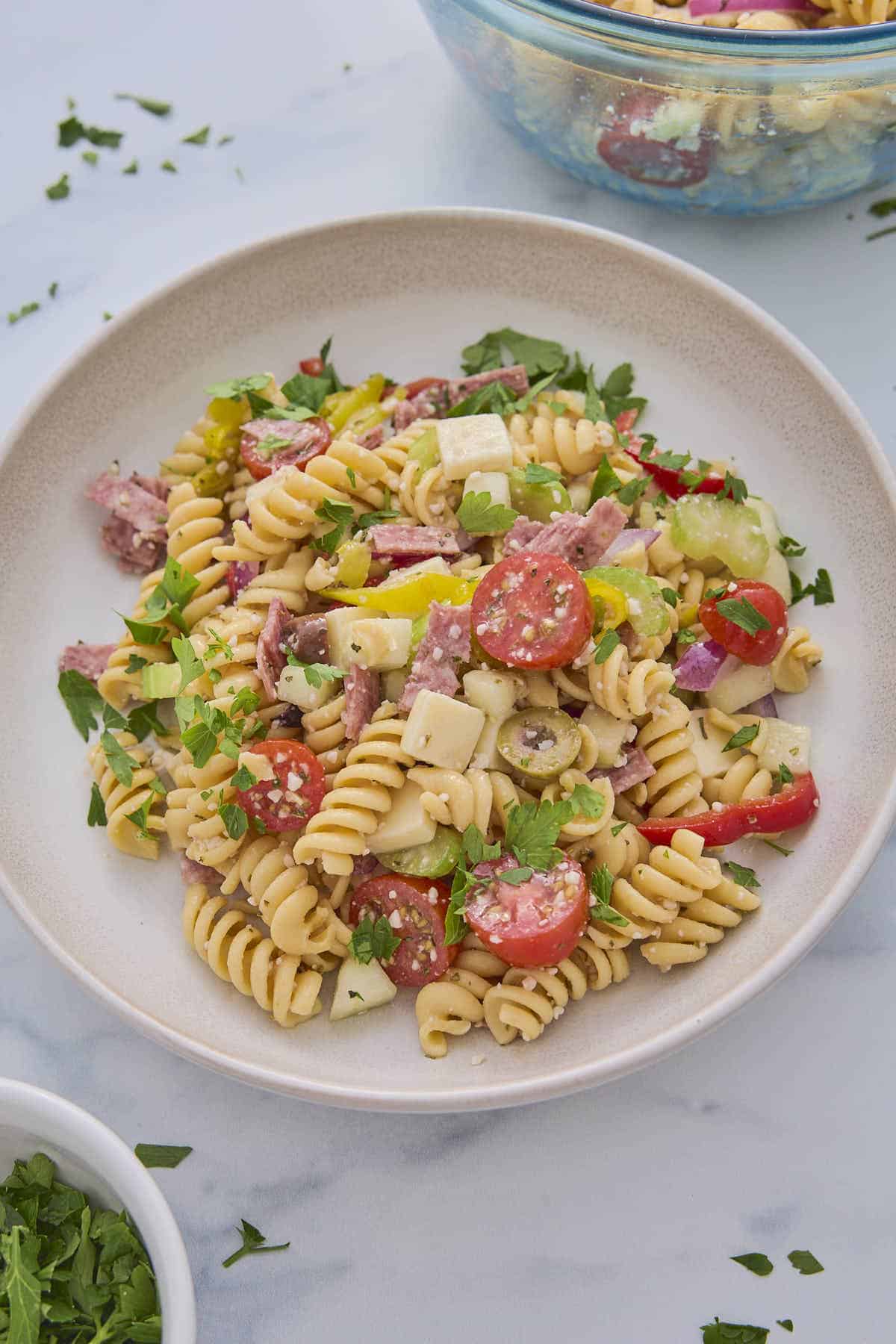
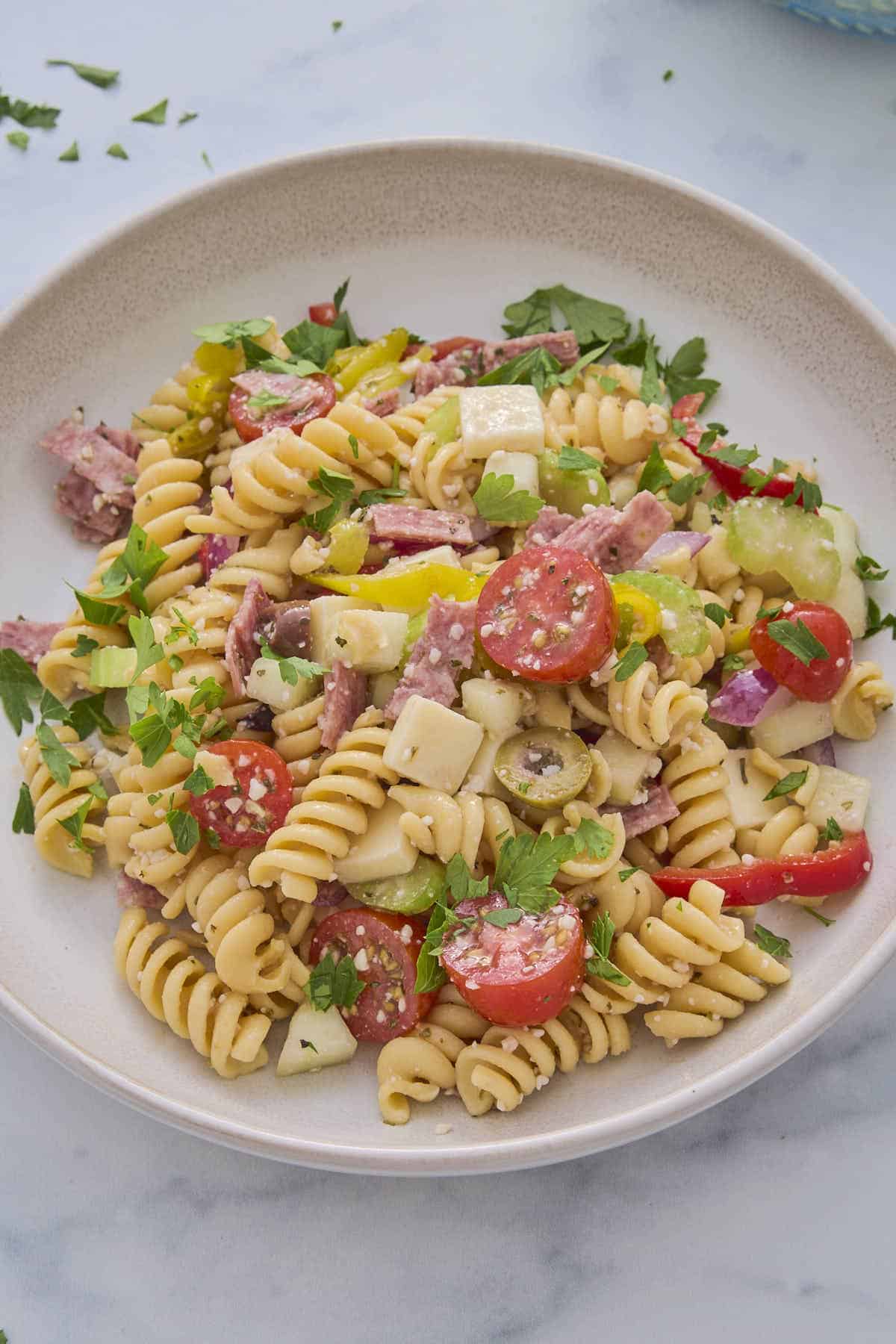
This is what I landed on. A cup and a half, 413 calories, 20 grams of protein, 26 grams of net carbs — and past 32 grams if you add chicken and eggs. Eight lunches out of one bowl.
Why This High Protein Pasta Salad Works
- Written for people on a GLP-1. When you can only eat one real plate a day, every bite has to pull its weight. This one does.
- 20 grams of protein and 26 g net carbs per serving. Against roughly 7 g protein and 42 g net carbs in the same size scoop from the deli case.
- Real protein pasta, not a protein number bolted onto semolina. Two ingredients on the box.
- No mayonnaise, no bottled dressing, no seasoning packet. The three biggest sources of sugar, seed oil, and preservatives in a classic pasta salad, gone.
- Every ingredient has a readable label. Same standard as every recipe on this site.
- Eight lunches, and every one of them eats like a meal. 20 grams of protein as written, 32 with chicken and eggs — the difference between a lunch that holds and one you’re hungry an hour after.
Where the Carbs in a Pasta Salad Actually Come From
This is the table that decides the whole recipe. Here’s where all 31 grams of carbohydrate in one serving are sitting.
| Component | Amount per serving | Total carbs |
|---|---|---|
| Brami protein pasta | 1.5 oz dry | 27.3 g (3.8 g fiber) |
| Cucumber | about 3 tbsp | 0.8 g |
| Cherry tomatoes | about 2 tbsp | 0.7 g |
| Mini sweet peppers | about 2 tbsp | 0.7 g |
| Red onion | about 1 tbsp | 0.7 g |
| Celery | about 3 tbsp | 0.6 g |
| Pepperoncini | about 1½ tsp | 0.1 g |
| Salami, cheese, olives | — | 0 g |
| Olive oil, red wine vinegar, Pecorino | — | 0 g |
Look at the first row and then look at everything under it. The pasta is 27 grams. Everything else in the bowl adds up to 3.6. All the protein is free, carb-wise. All the vegetables are essentially free. The entire carbohydrate load of a pasta salad is the noodles, and nothing else is even close.
That’s what makes the protein side of this so cheap. Carbs are fixed by the box of pasta. Protein isn’t fixed by anything.
| Serving | Protein | Net carbs | Calories | |
|---|---|---|---|---|
| As written | ~1⅔ cups | 20 g | 26 g | 413 |
| + 12.5 oz canned chunk chicken breast | ~2 cups | 27 g | 26 g | 451 |
| + chicken and 6 hard-boiled eggs | ~2¼ cups | 32 g | 26 g | 509 |
Protein goes up 63 percent down that column. Net carbs move four tenths of a gram. You can keep stacking protein into this bowl until it’s a full dinner and the carb number just sits there, because chicken and eggs don’t have any.
That’s the opposite of how a deli pasta salad scales. There, more food means more noodles means more carbs, every time, because the noodles are the product.
So I’d rather keep real pasta and pull two levers instead of throwing it out and calling zucchini ribbons a noodle. Use a higher-protein, higher-fiber pasta so the same volume costs fewer net carbs. Then load the bowl with enough protein and vegetables that a serving simply contains less pasta by weight.
That’s the same pattern I wrote about in what hidden sugars really mean. The carbs are never where you’re looking. Find the one ingredient carrying the load and deal with that one.
Pick the Right Protein Pasta (Most of Them Aren’t Just Pasta)
“Use a protein pasta” is where most high protein pasta salad recipes stop reading the label. Keep going.
Regular semolina pasta runs about 7 grams of protein and 2 grams of fiber per 2 ounces dry. A good protein pasta roughly doubles both. Across a 12 ounce box that’s an extra 30 grams of protein and 18 grams of fiber, and you didn’t have to add a thing to get it.
The question is how the box got there.
Most of them add ingredients to hit the number. Flip over the protein pastas at your store and you’ll find semolina plus pea protein isolate, plus egg white, plus some combination of gums and added fibers holding the texture together. Those aren’t poisons. They’re also not really food — they’re a nutrition panel engineered onto a product, and they’re why so much protein pasta tastes like cardboard and turns to paste in the pot.
Brami gets there with beans. Durum wheat semolina and lupini beans. That’s the entire ingredient list. Lupini is a legume that’s unusually high in protein and fiber on its own, so the pasta doesn’t need anything bolted on.
The practical difference shows up in the bowl. It holds its bite, which matters more in pasta salad than in any hot dish, because the noodles sit in acid for hours before you eat them. A pasta that’s already soft out of the pot will be mush by dinner.
How to buy in thirty seconds:
- Turn the box over. If the ingredient list runs past three items, you’re buying additives.
- Look for a legume, not an isolate. Lupini, chickpea, lentil, red lentil — a whole bean that’s been milled. “Pea protein isolate” is a processed fraction, not a bean.
- Check for gums and added fiber. Xanthan gum, guar gum, chicory root fiber, and inulin are all texture patches. Some people also get real digestive trouble from chicory root and inulin, which is worth knowing before you eat a whole bowl.
- Ignore the front of the box entirely. “25g protein” in a starburst tells you nothing about where it came from.
One cooking note, and it’s the one people get wrong: pull it a full minute short of the package time. Bean-blend pasta goes from firm to mush faster than semolina.
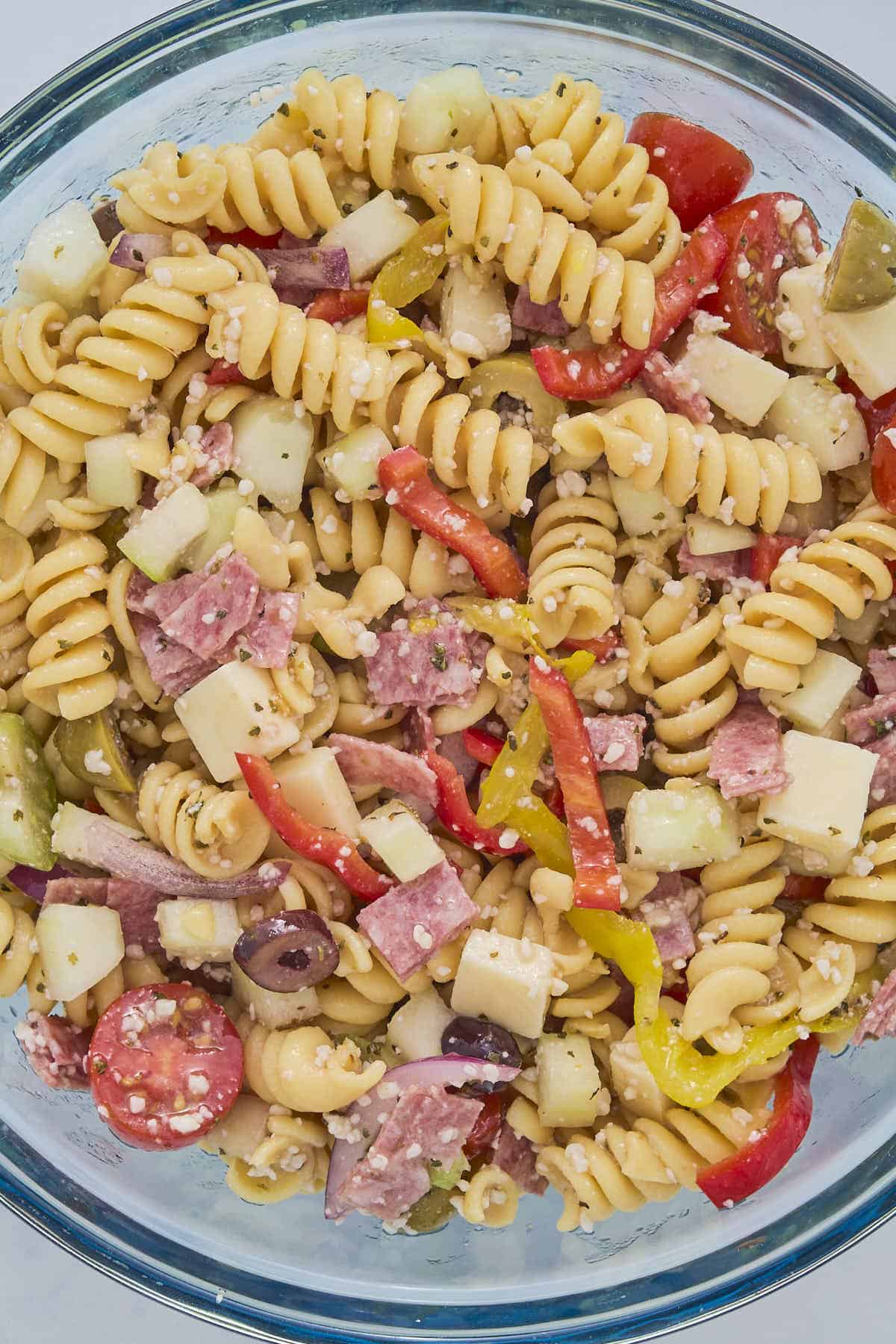
The Deli Counter Problem: Salami, Cheese, and What’s Actually In Them
This is where a healthy recipe usually falls apart. You do the work on the pasta, then dump in pre-shredded cheese and a bottled dressing with corn syrup in it.
Salami
Regular deli salami is cured with sodium nitrite and padded out with corn syrup or dextrose, and the cheap ones carry BHA and BHT as preservatives.
I use Hormel Natural Choice hard salami. The list is beef and pork, salt, then under 2 percent of turbinado sugar, water, spices, cherry powder, cultured celery powder, garlic powder, sea salt, lactic acid starter culture, and natural flavoring. The celery and cherry powder are doing the curing — that’s the nitrate source, and it’s plant-derived rather than synthetic.
Six ounces across eight servings is three-quarters of an ounce per plate. That’s the whole point. Eat clean enough everywhere else and you can still have salami in your pasta salad.
Cheese
Do not buy the pre-shredded or pre-cubed bags. They’re coated with powdered cellulose to stop caking and natamycin to stop mold. Cellulose is wood pulp. Natamycin is an antifungal. Neither one will hurt you, and both are there for the store’s convenience rather than yours — the cellulose is also why pre-shredded cheese never melts right.
Buy a block of sharp cheddar or provolone and cube it yourself. Six ounces takes two minutes with a knife. The ingredient list on a block is milk, salt, cultures, enzymes.
Parmesan
Same rule, worse offenders. The green can is largely cellulose and potassium sorbate.
I buy the bagged Pecorino Romano from the warehouse club — sheep’s milk, salt, lamb’s rennet, cheese cultures, nothing else. It’s saltier and sharper than Parmigiano, so a quarter cup carries a whole bowl of dressing.
Canned chicken
Look for chicken breast, water, salt, and maybe a little sodium phosphate. Put back anything carrying modified food starch or a broth with carrageenan in it. If your store stocks a low-sodium can, buy that one — see the honest math section, because canned chicken is a real contributor here.
The dressing
A bottled Italian dressing is soybean oil, corn syrup, and xanthan gum with some herbs thrown at it. You can rebuild it from four things.
Olive oil — actual extra virgin, from a producer that isn’t playing games. I got burned on this once and wrote up the whole thing in my post on fake avocado oil. The same adulteration problem runs straight through the olive oil aisle.
Red wine vinegar — I use Pompeian organic, which is red wine vinegar diluted with water to 5 percent acidity and nothing else. Avoid anything sold as a glaze or a reduction; those are usually half sugar.
Pecorino and dried oregano do the rest. No emulsifier, no thickener, no sweetener.
Ingredients
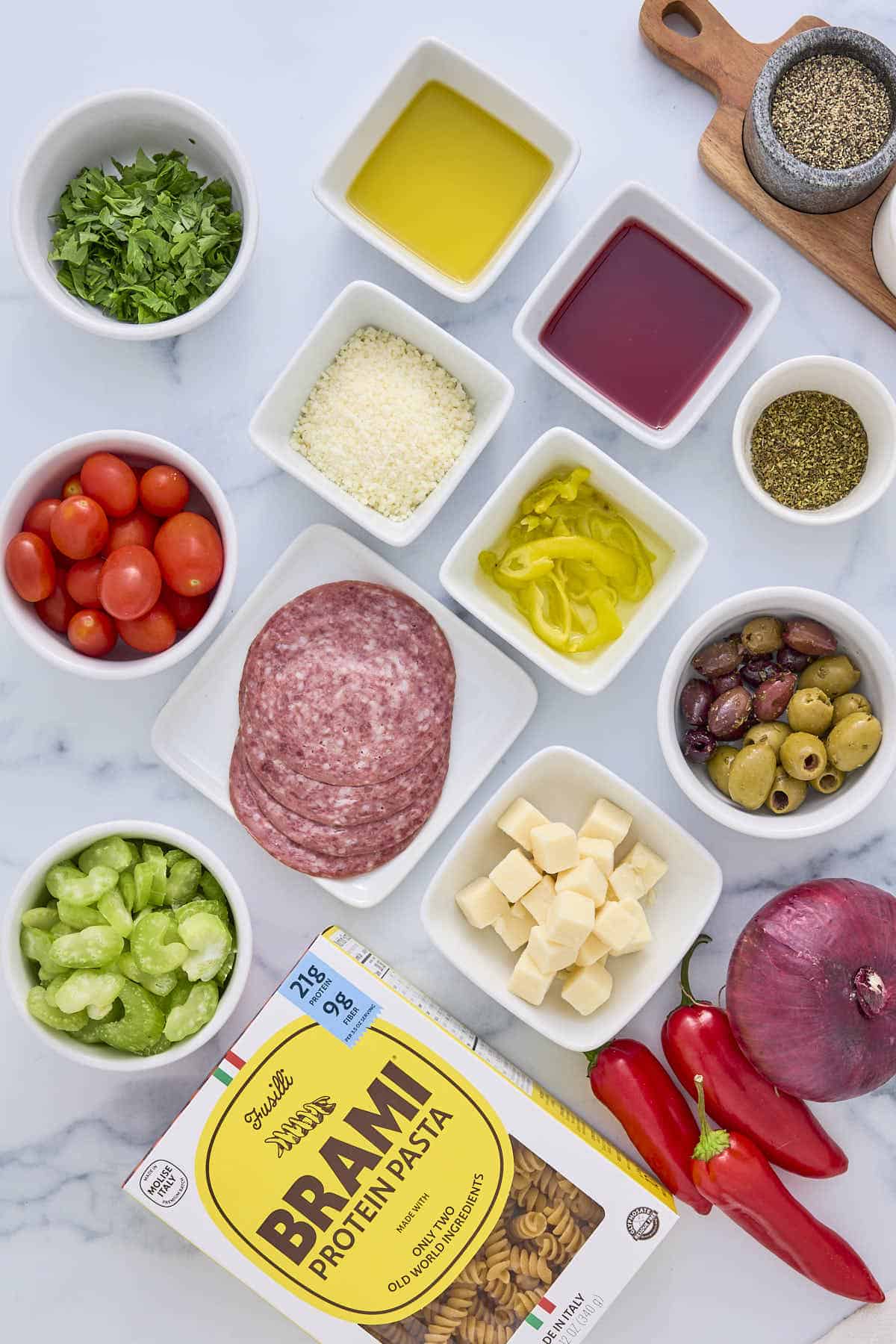
Makes 8 servings.
The salad
- 12 oz Brami protein pasta, rotini or penne, dry
- 6 oz uncured hard salami, cubed
- 6 oz block cheese, cubed and halved
- 1½ cups celery, sliced thin
- 1½ cups cucumber, quartered and sliced
- 1 cup cherry tomatoes, halved
- 1 cup mini sweet peppers, sliced
- ½ cup red onion, sliced thin
- ½ cup kalamata olives, sliced
- ¼ cup pepperoncini, sliced
The dressing
- ⅓ cup organic red wine vinegar
- ¼ cup extra virgin olive oil
- ¼ cup Pecorino Romano, finely grated
- 2 tbsp pepperoncini brine
- 1 tsp dried oregano
- 1 tsp black pepper
Ingredient notes
Pasta shape. Rotini or penne. You want ridges and hollows that trap dressing. Spaghetti or anything long is wrong here.
Chicken. Canned chunk breast is what I use because it’s shelf-stable and it’s already cooked. Rotisserie chicken beats it on flavor if you’ve got one. Grilled breast or thighs work too — about 10 ounces cooked.
Cucumber. Don’t peel it. The skin is where most of the fiber is, and it holds together better in the dressing over five days.
Red onion. Slice it thin and let it sit in the vinegar for ten minutes before you build the salad if raw onion is too sharp for you. It takes the bite off without cooking it.
Olives and pepperoncini. Both are usually clean. Check the pepperoncini for sulfites if you’re sensitive — mine list metabisulfite as a color stabilizer.
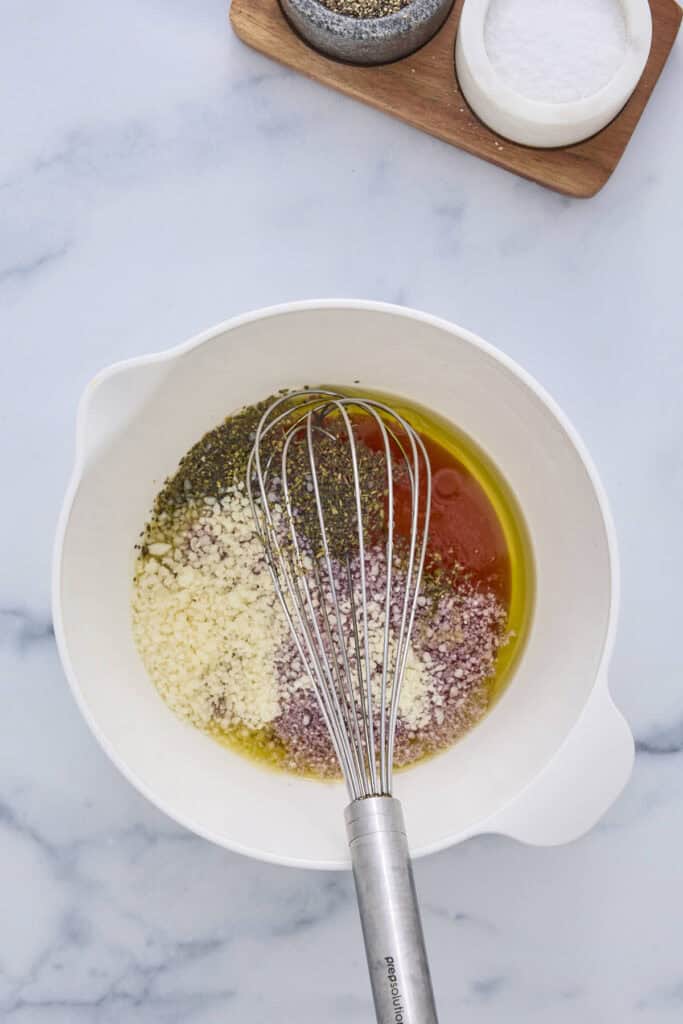
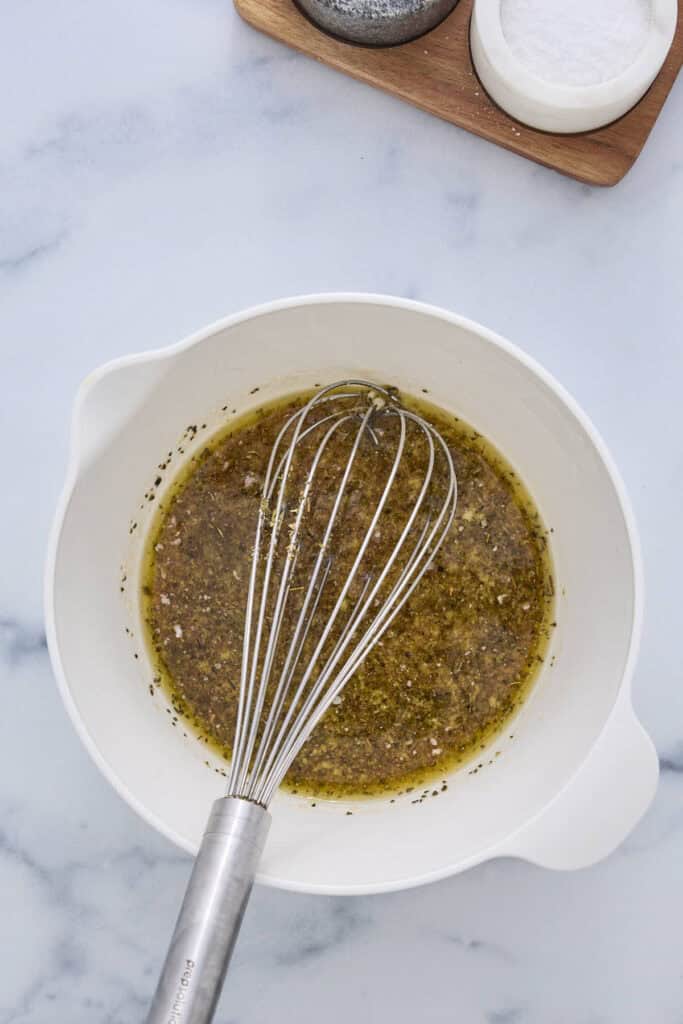
About the dressing ratio. This is deliberately acid-forward, close to 1.75 parts vinegar to 1 part oil, where a classic vinaigrette is 3 parts oil to 1. Straight off the whisk it tastes too sharp. Don’t correct it. The pasta absorbs the acid and mutes it while it chills, and by hour four it’s right.
Hard boiled eggs. If you bump up the protein with hard boiled eggs the storage time dropps from 5 days to 3 days for food safety. You can avoid this by adding the eggs when served.
How to Make High Protein Pasta Salad
Prep 20 minutes. Cook 10 minutes. Chill 1 hour. Serves 8.
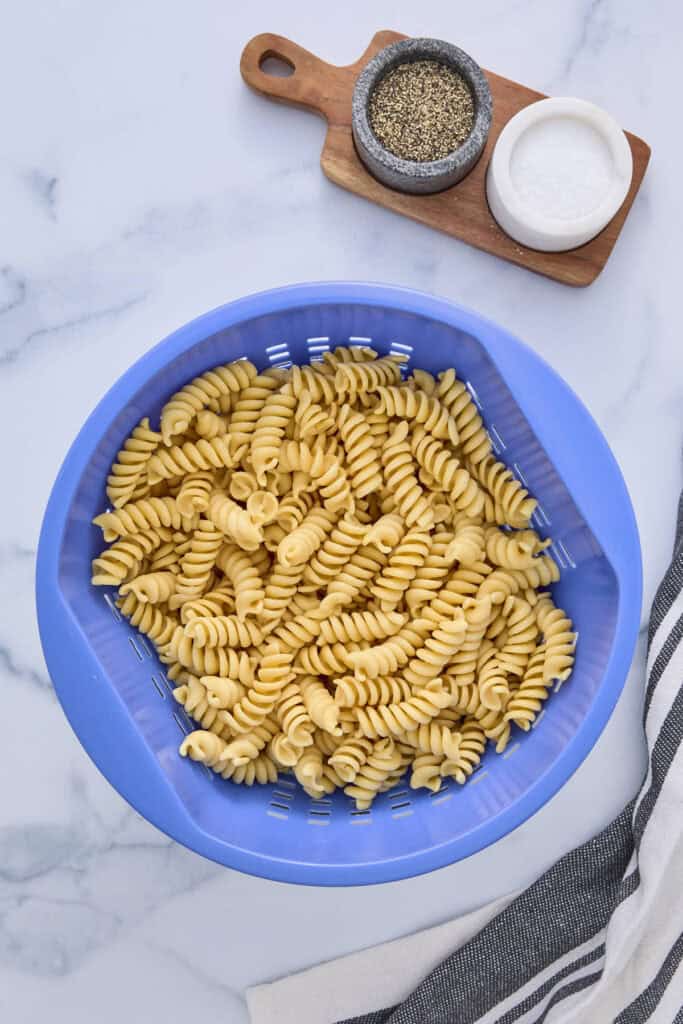
- Cook the pasta one minute short of the package time. Salt the water. Bean-blend pasta softens further in the dressing, so anything at or past al dente in the pot is already too far.
- Rinse it cold and drain it well. Run cold water over it until it stops steaming. Rinsing is wrong for hot pasta and right here — it kills the carryover cooking and washes off the surface starch that would otherwise glue the whole bowl together.
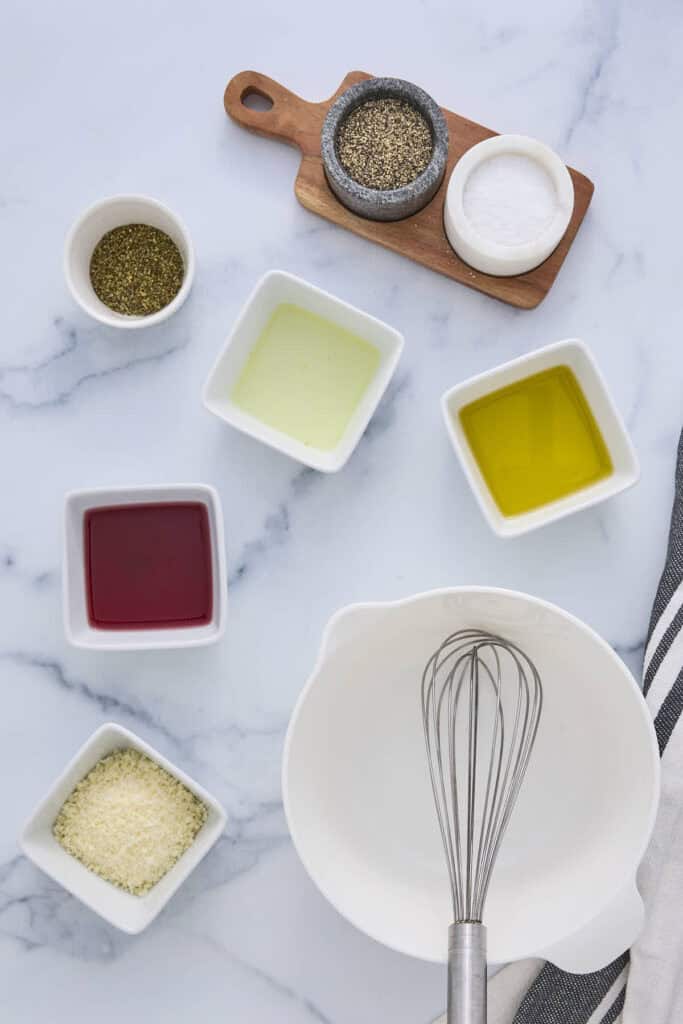
- Whisk the dressing in the bottom of the serving bowl. Olive oil, vinegar, brine, Pecorino, oregano, black pepper. It will separate. That’s what a real vinaigrette does.
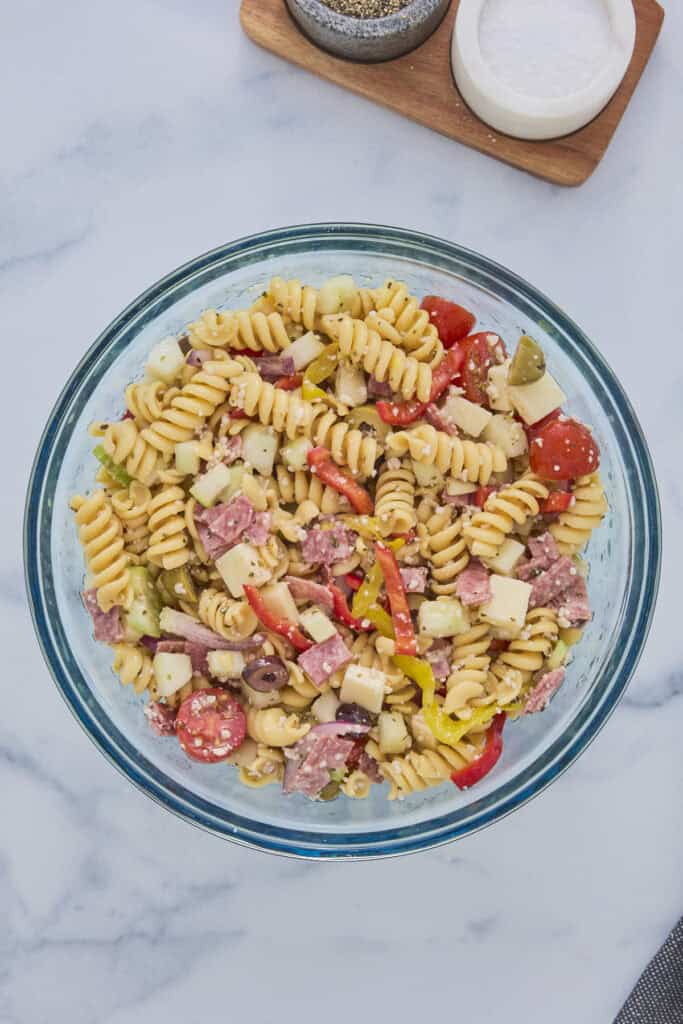
- Add the pasta by itself and toss it while it’s still slightly warm. This is the step that matters. Warm pasta drinks the dressing; cold pasta sits in it. Dump everything in at once and you’ll taste the difference on day two.
- Fold in the chicken and eggs if adding them, breaking up the big chunks with a fork as you go.
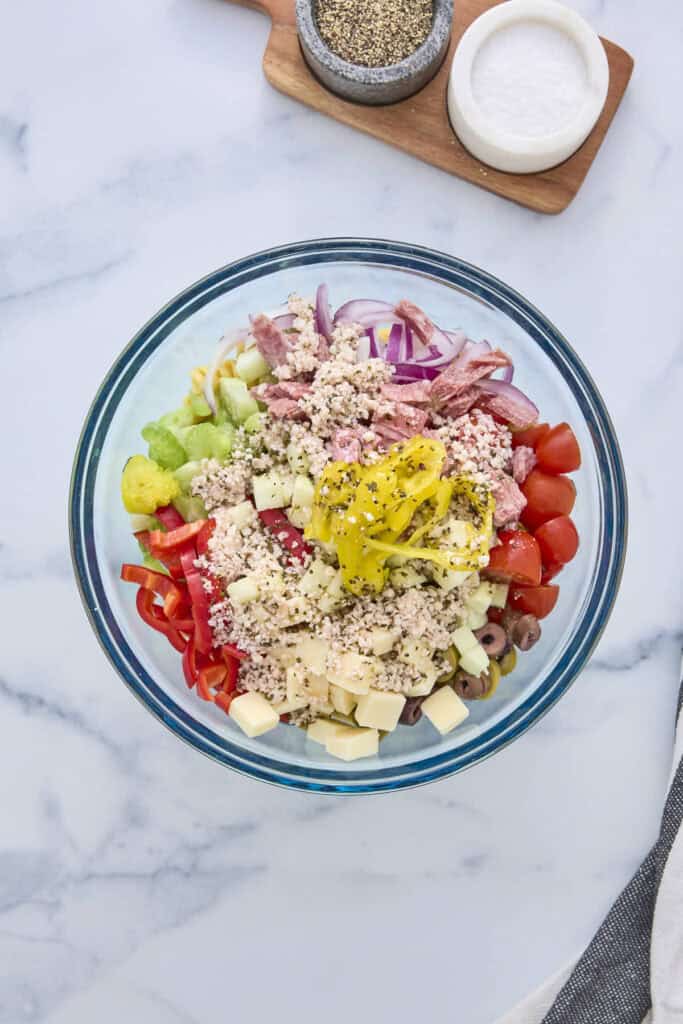
- Fold in everything else. Salami, cheese, celery, cucumber, tomatoes, peppers, onion, olives, pepperoncini.
- Chill at least one hour, four if you can wait. It needs the time. The acid has to move into the pasta and the vegetables have to release a little water.
- Toss again before you serve it. The dressing migrates to the bottom of the bowl. Scrape it back up.
Variations
Add eggs. Six chopped hard-boiled eggs add about 57 grams of protein across the batch for almost no carbohydrate. They also cut the fridge life from five days to three, so I mix them into the individual container I’m eating that day rather than into the whole bowl.
Greek. Swap the cubed cheese for crumbled feta and the salami for more chicken. The feta breaks down into the dressing and thickens it, which some people love and some don’t.
Vegetarian. Drop the salami and chicken, double the cheese, add a rinsed can of chickpeas. Lands near 18 grams of protein per serving and the sodium drops by about a third.
Side dish portions. Cut it 16 ways instead of 8 and a portion runs 207 calories with 10 g protein, or 226 and 13 g with chicken, or 255 and 16 g with chicken and eggs. Net carbs hold at 13 across all three. That is the range a deli scoop occupies, at three times the protein.
Lower sodium. Swap the salami for 6 oz of plain grilled chicken breast and leave out the olives, pepperoncini, and brine. A serving drops from about 826 mg of sodium to 288, protein climbs to 22 g, and net carbs do not move. Lean harder on the oregano and add a squeeze of lemon to make up the punch.
Can You Eat Pasta Salad on Ozempic, Wegovy, or Zepbound?
Yes, and this version specifically is built for it. But there are three things worth understanding. I am not a doctor and none of this is medical advice.
1. A cup and a half may be more than you can finish
This is a real serving of food. 245 grams, about a cup and a half. Early in treatment, or after a dose increase, that might be two sittings. That’s fine. It keeps in the fridge, and eating half of a nutrient-dense plate beats finishing all of an empty one.
With chicken and eggs added, a serving is closer to 2 cups. If you’re early on and that sounds like a lot, it is. Make the base version and add the protein to the container you’re eating that day.
2. Protein first is not a slogan
GLP-1 medications slow gastric emptying, which is why you feel full so fast and why the order you eat in suddenly matters. If you’ve only got room for half the bowl, eat the chicken, salami, cheese, and eggs out of it first and let the pasta be whatever fits after. You’ll hold onto muscle while you lose weight, which is the actual goal. Same reasoning as 30 grams of protein at breakfast, applied to lunch.
3. Fiber and fat both slow digestion further
There’s 5 grams of fiber and 25 grams of fat in a serving, on top of a medication that’s already slowing things down. For most people that’s the point — it’s what makes one cup hold you for five hours. If you’re in the first weeks and nausea is bad, start with a half portion and see how it sits.
The Rest of the Honest Math
The carbs on this one are handled. The sodium is not, and I’d rather say so than bury it in a footnote.
826 milligrams per serving is high. It comes from three places: salami at roughly 2,700 mg across the batch, cheese at 1,340, and olives at about 1,200. Everything else is noise.
Here’s the uncomfortable part of the comparison. On sodium, this recipe is a tie with the deli version. Homemade usually wins that category outright. This one doesn’t, because cured meat and brined olives are exactly what makes it taste like pasta salad.
The variations section has the fix if you need it. The version I actually make is the full-sodium one, because I drink a lot of water and my numbers are fine. Yours may not be. Decide on purpose rather than by accident.
Against the deli case, same 245 gram serving:
| This recipe | Deli Italian | Boxed mix | |
|---|---|---|---|
| Calories | 413 | ~499 | ~490 |
| Protein | 20 g | ~7 g | ~7.8 g |
| Fat | 24.4 g | ~31 g | ~22.4 g |
| Net carbs | 26 g | ~42 g | ~56 g |
| Fiber | 4.9 g | ~1.7 g | ~2.6 g |
| Sodium | ~826 mg | ~802 mg | ~936 mg |
Store figures are category averages from typical labels, not one specific product. Deli counters vary a lot.
Nearly three times the protein. Well under half the net carbs of a boxed mix. Eighty-six fewer calories. And a fat profile that’s olive oil and real cheese instead of soybean oil mayonnaise.
More High Protein Recipes and GLP-1 Reading
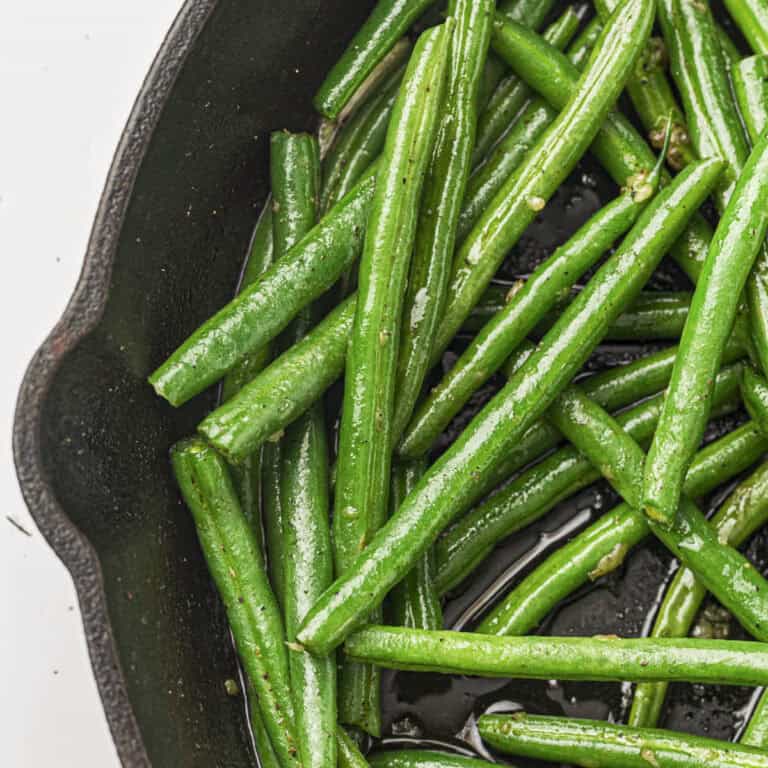
- Garlic butter green beans, the low-carb side I put next to this
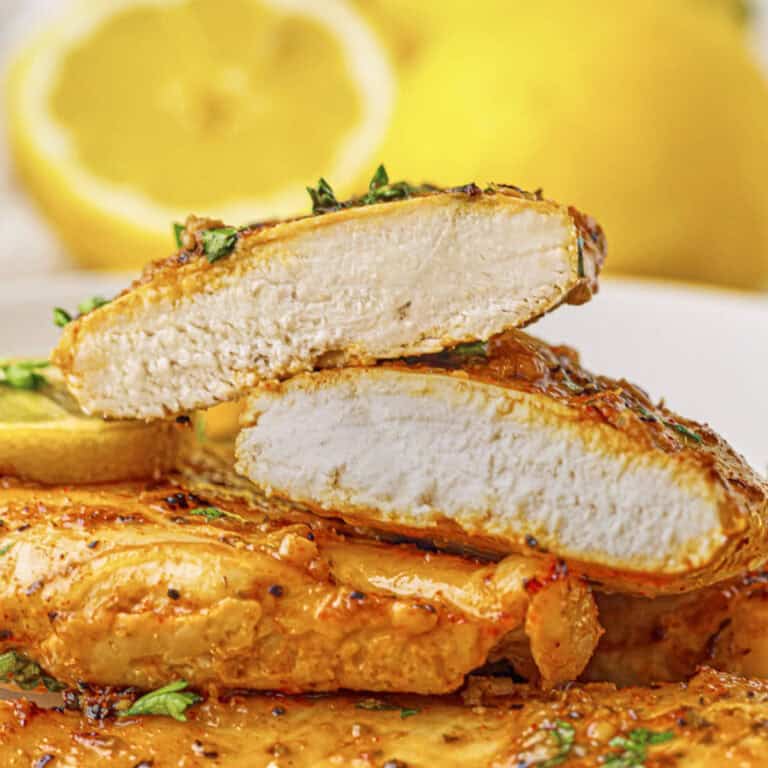
- Baked lemon chicken breasts for the protein on top
- Grilled pork tenderloin with a low-carb BBQ sauce
- 12 no-cook GLP-1 recipes for when the kitchen is out
- The protein anchor: why 30g at breakfast
- What you need to know about carbs on a GLP-1 diet
Final Thoughts
Your pasta salad shouldn’t be mayonnaise with noodles in it. Sour mix is in a margarita because it’s cheap, and soybean oil mayo is in a pasta salad for the same reason — it’s not there because the dish needs it.
That’s the whole job around here. I take something I don’t want to give up, find where the sugar and the processed filler got in, and rebuild it with ingredients I can name.
A GLP-1 shouldn’t cost you a year of dry chicken and steamed broccoli while everybody around you eats. You can have the pasta salad. You can bring it to the cookout and not explain yourself. It just takes recipes built by somebody who cared about the food as much as the numbers.
Frequently Asked Questions
The store version isn’t. Four to five grams per serving, because it’s refined noodles and mayonnaise. Swap to a bean-blend protein pasta and add real protein and the same dish clears 27 grams per serving.
Two levers, and they stack. Use a higher-fiber protein pasta, which drops net carbs at the same volume. Then raise the ratio of everything that isn’t pasta, so a serving contains less of it by weight. This recipe does both and lands at 26 g net carbs where a boxed mix hits 65.
Brami is the only one I’ve found with a two-ingredient list — durum wheat semolina and lupini beans. Most others add pea protein isolate, egg white, and gums to hit the protein number. Read the back of the box, not the front.
That’s what it’s for. Five days refrigerated in an airtight container, three if you add eggs. It’s better on day two than day one. Portion it after the first hour of chilling.
You cooked it to the package time. Bean pasta needs about a minute less than the box says, and in a cold salad it keeps softening in the dressing for hours after that.
You can, and it’ll taste fine. It costs you about 30 grams of protein and 18 grams of fiber across the batch, and pushes a serving from 26 to roughly 41 net carbs. At that point you’ve got a nice pasta salad rather than a high protein one.
High Protein Pasta Salad: Low Carb, No Processed Junk
Ingredients
For the salad
- 12 oz Brami protein pasta fusilli
- 6 oz uncured hard salami cubed
- 6 oz block cheese cubed and halved
- 1½ cups celery sliced thin
- 1½ cups cucumber quartered and sliced
- 1 cup cherry tomatoes halved
- 1 cup mini sweet peppers sliced
- ½ cup red onion sliced thin
- ½ cup Kalamata olives sliced
- ¼ cup pepperoncini sliced
For the dressing
- ⅓ cup red wine vinegar organic additive free
- ¼ cup extra virgin olive oil
- ¼ cup Pecorino Romano finely grated
- 2 tbsp pepperoncini brine
- 1 tsp dried oregano
- ½ tsp black pepper
Instructions
- Cook the pasta one minute short of the package time. Salt the water. Bean-blend pasta softens further in the dressing, so anything at or past al dente in the pot is already too far.
- Rinse it cold and drain it well. Run cold water over it until it stops steaming. Rinsing is wrong for hot pasta and right here — it kills the carryover cooking and washes off the surface starch that would otherwise glue the whole bowl together.
- Whisk the dressing in the bottom of the serving bowl. Olive oil, vinegar, brine, Pecorino, oregano, black pepper. It will separate. That's what a real vinaigrette does.
- Add the pasta by itself and toss it while it's still slightly warm. This is the step that matters. Warm pasta drinks the dressing; cold pasta sits in it. Dump everything in at once and you'll taste the difference on day two.
- Fold in the chicken and eggs if adding them, breaking up the big chunks with a fork as you go.
- Fold in everything else. Salami, cheese, celery, cucumber, tomatoes, peppers, onion, olives, pepperoncini.
- Chill at least one hour, four if you can wait. It needs the time. The acid has to move into the pasta and the vegetables have to release a little water.
- Toss again before you serve it. The dressing migrates to the bottom of the bowl. Scrape it back up.