Low Carb Margarita: Keto Margarita Recipe With 2g Net Carbs
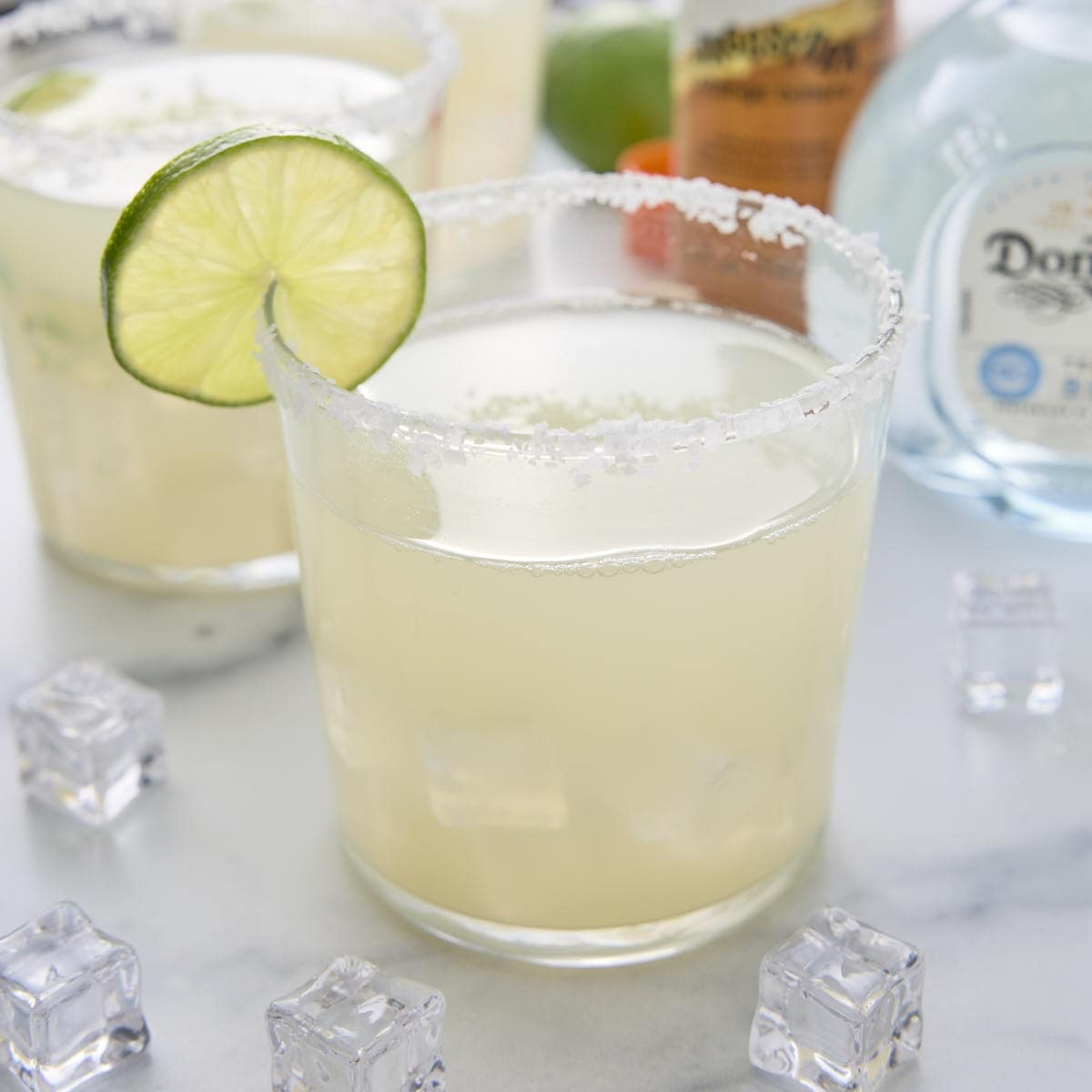
The best low carb margarita! Just 2g carbs instead of 30g+ in a restaurant. This keto margarita recipe replaces the triple sec and sour mix.
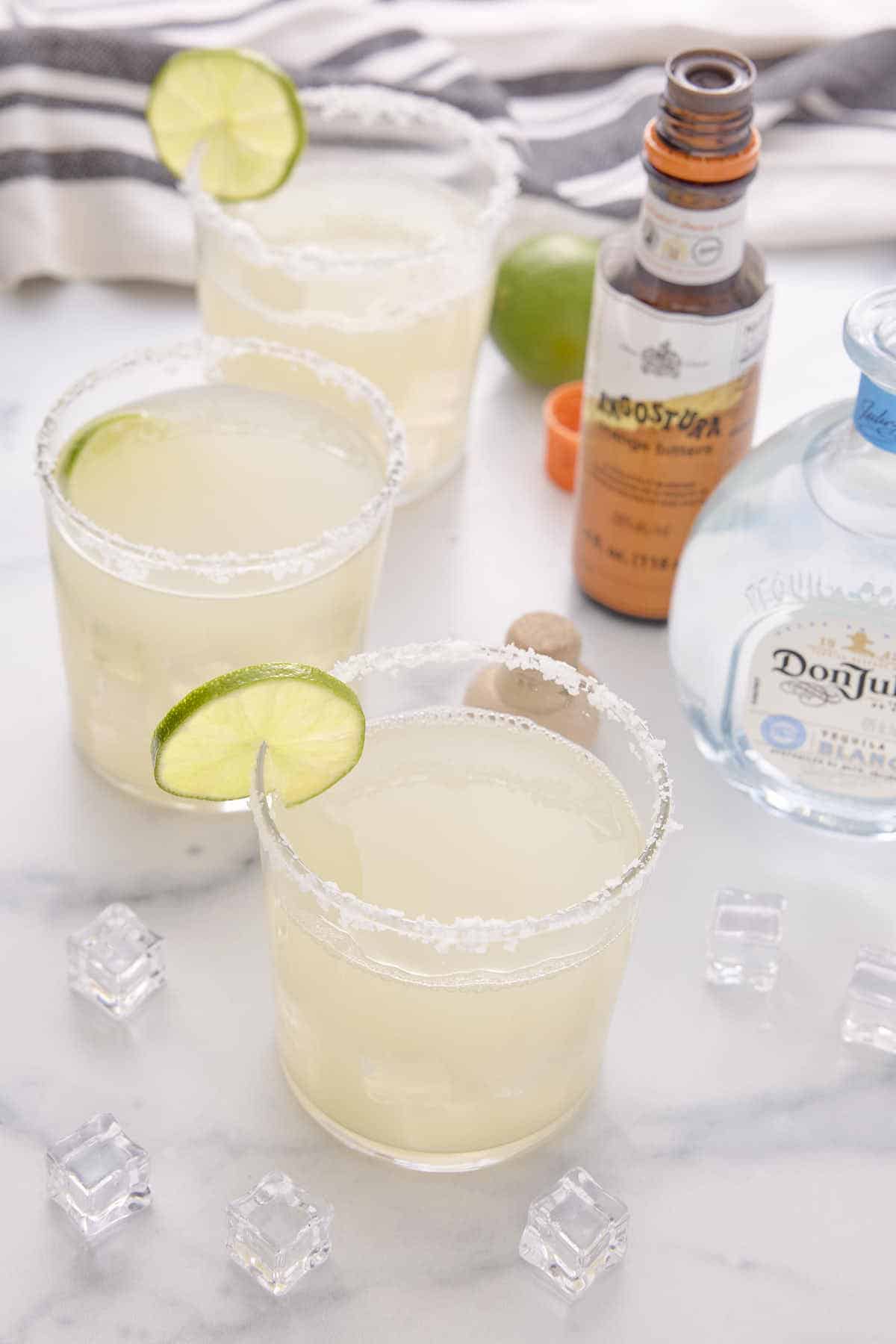
Table of contents
- Why This Low Carb Margarita Works
- Where the Carbs in a Margarita Actually Come From
- Pick the Right Tequila (Most “100% Agave” Isn’t Additive-Free)
- The Sweetener Question: Why Allulose Beats Erythritol in a Cold Drink
- Ingredients
- How to Make a Low Carb Margarita
- Variations
- Can You Drink a Margarita on Ozempic, Wegovy, or Zepbound?
- The Rest of the Honest Math
- More Low Carb Drinks and GLP-1 Reading
- What to Eat With It
- Final Thoughts
- Frequently Asked Questions
Being on a GLP-1 doesn’t mean the party is over. A low carb margarita built with fresh lime juice, a natural sweetener, and a couple dashes of orange bitters in place of the sour mix and triple sec will keep you in the party without undoing your week. This keto margarita recipe comes in at 2 grams of net carbs, about 110 calories.
Drinking with other people ranks second on the list of hard things to navigate on a GLP-1, behind only a party built around food. In some ways it’s worse — nobody counts a couple of drinks as a meal.
Store-bought no sugar mixers run on artificial sweeteners and preservatives. I know what’s in mine. Cutting carbs isn’t worth what those do to your metabolism and your gut.
A standard restaurant margarita runs roughly 25 to 40 grams of carbs, and a frozen one can run well past that. Tequila and fresh lime carry almost no sugar. It’s in the triple sec and the sour mix. Drop them and you land at 2 grams.
Why This Low Carb Margarita Works
- Written for people on a GLP-1. Carb count is the easy part.
- 2g net carbs, roughly 110 calories per drink. Compare that to a 16 ounce frozen house margarita.
- Fresh lime only. Bottled lime juice tastes flat and often contains preservatives and added sweeteners.
- No triple sec, no sour mix, no bottled margarita mix. The three biggest sugar sources, gone.
- No seed oils, no hidden sugars, nothing you cannot pronounce. Same standard as every recipe on this site.
Where the Carbs in a Margarita Actually Come From
This is the table nobody publishes, and it is the whole argument in one place. These are typical figures per standard pour. Brands vary, so check your own bottles.
| Component | Typical serving | Carbs |
|---|---|---|
| Blanco tequila, 100% agave | 1.5 oz | 0 g |
| Fresh lime juice | 1 oz | about 2 g |
| Triple sec or Cointreau | 1 oz | about 7 to 11 g |
| Agave nectar | 1 tbsp | about 16 g |
| Bottled sweet and sour mix | 2 oz | about 12 to 16 g |
| Bottled margarita mix | 4 oz | about 24 to 30 g |
| Frozen house margarita, 16 oz | 1 drink | often 30 g or more |
Look at the first two rows. The tequila is zero. The lime is two. The entire carb load of a margarita comes from the sweeteners, and every one of them is optional.
That is the same pattern I wrote about in what hidden sugars really mean. The sugar is never in the thing you think you are ordering. It is in the mixer, the sauce, the dressing, the glaze. The margarita is an honest example. Pull the sugar out and the drink still works.
Distillation leaves no sugar behind. Fermentation turns sugar into alcohol, then the still carries over alcohol and aromatics — no carbohydrate makes the trip. A plain distilled spirit is zero carb no matter what it was fermented from, which is why the tequila row reads 0. Anybody telling you a straight spirit is “high carb” doesn’t know how a still works.
Which does not mean all tequila is the same. Keep reading.
Pick the Right Tequila (Most “100% Agave” Isn’t Additive-Free)
“Use a good silver tequila” is where most keto margarita recipes stop reading the label. Keep going.
There are two legal classes of tequila under Mexico’s NOM-006 standard.
Mixto only has to be 51% blue agave sugars. The other 49% can be cane sugar, corn syrup, or other fermentable sugars. A bottle that just says “Tequila” with no agave percentage is a mixto. That’s usually the cheap one behind the bar.
100% de agave means every fermentable sugar came from blue Weber agave.
Now the part that matters. “100% de agave” does not mean additive-free. The standard permits up to 1% by weight of undisclosed additives after distillation, a process called abocado: caramel coloring, glycerin, oak extract, and sugar-based syrup. None of it has to appear on the label. A big “100% de Agave” stamp on the front doesn’t rule out sweetening syrup or glycerin.
Does this wreck your carb count? Honestly, no. One percent by weight of a two ounce pour is not going to move a blood sugar reading, and I am not going to tell you it will. This is not a carb argument.
How to buy in sixty seconds:
- Find the words “100% de Agave” on the label. No percentage means mixto. Put it back.
- Find the NOM number, a four-digit code identifying the distillery.
- Look at the color. A blanco should be crystal clear. Any color in the bottle came from something other than the agave.
- Check the brand on Tequila Matchmaker, the community database that tracks additive testing. Free, takes ten seconds.
You do not need an expensive bottle. You need an honest one.
The Sweetener Question: Why Allulose Beats Erythritol in a Cold Drink
Most keto margarita recipes call for any kind of zero calorie sweetener. Most of the readily available sweeteners are mixed with a carrier like dextrose or erythritol. Even brands like Swerve or Lakanto might contain them. They work fine in baking. In a cold shaken cocktail they have two problems.
They recrystallize. Erythritol is far less soluble in cold liquid than sugar. Shake it with ice and a lot of it drops back out. You get grit at the bottom of the glass and a drink that is less sweet than you built.
They taste cold. Erythritol has a negative heat of solution, which is a technical way of saying it produces a mint-like cooling sensation on the tongue. In a brownie you never notice. In a lime cocktail it reads as wrong.
Allulose fixes both. It is a rare sugar that dissolves in cold liquid the way sugar does, carries no cooling effect, and has a negligible effect on blood glucose. In the United States it is excluded from added sugars on the nutrition label. It is the right tool for cold drinks and it is not close.
If you only have erythritol blend: dissolve it in a tablespoon of hot water first, let it cool, then shake. That is a real fix, not a workaround.
If you skip sweetener entirely: the drink is tart and bracing, and a lot of people prefer it that way, including me on most nights. Start with none, taste, and add. You can always sweeten a finished drink. You cannot unsweeten one.
For the longer version of why the sweetener choice matters beyond taste, see carbs on a GLP-1 diet.
Ingredients
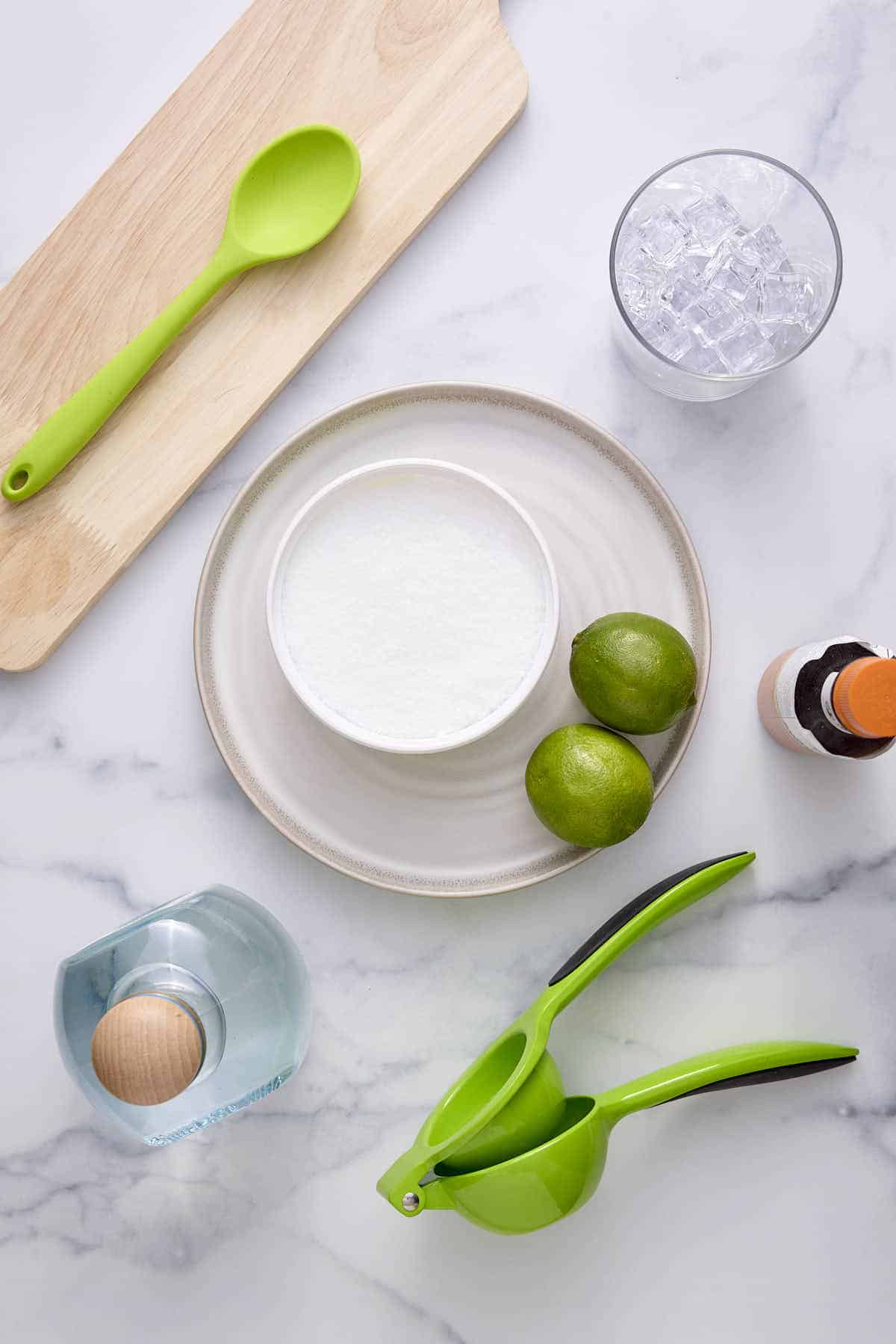
Makes 1 margarita.
- 1.5 oz blanco tequila, 100% de agave, additive-free if you can find it
- 1 oz fresh lime juice, about one large lime
- 2 to 3 dashes orange bitters, or 1/2 oz fresh orange juice
- ½ tsp powdered allulose, or monkfruit with allulose, to taste, optional
- Ice
- Lime wedge and coarse salt for the rim
Ingredient notes
Tequila. Blanco, also sold as silver or plata. Reposado works and gives you a rounder, slightly vanilla drink. Skip añejo, the barrel character fights the lime. See the next section on how to read the label.
Lime. Fresh. Not the plastic lime, not the bottle. One large lime gives you about an ounce. Roll it hard on the counter before you cut it. You’ll get noticeably more juice.
Two ways to get the orange note:
Triple sec is made from bitter orange peel. The bitter edge is what it brings to a margarita, not the sugar. Replace the peel, not the sweetness. Three options, best first.
1. Orange bitters, 2 to 3 dashes. Bitters are the closest thing to what you took out. They’re built on the same bitter peel, with botanicals like gentian and cardamom layered in. Zero carbs. Regans’ No. 6, Angostura Orange, and Fee Brothers all work. A ten dollar bottle lasts years, because you use it a dash at a time. The catch is you will probably need a liquor store, not a grocery store.
2. Fresh orange juice, 1/2 oz. The real thing, and it tastes like it. Adds about 1.5 grams of carbs, which takes the drink to roughly 3.5 total. If you are not counting to the gram, this is the best-tasting version.
How to Make a Low Carb Margarita
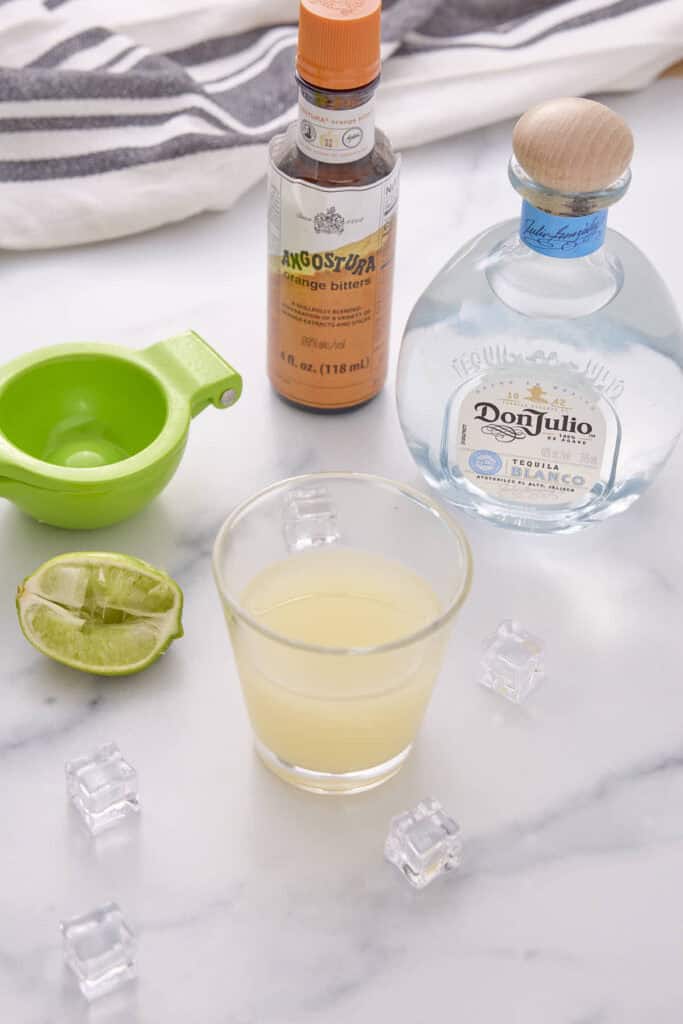
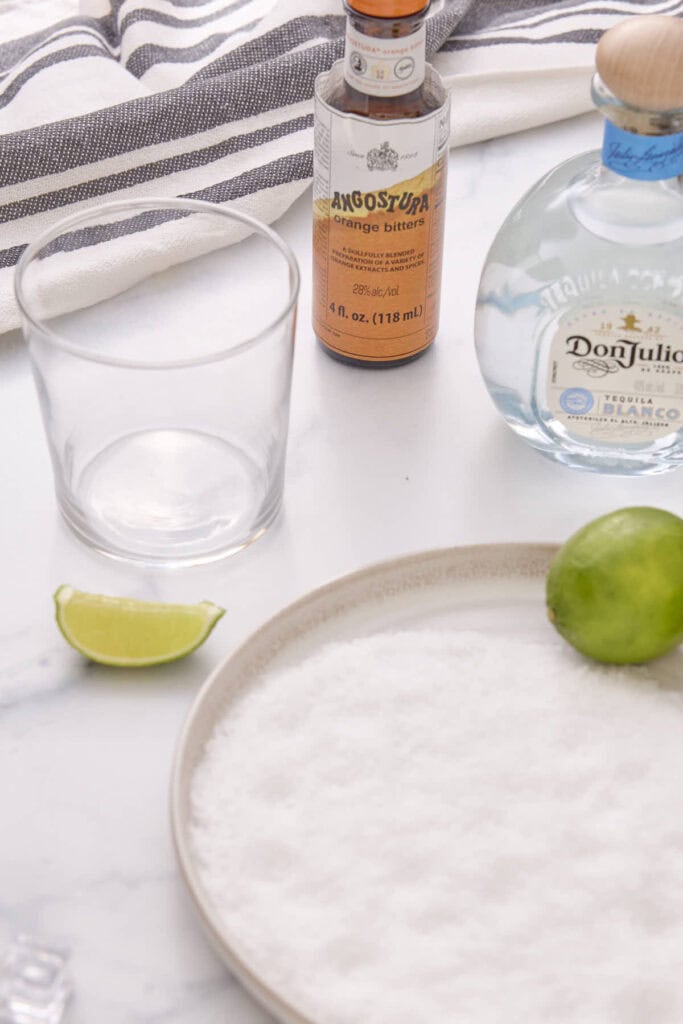
Total time: 5 minutes. Serves 1.
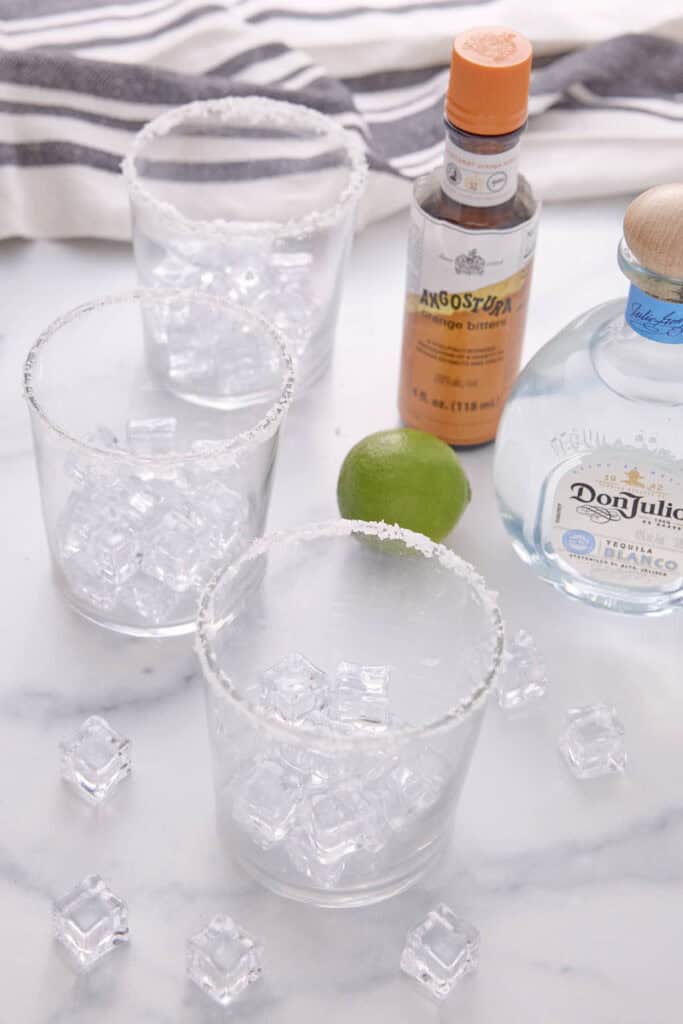
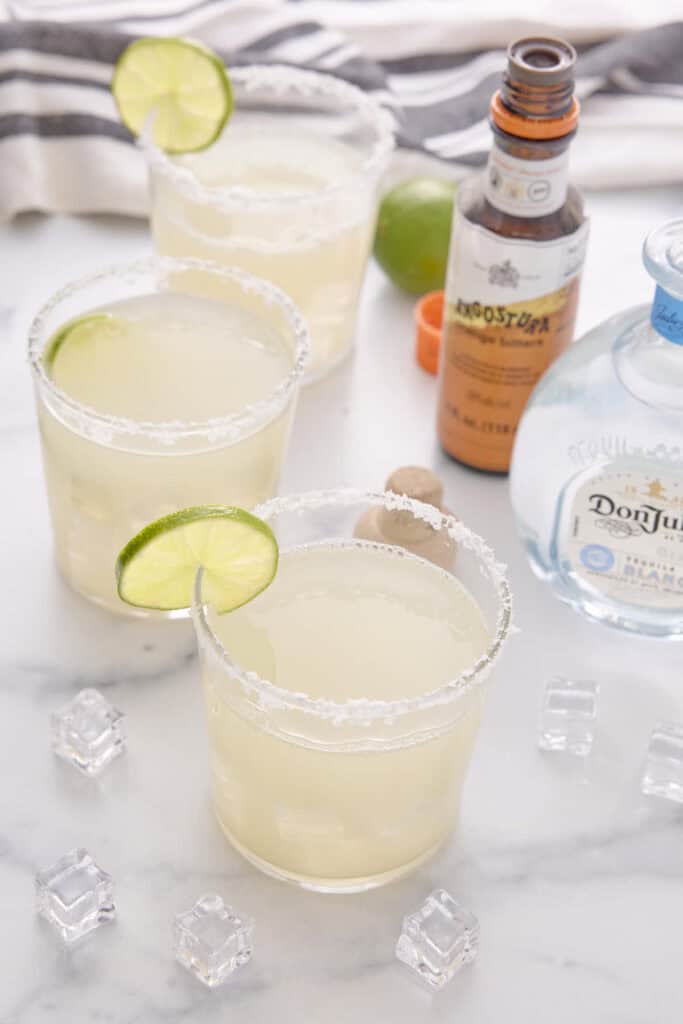
- Rim the glass. Run a lime wedge around the outside edge of a rocks glass. Pour coarse salt onto a small plate and roll the outer rim through it. Rim the outside only, so the salt does not fall into the drink and take over.
- Fill the glass with ice. Do it now, so the glass is cold when the drink hits it.
- Build in the shaker. Add tequila, fresh lime juice, orange bitters, and sweetener to a cocktail shaker.
- Add ice and shake hard for 15 seconds. Hard, not polite. You are chilling, aerating, and adding a bit of water by dilution, and that dilution is part of the recipe, not a flaw. It is also why a properly shaken drink goes down slower.
- Strain over the fresh ice. Garnish with a lime wheel.
- Taste before you adjust. If it is too tart, add sweetener a quarter teaspoon at a time. If it is flat, it needs more lime, not more sweetener.
Variations
Frozen low carb margarita. Blend the same ingredients with 1 cup of ice until slushy. Use allulose here, not erythritol, the cold problem is worse in a frozen drink. Adds no carbs.
Spicy margarita. Two thin slices of jalapeño in the shaker before you shake. Muddle lightly if you want more heat. Zero carbs, and the capsaicin makes a small drink feel like a bigger event.
Strawberry margarita. Muddle two medium strawberries in the shaker. Adds roughly 2 grams of carbs. Still under 5 total.
Pitcher for six. 9 oz tequila, 6 oz fresh lime juice, 12 dashes of orange bitters, 2 tsp allulose or monkfruit with allulose sweetener, and 2 oz cold water for the dilution you are skipping by not shaking. Stir, chill, and pour over ice. Mix it up to 24 hours ahead and keep it covered in the fridge.
Can You Drink a Margarita on Ozempic, Wegovy, or Zepbound?
Short answer: usually yes, in moderation, and there are three things you should understand first. I am not a doctor. None of this is medical advice. If you take insulin or a sulfonylurea, alcohol is worth asking your prescriber about — the low blood sugar risk is real with those.
1. One drink will probably hit you harder than it used to
GLP-1 medications slow gastric emptying. Slowed digestion is a core part of how these drugs work, and the reason you feel full so fast. That same slowdown changes when alcohol reaches your bloodstream. A drink you handled easily last year can feel like two.
2. The nausea stacks
Nausea is the most common side effect of these medications, and it is worst in the first weeks and after every dose increase. Alcohol irritates the stomach lining on its own. Stacking them is a bad afternoon.
3. Low blood sugar is a real risk for some people, not all
For most people taking a GLP-1 alone, hypoglycemia is uncommon. Alcohol suppresses the liver’s ability to release glucose. On insulin or a sulfonylurea like glipizide or glyburide, that combination can drop you low — sometimes hours later, while you’re asleep.
4. You may simply want it less, and that is not in your head
There is now randomized trial evidence that semaglutide reduces both alcohol consumption and alcohol craving. A 2025 phase 2 trial published in JAMA Psychiatry found that low-dose semaglutide cut how much participants drank in a controlled setting and reduced their reported cravings. It is a small, early study in adults with alcohol use disorder, not a general-population result, and it is not an approved use. But it lines up with what a huge number of people on these medications report without prompting: the pull toward a second drink is just gone.
That is the same phenomenon as food noise going quiet. GLP-1 receptors sit in the brain’s reward pathways, not only in the gut, and the medication turns down the volume on wanting in general. Alcohol is part of “in general.”
The Rest of the Honest Math
A margarita at 2 grams of carbs is not a carb problem. It is a calorie problem and an appetite problem, and those are different.
- 110 calories with no protein, no fiber, and no satiety value. It does not make you full. It is a rounding error on a maintenance day and a real drag on a deficit if it becomes a habit.
- Alcohol gets metabolized first. Your liver treats ethanol as a priority because it is a toxin, and everything else in the queue waits. That is why alcohol and active fat loss pull against each other even when the drink is carb free.
- It lowers the guardrails. For me this was always the real cost, not the calories. Two drinks and I stopped caring about the chips. On a GLP-1 that effect is blunted, but it is not gone.
If you want the medication side rather than the drink side, start with what a GLP-1 diet actually is, or read my own GLP-1 journey for how I worked all of this out in practice.
More Low Carb Drinks and GLP-1 Reading
- Diet myths about tequila, plus 5 low carb tequila drinks
- What you need to know about carbs on a GLP-1 diet
- Low glycemic index diet: what hidden sugars really mean
- Metabolic resistance and the GLP-1 diet
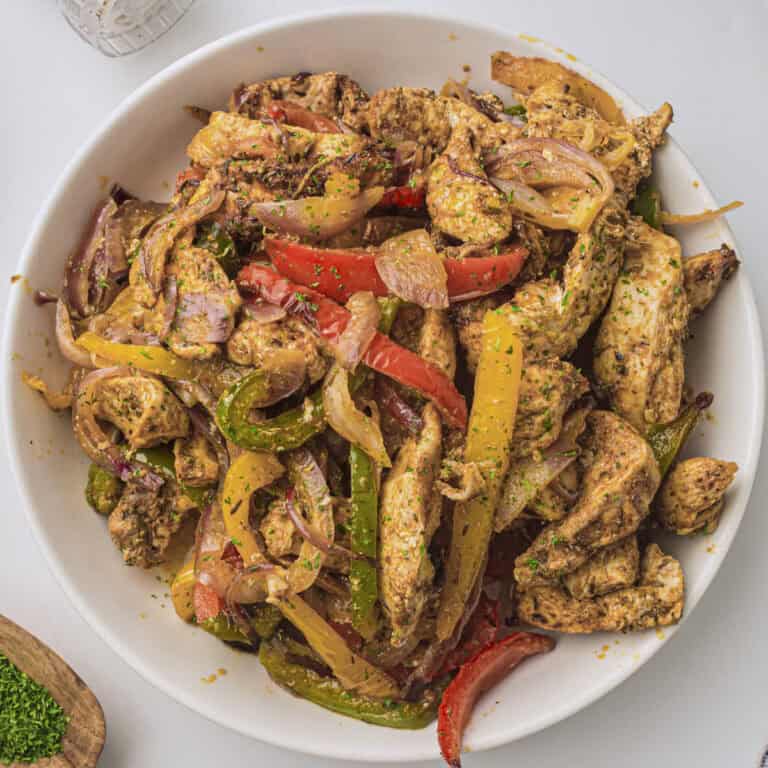
- Air fryer chicken fajitas to go with it
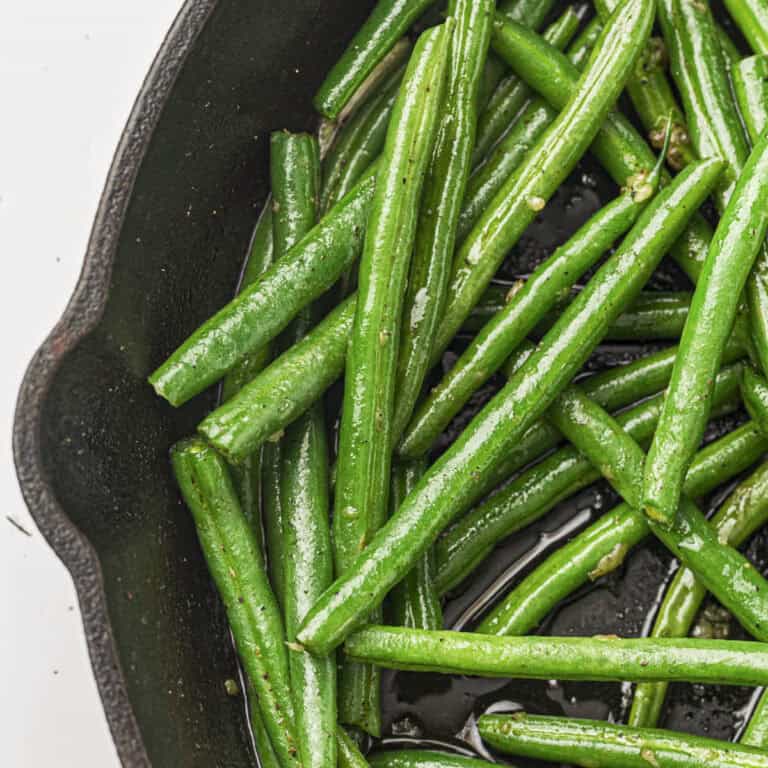
- Garlic butter green beans, low-carb veggies for a GLP-1 diet
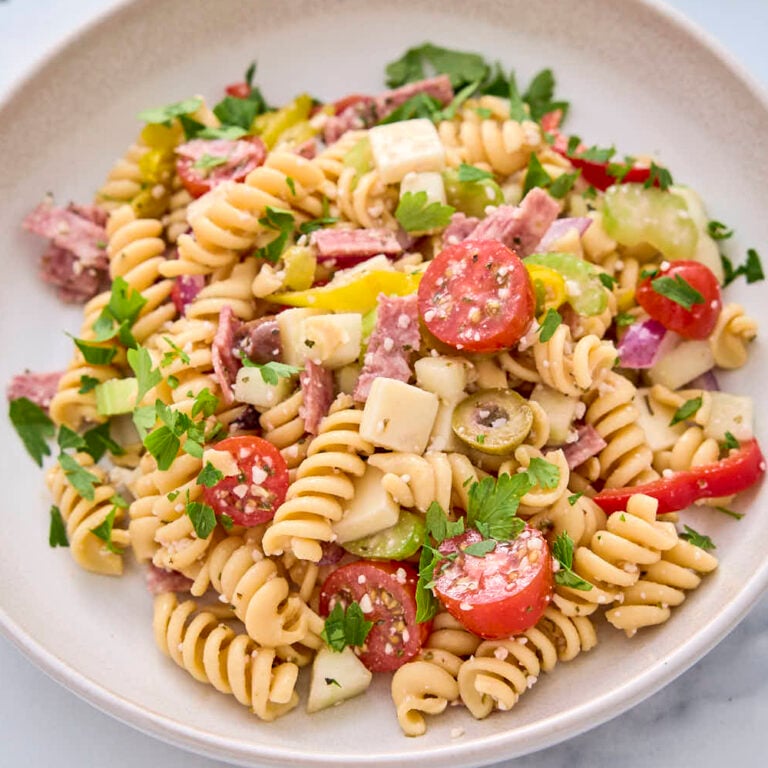
- The high protein pasta salad I eat on a low carb GLP-1 diet
What to Eat With It
A margarita on an empty stomach is a worse idea now than it was before you started your medication. Anchor it with protein.
- Chuckwagon chili with stew meat. This is the pairing. Big beef chili, lime, and a salted rim is a genuinely great combination, and a bowl of it gives you the protein and the stomach ballast that make the drink behave.
- No-cook GLP-1 recipes. If you are pouring drinks and not cooking, there are several things in here you can put on a board in five minutes.
- Simple additions: guacamole with sliced cucumber and jicama instead of chips. Shrimp with lime and chili. Queso fresco with cherry tomatoes. Carnitas in lettuce cups.
The rule I use: protein before the drink, not after. The same logic as why I put 30 grams of protein at breakfast, applied to a Friday night.
Final Thoughts
Your drinks shouldn’t be loaded with sugar. Sour mix is in there because it’s cheap and it covers for bad tequila, not because a margarita needs it. Your metabolism and your gut deserve a low carb margarita built out of real ingredients.
That’s the whole job around here. I take something I don’t want to give up, find where the sugar and the processed filler got in, and rebuild it with ingredients I can name. The test isn’t whether it comes out low carb. It’s whether I’d still want it if I weren’t counting anything.
A GLP-1 shouldn’t cost you a year of dry chicken and steamed broccoli while everybody around you eats. You can have the margarita. You can have the dessert, the fried thing, the Friday night that doesn’t revolve around what you’re not having. It takes recipes built by somebody who cared about the food as much as the numbers.
New ones go up every week. Subscribe and I’ll send them to you — the Paloma recipe is next.
Frequently Asked Questions
Some sugar-free mixes exist, but most are built on sucralose and citric acid and taste like it, and several “light” mixes still carry 10 or more grams of sugar per serving. Two limes and a bottle of extract cost less and taste better.
Yes. Distilled spirits contain no carbohydrate, because fermentation converts the sugars to alcohol and distillation carries over no sugar. That is true of both 100% agave tequila and mixto. The carbs in a margarita come from the mixers, not the tequila.
Orange bitters, two to three dashes. Triple sec is built on bitter orange peel, and bitters reconstruct that better than anything else at zero carbs. Half an ounce of fresh orange juice also works and adds about 1.5 grams. Orange extract is the most widely available option, but use only a quarter teaspoon or it reads artificial.
Yes. Mix the tequila, lime juice, orange extract, and sweetener, cover, and refrigerate up to 24 hours. Or use this recipe for your frozen drink machine.
Low Carb Margarita: Keto Margarita Recipe With 2g Net Carbs
Ingredients
- 1.5 oz tequila blanco additive free
- 1 oz fresh squeezed lime juice
- 2 dashes orange bitters
- ½ tsp allulose
Instructions
- Rim the glass. Run a lime wedge around the outside edge of a rocks glass. Pour coarse salt onto a small plate and roll the outer rim through it. Rim the outside only, so the salt does not fall into the drink and take over.
- Fill the glass with ice. Do it now, so the glass is cold when the drink hits it.
- Build in the shaker. Add tequila, fresh lime juice, orange bitters, and sweetener to a cocktail shaker.
- Add ice and shake hard for 15 seconds. Hard, not polite. You are chilling, aerating, and adding a bit of water by dilution, and that dilution is part of the recipe, not a flaw. It is also why a properly shaken drink goes down slower.
- Strain over the fresh ice. Garnish with a lime wheel.
- Taste before you adjust. If it is too tart, add sweetener a quarter teaspoon at a time. If it is flat, it needs more lime, not more sweetener.