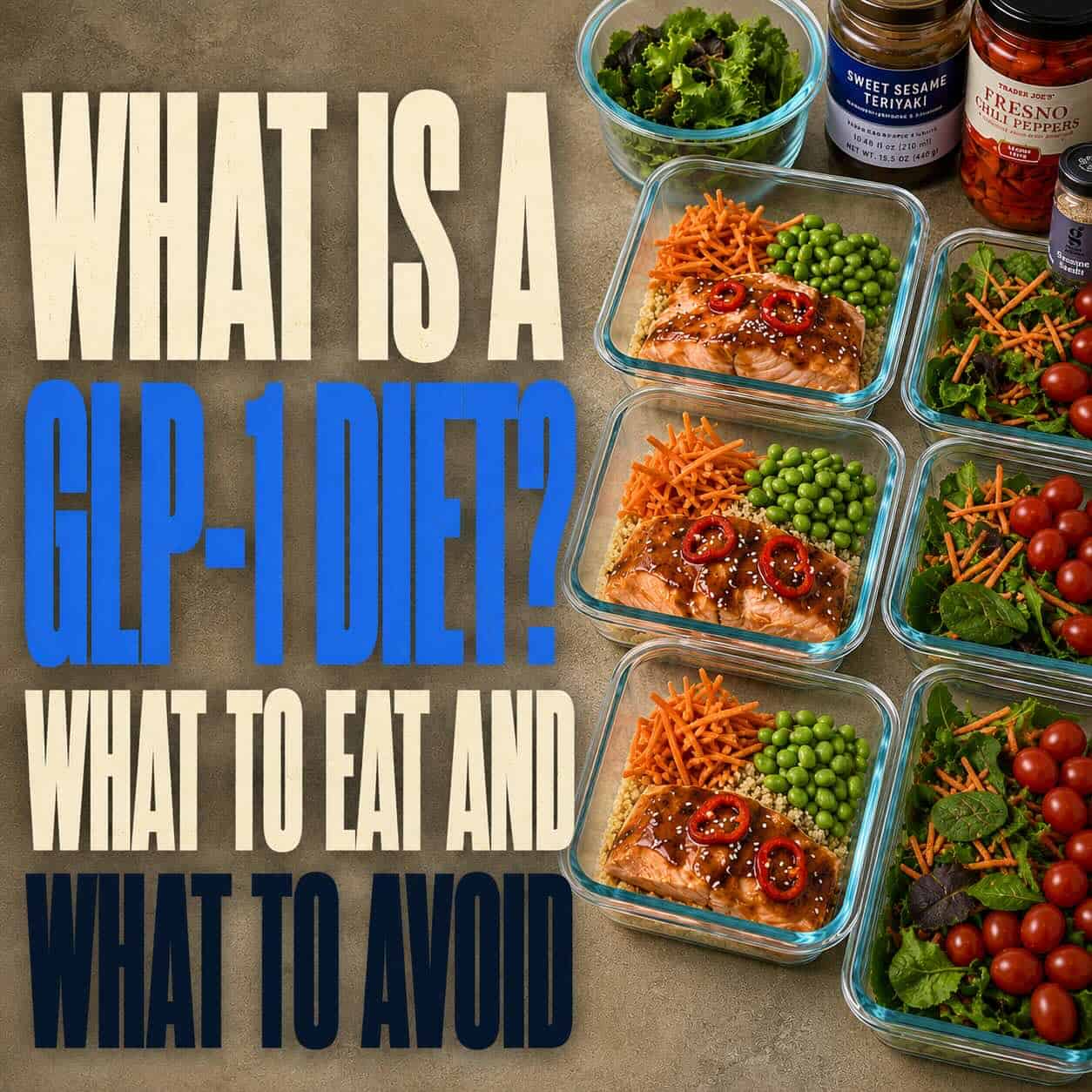
What Is a GLP-1 Diet? Foods, Protein, and What to Avoid
What to eat on a GLP-1 diet, what to limit, and how much protein you need — from someone who lost over 100 lbs on one.
Table of contents
- What Is a GLP-1 Support Diet?
- Why Protein Matters More Than Anything Else
- Fiber, Digestion, and the Constipation Nobody Mentions
- What to Limit on a GLP-1 Diet
- Why I Avoid Seed Oils and Ultra-Processed Food
- Light Meals for Low-Appetite Days
- A Sample Day of Eating
- What Happens When You Stop
- How Lizard Bites Recipes Fit
- GLP-1 Diet Recipes To Try
- FAQ: GLP-1 Support Diet
GLP-1 medications changed the conversation around weight loss and metabolic health. By reducing appetite and slowing digestion, they make it easier to eat less. But that same appetite suppression creates a problem nobody warns you about: when you’re only eating half of what you used to, the half you do eat has to work twice as hard.
That’s what a GLP-1 support diet is for. It isn’t about eating less — the medication already handles that. It’s about making sure the smaller amount you eat still covers what your body needs.
I lost over 100 pounds on GLP-1 medications after a heart attack at 48. Most of what I know about eating this way I learned by getting it wrong first. If you want the full story, it’s in My GLP-1 Journey.
A note before we start: I’m not a doctor or a dietitian. This is what the research says and what worked for me. Your prescriber knows your situation and I don’t — take anything here to them before you act on it.
What Is a GLP-1 Support Diet?
A GLP-1 support diet is a way of eating built around the specific side effects of GLP-1 medications like semaglutide (Ozempic, Wegovy) and tirzepatide (Mounjaro, Zepbound).
These drugs work two ways at once. They activate GLP-1 receptors in the brain to reduce hunger, and they slow the rate at which food leaves your stomach — what the Mayo Clinic describes as “delayed gastric emptying,” producing a prolonged sense of fullness.
Both effects are useful. Both change what you should be eating.
The core principles:
- Higher protein to protect muscle while you lose weight
- Adequate fiber to keep digestion moving when the medication slows it down
- Whole, minimally processed foods that are easier on a slower stomach
- Meals sized for a smaller appetite without sacrificing nutrition
When your appetite drops off a cliff, it’s easy to under-eat the things that matter without noticing. Fatigue, muscle loss, and digestive misery are the usual results. Structuring meals around nutrient-dense food is how you avoid that.
A GLP-1 support diet is less about restriction than about making every bite count.
Why Protein Matters More Than Anything Else
If you take one thing from this post, take this: get your protein in.

During any weight loss, your body breaks down some muscle alongside fat. GLP-1 medications often produce fast weight loss, which makes protecting lean mass a real priority rather than a nice-to-have.
Here’s the honest version of the science, though, because there’s a lot of alarmism about this. Researchers at Massachusetts General have pointed out that the data does not show GLP-1 medications cause a uniquely high level of lean body mass loss compared with other weight loss approaches. Muscle loss during weight loss isn’t a GLP-1 problem — it’s a weight loss problem. What’s different is the speed.
What their clinicians say helps most: a higher-protein diet combined with consistent exercise, and specifically that patients who train from the start of treatment have the best odds of holding onto lean mass.
Protein does four jobs here:
- Preserves muscle while you’re losing
- Supports metabolism and energy
- Makes smaller meals actually satisfying
- Helps stabilize blood sugar
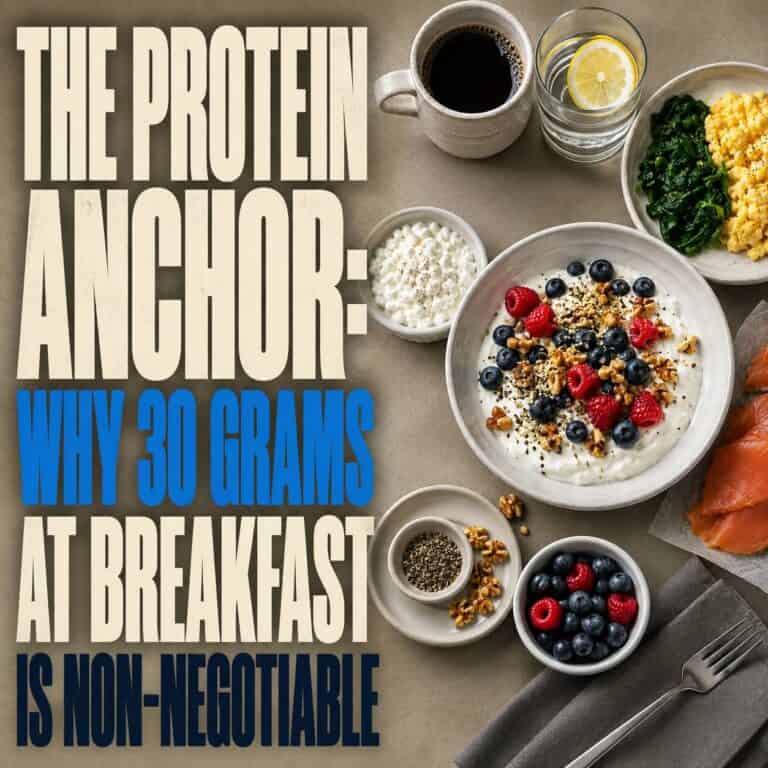
Most people do well aiming for 25–35 grams of protein per meal, which is harder than it sounds when you’re not hungry. Front-loading it helps — I wrote about why in The Protein Anchor: Why 30g at Breakfast Is Non-Negotiable.
Protein-dense foods that don’t require a big portion:
- Eggs
- Greek yogurt or cottage cheese
- Tofu or tempeh
- Lean meat, chicken, fish
- Protein smoothies
On days when a plate of food is more than you can face, a blended meal will get protein into you when chewing won’t.
Don’t skip the resistance training
Diet alone won’t hold your muscle. This is the part of the advice people skip because it isn’t about food, and it’s the part that matters most. Two or three short strength sessions a week — bodyweight counts — does more to protect lean mass than any dietary tweak. I know that’s not what a food blog is supposed to tell you. It’s still true.
Fiber, Digestion, and the Constipation Nobody Mentions
GLP-1 medications slow digestion. That’s a feature — it’s part of how they reduce hunger. It’s also why constipation is one of the most common complaints on these drugs.
Fiber is the counterweight.
Fiber helps:
- Keep things moving when motility slows
- Reduce constipation
- Extend fullness between meals
- Support blood sugar stability
Good sources:
- Vegetables — zucchini, spinach, broccoli
- Beans and lentils
- Chia and flaxseed
- Oats and whole grains
- Berries and fruit
Two practical notes. Spread fiber across the day instead of loading it into one meal — a slower stomach handles a steady drip better than a dump. And ramp up gradually. Going from very little fiber to a lot of it overnight, on a medication that already slows your gut, is a bad afternoon waiting to happen.
Water matters as much as fiber here. Fiber without adequate fluid makes constipation worse, not better. Appetite suppression tends to blunt thirst cues too, so you can end up under-drinking without noticing. If you’re increasing fiber, increase water alongside it.
I went looking for a shortcut on the constipation front and reviewed a probiotic yogurt that gets recommended constantly in GLP-1 forums — that’s in Coconut Cult Yogurt Review for GLP-1 Constipation and a follow-up.
What to Limit on a GLP-1 Diet
Most GLP-1 diet advice tells you what to eat. Here’s the other half.
Fried and very greasy food. Fat slows gastric emptying further. On a medication already doing that, a heavy fried meal can sit in your stomach for hours and make you genuinely ill. This was the single biggest change for me — once I stopped ordering fried, most of my nausea stopped too.
Large portions. Not a moral point, a mechanical one. Your stomach empties slower now. The portion that felt normal six months ago will make you miserable.
Refined carbs and hidden sugars. These spike blood sugar, do nothing for satiety, and displace food that would have fed you. The hidden ones are the problem — sugar shows up in bread, sauces, dressings, and things marketed as health food. I broke that down in How Food Giants Are Using Hidden Sugar in Foods and Low Glycemic Index Diet: What Hidden Sugars Mean for Your Results.
Alcohol. It hits harder on a smaller stomach and less food, it’s empty calories, and for many people it stalls progress. I didn’t cut it entirely — I wrote about what actually works if you’re going to drink.
Carbonated drinks, if bloating is a problem for you. Gas plus delayed emptying is an unpleasant combination.
Note what isn’t on this list: carbs. You don’t need to cut them, and cutting them is usually a mistake. That’s a long enough subject to have its own post — What You Need to Know About Carbs on a GLP-1 Diet covers how many to eat and which ones to choose. And if you’ve ever wondered why you couldn’t stop eating them in the first place, that’s not a willpower problem.
Why I Avoid Seed Oils and Ultra-Processed Food
This is where my approach gets more opinionated than standard GLP-1 advice, and I’ll flag that clearly: the evidence on seed oils specifically is contested, and plenty of qualified people disagree with me.
What isn’t contested is that ultra-processed food is engineered to be over-eaten, and that most industrial seed oil in the American diet arrives inside ultra-processed products. Cutting one largely means cutting the other.
My cooking uses:
- Olive oil
- Avocado oil — though check what’s actually in the bottle, because adulteration in that category is rampant
- Whole vegetables and fruit
- Real protein
- Herbs and spices for flavor
The practical argument is simpler than the biochemical one. When you’re eating half as much food, ingredient quality stops being a philosophical question. Every ingredient is carrying twice the load.
I go deeper on the mechanism in Metabolic Resistance and the GLP-1 Diet.
Light Meals for Low-Appetite Days
Some days your appetite is simply gone. Other days nausea makes anything solid unappealing. You still need to eat something, and “I’ll just skip it” compounds fast.
Have two or three fallbacks ready before you need them.
Smoothies
The easiest way to get protein, fiber, and fluid into a form you can drink.
A balanced one:
- Greek yogurt or protein powder
- Frozen berries
- Oats, chia, or flax
- Spinach or greens
- Milk of your choice
Soups
Warm, blended, easy to digest, and they carry protein and fiber without feeling heavy.
- Lentil and vegetable
- Roasted tomato and red pepper
- Chicken and vegetable
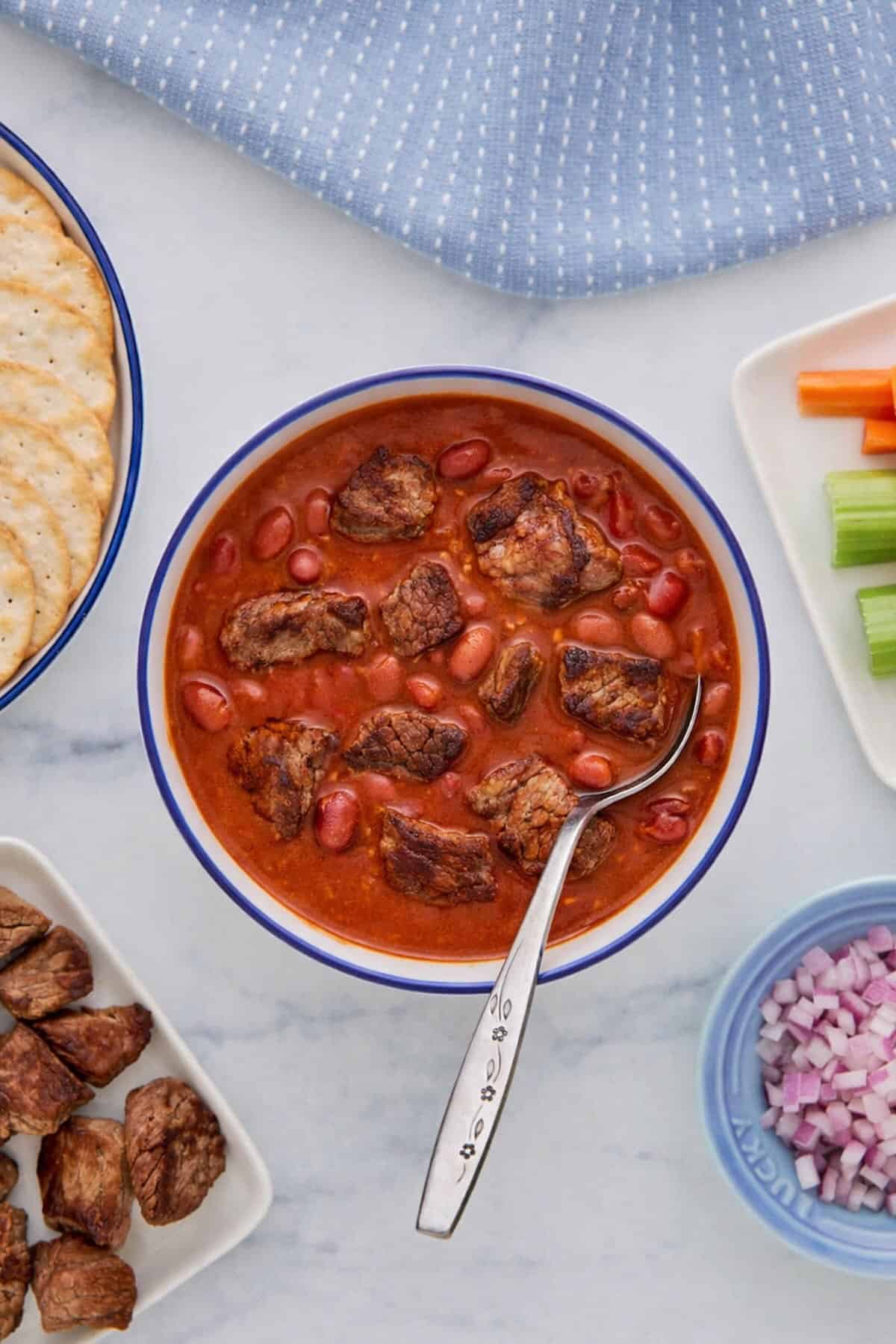
- Chuckwagon chili with stew meat — high protein, reheats well for meal prep
No-cook options
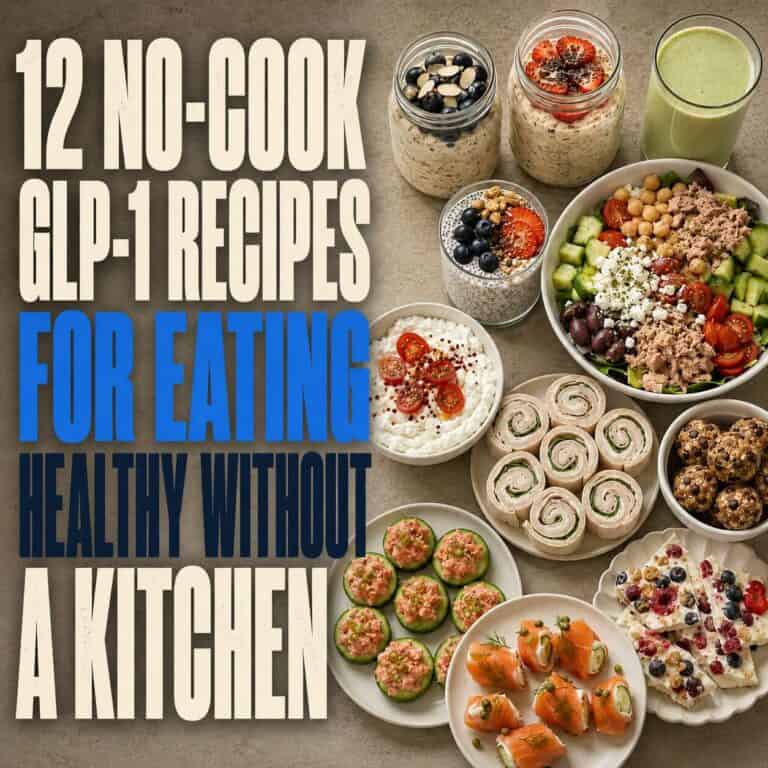
Some days it isn’t appetite, it’s energy. I put together 12 no-cook GLP-1 recipes for exactly that.
A Sample Day of Eating
Not a prescription — a shape.
Breakfast: Greek yogurt with berries, chia, and a spoon of nut butter. Around 30g protein, and it front-loads the day.
Lunch: Leftover protein over greens or a grain, dressed with olive oil and lemon. Cherry tomato feta orzo works well cold.
Snack, if you want one: Cottage cheese, a hard-boiled egg, or a handful of nuts. Protein-anchored, not carb-anchored.
Dinner: A palm of protein, half a plate of vegetables, a fist of a whole-food carb. French onion quinoa is a good side that isn’t a boxed rice mix.
Throughout: Water. More than you think.
The structure is the point: protein + fiber + whole food, at every meal, in whatever portion you can manage today.
What Happens When You Stop
Worth knowing before you start, because almost nobody brings it up.
GLP-1 medications work while you take them. Appetite suppression is not a permanent change to your body — the research on discontinuation consistently shows substantial weight regain after stopping, and a large trial extension of semaglutide found participants regained a majority of what they’d lost within a year of withdrawal.
I came off my medication for two months during my own weight loss. It was rough, and it taught me the thing this entire site is built on: the medication buys you the quiet to build eating habits, but it doesn’t build them for you. If the only thing that changes is the drug, the only thing you keep is the drug.
That’s the actual case for a GLP-1 support diet. Not that it accelerates the loss — the medication is doing that — but that it’s the part that’s still there afterward.
How Lizard Bites Recipes Fit
Every recipe here is built on the same principles: protein and fiber first, no seed oils, no hidden sugars, nothing processed, and light options for the days your stomach isn’t cooperating.
I cook these in my own kitchen and eat them on a GLP-1 schedule with a stomach considerably less forgiving than it used to be. If a recipe doesn’t survive that test, it doesn’t go up.
Browse them all in the recipe index, or start with what a 100-pound loss actually looked like.
GLP-1 Diet Recipes To Try
- Keto pot roast
- Keto beef stew
- Grilled pork tenderloin
- Baked lemon chicken breasts
- Air fryer chicken fajitas
- Lentil soup for a GLP-1 diet
- Garlic butter green beans
- High protein pasta salad
- Slow cooker chicken stock
- Low carb margarita
FAQ: GLP-1 Support Diet
High-protein foods, fiber-rich vegetables, beans, whole grains, and nutrient-dense whole foods. Smoothies, soups, eggs, yogurt, tofu, and lean proteins come up constantly because they deliver real nutrition in small portions.
It preserves muscle during weight loss, supports metabolism, and makes smaller meals satisfying. Most people target 25–35g per meal. Pair it with resistance training — diet alone won’t hold your muscle.
Yes. Nausea, slowed digestion, and constipation are common. Smaller meals, adequate fiber introduced gradually, plenty of water, and easy-to-digest foods like soups and smoothies all help. Persistent or severe symptoms are a conversation with your prescriber, not something to push through.
There’s no single required diet. Most people do well emphasizing protein, fiber, whole foods, and balanced meals — maximizing nutrition while appetite is reduced.
No. Carb quality matters far more than carb quantity. Full breakdown here.
More than you did before. Appetite suppression blunts thirst cues, and increasing fiber without increasing fluid makes constipation worse.
The research says most people regain a substantial portion. The habits you build while on the medication are what determine how much.