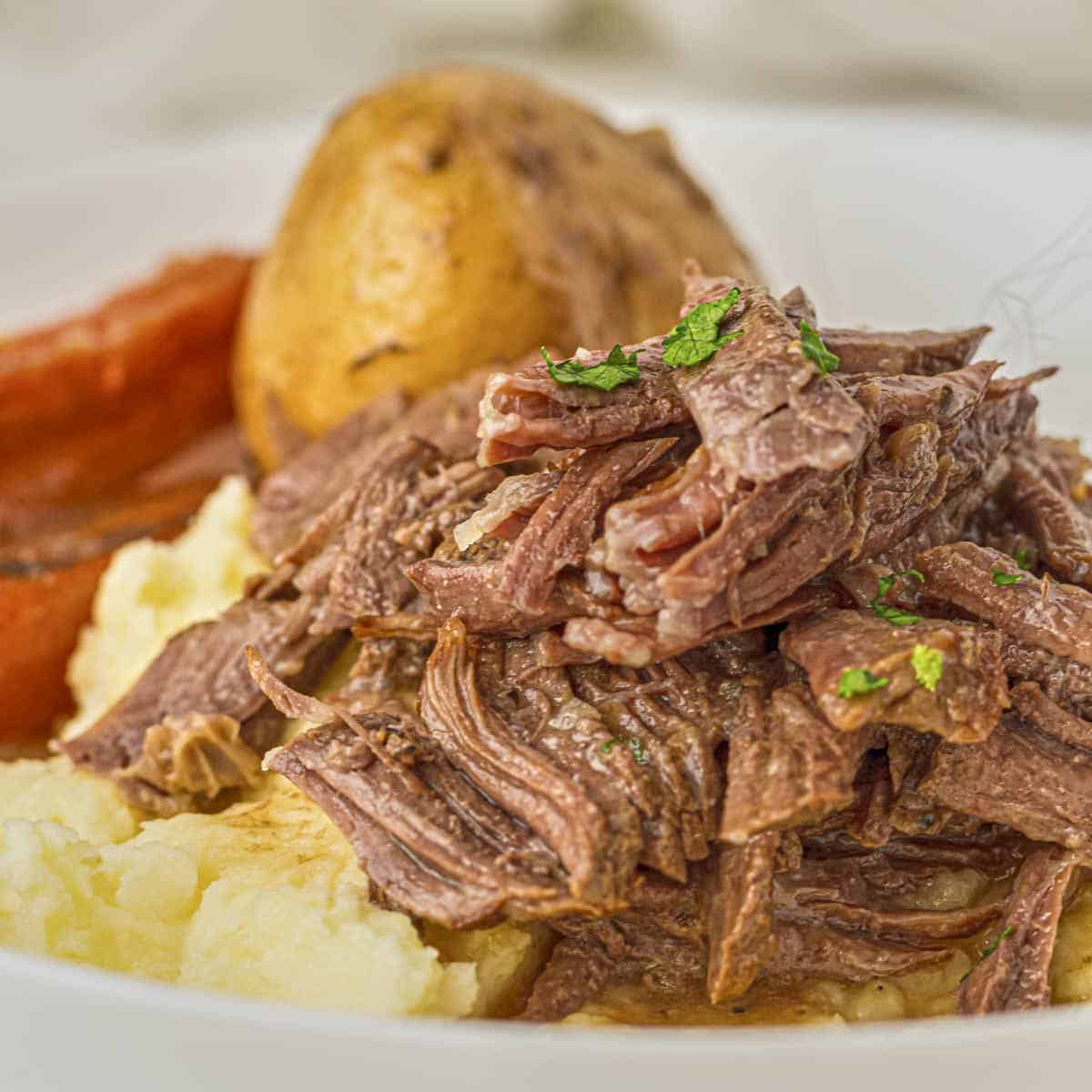
Keto Pot Roast: No Potatoes, No Flavor Packet, No Problem
Keto pot roast, slow braised with a homemade seasoning in place of the packet. Built for a GLP-1 diet; no potatoes, no flour in the gravy.
Table of contents
- Why This Keto Pot Roast Works on a GLP-1 Diet
- Is Pot Roast Keto?
- What to Use Instead of Potatoes in Pot Roast
- Skip the Packet: What Is Actually in Onion Soup Mix
- Sear It Properly, and Give It the Time It Needs
- Make the Gravy From the Drippings, Not From Flour
- Ingredients – Keto Pot Roast
- How to Make Keto Pot Roast
- Variations
- Can You Eat Pot Roast on a GLP-1 Diet?
- More High-Protein Recipes and GLP-1 Reading
- Final Thoughts
- Frequently Asked Questions
Keto pot roast sounds like a contradiction until you look at what is actually in the pot. Beef and a long braise are already low carb. The carbs ride in on the potatoes. The sugar and modified starch ride in on the seasoning packet. My recipe cuts both loose.
The potatoes are the obvious number. Five medium ones turn a pot of beef and gravy into more than 20 grams of net carbohydrate per bowl. That number is easy to check, and I went through the arithmetic in what you need to know about carbs.
The packet takes more reading. Onion soup mix is dehydrated onion, salt, cornstarch, sugar, maltodextrin, MSG, and caramel color. That is a lot of factory for something that is mostly onion and salt. Homemade pot roast seasoning takes two minutes to mix. It tastes like food. The carb count gets all the attention on a GLP-1 diet. The ingredient panel has earned the same look.
Three hours at 325°F in a covered pot. Ten minutes of that is actual work. I wrote up why I cook this way in my GLP-1 journey.
Why This Keto Pot Roast Works on a GLP-1 Diet
- Around 9g net carbs a serving – no potatoes, no packet, no flour
- 38 grams of protein per serving – a three pound roast across six plates
- Homemade seasoning blend – no MSG, maltodextrin, sugar, or caramel color
- Real root vegetables – turnips and/or rutabaga, not a plate of meat and nothing else
- Ten minutes of actual work – sear, cover, and leave it alone
- Better on day two – four days refrigerated, three months frozen
Is Pot Roast Keto?
Not as it usually comes. Because of the potatoes and the packet, a standard plate runs past 20 grams of net carbohydrate. Therefore dinner takes most of a keto day.
Still, the fix is not complicated. Chuck roast is meat and fat, while the braising liquid is stock. Since neither carries carbohydrate, everything you count on that plate comes from the vegetables.
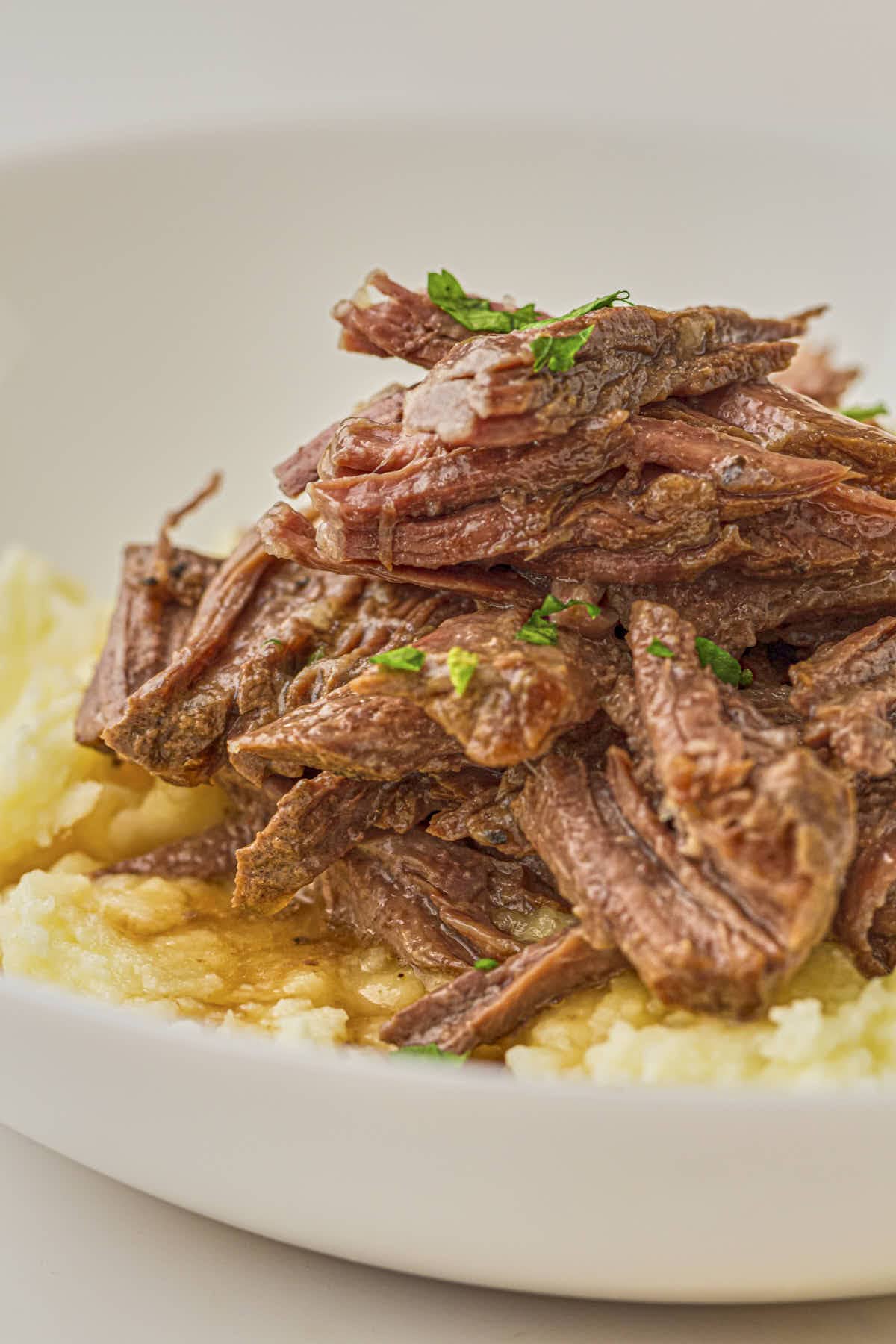
Overall, this version lands near 9 grams a serving with turnip, rutabaga, cabbage, mushrooms, and onion in the pot. However, cutting the roots to two cups total drops it closer to 7. Otherwise, leave them out the way many keto recipes do, and it lands near 6.
Instead, I put them in. A pot roast with no fork vegetable is just a roast. After all, the appeal of this dish is that everything cooks together and tastes like the same thing.
What to Use Instead of Potatoes in Pot Roast
Unlike 25 minutes under pressure, three hours of low heat asks something different from a vegetable. So cut size matters more here than density does. Since everything below goes in for the last hour, one inch chunks are right for all of it.
Turnip, about 6 grams net a cup. Because an hour in the pot cooks it through, it still holds on a fork. Also, it carries a faint pepperiness that suits beef.
Rutabaga, about 9 grams net a cup. In fact, it comes closest to the potato flavor people miss. Still, use it for half the volume rather than all of it. Peel it deep, since the waxy coating runs further down than it looks.
Potato, by comparison, runs about 24 grams net a cup.
Cabbage and mushrooms go in alongside these. For example, half a head in thick wedges runs about 3 grams a cup. Moreover, eight ounces of cremini adds about 2 grams and brings the meaty depth a packet fakes with MSG.
Cauliflower mash does the job potatoes used to. A head steamed and blended with butter and salt runs about 3 grams a cup. So make the mash while the roast rests.
Skip the Packet: What Is Actually in Onion Soup Mix
Read one. A standard packet runs dehydrated onion, salt, cornstarch, sugar, maltodextrin, monosodium glutamate, and caramel color. In addition, a pair of disodium salts makes the MSG land harder. Altogether, two of those are sweeteners, one is a thickener, and one is food coloring. Meanwhile, the actual seasoning is onion and salt.
The carb cost is small, but the habit is the problem. A packet across six servings adds a gram or two. Rather, what it teaches is that a pot roast needs a manufactured product to taste like anything. Likewise, the sauce aisle teaches the same lesson. In fact, that whole category of quiet additions is what I mapped in hidden sugar in foods.
What replaces it. First, garlic powder and onion powder. Then celery seed and ground mustard cover the savory depth the MSG was faking. Finally, a spoon of tomato paste and a splash of soy sauce does the rest. Moreover, a properly seared roast makes its own color.
Sear It Properly, and Give It the Time It Needs
Four to five minutes a side, in a hot Dutch oven, until every surface is genuinely brown. This is the step people rush, and it decides whether the finished dish tastes like pot roast or like boiled beef.
Pat the roast dry and salt it early. A wet surface boils off its water before it browns, and the meat toughens while it waits. A three pound roast takes more salt than feels right.
Get the pot hot and use enough oil to cover the bottom. If the oil is not shimmering, the roast is not searing.
Put it down and leave it. Lift a corner at four minutes to check. Moving it around the pot cools the contact surface and no crust ever forms.
Give it the time. Chuck runs backwards from steak. It is tough at ninety minutes and tender at three hours, and the way out of a tough roast is always more heat and more time. A two and a half pound roast can be ready at two and a half hours. A three pound roast usually wants the full three. If a fork meets resistance, it is not done.
Make the Gravy From the Drippings, Not From Flour
A pot roast produces two to three cups of braising liquid, and it is already most of the way to gravy. Traditional recipes thicken it with a flour roux or a cornstarch slurry, and both are pure starch.
Strain the liquid into a pan and boil it hard for five to ten minutes. It reduces, concentrates, and takes on body from the gelatin the chuck released.
For more than that, bloom a tablespoon of powdered beef gelatin in cold water and stir it in off the boil. Collagen peptides will not work. They are hydrolyzed and they thicken nothing.
Ingredients – Keto Pot Roast
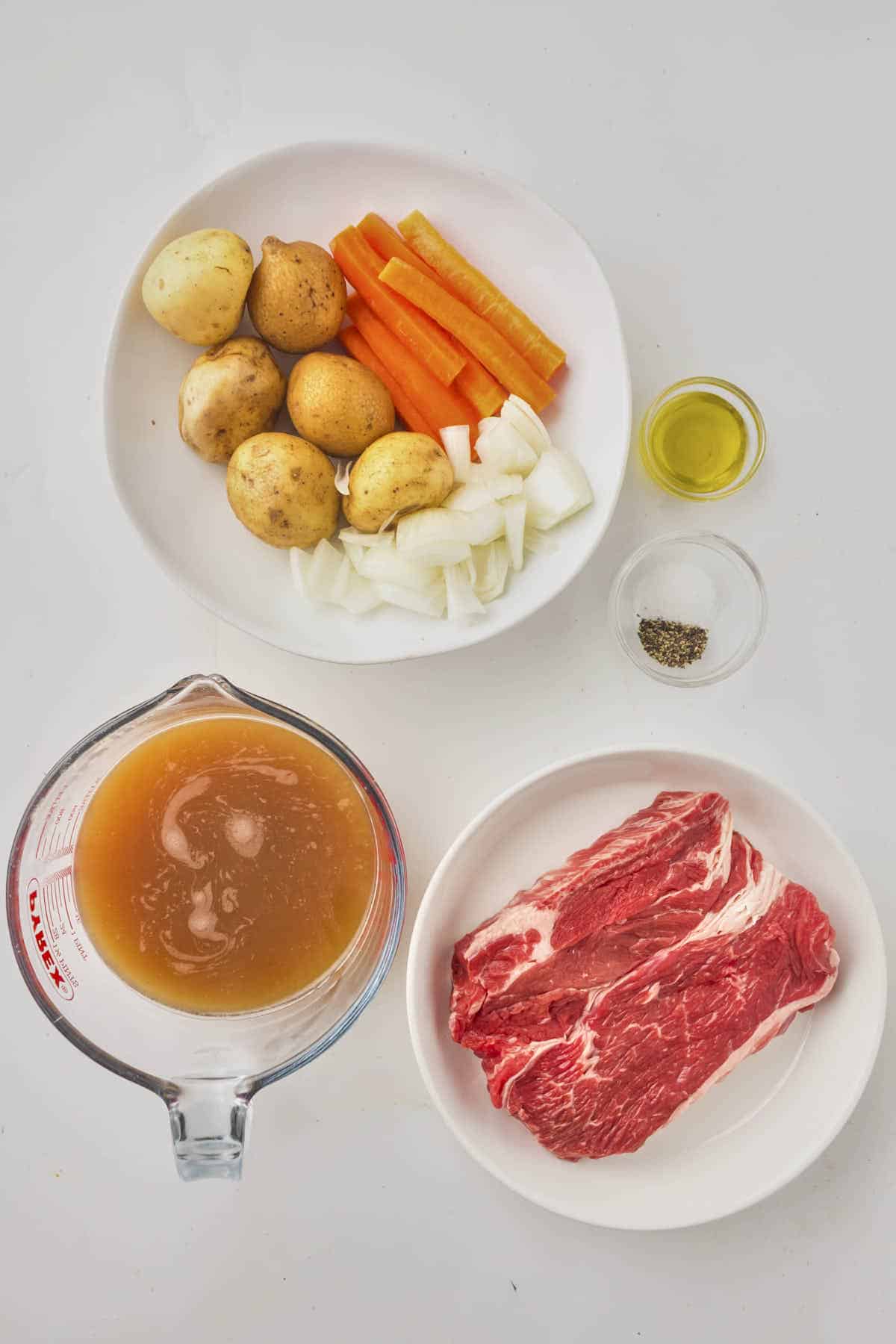
Pot roast seasoning:
- 1 tbsp onion powder
- 1 tbsp garlic powder
- 1 tsp salt
- 1 tsp black pepper
- 1 tsp dried thyme
- 1 tsp dried oregano
- 1 tsp smoked paprika
- 1/2 tsp celery seed
- 1/2 tsp ground mustard
Roast:
- 2 1/2 beef chuck roast
- 1 tbsp olive oil
For the pot:
- 1 large onion, cut into thick wedges
- 4 cloves garlic, smashed
- 2 tbsp tomato paste
- 2 cups beef stock
- 2 tbsp dried onions
- 1 tbsp soy sauce or worcestershire
- 3 sprigs fresh thyme
- 1 sprig fresh rosemary
Added in the last hour (optional):
- 4 cups turnip, peeled and cut into 1-inch chunks
- or 2 cups turnip and 2 cups rutabaga, peeled and cut into 1-inch chunks
- 1/2 head green cabbage, cut into thick wedges with the core attached
- 8 oz white or brown mushrooms, halved
To finish (optional):
- 1 tbsp powdered beef gelatin, bloomed in 3 tbsp cold water
- Fresh parsley, chopped
Ingredient Notes
The chuck. Look for the word chuck on the label. Shoulder roast, blade roast, and 7-bone roast are the same thing. Pick the one with the most white seams running through it, since those seams turn into gelatin and become the gravy. Bottom round will be dry after three hours no matter what you do to it. Two and a half to three pounds feeds six and fits a standard Dutch oven without crowding, which matters for the sear.
The rutabaga and turnip. Cut both into one inch chunks. Buy rutabaga firm and heavy, turnips small or medium sized. Large turnips go woody in the middle and turn bitter. Four cups sounds like a lot next to four potatoes. It is roughly the same volume in the bowl at a third of the carbohydrate.
The seasoning blend. This makes about a quarter cup, the same volume as one packet.
The cabbage. Leave the core attached to each wedge. It holds the leaves together through an hour of braising. Cut it loose and you get boiled cabbage floating in the gravy.
The beef stock. Boxed beef broth often carries sugar, yeast extract, or “natural flavor” doing the work the beef should do. A short ingredient list is the one to buy. Homemade stock is better, and chicken stock works fine here once the tomato paste and the sear are in.
How to Make Keto Pot Roast
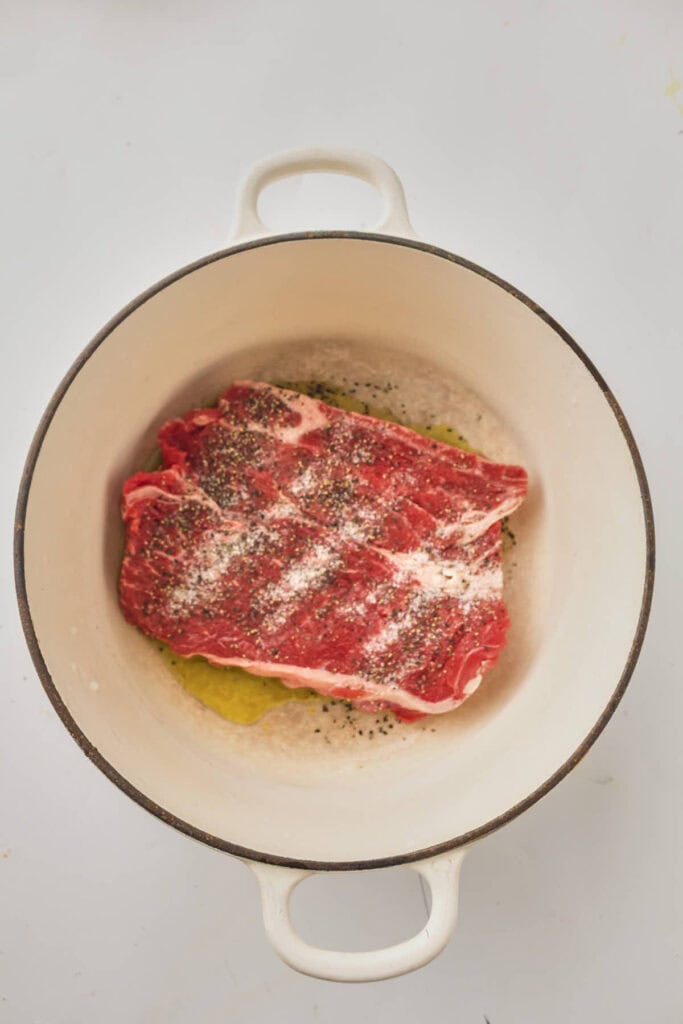
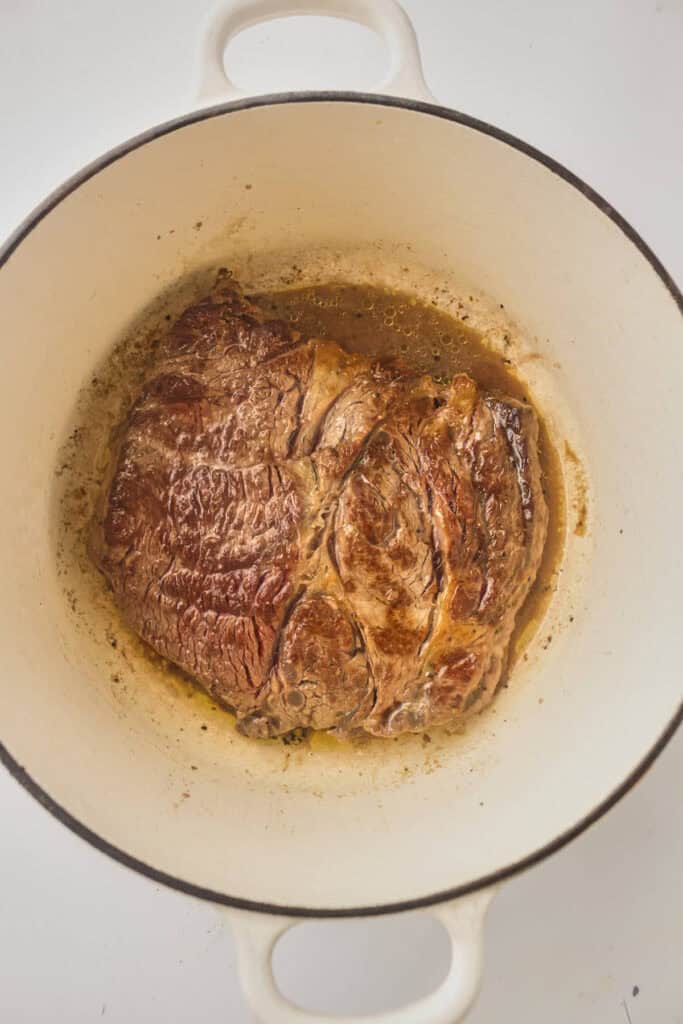
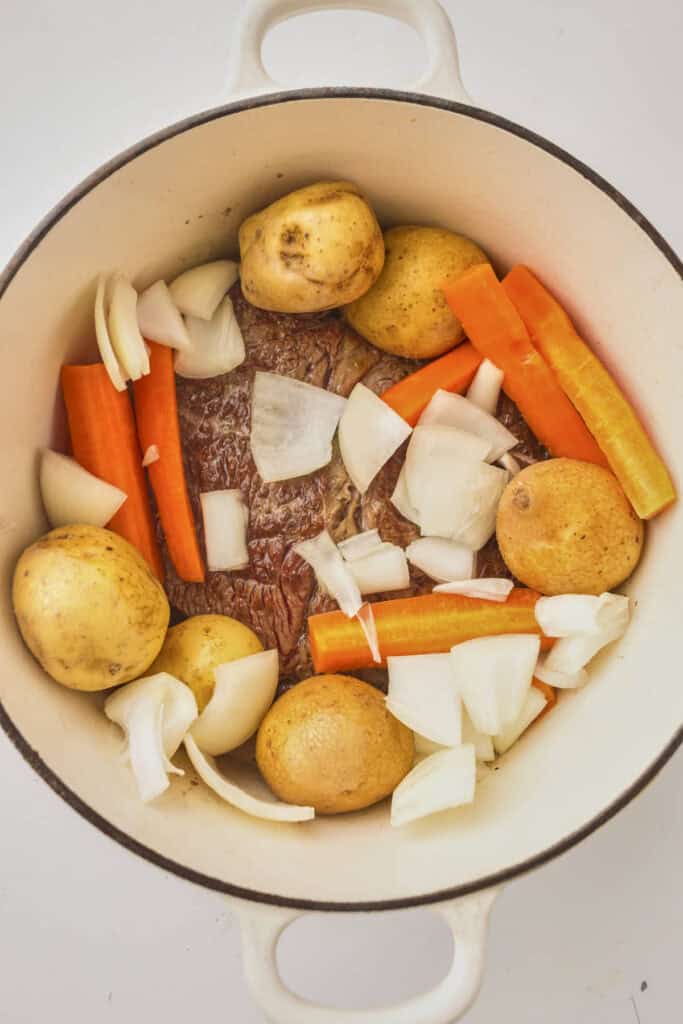
- Heat the oven to 325°F and mix the seasoning. Combine the seasoning ingredients in a small bowl.
- Pat the roast dry and coat it. Press the seasoning blend over every surface. Dry meat browns, wet meat steams, and the blend needs a dry surface to hold onto.
- Sear it in a hot Dutch oven, 4 to 5 minutes a side. Oil shimmering, roast down, hands off. Lift a corner to check before turning. Every brown surface here turns into flavor in the gravy.
- Take the roast out and cook the onion wedges 3 minutes. They pull up the browned bits stuck to the bottom.
- Stir in the tomato paste and garlic, cook 1 minute. Wait for the paste to darken. This minute does more for the gravy than anything else in the recipe.
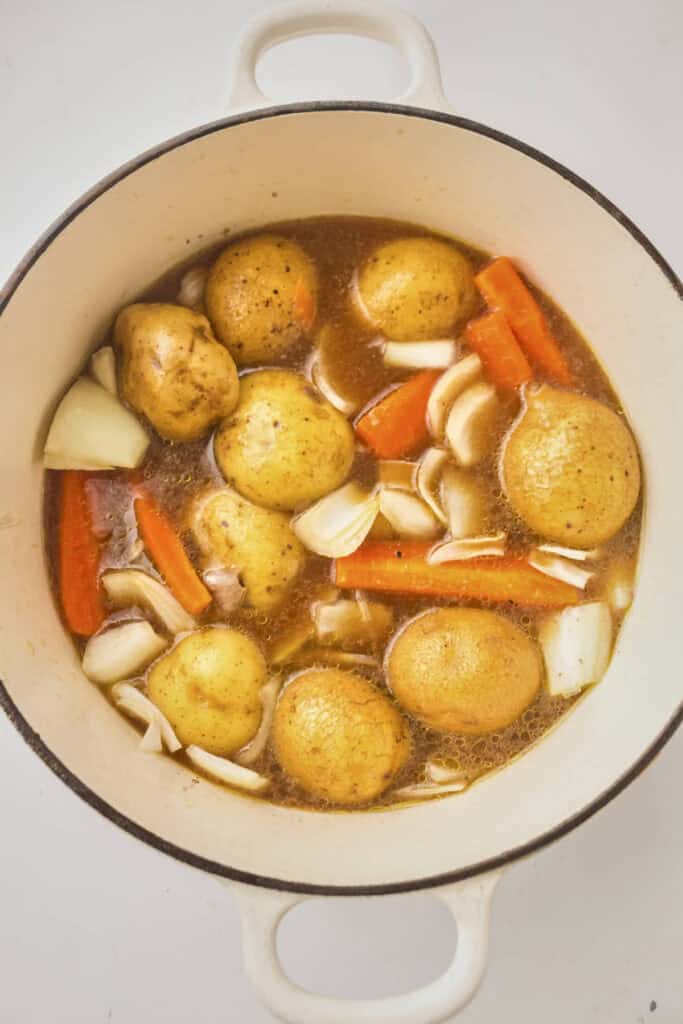
- Add the stock, soy sauce or worcestershire, and the rest of the seasoning blend. Scrape the bottom of the pot clean. Return the roast and tuck the thyme and rosemary alongside it.
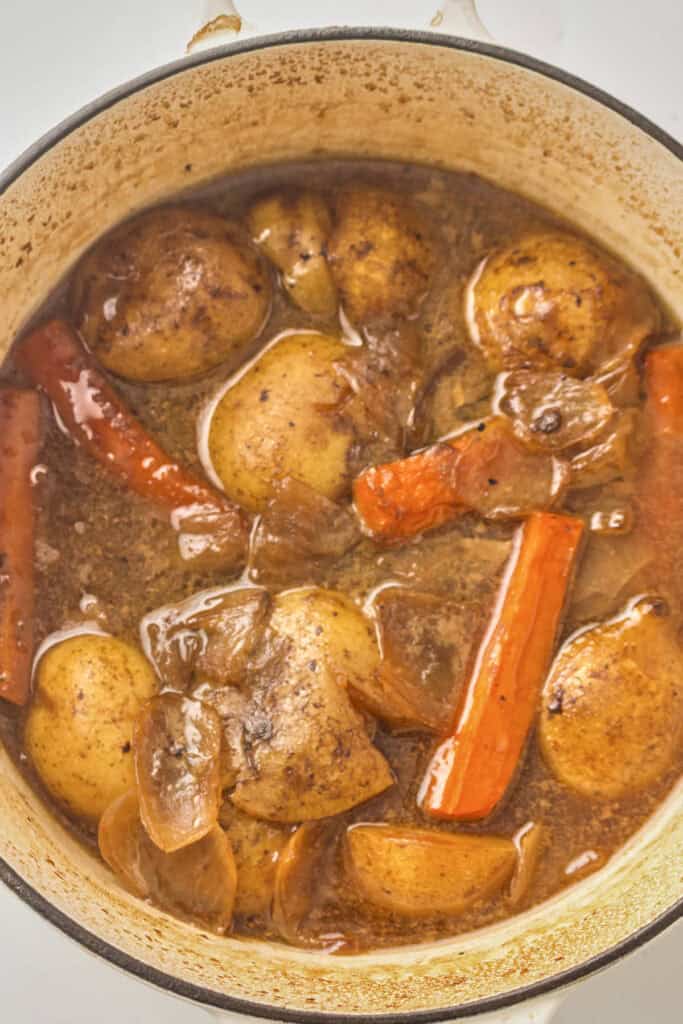
- Cover and braise 2 hours. The liquid should come partway up the roast, not cover it. A pot roast is a braise, not a boil.
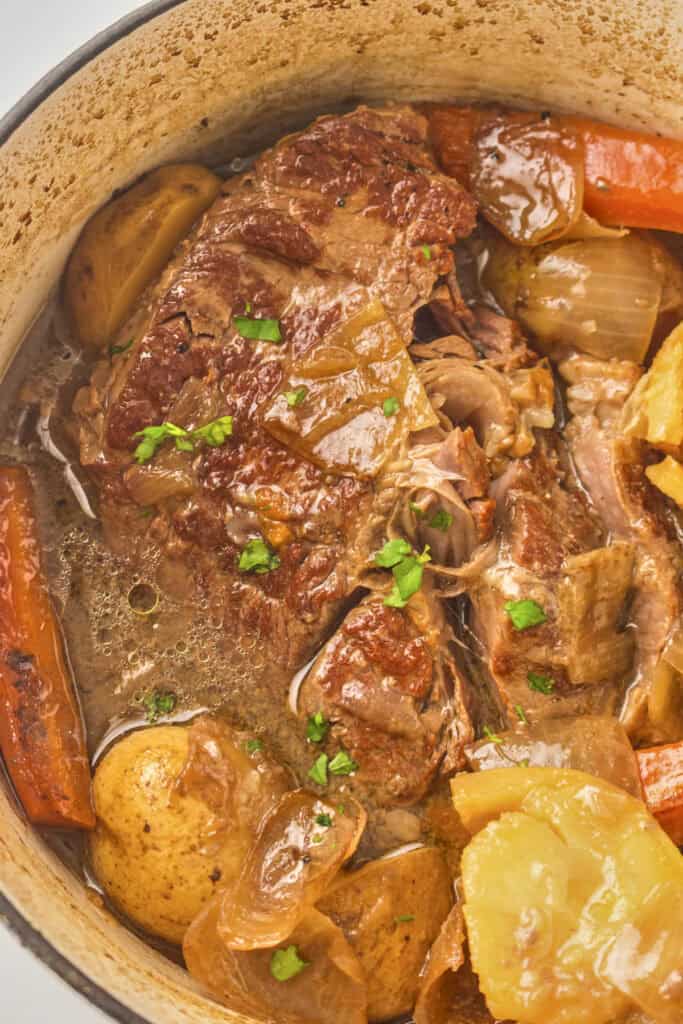
- Add the turnip, cabbage wedges, and mushrooms, cover, and braise 1 more hour. Three hours total. Tuck the turnip down into the liquid around the roast and set the cabbage wedges on top. Start checking a two and a half pound roast here. The roast is done when a fork twists out a piece with no resistance, and the turnip should give to a knife tip without falling apart.
- Reduce the liquid into gravy. Strain it into a pan, skim the fat, and boil hard 5 to 10 minutes. Stir in the bloomed gelatin off the heat for a thicker gravy.
- Pull the roast into large pieces and spoon the gravy over. Finish with parsley.
Variations
No roots at all. Cabbage, mushrooms, and onion only. Drops the plate to about 6 grams and it is the strictest build here. Serve it over cauliflower mash so there is something to catch the gravy.
Red wine. Deglaze with a half cup of dry red before the stock goes in, and cut the stock to a cup and a half.
Mississippi-style, from scratch. Skip both packets. Use the blend above plus a teaspoon of dried dill and a half teaspoon of buttermilk powder for the ranch note, then add six pepperoncini and a quarter cup of their brine with the stock. Four tablespoons of butter on top of the roast.
Horseradish finish. Two tablespoons of prepared horseradish stirred into the finished gravy. It cuts the fat and it suits beef.
Can You Eat Pot Roast on a GLP-1 Diet?
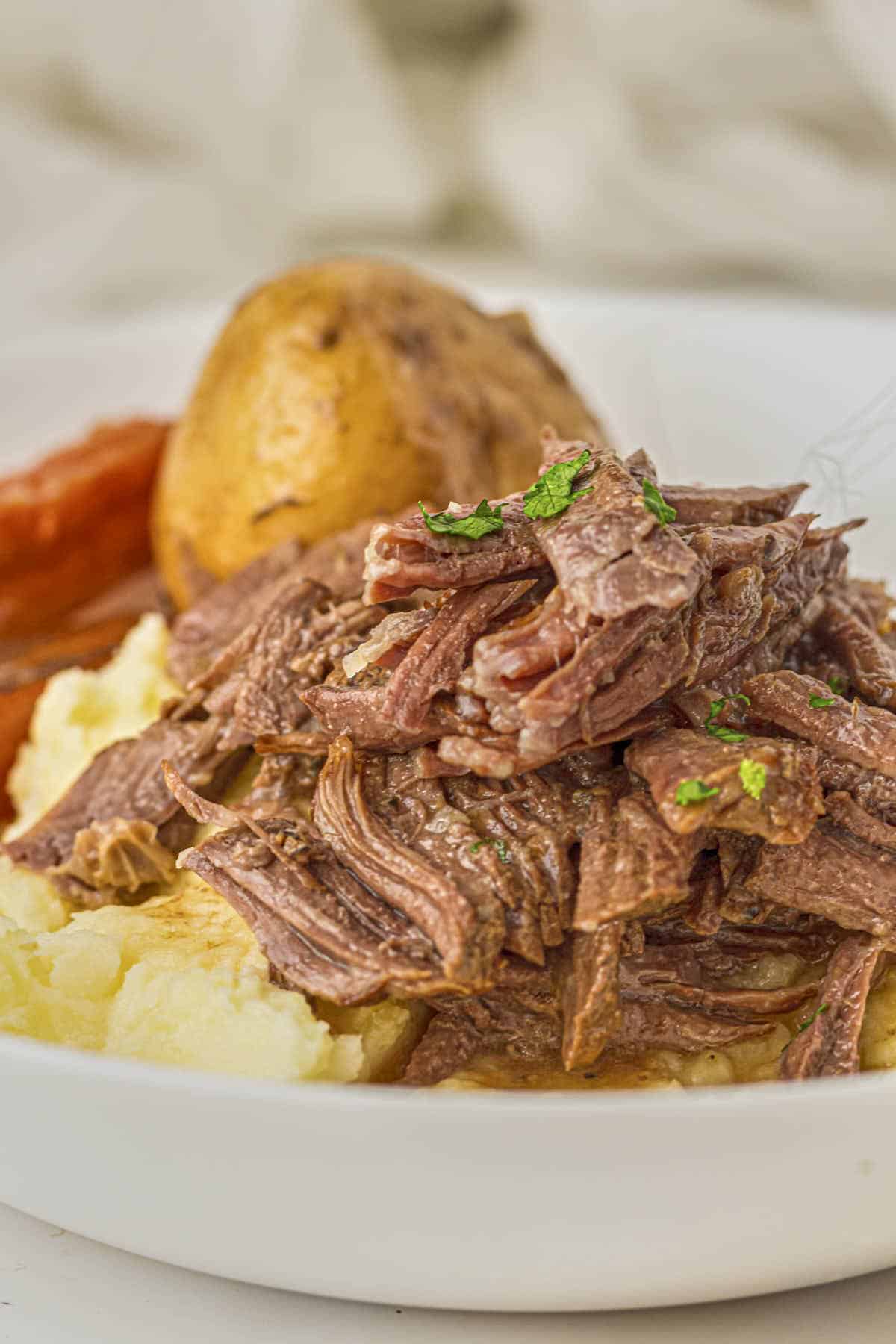
- Yes, and it is one of the easier dinners to build around. Braised chuck is soft and moist, which matters on a day when food is unappealing. Nothing here requires chewing through dry protein.
- The potatoes were the only real problem. Beef, rutabaga, turnip, cabbage, and mushrooms are all cheap on carbohydrate. The packet and the potatoes made this a heavy plate.
- Portion by your own appetite, not by the serving count. A three pound roast can run eight or nine meals on a reduced appetite. Store the leftovers in their gravy and they stay good all week.
Talk to your prescriber if you have questions about how a specific meal fits your treatment. They know your situation better than any recipe blog can.
More High-Protein Recipes and GLP-1 Reading
- Keto Beef Stew (Low-Carb, No Potato)
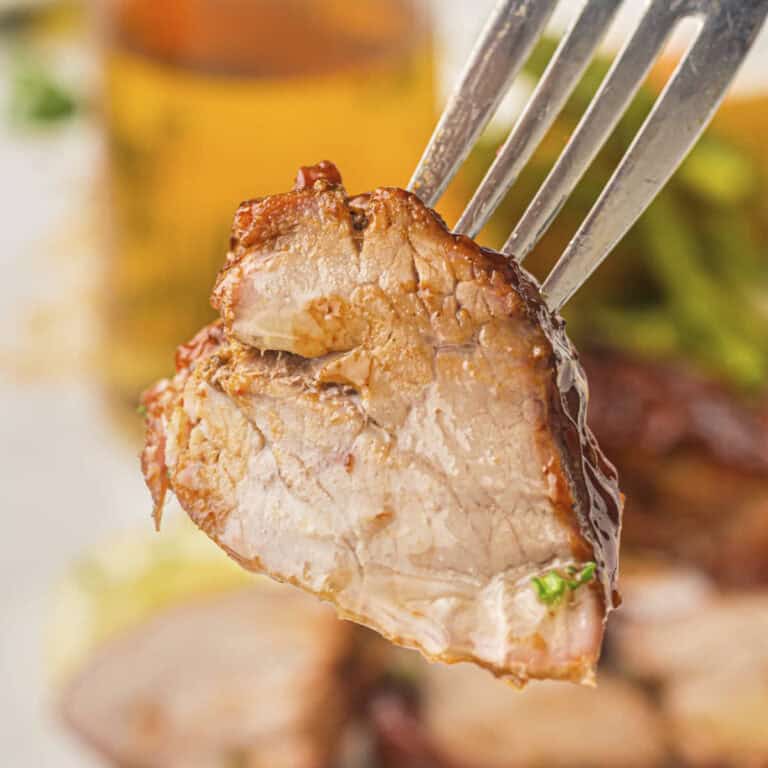
- Grilled Pork Tenderloin (High-Protein, Low-Carb, GLP-1)
- Baked Lemon Chicken Breasts (High-Protein, Keto, GLP-1)
- Air Fryer Chicken Fajitas
- Hidden Sugar in Foods and Metabolic Resistance
- What Is a GLP-1 Diet?
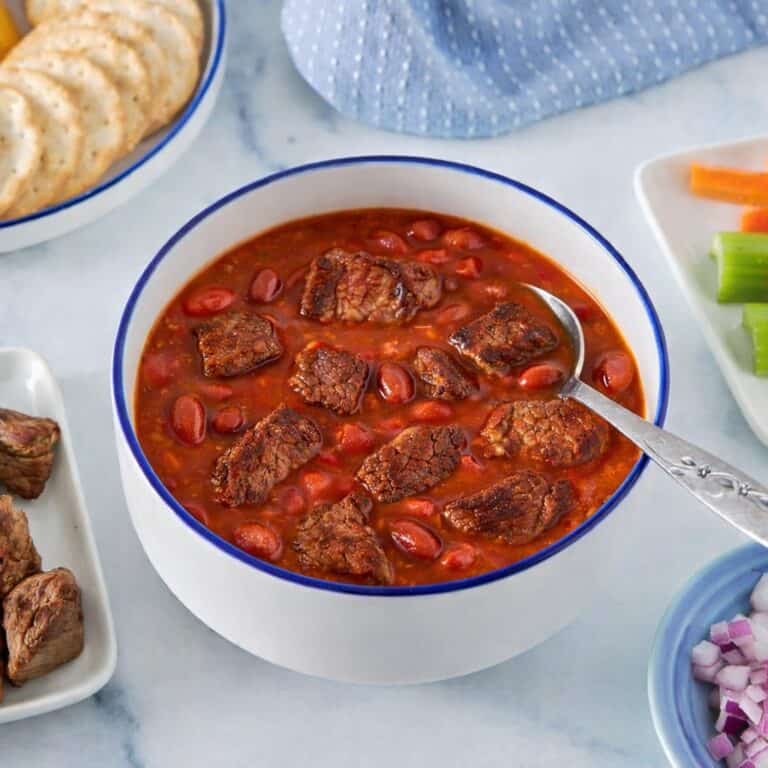
- Chuckwagon chili with stew meat instead of ground beef
Final Thoughts
The packet is the tell. A dish made from a cheap cut of beef, an onion, and three hours of low heat got sold back to us as something that needs a foil pouch of maltodextrin and caramel color to work.
Ten spices in a jar do the same job and taste like actual food. Mix a double batch this weekend. It outlasts the roast by months.
Frequently Asked Questions
Not with four or five potatoes and a seasoning packet, which push a plate past 20 grams of net carbohydrate. Built with rutabaga, turnip, cabbage, and mushrooms instead, the same plate lands near 9. Drop the roots and it is closer to 6.
Turnip is the best swap for potatoes at about 6 grams of net carbohydrate a cup, against a potato’s 24. Skip parsnip, which is closer to potato than people think.
A blend of onion powder, garlic powder, salt, pepper, thyme, parsley, celery seed, smoked paprika, and ground mustard. It matches a packet in volume with no cornstarch, sugar, maltodextrin, or MSG.
It is almost always undercooked. Chuck gets tender by cooking longer, not shorter, and two and a half hours is the floor. The other cause is the wrong cut. Bottom round has no connective tissue to convert.
Strain the liquid and boil it down for five to ten minutes. For more body, bloom a tablespoon of powdered beef gelatin in cold water and stir it in off the heat. Collagen peptides will not thicken anything.
Yes, up to three months. Pull the meat apart and freeze it in its gravy in single portions. Rutabaga and turnip freeze better than potato, which goes grainy. Cabbage softens, so cook it fresh if that bothers you.
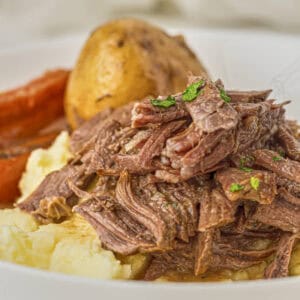
Keto Pot Roast: No Potatoes, No Flavor Packet, No Problem
Ingredients
Pot roast seasoning:
- 1 tbsp garlic powder
- 1 tbsp onion powder
- 1 tsp salt
- 1 tsp black pepper
- 1 tsp thyme
- 1 tsp dried oregano
- 1 tsp smoked paprika
- ½ tsp celery seed
- ½ tsp ground mustard
Roast:
- 2½ lbs beef chuck roast
- 1 tbsp olive oil
For the pot:
- 1 large onion cut into thick wedges
- 4 cloves garlic smashed
- 2 tbsp tomato paste
- 2 tbsp dried onions
- 2 cups stock
- 1 tbsp soy sauce or worcestershire
- 3 sprigs fresh thyme
- 1 sprig fresh rosemary
Added in the last 60 minutes:
- 2 medium turnips peeled and cut into 1-inch cubes
Instructions
- Heat the oven to 325°F and mix the seasoning. Combine the ten blend ingredients in a small bowl. Set two tablespoons aside for the roast.
- Pat the roast dry and coat it. Press the two tablespoons of blend over every surface. Dry meat browns, wet meat steams, and the blend needs a dry surface to hold onto.
- Sear it in a hot Dutch oven, 4 to 5 minutes a side. Oil shimmering, roast down, hands off. Lift a corner to check before turning. Every brown surface here turns into flavor in the gravy.
- Take the roast out and cook the onion wedges 3 minutes. They pull up the browned bits stuck to the bottom.
- Stir in the tomato paste and garlic, cook 1 minute. Wait for the paste to darken. This minute does more for the gravy than anything else in the recipe.
- Add the stock, soy sauce or worcestershire, and the rest of the seasoning blend. Scrape the bottom of the pot clean. Return the roast and tuck the thyme and rosemary alongside it.
- Cover and braise 2 hours. The liquid should come partway up the roast, not cover it. A pot roast is a braise, not a boil.
- Add the turnip, cabbage wedges, and mushrooms, cover, and braise 1 more hour. Three hours total. Tuck the turnip down into the liquid around the roast and set the cabbage wedges on top. Start checking a two and a half pound roast here. The roast is done when a fork twists out a piece with no resistance, and the turnip should give to a knife tip without falling apart.
- Reduce the liquid into gravy. Strain it into a pan, skim the fat, and boil hard 5 to 10 minutes. Stir in the bloomed gelatin off the heat, or the xanthan and oil, for a thicker pour.
- Pull the roast into large pieces and spoon the gravy over. Finish with parsley.