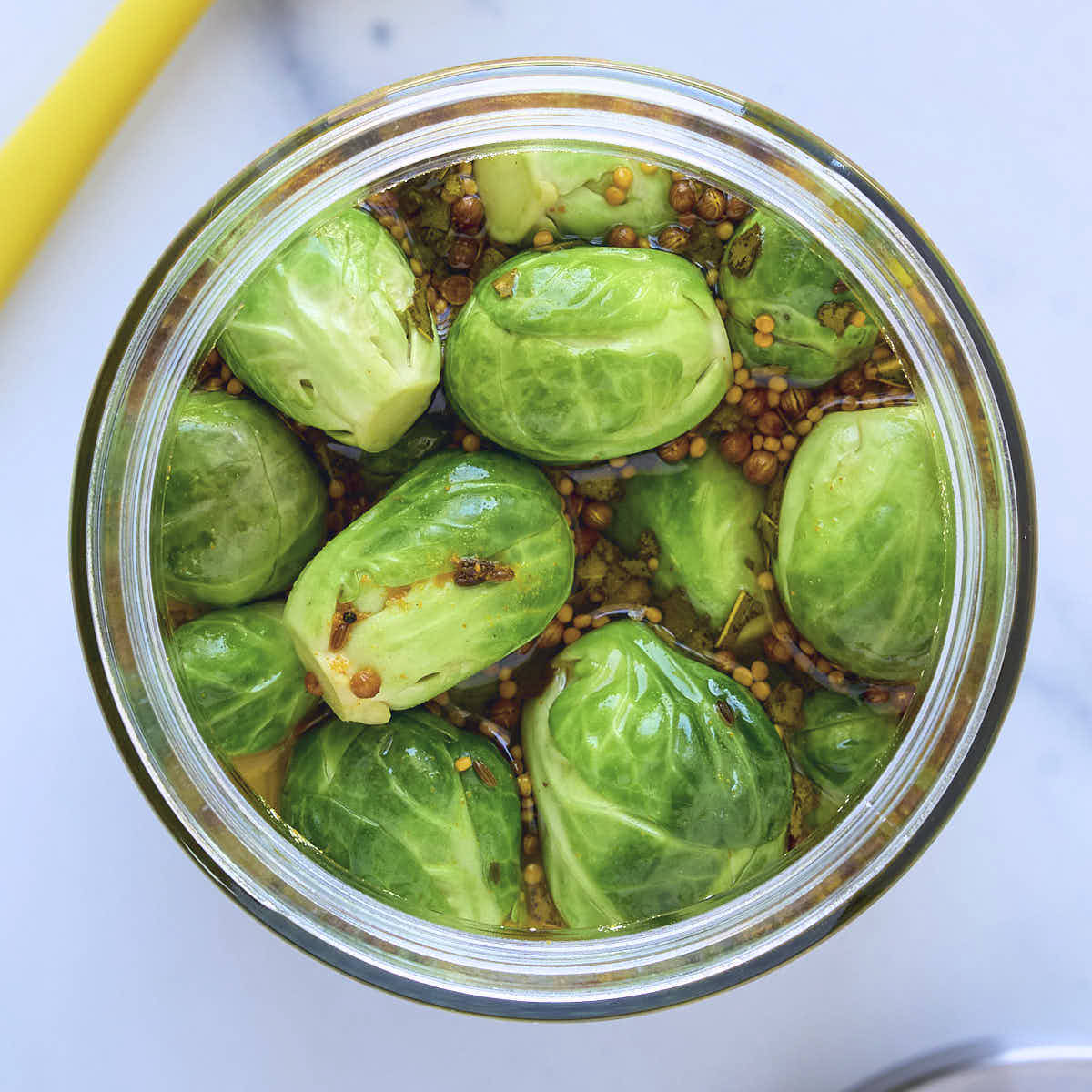
Pickled Brussels Sprouts: Crunchy Low-Carb Frog Balls
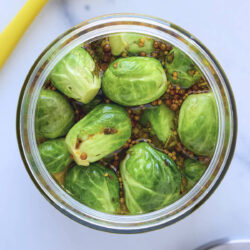
Frog balls are pickled Brussels sprouts, blanched and packed in a garlic dill brine with no added sugar. A low-carb snack built for a GLP-1 diet.
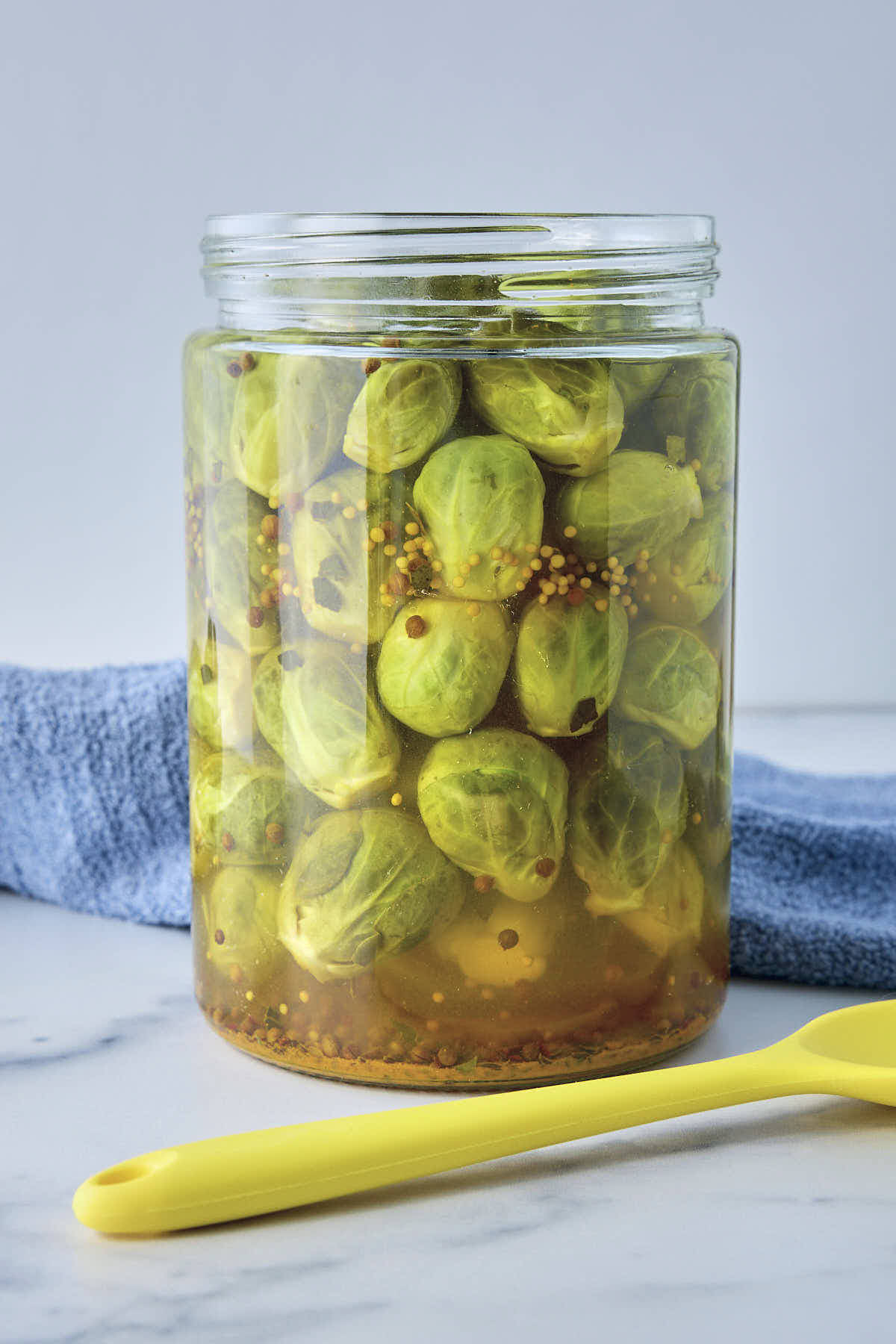
Table of contents
- Why These Frog Balls Work
- Why Brussels Sprouts Don’t Taste Like They Used To
- Pick the Right Brussels Sprouts
- Ingredients for the Recipe
- Ingredient Notes
- How to Make Pickled Brussels Sprouts
- Can You Eat Pickled Brussels Sprouts on a GLP-1 Diet?
- More Low-Carb Recipes and GLP-1 Reading
- Final Thoughts
- Frequently Asked Questions
Fall is Brussels sprouts season. The stalks show up at the farmers market and the grocery bins fill up. Getting everyone at the table to eat them is another story. Kids push them to the edge of the plate, and plenty of adults do the same thing, just more politely.
Pickle them and call them Frog Balls, and it’s a different vegetable. The name gets the laugh first. Then somebody tries one on a dare. It’s the same sprout everyone refused at dinner, and now people are fishing them out of the jar with a fork.
These are easy to make low-carb. The brine is vinegar, water, salt, garlic and whole spices, with no sugar in the pot. From there you can take them anywhere you like: fiery hot, heavy on the dill, loaded with garlic, or a little sweet with allulose or monkfruit sweetener.
On a GLP-1 medication the plate gets smaller, and every bite has to earn its spot. A crunchy vegetable snack you actually want is worth keeping in the fridge door. This one takes twenty-five minutes of work and two days of waiting.
Why These Frog Balls Work
- The name sells it. A vegetable nobody wanted turns into the snack everyone asks about.
- Low-carb by default. There’s no sugar in the brine, and the sprouts are a low-carb vegetable.
- Real crunch. A short blanch and a hard chill keep them firm, not soggy.
- Endless flavors. The brine stays the same. The spices in the jar decide the flavor.
- Fiber in a snack. Three or four sprouts give you something to chew and some fiber to go with it.
- Twenty-five minutes of work. The fridge does the rest.
- Built for meal prep. One batch fills four pint jars and keeps for two months.
Why Brussels Sprouts Don’t Taste Like They Used To
If you grew up hating Brussels sprouts, you remember it right. The sprouts of the 1970s and ’80s really were more bitter.
In the late 1960s, growers switched to varieties that ripened evenly for machine harvesting. Those plants yielded well and tasted harsh. A whole generation got its opinion of the vegetable from a boiled, gray pile on a dinner plate.
In the 1990s, Dutch researchers led by Hans van Doorn traced the bitterness to two compounds: sinigrin and progoitrin. Both are glucosinolates, sulfur compounds found across the cabbage family. Seed breeders went back to older, milder varieties and crossed them with modern high-yield plants. The first of the milder varieties, Maximus, came out in 1994. Each new variety takes six to eight years to develop, and the milder lines now dominate the market.
Breeding out the bitterness didn’t strip the vegetable of its good side. The compounds bred down for flavor aren’t the ones researchers study for health benefits.
Cooking still matters. Long boiling breaks down the sulfur compounds that are left and fills the kitchen with that old cabbage smell. A two-minute blanch keeps a pickled sprout mild and bright green.
Pick the Right Brussels Sprouts
Size matters more here than in any roasted sprout recipe. Whole sprouts need to fit the jar and take on brine evenly. Big ones stay raw in the middle. Tiny ones go soft.
Look for tight, closed heads. Loose outer leaves mean an older sprout, and older sprouts turn bitter in vinegar. The color should be bright green with no yellowing. A good sprout feels heavy for its size and squeaks a little when you press it.
Sprouts sold on the stalk are usually fresher than bagged ones. Bagged sprouts tend to come in mixed sizes, so you’ll end up halving a lot of them.
How to Buy in Thirty Seconds
- Pick sprouts about 1 inch across and close to the same size.
- Squeeze one. It should be firm all the way through.
- Skip anything with yellow leaves, black spots or a dried-out stem end.
- Check the bottom of the bag or bin for wet, slimy sprouts.
Ingredients for the Recipe
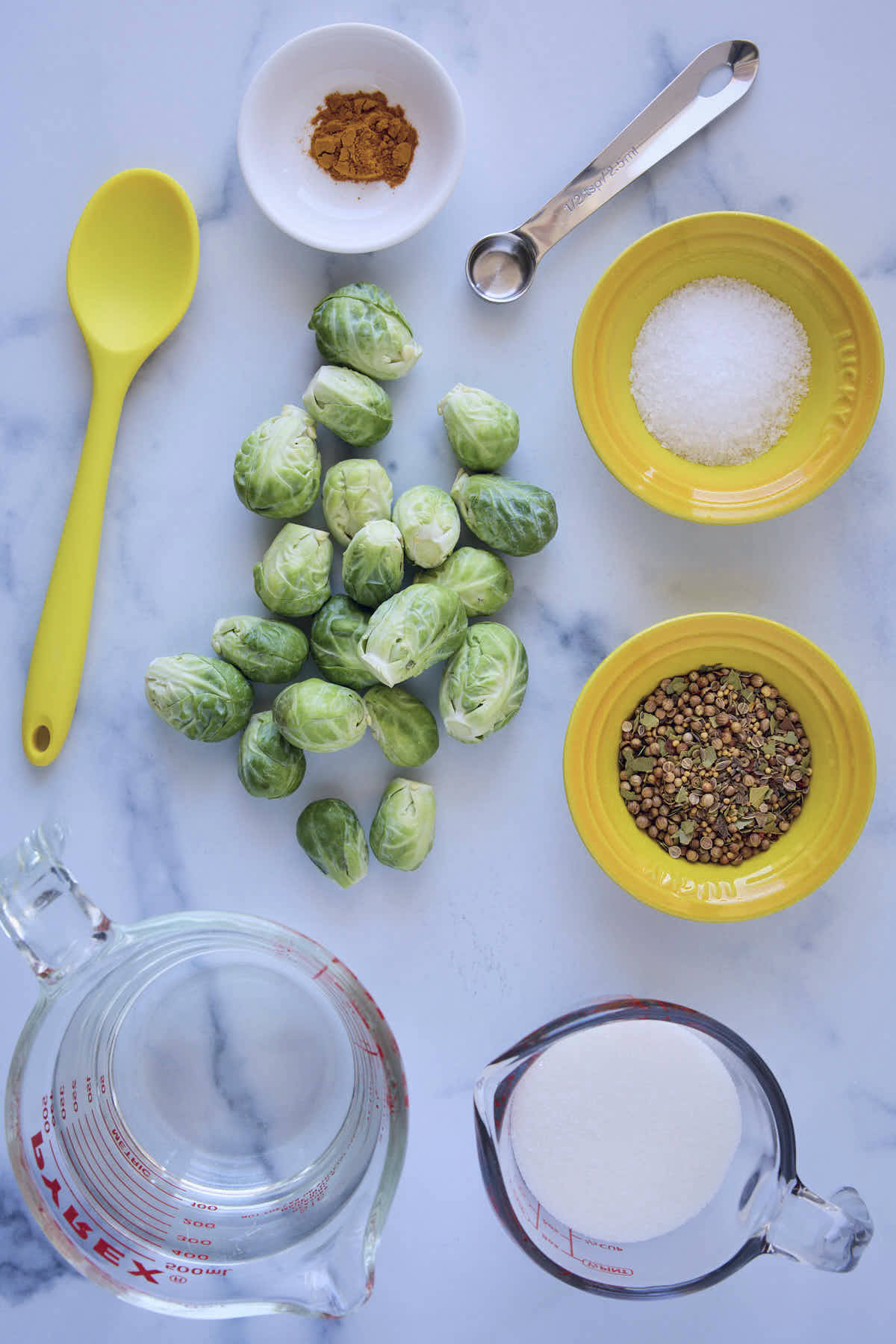
For the Sprouts
- 2 lb Brussels sprouts, about 1 inch across
- Ice water for the bath
For the Brine
- 2 cups white vinegar, 5% acidity
- 2 cups water
- 2 Tbsp pickling salt (or kosher salt)
Per Pint Jar
- 2 garlic cloves, smashed
- 1 bay leaf
- ½ tsp dill seed (or 1 fresh dill head)
- ½ tsp yellow mustard seed
- ½ tsp coriander seed
- ¼ tsp black peppercorns
- ¼ tsp red pepper flakes
Ingredient Notes
Vinegar. Use a vinegar labeled 5% acidity. Most white vinegar on the shelf is. Apple cider vinegar works and gives a fruitier, darker brine. Don’t use a homemade vinegar with an unknown strength.
Salt. Pickling salt dissolves clear and has no anti-caking agents. Iodized table salt can cloud the brine and darken the garlic. If you use kosher salt, go to 3 Tbsp. The flakes are lighter by volume.
A sweeter brine. Some people like a sweet-sour pickle. Stir 1 Tbsp of allulose or monkfruit sweetener into the hot brine. It keeps the jar low-carb.
Garlic. Garlic sometimes turns blue or green in vinegar. It’s a harmless reaction between its sulfur compounds and the acid. It looks strange and tastes the same.
Dill. Dill seed gives a stronger pickle flavor than dried dill weed. Fresh dill heads look best in the jar.
Heat. The red pepper flakes give a mild background warmth. For real heat, add a sliced jalapeño or half a habanero to each jar.
How to Make Pickled Brussels Sprouts
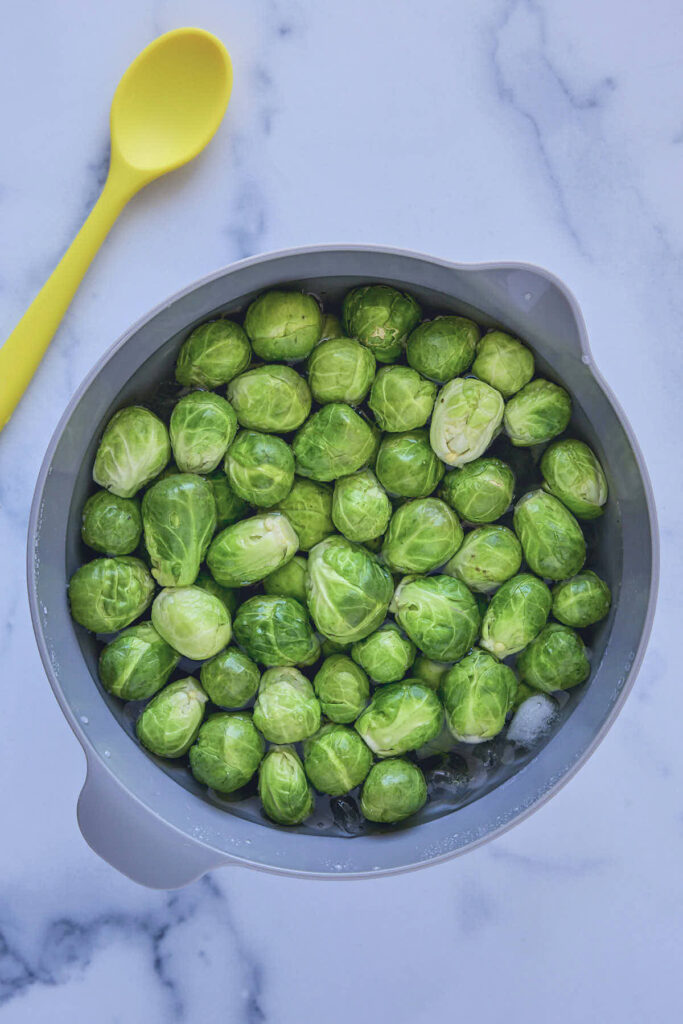
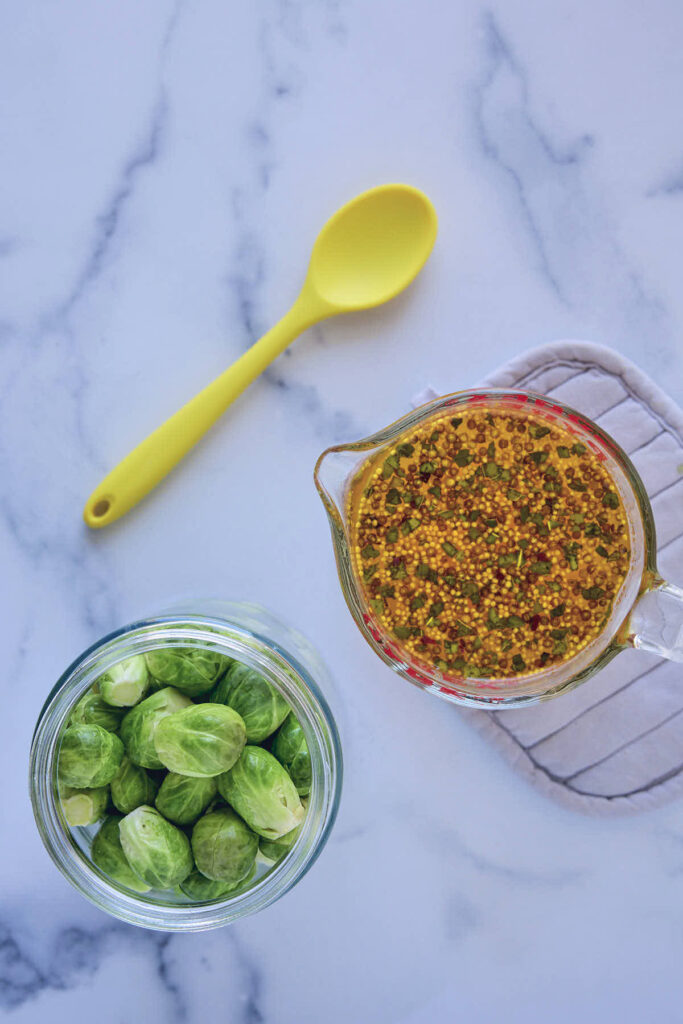
- Trim the sprouts. Cut a thin slice off each stem end and pull off any loose or yellow outer leaves. Halve anything much bigger than an inch. Even sizes pickle at the same rate.
- Blanch for 2 to 3 minutes. Bring a big pot of water to a rolling boil and add the sprouts. Start the timer when the water comes back to a boil. That’s enough time to take off the raw edge without cooking the core.
- Ice bath right away. Move the sprouts straight into ice water for 10 minutes. The cooking stops right there. Skipping this step is the main reason pickled sprouts turn mushy.
- Drain well. Extra water on the sprouts dilutes the brine. Let them sit in a colander while you make it.
- Load the jars. Put the garlic, spices and bay leaf in the bottom of each clean pint jar. Pack the sprouts in tightly. They shrink a little once the brine hits them.
- Boil the brine. Bring the vinegar, water and salt to a boil and stir until the salt dissolves. Add allulose now if you’re using it. Hot brine pulls more flavor out of the whole spices.
- Pour and cover. Fill each jar with brine to ½ inch below the rim. Every sprout needs to be under the liquid. Tap the jars on the counter to release trapped air.
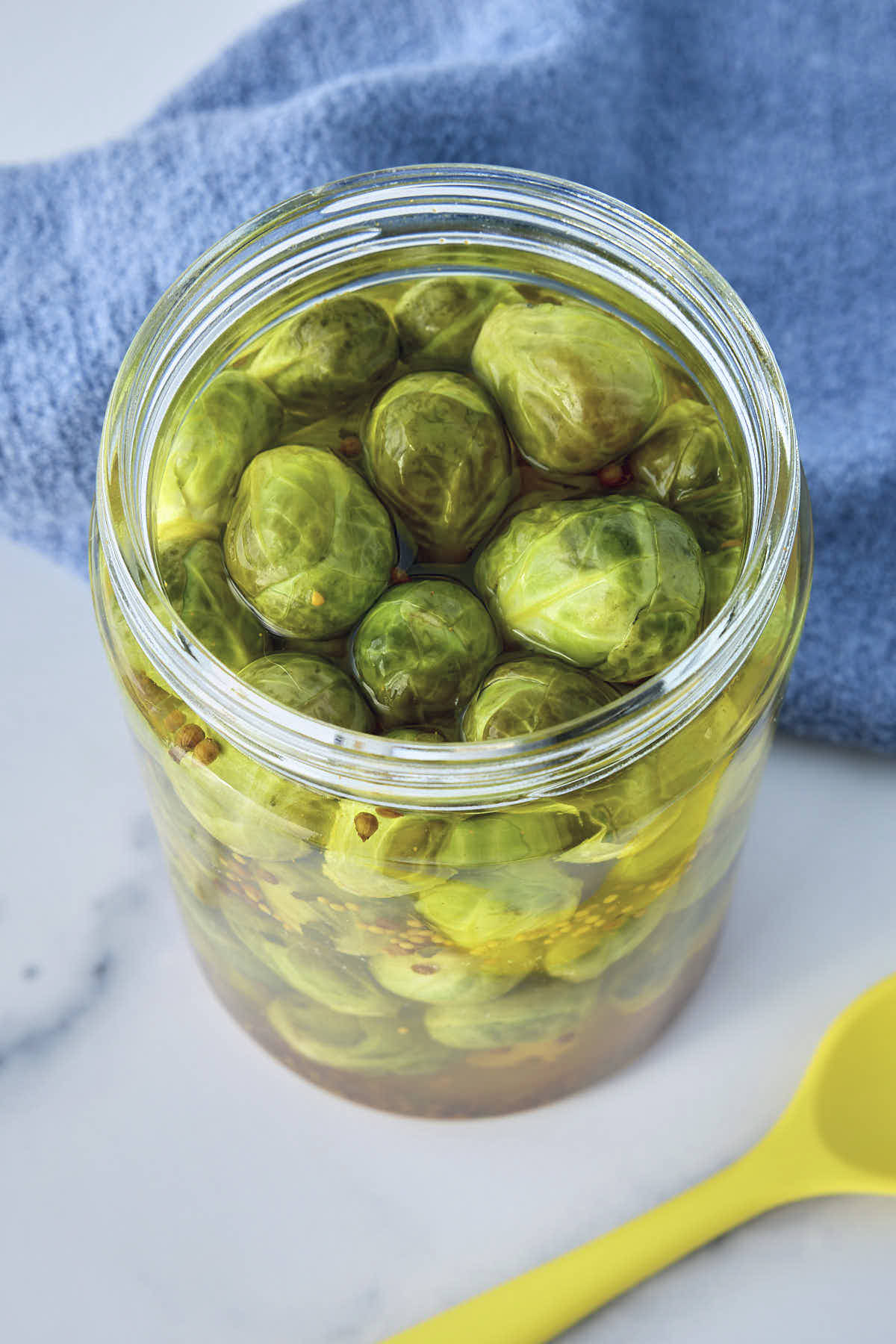
- Cool, cap, chill. Let the jars cool to room temperature, then lid them and refrigerate. They’re good at 48 hours. They’re at their best around day five to seven, once the brine reaches the center of each sprout.
Variations
Atomic frog balls. Add half a habanero or two sliced jalapeños to each jar, and double the red pepper flakes. Save this jar for the person who dared everyone else.
Garlic bomb. Use six cloves per jar and add a few thin slices of shallot. Every clove comes out of the jar pickled and ready to eat.
Bread-and-butter style. Add 2 Tbsp allulose to the brine, plus ½ tsp turmeric and ½ tsp celery seed. You get the sweet pickle flavor and it stays keto.
Curry pickle. Swap the dill for 1 tsp curry powder and a thin slice of fresh ginger per jar. It goes well next to grilled chicken.
Lacto-fermented frog balls. Skip the vinegar and the blanch. Pack raw sprouts under a 2.5% salt brine with a weight and let them ferment at room temperature for one to two weeks. The flavor gets deeper and funkier than a vinegar pickle.
Cocktail garnish. Put one on a pick in a Bloody Mary or a dirty martini. A frog ball holds up in a drink better than an olive.
Can You Eat Pickled Brussels Sprouts on a GLP-1 Diet?
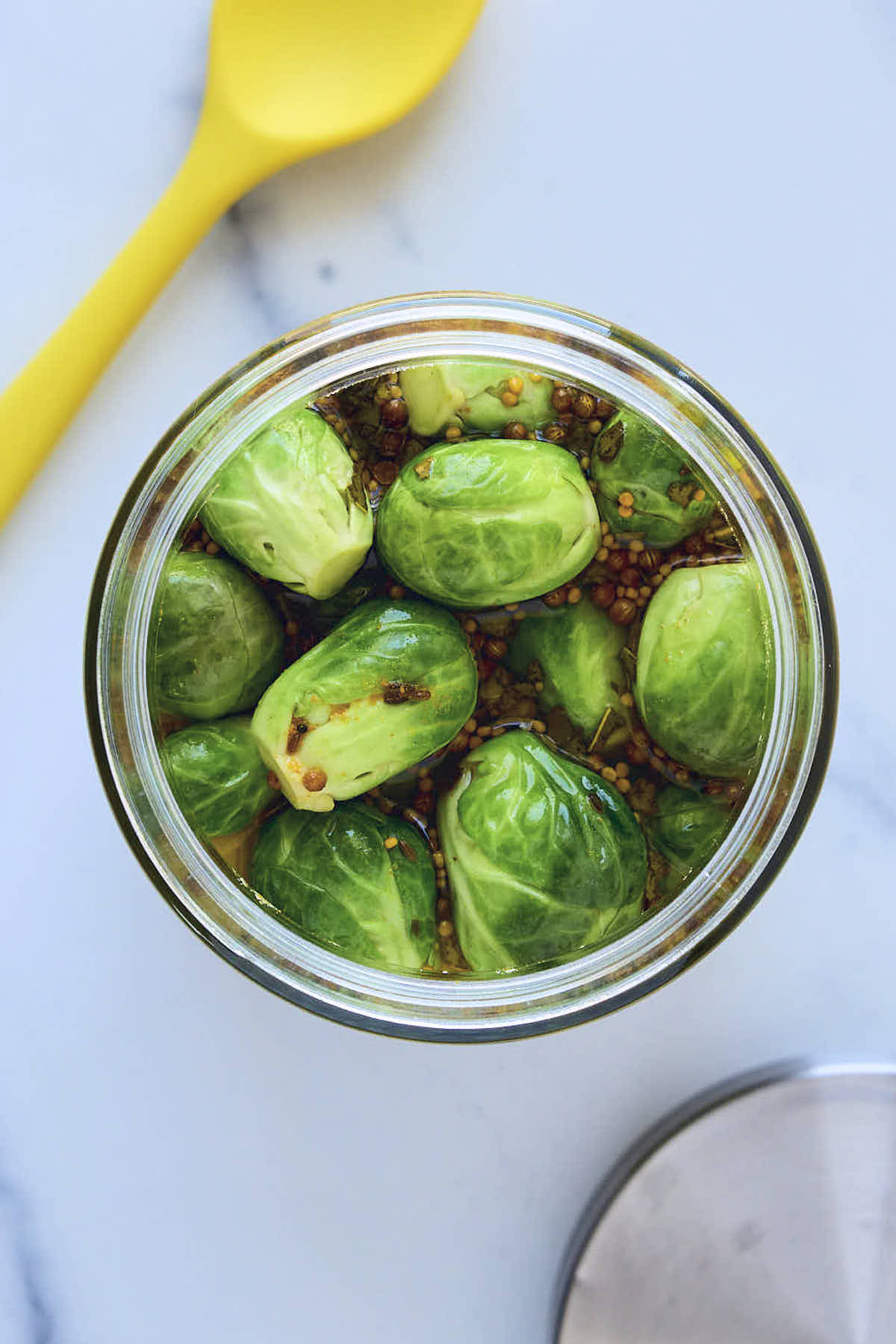
Yes. Made without sugar, they’re one of the easiest snacks to keep on hand.
- The carb cost is small. Brussels sprouts are a lower-carb vegetable, and this brine adds nothing to them.
- You get fiber and something to chew. Eating less total food on a GLP-1 can mean less fiber. A few sprouts add some back without taking up much room.
- Watch the salt and drink water. Pickles are salty by nature. A glass of water with a handful of sprouts is a good habit when your appetite, and often your thirst, runs low.
More Low-Carb Recipes and GLP-1 Reading
- Garlic Butter Green Beans
- 12 No-Cook GLP-1 Recipes for Eating Healthy Without a Kitchen
- Low-Carb Margarita
- Hidden Sugar in Foods and Metabolic Resistance
- What You Need to Know About Carbs on a GLP-1 Diet
- What Is a GLP-1 Diet?
Final Thoughts
Getting people to eat vegetables usually turns into a negotiation. Three more bites. Just try one. Nobody enjoys that part of dinner, least of all the person being bargained with.
Frog balls skip the argument. A silly name and a jar of something crunchy turn a vegetable into a dare, then a snack, then a request. Eating well on a GLP-1 diet doesn’t have to mean steamed and plain. It can mean a little fun in the kitchen and a jar people actually open.
Make a batch while the sprouts are in season. Set the jar out and let the name do the work. Next time, try a second jar in a new flavor and let everyone pick a favorite.
Frequently Asked Questions
It’s a nickname based on how they look: small, round and green. It’s popular in the South, and nobody has documented where it started.
Up to two months in the fridge, as long as the sprouts stay under the brine. Use a clean fork every time you reach into the jar.
For a vinegar pickle, yes. The blanch takes the raw edge off the sprouts and helps the brine soak in. Keep it to 2 or 3 minutes, and ice them right after.
Usually it’s over-blanching or skipping the ice bath. Old sprouts with loose leaves soften faster too.
Made this way, yes. There’s no sugar in the brine, and Brussels sprouts are a low-carb vegetable. If you want a sweeter jar, use allulose instead of sugar.
Not for pickling. Freezing breaks down the sprout’s structure, and it goes soft in the brine. Use fresh sprouts in season for the best crunch.
Pickled Brussels Sprouts: Crunchy Low-Carb Frog Balls
Ingredients
Sprouts:
- 2 lbs Brussels sprouts about 1 inch across
- 1 gallon ice water for the bath
Brine:
- 2 cups white vinegar 5% acidity
- 2 cups water
- 2 tsp pickling salt or kosher salt
Per Pint Jar:
- 2 cloves garlic
- 1 whole bay leaf
- ½ tsp dill
- ½ tsp yellow mustard seed
- ½ tsp coriander seed
- ¼ tsp black peppercorns
- ¼ tsp red pepper flakes
Instructions
- Trim the sprouts. Cut a thin slice off each stem end and pull off any loose or yellow outer leaves. Halve anything much bigger than an inch. Even sizes pickle at the same rate.
- Blanch for 2 to 3 minutes. Bring a big pot of water to a rolling boil and add the sprouts. Start the timer when the water comes back to a boil. That's enough time to take off the raw edge without cooking the core.
- Ice bath right away. Move the sprouts straight into ice water for 10 minutes. The cooking stops right there. Skipping this step is the main reason pickled sprouts turn mushy.
- Drain well. Extra water on the sprouts dilutes the brine. Let them sit in a colander while you make it.
- Load the jars. Put the garlic, spices and bay leaf in the bottom of each clean pint jar. Pack the sprouts in tightly. They shrink a little once the brine hits them.
- Boil the brine. Bring the vinegar, water and salt to a boil and stir until the salt dissolves. Add allulose now if you're using it. Hot brine pulls more flavor out of the whole spices.
- Pour and cover. Fill each jar with brine to ½ inch below the rim. Every sprout needs to be under the liquid. Tap the jars on the counter to release trapped air.
- Cool, cap, chill. Let the jars cool to room temperature, then lid them and refrigerate. They're good at 48 hours. They're at their best around day five to seven, once the brine reaches the center of each sprout.