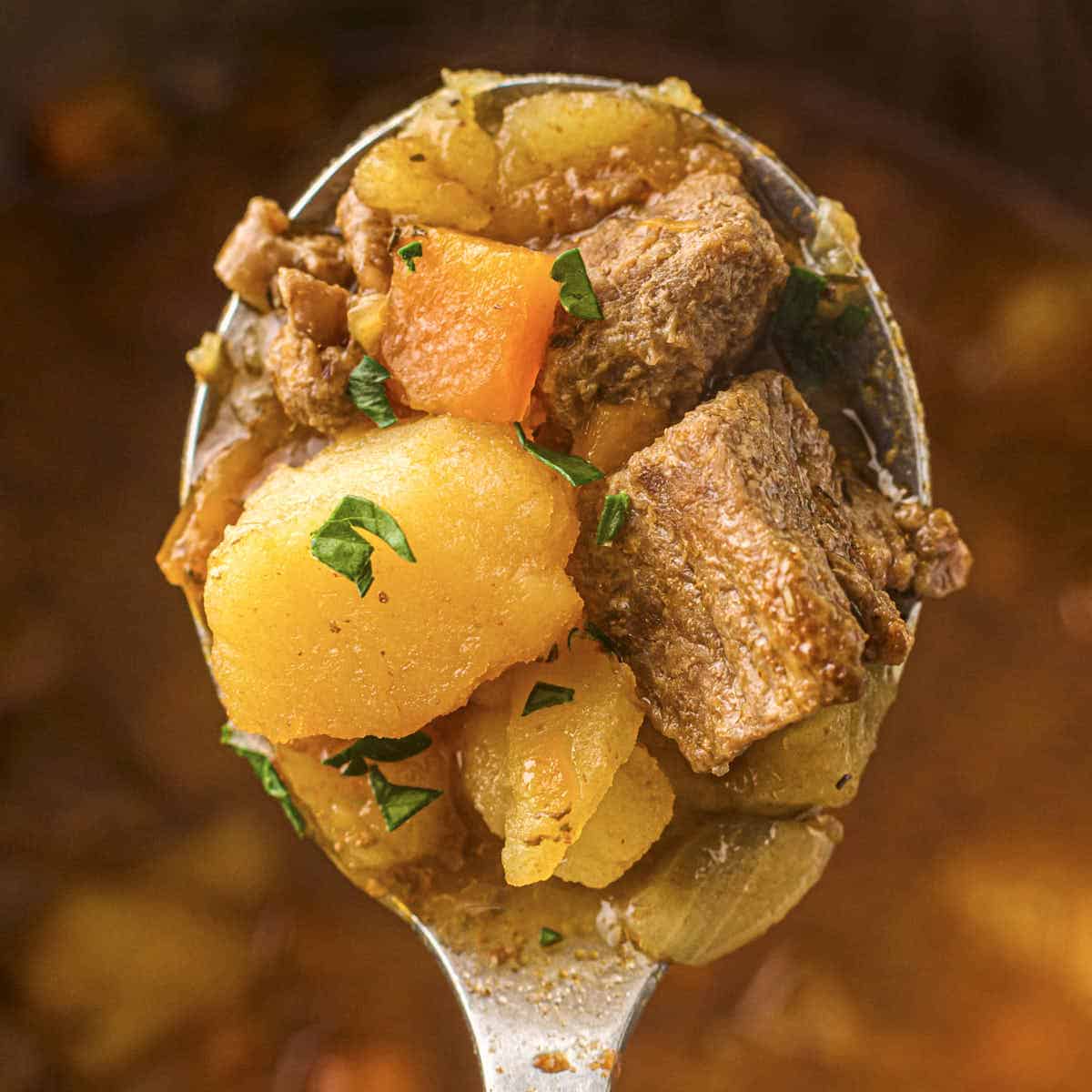
Keto Beef Stew for a GLP-1 Diet (Low-Carb, No Potato)
Keto beef stew in the Instant Pot, with turnip in place of the potatoes. No starch slurry, high-protein, low-carb and built for a GLP-1 diet.
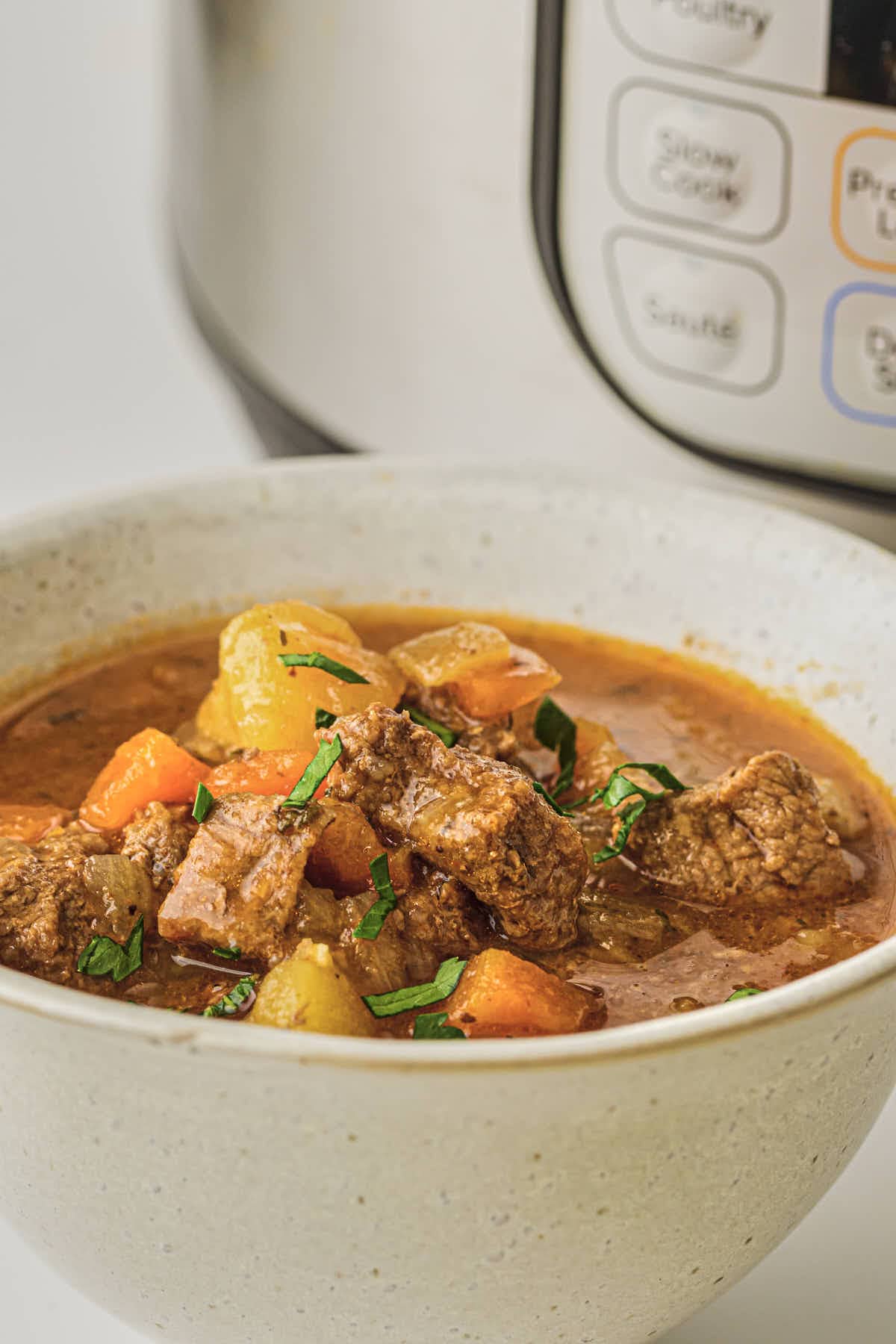
Table of contents
- Why This Keto Beef Stew Works on a GLP-1 Diet
- Why This Stew Has No Potatoes
- Is Beef Stew Keto?
- What to Use Instead of Potatoes in Beef Stew
- Bell Pepper Instead of Carrots, and When to Add It
- Buy Chuck, Not Pre-Cut Stew Meat
- Why Pressure Cooked Beef Comes Out Tough
- Thicken the Gravy Without Starch
- Skip the Packet and the Can
- Ingredients – Keto Beef Stew
- How to Make Keto Beef Stew
- Variations
- Can You Eat Beef Stew on Wegovy, Ozempic, or Zepbound?
- More High-Protein Recipes and GLP-1 Reading
- Final Thoughts
- Frequently Asked Questions
Beef stew is filed under heavy food, and the potatoes are the reason. Take them out and the bowl is beef, root vegetables, and gravy.
The canned version earns the reputation on its own. Modified food starch does the thickening, one can carries half of a day’s sodium, and the meat sits low on the ingredient list. Seasoning packets run the same trick in powder form, with cornstarch and maltodextrin near the top and caramel color standing in for real browning. Sugar hides in both under names that do not read as sugar, which I mapped in hidden sugar in foods. A GLP-1 diet demands the same scrutiny on the gravy as on the carb count.
This recipe does that. Chuck roast, turnip and/or rutabaga for the body, sweet bell pepper at the end, tomato paste bloomed in the fat. No potato, no packet, no can, no starch slurry. The gravy thickens on its own from the collagen in the beef, or with added powdered gelatin.
Twenty five minutes under pressure, ten minutes of natural release, and the pot handles all of it.
Why This Keto Beef Stew Works on a GLP-1 Diet
- About 7g net carbs a bowl – no potatoes, no flour, no starch slurry
- 33 grams of protein per serving – a pound and a half of chuck across five bowls
- Turnip and/or rutabaga for the body – a fraction of what potato costs, and the same job in the bowl
- 25 minutes under pressure – the collagen breakdown a stove needs three hours for
- No seasoning packet – spice rack ingredients, all of them nameable
- Better on day two – five days refrigerated, three months frozen
Why This Stew Has No Potatoes
Half measures do not get you a keto stew. A cup of diced potato runs about 24 grams of net carbohydrate. Three of them spread across a pot is most of what a bowl costs you, and cutting it to one still leaves the potato as the biggest number in the dish.
Pull it out completely and the whole bowl changes category. What remains is beef and root vegetables that cost a few grams each.
Nothing is lost structurally. Potato is in a stew for bulk and for starch that clouds the gravy. The bulk comes back with turnip and rutabaga, and the gravy gets its body from the beef instead.
Put the potatoes back if you want them. That is a real choice, and what you need to know about carbs has the accounting to make it with.
Is Beef Stew Keto?
Not as it is normally made. Two potatoes and a cornstarch slurry put a standard bowl somewhere over 20 grams of net carbohydrate, which is most of a keto day in one sitting.
Strip both out and the answer changes. Beef, turnip, pepper, onion, and tomato paste land this pot near 7 grams a bowl. That fits inside a 20 gram day with room to eat again.
Carrots are the second ingredient that usually pushes a stew over. They run about 9 grams net a cup, and they are the sweetest thing in most recipes. This version uses a bell pepper instead, which costs less and does the same job for the eye.
What to Use Instead of Potatoes in Beef Stew
Not every root vegetable is a low-carb swap. Here is the ladder, per cup, net carbohydrate:
Turnip, about 6 grams. The workhorse. It holds its shape under pressure, soaks up gravy the way a potato does, and brings a faint pepperiness that suits beef. Buy them small. Large turnips go woody in the middle and turn bitter.
Rutabaga, about 9 grams. Sweeter and denser than turnip, closer to the potato flavor people miss. One cup alongside four of turnip gets you that without costing much.
Celery root, about 12 grams. Works, comes out softer, and carries a celery note that suits a beef broth. Peel it hard.
Parsnip, about 17 grams. This is the one to watch. Parsnip reads as a low-carb vegetable and is not. It sits nearly three times turnip and lands closer to potato, and it is sweet enough to change the direction of the pot. Use it as an accent or leave it out.
Potato, about 24 grams. For comparison.
Cauliflower does not work here. It dissolves under pressure and clouds the gravy, which is the exact problem this recipe avoids.
Cut the roots into one-inch chunks, slightly larger than you would cut potato. Turnip softens a little faster.
Bell Pepper Instead of Carrots, and When to Add It
A stew needs something bright in it. Carrots have always done that job, and they are also the second biggest carb source in a standard pot once the potatoes are gone.
A red or orange bell pepper does the same work for about 6 grams net a cup. Orange runs a little milder, red a little sweeter. Green is cheaper and lower still, and it brings a bitterness that fights the beef.
Add it after the pressure, not before. Twenty five minutes at high pressure destroys a bell pepper. The color bleeds out to a dull olive, the skin separates from the flesh, and what is left is a soft grey ribbon. Slice it and stir it in during the sauté reduction at the end. Five minutes in simmering gravy is all it needs. It holds its color and keeps a little texture, and the vitamin C survives, which it does not under pressure.
The flavor does shift. Bell pepper, tomato paste, and beef together lean toward goulash rather than a classic stew. Lean into it with a teaspoon of smoked paprika, or keep the pepper to half and stay closer to the original.
Buy Chuck, Not Pre-Cut Stew Meat
The package marked “stew meat” is trimmings from whatever the butcher broke down that morning. Some days that is chuck. Other days it is round or sirloin tip, and those cuts have almost no connective tissue in them.
Connective tissue is the whole point. It melts into gelatin under pressure, and that gelatin gives a stew its body and its gravy. Lean beef has none to convert. It comes out dry at 25 minutes and drier at 40.
Chuck is shoulder. It worked hard, so it is threaded with white seams of collagen. Buy a roast and cube it yourself. It takes five minutes and costs less per pound than the pre-cut tray.
How to buy in thirty seconds:
- Look for the word chuck on the label. Shoulder roast, blade roast, and 7-bone roast are all chuck.
- Pass on round, sirloin tip, and anything labeled only “stew meat.”
- Pick the roast with the most white seams running through the red.
- Two pounds of untrimmed chuck yields about a pound and a half of cubes.
Why Pressure Cooked Beef Comes Out Tough
Three mistakes cause almost every tough bowl of stew. This recipe fixes each one.
The wrong cut. Round and sirloin have no collagen to convert. They tighten under pressure and stay tight. Time does not rescue them.
Not enough time under pressure. Collagen cuts run backwards from steak. Fifteen minutes gives you tough cubes, and the way out is more time rather than less. Twenty five minutes suits one-inch cubes. Two-inch cubes need about thirty five.
A quick release at the end. Dropping the pressure fast flashes the liquid inside the meat into steam, and it rushes out of the cubes. Ten minutes of natural release keeps the juice where it belongs. Vent the remainder after that.
Thicken the Gravy Without Starch
Arrowroot is not a low-carb thickener. It runs about 7 grams of carbohydrate a tablespoon, which is what cornstarch runs. Tapioca starch is the same, and potato starch is higher. All of them are pure starch. Arrowroot gets shelved as a health-food ingredient because it is grain-free and paleo, and that is a separate claim from low-carb. It also breaks down under long heat and thins back out, so it would not survive the reduction at the end of this recipe.
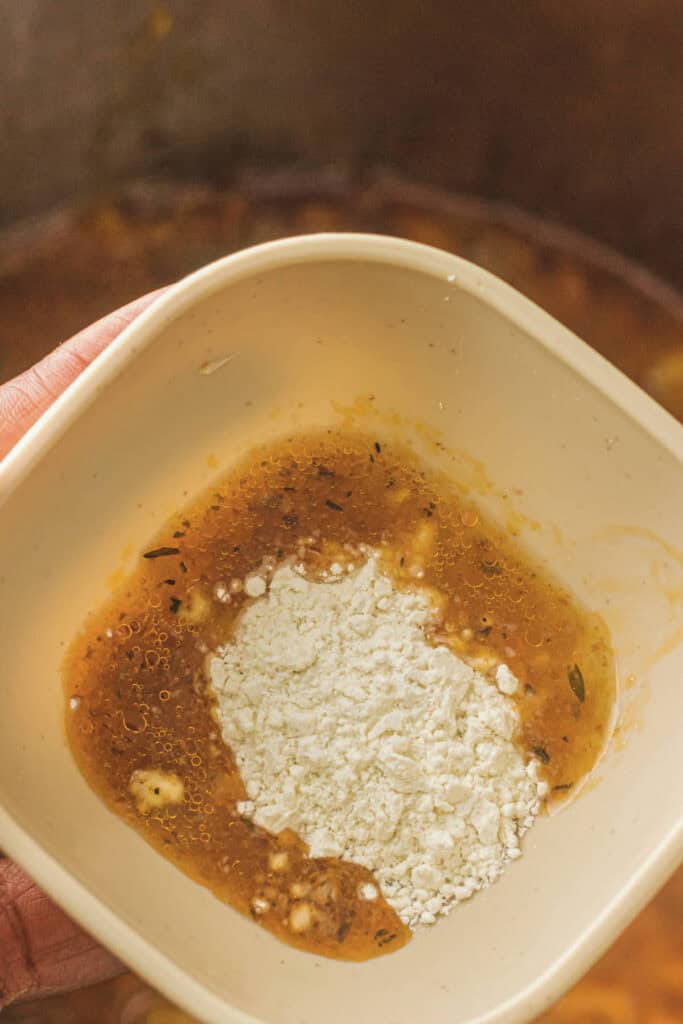
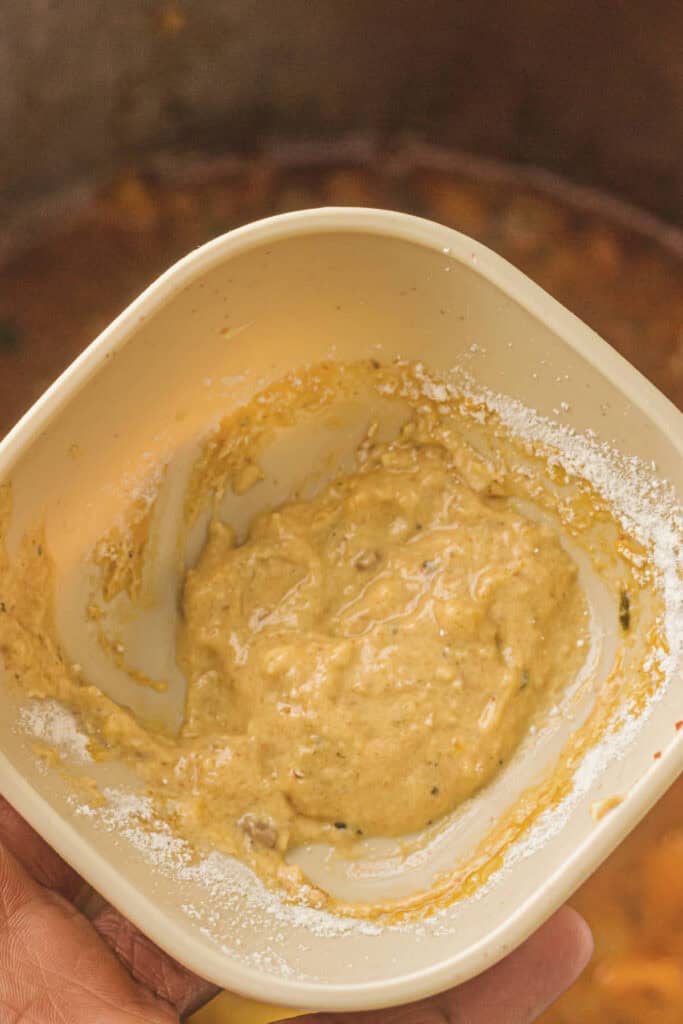
Powdered beef gelatin. This is the one that suits a beef stew. It is the same collagen the chuck has been giving up for twenty five minutes, in a tub. A tablespoon carries zero carbohydrate and about 6 grams of protein, so it thickens the pot and raises the protein at the same time.
Glucomannan or xanthan. Both are soluble fiber with no usable carbohydrate. Glucomannan, sold as konjac powder, thickens at roughly half the dose of xanthan and leaves no slippery texture. A quarter teaspoon of either handles this pot. Whisk it into a tablespoon of olive oil first, then stir that in. Dropped straight into liquid, both clump into strings that never dissolve.
Skip the Packet and the Can
The seasoning packet. Turn one over. Cornstarch or wheat flour usually leads, maltodextrin follows, and caramel color supplies the brown that browning should have produced. Sugar appears under its own name or as dextrose. The seasoning itself is a teaspoon of thyme and some onion powder, sold at a markup with thickener attached.
The can. Canned beef stew is built to survive a warehouse. Modified food starch holds the gravy together, sodium runs high enough to preserve it, and the beef works out to a small fraction of the weight. The vegetables are cooked to collapse.
What replaces both. Tomato paste cooked in fat for a minute, browned beef, real stock, and thyme. That is the entire flavor base. It takes about four minutes of work on sauté mode, and it is the difference between a stew and boiled beef in brown water.
Ingredients – Keto Beef Stew
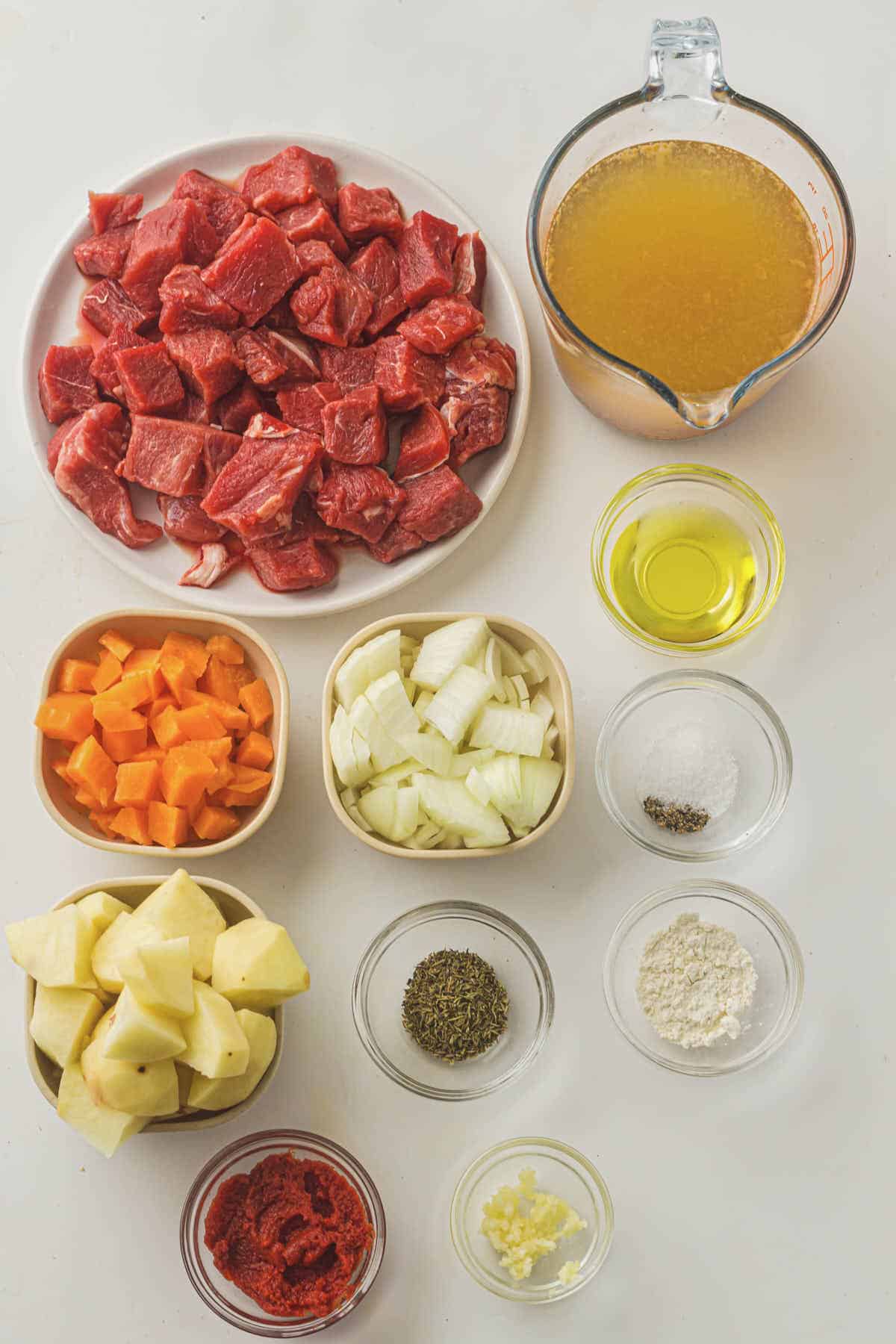
For the beef:
- 2 lbs beef chuck, cut into 1-inch cubes
- 1 tbsp olive oil
- 1 tsp salt
For the stew:
- 1 small onion, chopped
- 2 cloves garlic, minced
- 2 medium sized turnip, peeled and cubed
- 2 tbsp tomato paste
- 3 cups beef stock
- 1 tsp dried thyme
- 1 dried bay leaf
To finish:
- 1 red or orange bell pepper, sliced into strips
- Fresh parsley, chopped
To thicken, pick one (optional):
- 1 tbsp powdered beef gelatin, bloomed in 3 tbsp cold water
- 1/4 tsp glucomannan or xanthan gum, whisked into 1 tbsp olive oil
Ingredient Notes
The chuck. Trim the hard outer fat and leave the white seams running through the middle. Those seams are the gravy. Cut the cubes to a consistent inch so they finish together, and pat them dry before they hit the pot. Wet beef boils off its surface water before it browns, and it toughens while it waits.
The turnip and rutabaga. Buy turnips medium sized and a rutabaga that’s firm. Peel the rutabaga deep, past the waxy coating supermarkets put on it. It is the same volume in the bowl at a fraction of the carbohydrate.
The bell pepper. Red or orange, and cut it into wide strips rather than dice. Strips hold together in the last five minutes where small pieces go limp. One pepper is right for this pot. Two turns it into a different dish. Use a carrot for a traditional flavor with a few more carbs per serving.
The tomato paste. Check for one ingredient on the label: tomatoes. Salt is fine. Added sugar is not, and it shows up in more brands than it should. Cook the paste in the fat for a full minute before any liquid goes in. Raw paste tastes like raw paste all the way through dinner.
The beef stock. Read this label too. Boxed beef broth often carries sugar, yeast extract, or “natural flavor” doing the work the beef should do. A short ingredient list is the one to buy. Homemade stock works here as well.
How to Make Keto Beef Stew
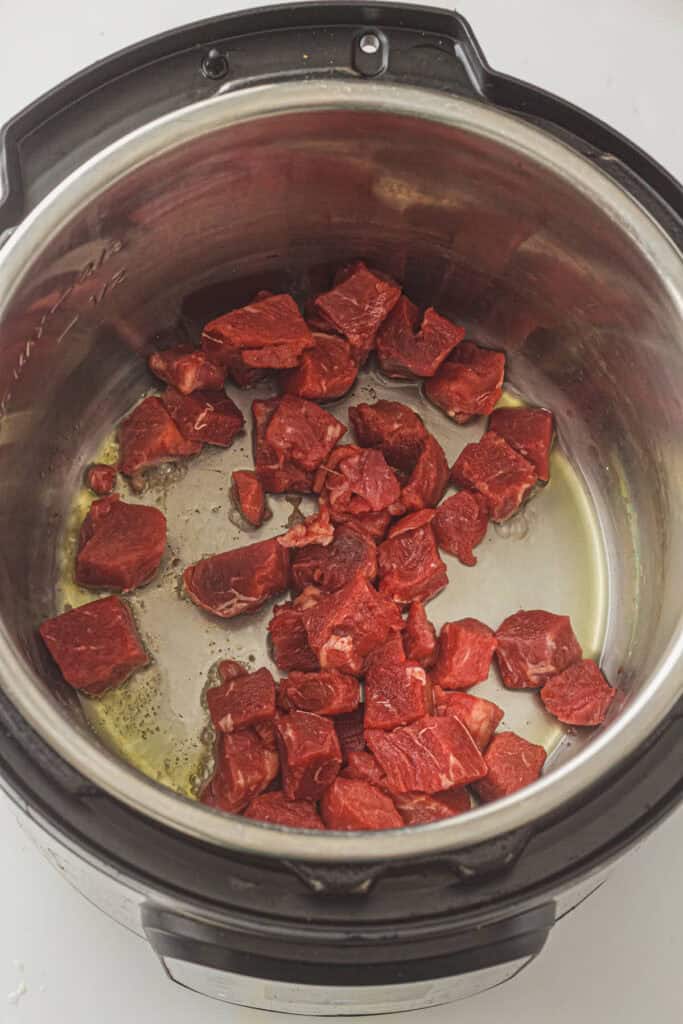
- Pat the beef dry and season it. Toss the cubes with the salt. Dry meat browns. Wet meat steams.
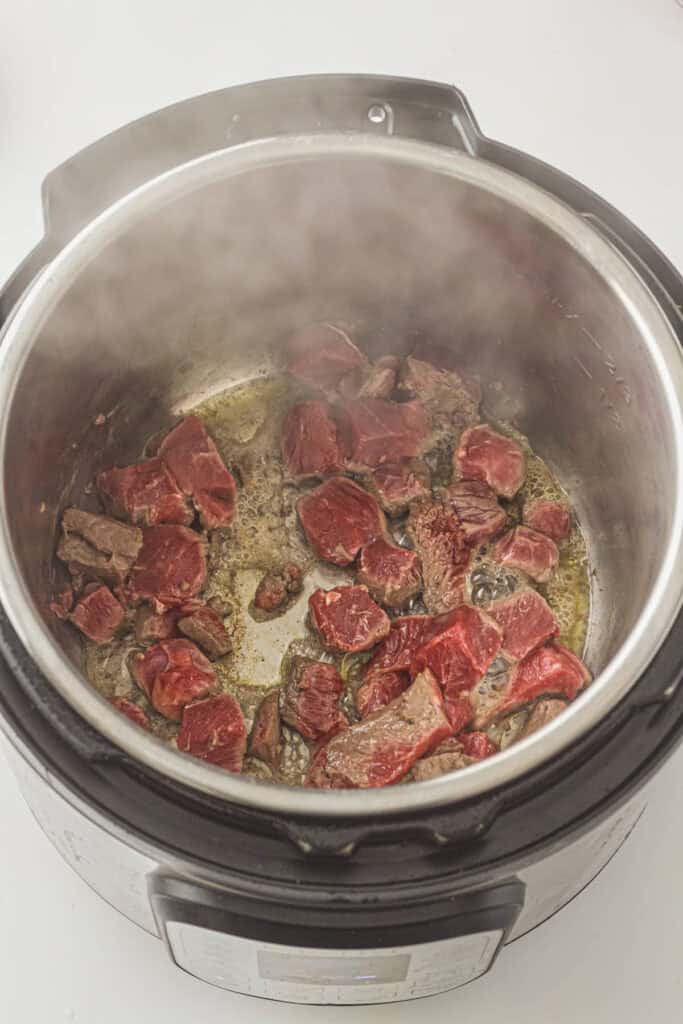
- Heat the oil on Sauté and brown the beef in batches. Two or three batches, four to five minutes each. Crowding the pot traps moisture and drops the temperature below browning range, and the beef turns grey instead. Set each batch aside.
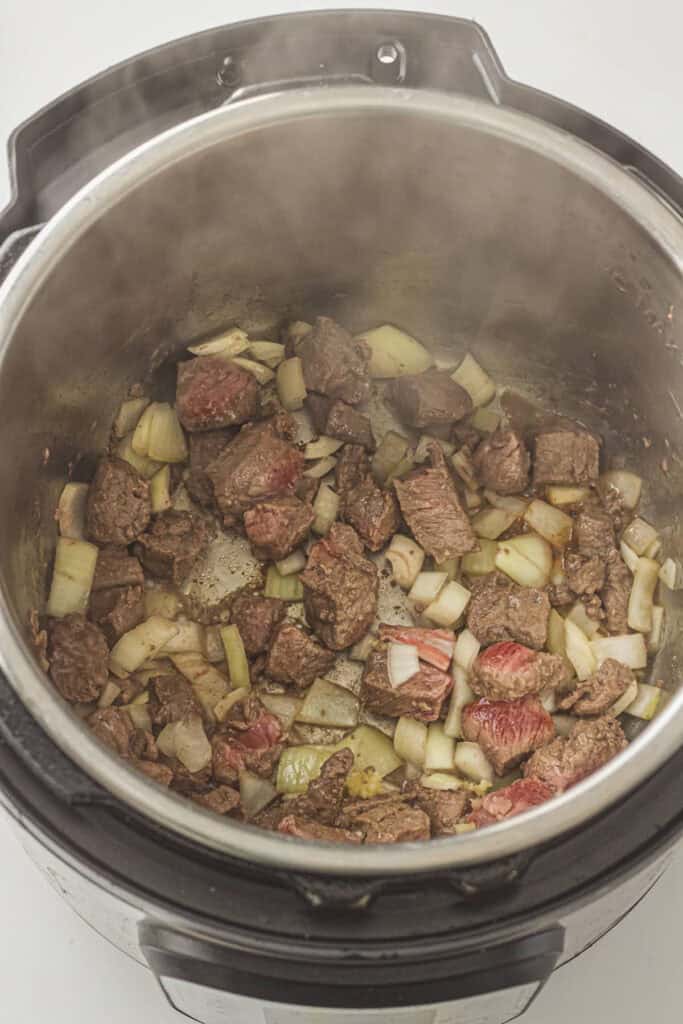
- Cook the onion and garlic for two minutes. They pick up the browned bits stuck to the bottom.
- Stir in the tomato paste and cook one minute. Wait for it to darken and smell sweet. This minute does more for the finished stew than any other step in the recipe.
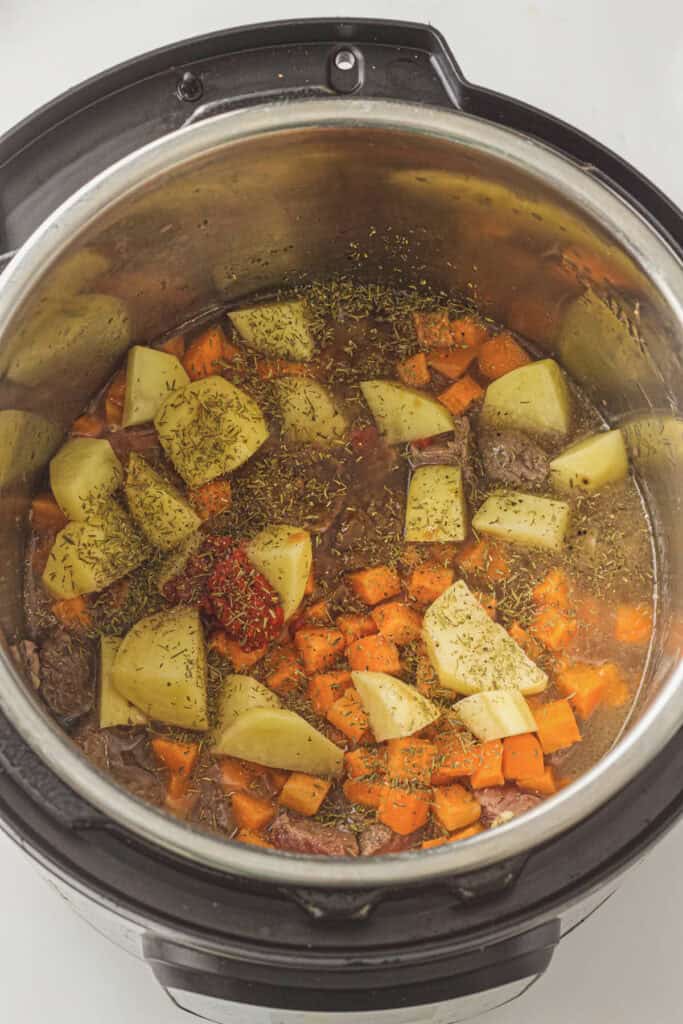
- Press Cancel, then return the beef and add the roots. Turnip, or with a rutabaga, stock, thyme, and the bay leaf. Add a carrot or two now if using them. The bell pepper stays out for now.
- Scrape the bottom of the pot clean before sealing. Anything stuck down there will trigger a burn warning once the pressure builds.
- Seal the lid, set the valve to Sealing, and cook 25 minutes on High Pressure. The pot takes about 10 minutes to come up to pressure first.
- Let it release naturally for 10 minutes, then vent the rest. A fast release now drives moisture out of the meat and tightens it.
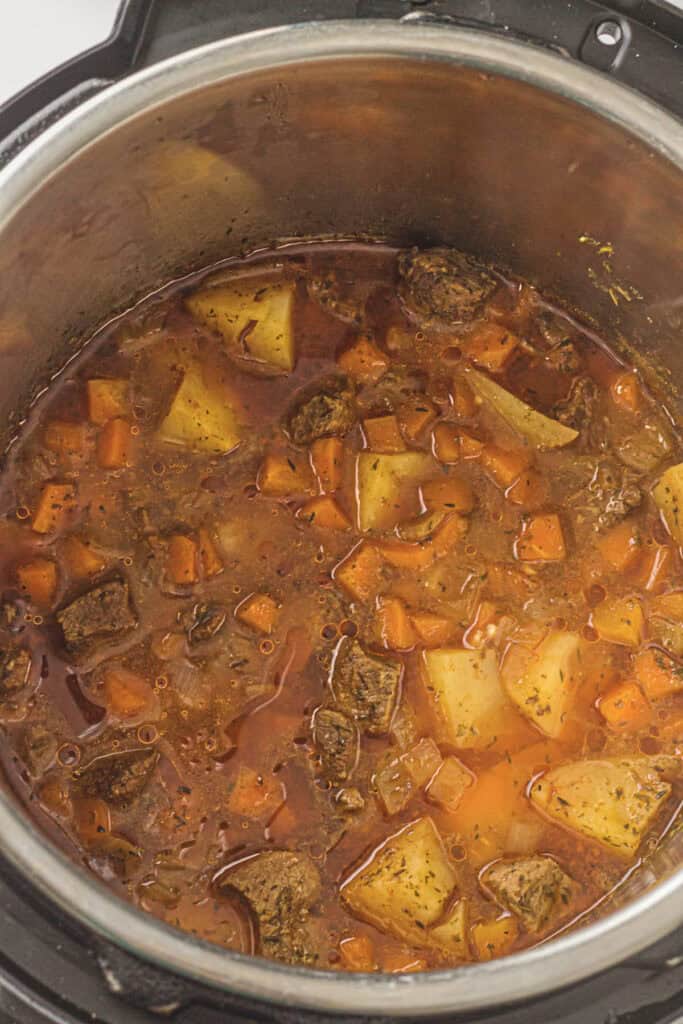
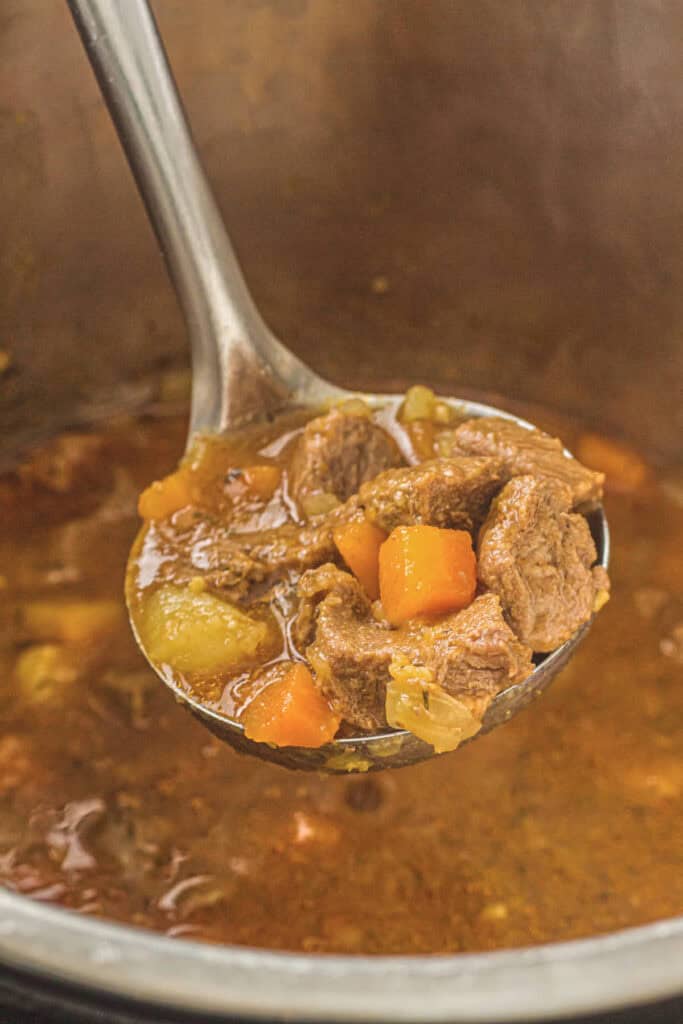
- Turn Sauté back on, add the bell pepper, and simmer uncovered 5 to 8 minutes. The gravy reduces while the pepper softens and keeps its color. Stir occasionally and pull it when the gravy coats a spoon.
- Thicken it now if you want it thicker. Stir the bloomed gelatin in off the boil, or whisk the glucomannan into oil and stir that in. Neither needs more than a minute.
- Fish out the bay leaf, rest 5 minutes, and finish with parsley. The stew thickens a little more as it sits off the heat.
Variations
Goulash direction. Add a teaspoon of smoked paprika with the tomato paste and use two peppers. The pot turns Hungarian and it suits the beef.
Carrots back in. Two medium carrots, sliced thick, in with the roots. About 2 grams a bowl, and the classic look.
Daikon radish. About 2 grams net a cup and it holds its shape well. It loses its bite entirely under pressure and takes on the gravy.
Cabbage wedges. Add four thick wedges with the bell pepper and let them soften in the reduction. Nearly free on carbs and it bulks the bowl out.
Mushroom and red wine. Brown eight ounces of quartered cremini after the beef. Deglaze with a quarter cup of dry red before the stock goes in.
Can You Eat Beef Stew on Wegovy, Ozempic, or Zepbound?
- Yes, and the format works in your favor. A stew is dense and liquid at once. On a day when a plate of food looks like work, a bowl you eat with a spoon still goes down. Protein, fat, vegetables, and fluid arrive in one dish.
- The potatoes were the problem, not the beef. Chuck, turnip, and rutabaga bring very little. Two potatoes and a starch slurry are what turned this dish into a heavy one.
- Portion by your own appetite, not the recipe’s serving size. Five servings can easily be seven meals on a reduced appetite. This one reheats better than it cooks, so the later bowls are the good ones.
Talk to your prescriber if you have questions about how a specific meal fits your treatment. They know your situation better than any recipe blog can.
More High-Protein Recipes and GLP-1 Reading
- Grilled Pork Tenderloin (High-Protein, Low-Carb, GLP-1)
- Baked Lemon Chicken Breasts (High-Protein, Keto, GLP-1)
- Air Fryer Chicken Fajitas
- Keto pot roast: no potatoes, no flavor packet
- Chuckwagon chili with stew meat instead of ground beef
- The Protein Anchor: Why 30g at Breakfast
- Hidden Sugar in Foods and Metabolic Resistance
- What Is a GLP-1 Diet?
Final Thoughts
A stew never needed potatoes. They went in because they were cheap and they stretched a small amount of meat across a big family, and that math stopped applying a long time ago.
What the dish runs on is a cheap cut of beef with enough collagen to make its own gravy. Five cups of root vegetables do the rest for a few grams apiece, and a bell pepper at the end puts the color back. One pot on a meal prep day covers five dinners, and it fits a keto day without any arithmetic.
Frequently Asked Questions
This one comes in near 10 grams of net carbohydrate a bowl. A standard beef stew with two potatoes and a cornstarch slurry runs closer to 20. The potatoes and the slurry are the entire difference.
Turnip and rutabaga. Turnip runs about 6 grams of net carbohydrate a cup and rutabaga about 9, against a potato’s 24. Both hold their shape under pressure. Celery root and daikon also work. Skip cauliflower, which dissolves.
No. Both run about 7 grams of carbohydrate a tablespoon, and so does tapioca starch. Arrowroot is grain-free, which is a different thing from low-carb. Use gelatin, glucomannan, or xanthan instead.
Reduce it uncovered on Sauté for five to eight minutes so the gelatin from the chuck concentrates. For more body, bloom a tablespoon of powdered beef gelatin in cold water and stir it in off the boil. Collagen peptides will not work for this. They are hydrolyzed and they dissolve without thickening anything.
Usually the cut or the release. Round and sirloin have no collagen to convert, and a quick release drives moisture out of the meat. Use chuck and let it come down for ten minutes.
Yes, up to three months. Freeze it in single portions and thaw overnight in the fridge. Turnip and rutabaga freeze better than potato, which goes grainy. Bell pepper softens after freezing, so add it fresh on reheating if that bothers you.
Keto Beef Stew for a GLP-1 Diet (Low-Carb, No Potato)
Ingredients
Beef:
- 2 lbs beef chuck cut into 1-inch cubes
- 1 tbsp olive oil
- 1 tsp salt
Stew:
- 1 small onion chopped
- 2 cloves garlic minced
- 2 medium turnips peeled and cubed
- 2 tbsp tomato paste
- 3 cups beef stock
- 1 tsp dried thyme
- 1 whole bay leaf
Finish:
- 1 whole red or orange bell pepper sliced
- 1 tsp fresh parsley chopped
Thicken:
- 1 tbsp beef gelatin powder unflavored or Glucomann
Instructions
- Pat the beef dry and season it. Toss the cubes with the salt. Dry meat browns. Wet meat steams.
- Heat the oil on Sauté and brown the beef in batches. Two or three batches, four to five minutes each. Crowding the pot traps moisture and drops the temperature below browning range, and the beef turns grey instead. Set each batch aside.
- Cook the onion and garlic for two minutes. They pick up the browned bits stuck to the bottom.
- Stir in the tomato paste and cook one minute. Wait for it to darken and smell sweet. This minute does more for the finished stew than any other step in the recipe.
- Press Cancel, then return the beef and add the roots. Turnip, or with a rutabaga, stock, thyme, and the bay leaf. Add a carrot or two now if using them. The bell pepper stays out for now.
- Scrape the bottom of the pot clean before sealing. Anything stuck down there will trigger a burn warning once the pressure builds.
- Seal the lid, set the valve to Sealing, and cook 25 minutes on High Pressure. The pot takes about 10 minutes to come up to pressure first.
- Let it release naturally for 10 minutes, then vent the rest. A fast release now drives moisture out of the meat and tightens it.
- Turn Sauté back on, add the bell pepper, and simmer uncovered 5 to 8 minutes. The gravy reduces while the pepper softens and keeps its color. Stir occasionally and pull it when the gravy coats a spoon.
- Thicken it now if you want it thicker. Stir the bloomed gelatin in off the boil, or whisk the glucomannan into oil and stir that in. Neither needs more than a minute.
- Fish out the bay leaf, rest 5 minutes, and finish with parsley. The stew thickens a little more as it sits off the heat.