Lacto Fermented Pickle Recipe for Gut Mobility and Health
Lacto fermented pickles with live probiotic cultures for gut health. Replace the kombucha and kefir you buy with a jar you ferment on the counter.
Lacto fermented pickles are cucumbers fermented in a salt brine instead of vinegar. That leaves live probiotic cultures in the jar for gut health. A jar you ferment on the counter replaces the kombucha and kefir you buy, and it’s ready in 3 to 4 weeks.
I’ve been buying kombucha and kefir to help with my GLP-1 gut mobility symptoms, and the cost has gotten hard to justify. Making either one myself is off the table while I’m without a kitchen. A lacto ferment is a different animal. It takes a jar, a counter, and a few weeks, and I’m confident making those.
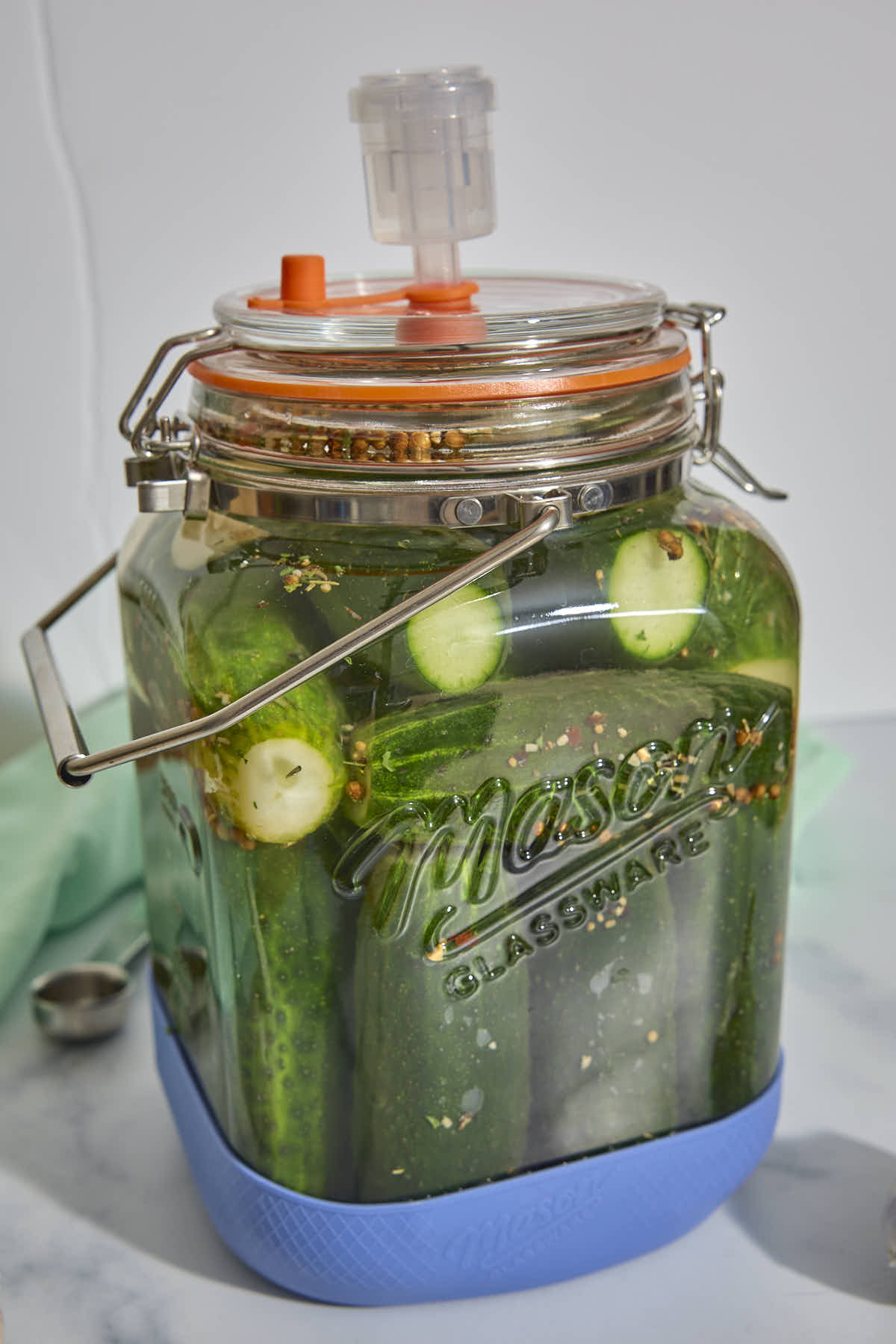
Store pickles aren’t the answer. Turn a few jars around and read the labels: vinegar, sugar, yellow dye, and a flavor that stops at salty. A jar like that has no live cultures, and live cultures are the reason I want pickles in the first place. Mine is a gallon jar, four pounds of mini cucumbers, a lot of garlic, and a plain salt brine.
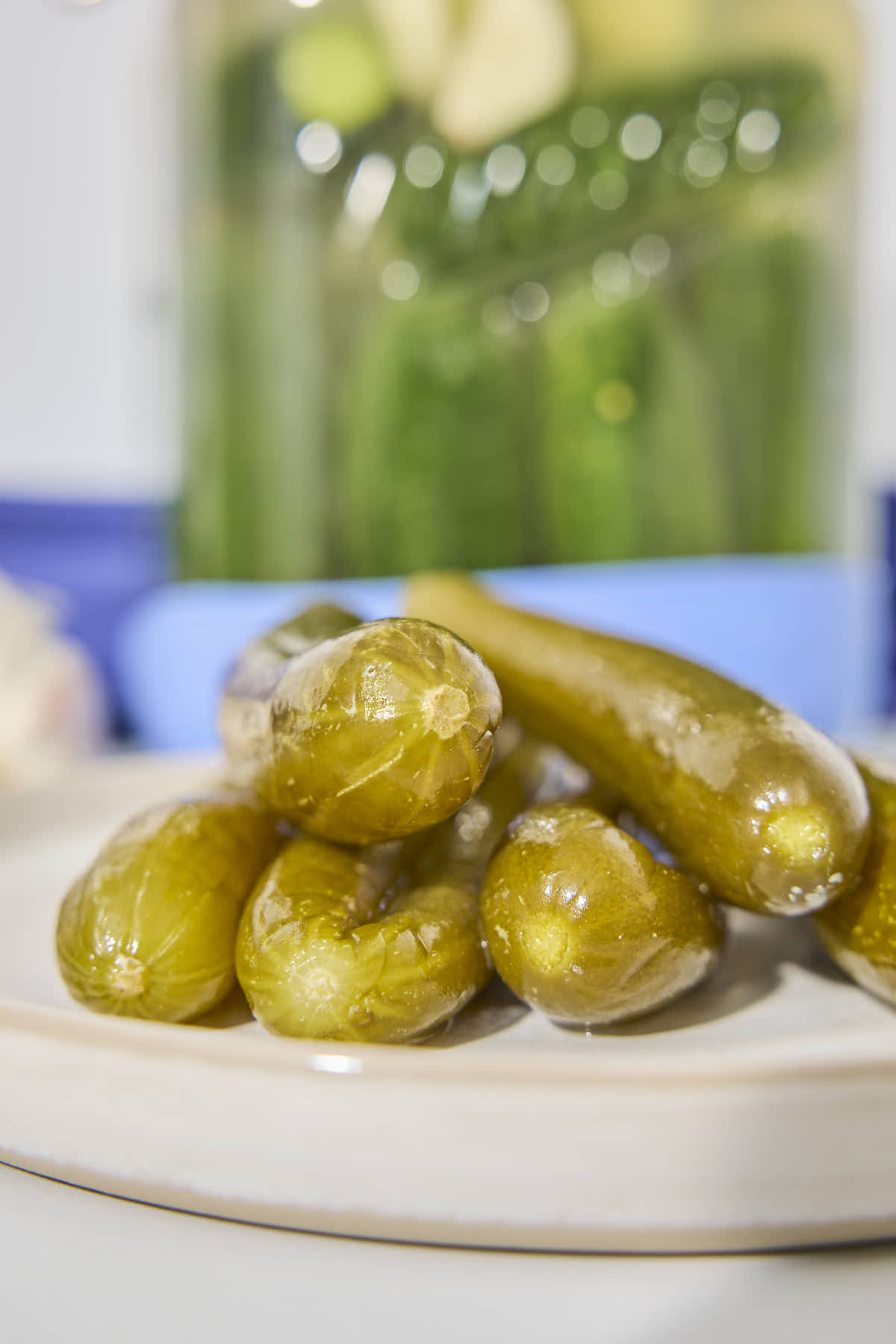
Table of contents
Why This Lacto Fermented Pickle Recipe Works
- Live cultures stay in the jar. The sour comes from fermentation instead of vinegar, and nothing gets heated or pasteurized. The lactic acid bacteria stay alive.
- One batch cuts into the kombucha and kefir bill. A batch of pickles can be as simple as cucumbers and salt, and it lasts 4 to 6 months in the fridge.
- Cultures and fiber arrive in the same bite. Fermented cucumbers bring live bacteria and plant fiber together. The fiber feeds the bacteria already in your gut.
- It’s low in carbs. Cucumbers are naturally low in carbs, and the bacteria turn their carbohydrates into lactic acid. No sugar goes in the brine.
- The method stays simple. There’s no stove and no canning, and prep takes about 20 minutes. The jar handles the next 3 to 4 weeks. Glass weights hold every cucumber under the brine, which keeps mold and yeast from getting started.
How Pickles Went From the Crock to the Jar
Pickles started with a very short ingredient list, and the shelf jar moved a long way from it.
Thousands of years ago. The earliest evidence of pickled cucumbers dates to about 2030 BCE in the Tigris Valley of Mesopotamia. The method was a salt brine and time. Lactobacillus bacteria living on the cucumber’s skin did the fermenting, and the brine needed no vinegar.
The 1800s. Pickles became a packaged product. Claussen started in Chicago in 1870 and packed raw cucumbers in brine for a crunch that required constant refrigeration.
The shelf-stable era. Makers like Vlasic moved to hot-packed pickles. Cucumbers went into jars, hot brine went over them, and the jars were sealed. These needed no refrigeration and lasted longer than pickles cured in vats. Vinegar took over as the preservative, and heat pasteurization kept the jar stable.
Today’s jar. Fresh-pack pickles sit in a vinegar and salt brine. Colorants and preservatives go in at that stage, and the jars are pasteurized at about 180 to 185°F. Producers add yellow coloring to offset fading on the shelf. One common dill lists Polysorbate 80, Yellow 5, and Blue 1 after the cucumbers. The sweet styles add sugar, and some use high fructose corn syrup. The sour in these jars comes from vinegar instead of fermentation, and the heat leaves no live bacteria.
Your Gut Microbiota and the Probiotic Value of Pickles
The gut microbiota is the community of bacteria and other microbes living in your digestive tract. Diet shapes it, and it affects your immune system and overall health. Low diversity in that community has been linked to obesity and diabetes.
Probiotics are live microbes that add to that community. Fermented vegetables carry lactic acid bacteria, and the vegetables supply plant fiber that feeds the bacteria already in your gut. In a Stanford trial, a diet high in fermented foods increased gut microbial diversity and lowered markers of inflammation. The trial used a mix of fermented foods, kefir and kombucha among them.
Ingredients
For one gallon jar:
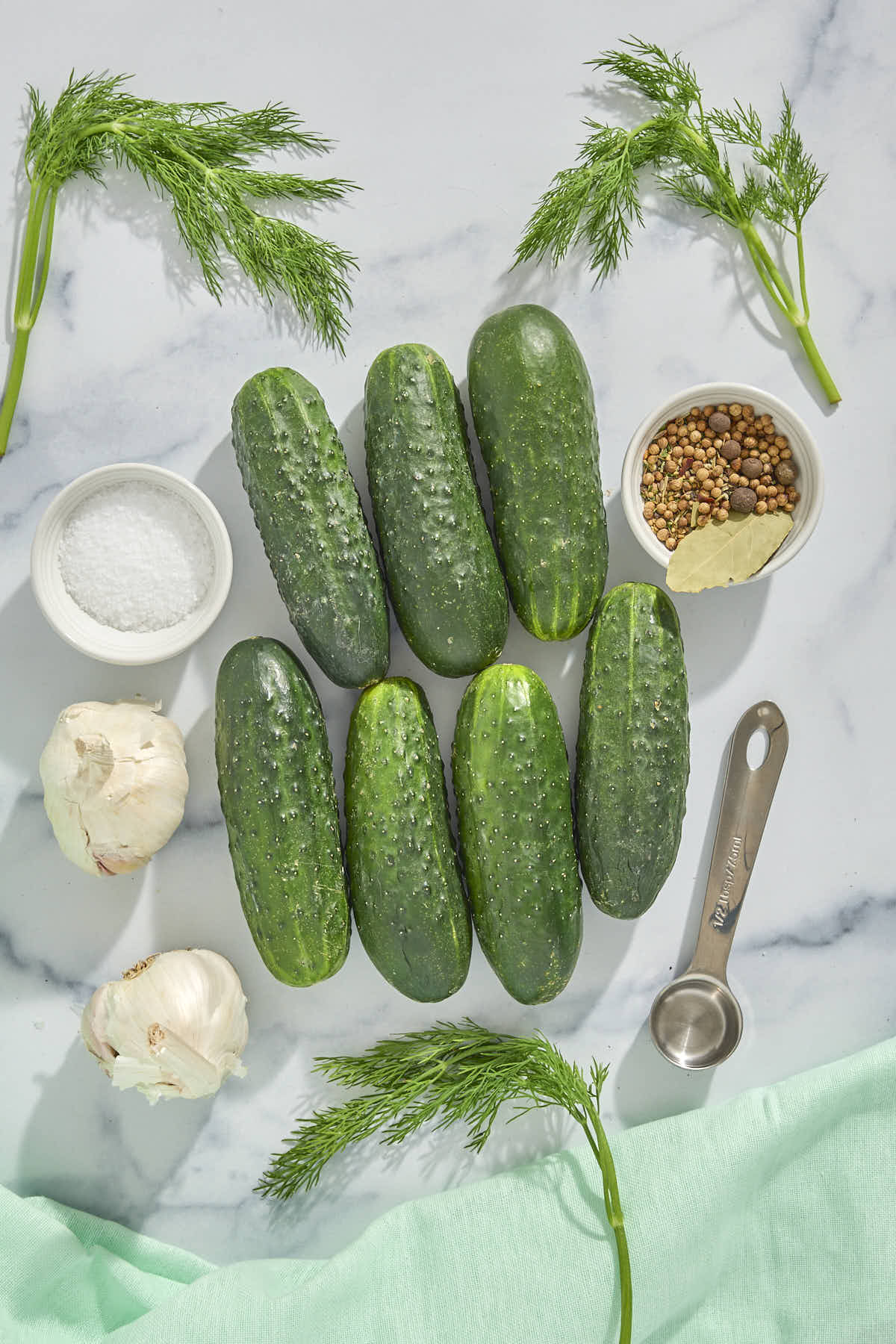
4 pounds pickling or mini cucumbers, unwaxed
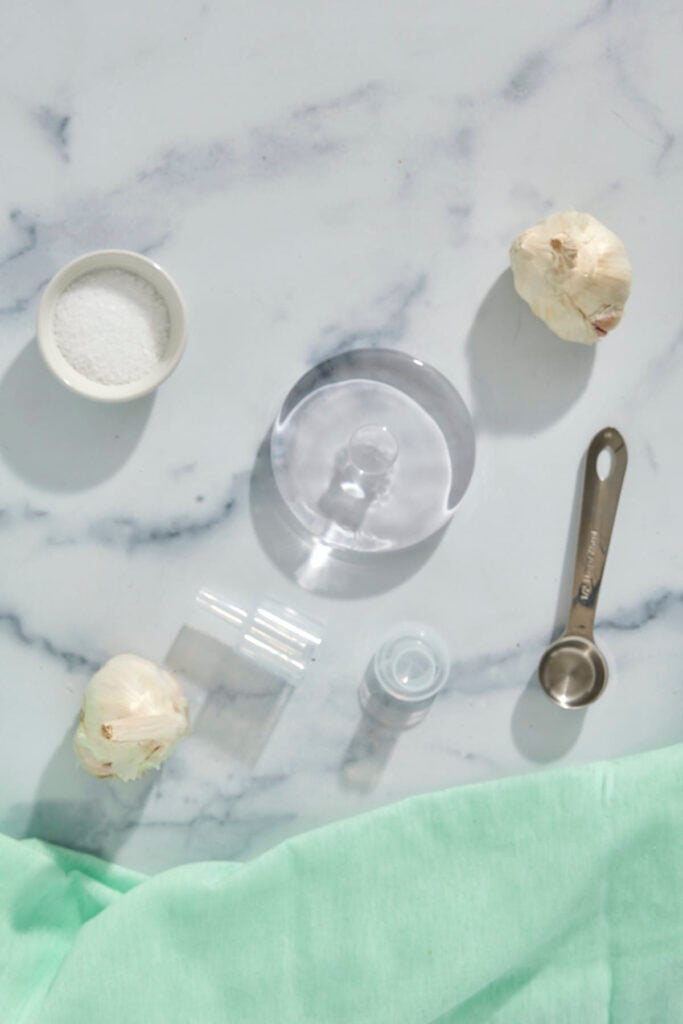
2 whole heads fresh garlic, peeled into individual cloves and left whole
2 tablespoons pickling spice
80 grams pickling or canning salt
2 liters water
A few sprigs fresh dill, in season (optional)
Ingredient Notes
Mini cucumbers. When pickling cucumbers are out of season I use minis. Skip any that are waxed. Wax keeps the brine from penetrating the cucumber.
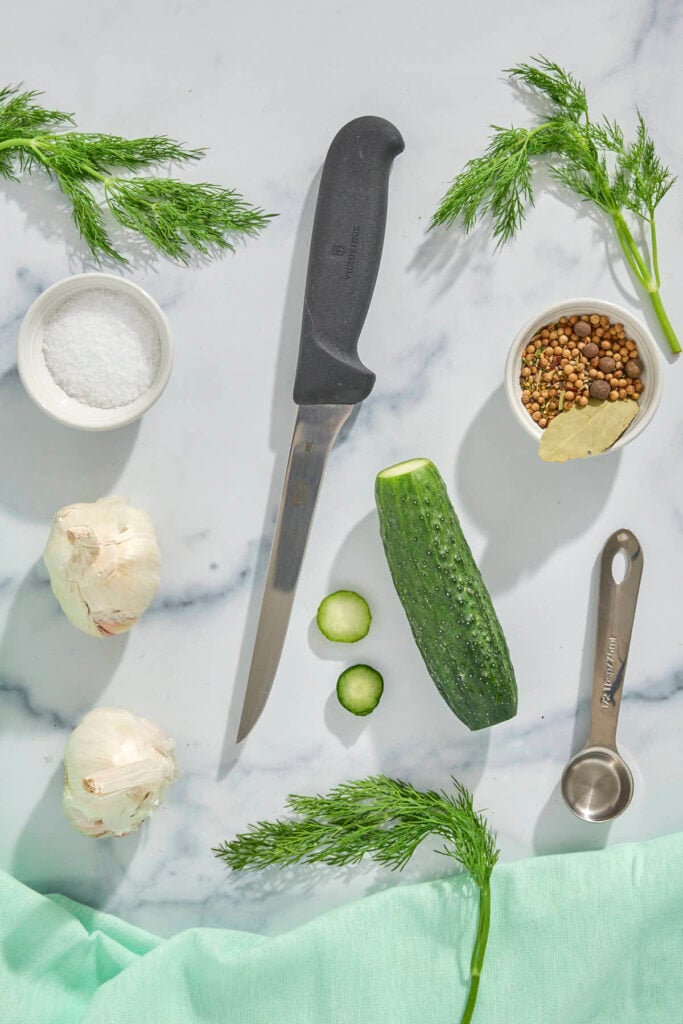
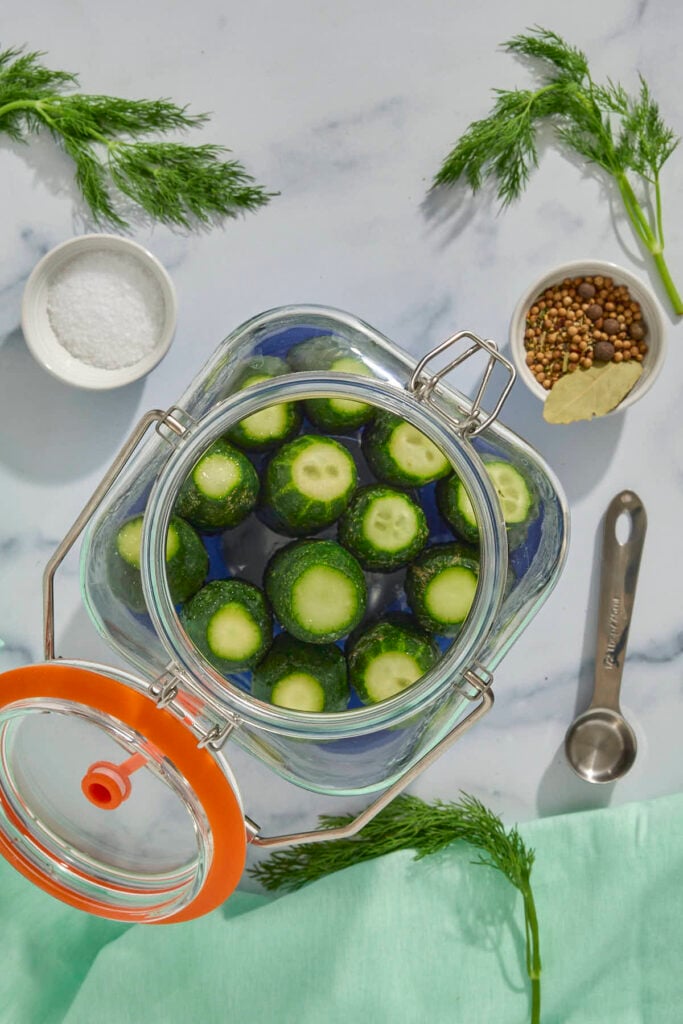
The blossom end. Cut a thin slice off the blossom end of every cucumber, the end opposite the stem. The blossom end holds enzymes that soften pickles. If you’re unsure, it is fine to trim both ends just in case.
Garlic and spices. Use fresh garlic and fresh spices. Old ones can bring mold into the jar. Whole cloves give a clear garlic flavor without any chopping. A few sprigs of fresh dill go well when it’s in season.
Salt. Use pickling or canning salt. Iodine and anti-caking agents in table salt can darken the pickles and cloud the brine. Weigh it. A tablespoon of fine salt and a tablespoon of flaky salt are very different amounts.
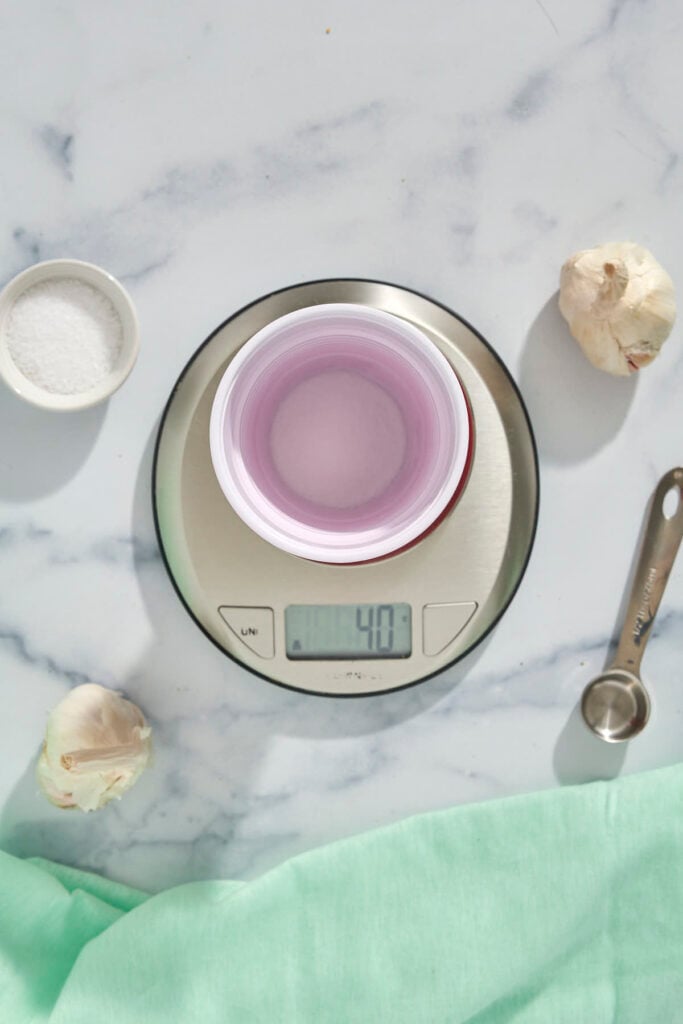
The brine. Forty grams of salt per liter of water makes a 4% brine. That is 80 grams in 2 liters. Mix extra at the same ratio to top off the jar. Some people prefer a stronger 4.5% or 5% brine, either is fine.
How to Make Lacto Fermented Pickles
- Wash the cucumbers. Scrub them under cool running water. Soil carries bacteria that soften pickles.
- Trim the blossom ends. Cut a thin slice off each cucumber and discard it. This keeps the softening enzymes out of the jar.
- Mix the brine. Stir 80 grams of salt into 2 liters of water until no grains remain. Weighing keeps the brine at 4%.
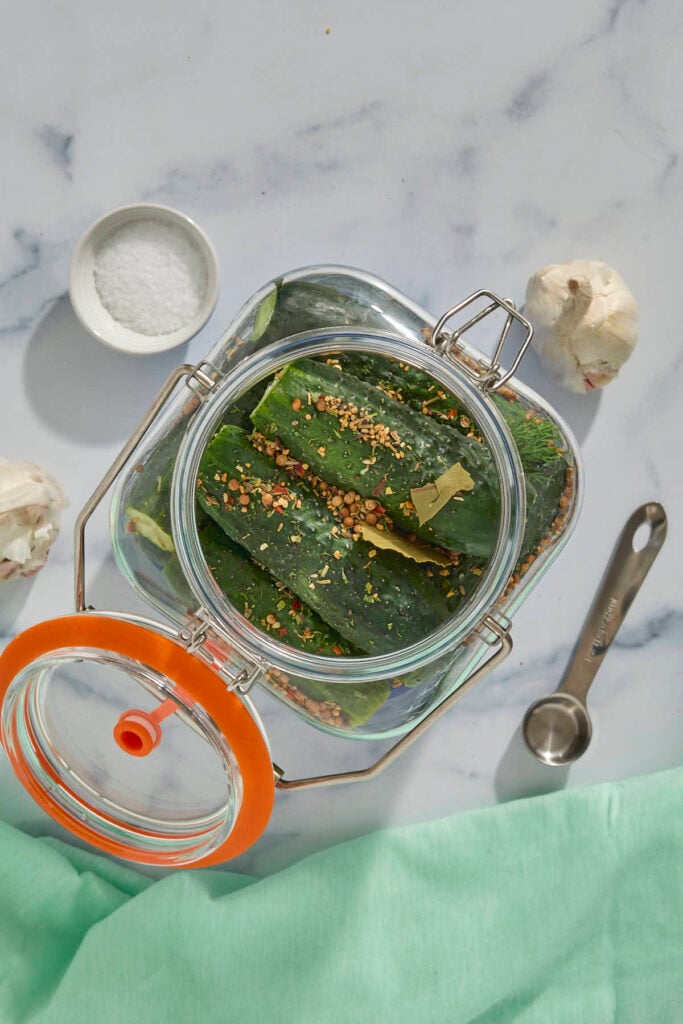
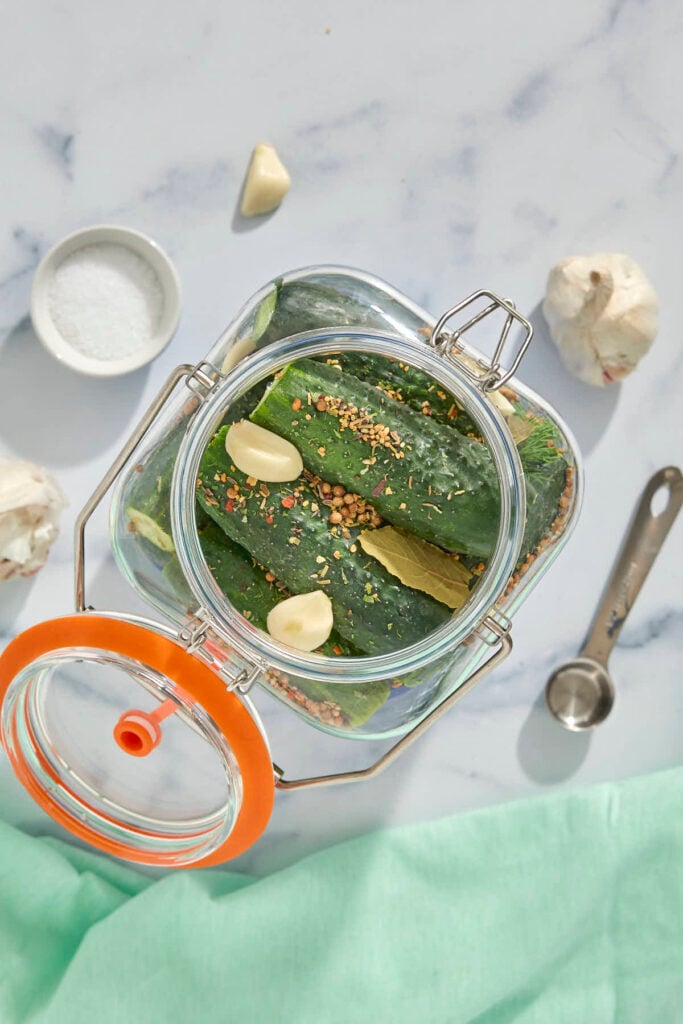
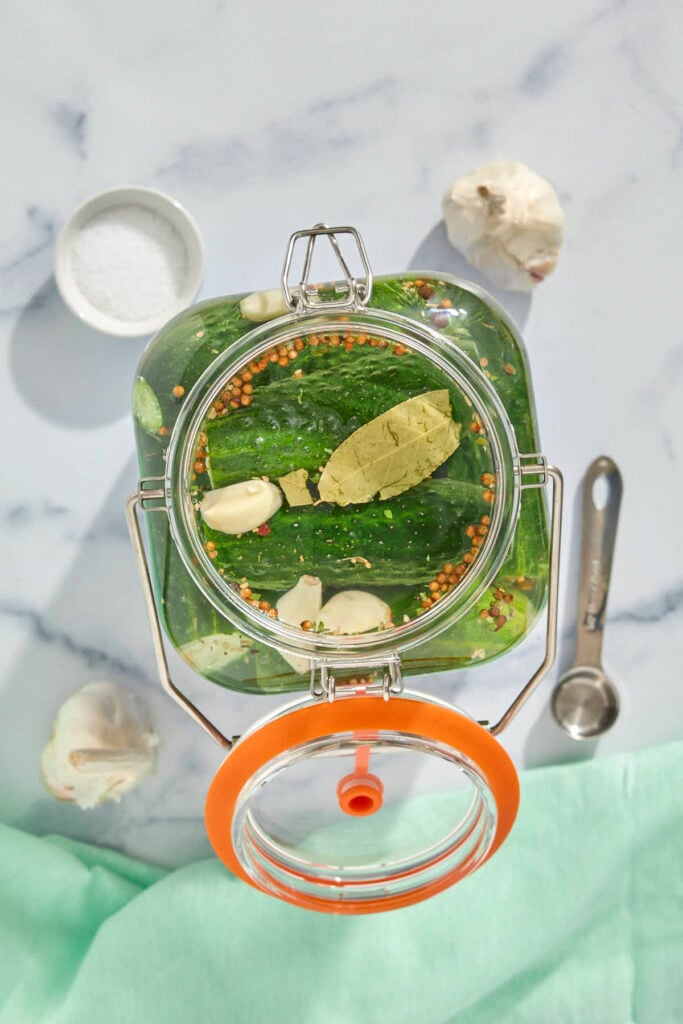
- Fill the jar. Put the garlic, pickling spice, and dill in the bottom of the gallon jar. Add the cucumbers and pack them snugly. Leave small gaps so brine can circulate around each one.
- Add the brine. Pour it over until every cucumber is covered. Top off with extra brine at the same ratio if the jar needs it.
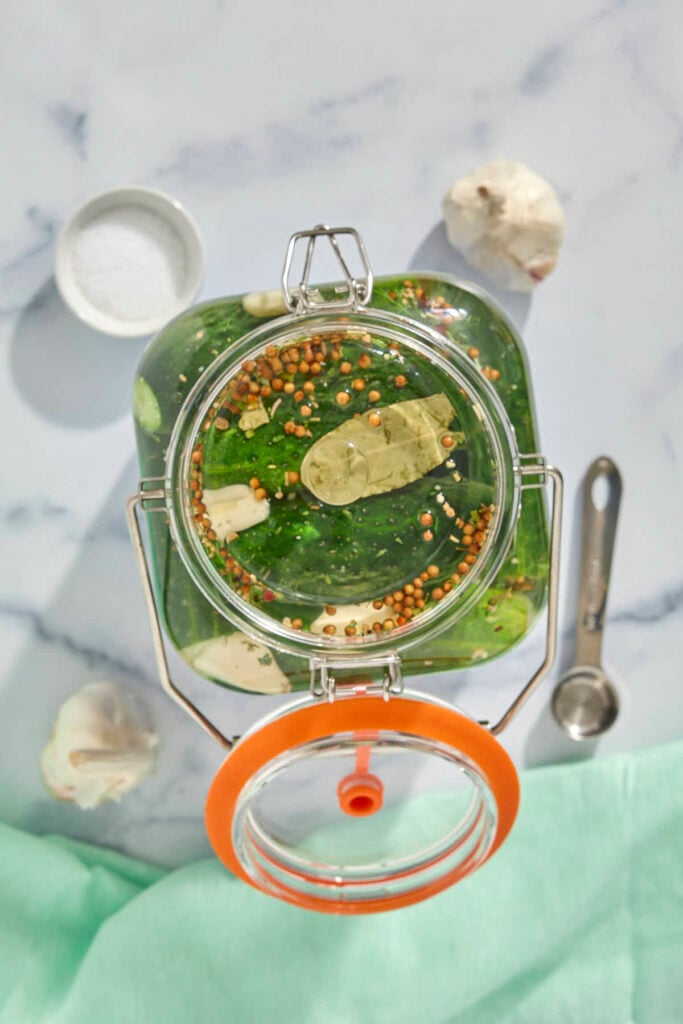
- Weigh everything down. Set the glass weights on top to keep every cucumber under the brine. Anything above the surface sits in air, and air is where mold and yeast get a start.
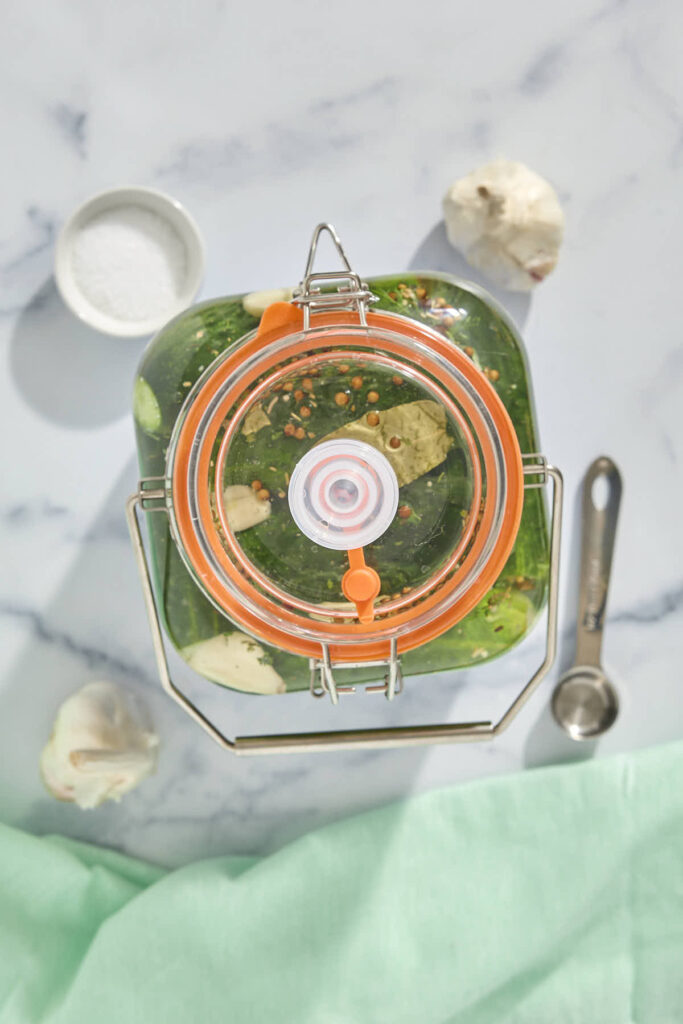
- Cover the jar. Set the lid on loosely to let gas escape. Keep the jar out of direct light.
- Ferment at room temperature. At 70 to 75°F the pickles take about 3 to 4 weeks. A cooler room stretches that to 5 or 6 weeks. A room above 80°F makes soft pickles.
- Check the jar often. Look at it every day or two. Push the weights down if anything rises. Taste a pickle now and then. The sourness builds with time, and you decide when it’s right.
- Refrigerate. Move the jar to the fridge when the pickles taste the way you want. Cold slows fermentation, and the pickles keep for 4 to 6 months.
Keeping Your Pickles Submerged and Clean
Cucumbers under the brine ferment. Cucumbers above it sit in air, which is where mold and yeast start.
I use glass weights to hold everything under the brine. Other setups handle the same problem with different gear, such as airlock lids and water-seal crocks. Some fermenters insist a weight and an airlock aren’t needed and say they have perfect success without them. Good for them. I like to keep things as simple as possible and control the environment, so nothing has a chance to grow in the first place.
Mold or Kahm Yeast?
Something showing up on the surface does not always end the batch. Look closely before deciding.
Kahm yeast is a wild yeast. It forms a thin, flat white film across the top of the brine, often wrinkled or stringy, with tiny bubbles trapped underneath. Kahm flakes apart when you touch it. It is harmless. Skim it off and check that the cucumbers are still submerged. Heavy kahm can soften pickles, so eat that jar sooner.
Mold is fuzzy and raised, and it grows in patches. It can be blue, green, black, brown, or white. It comes off in a chunk instead of flaking apart. In a salt brine like this one, mold stays on the surface. Remove it completely along with any cucumber that was floating above the brine. Cucumbers that stayed under the brine the whole time are fine. Eat that jar soon and keep it in the fridge. Mold tends to come back.
The batch goes in the trash if the mold has spread across the surface or you aren’t sure what you’re looking at. Pickles that turn soft or slimy, or smell bad, go in the trash as well.
For photos and more detail, Fermenting for Foodies has a good guide to preventing kahm yeast and mold in fermentation.
Can You Eat Lacto Fermented Pickles on a GLP-1 Diet?
- Carbs. Cucumbers are low in carbs, and the bacteria convert their carbohydrate into lactic acid. No sugar goes in the brine.
- Fiber and live cultures. A few pickles on the plate bring both without taking much room.
- Sodium. The brine is salty, and the pickles carry that salt. If you’re on a sodium limit, check with your prescriber or dietitian before eating them daily.
Recipes to Serve With Pickles and Other Condiments to Make
- Juicy Steak Lettuce Wraps
- Keto Guacamole
- Doner Kebab with Zero Carb Flatbread
- Homemade Pesto Recipe with Clean Ingredients
- Baked BBQ Chicken Thighs
Final Thoughts
A gallon jar, four pounds of cucumbers, and a few weeks on the counter replace a lot of shelf pickles and a lot of kombucha money. The jar holds garlic, spice, and live bacteria, with nothing added to make it last on a shelf.
If you make this recipe, rate it with the stars on the recipe card and leave a comment. Tell me what spices you used, how long yours fermented, and how sour you like it. If you know someone on a GLP-1 who is tired of paying for kombucha and kefir, send this to them.
Lacto Fermented Pickle Recipe
Ingredients
- 4 lbs pickling cucumbers or mini cucumbers
- 2 heads garlic peeled individual cloves
- 2 tbsp pickling spice
- 80 grams pickling and canning salt
- 2 liters water
- 2 sprigs fresh dill optional
Instructions
- Wash the cucumbers. Scrub them under cool running water. Soil carries bacteria that soften pickles.
- Trim the blossom ends. Cut a thin slice off each cucumber and discard it. This keeps the softening enzymes out of the jar.
- Mix the brine. Stir 80 grams of salt into 2 liters of water until no grains remain. Weighing keeps the brine at 4%.
- Fill the jar. Put the garlic, pickling spice, and dill in the bottom of the gallon jar. Add the cucumbers and pack them snugly. Leave small gaps so brine can circulate around each one.
- Add the brine. Pour it over until every cucumber is covered. Top off with extra brine at the same ratio if the jar needs it.
- Weigh everything down. Set the glass weights on top to keep every cucumber under the brine. Anything above the surface sits in air, and air is where mold and yeast get a start.
- Cover the jar. Set the lid on loosely to let gas escape. Keep the jar out of direct light.
- Ferment at room temperature. At 70 to 75°F the pickles take about 3 to 4 weeks. A cooler room stretches that to 5 or 6 weeks. A room above 80°F makes soft pickles.
- Check the jar often. Look at it every day or two. Push the weights down if anything rises. Taste a pickle now and then. The sourness builds with time, and you decide when it’s right.
- Refrigerate. Move the jar to the fridge when the pickles taste the way you want. Cold slows fermentation, and the pickles keep for 4 to 6 months.