Dutch Peanut Satay Sauce (Low-Carb Satésaus)
Dutch peanut satay sauce with Indonesian flavor and sugar free swaps. Great with chicken skewers or vegetables and built for a GLP-1 diet.
This low-carb peanut satay sauce is a Dutch creation, built on Indonesian flavors but with smart swaps that keep the sugar out. Peanut butter leads, a gentle sambal heat follows, and the sweetness stays low. It is milder than the Thai version, with no curry paste or fish sauce.
This easy sauce cooks in one pan in just minutes. Natural peanut butter, coconut milk, fresh ginger, garlic, shallots, and sambal make the base. Soy sauce and allulose stand in for ketjap manis, which is full of sugar and can be hard to find in America anyways.
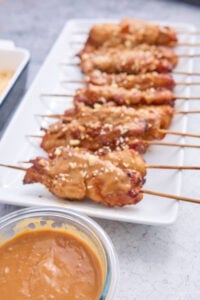
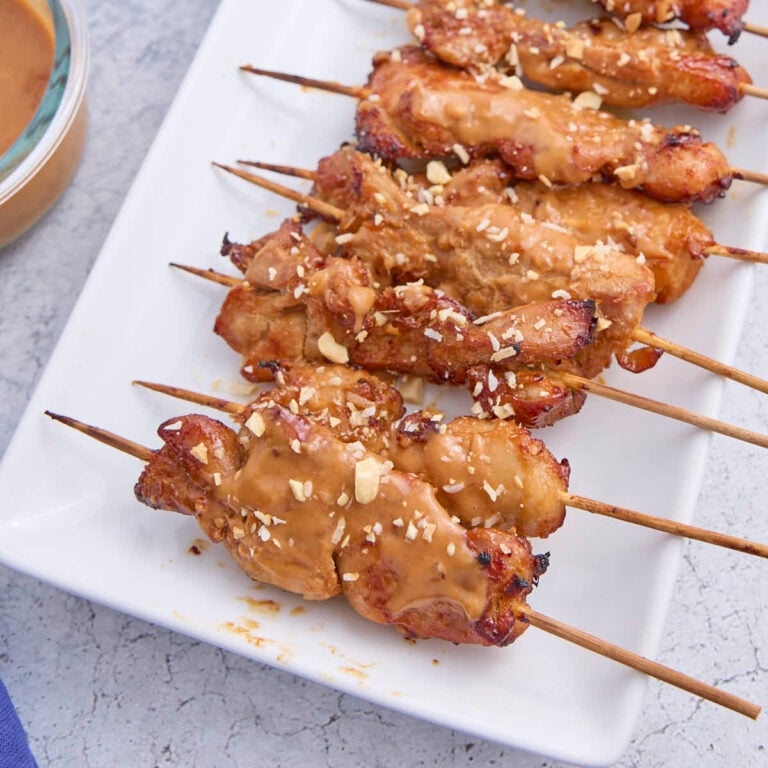
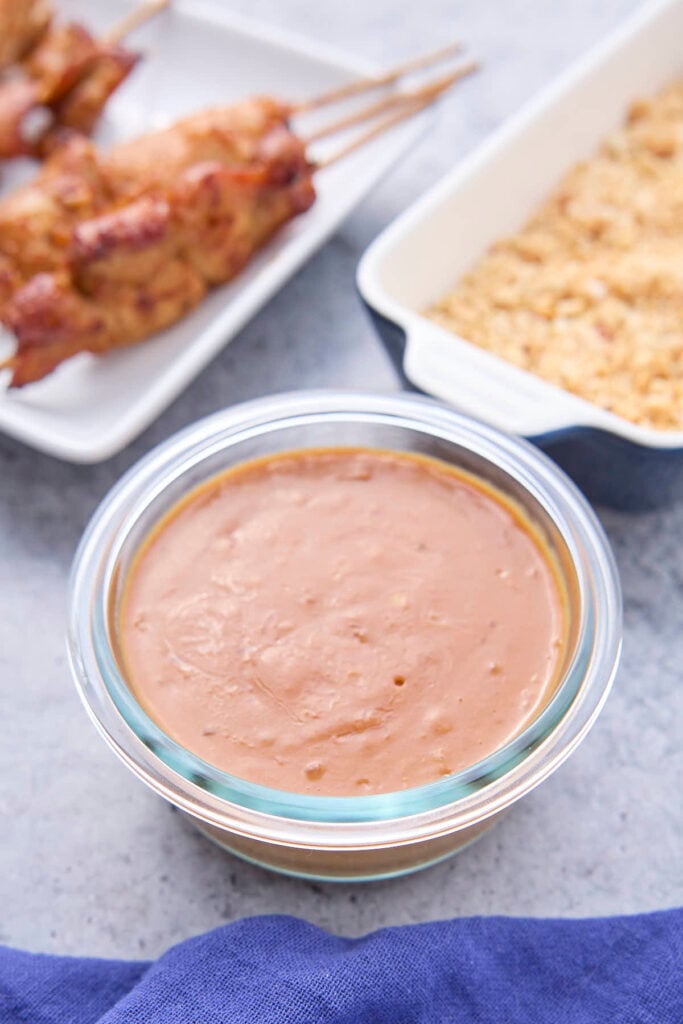
Our sauce’s texture is slightly thinner than ketchup. It is thick like gravy, pourable, and still coats a chicken skewer, which makes it a natural match for grilled chicken satay.
This GLP-1 diet has me rebuilding a lot of the foods we love with lower-carb ingredients, and this satésaus is one of them. As a low-carb sauce for grilled chicken and vegetables, it fits a GLP-1 diet.
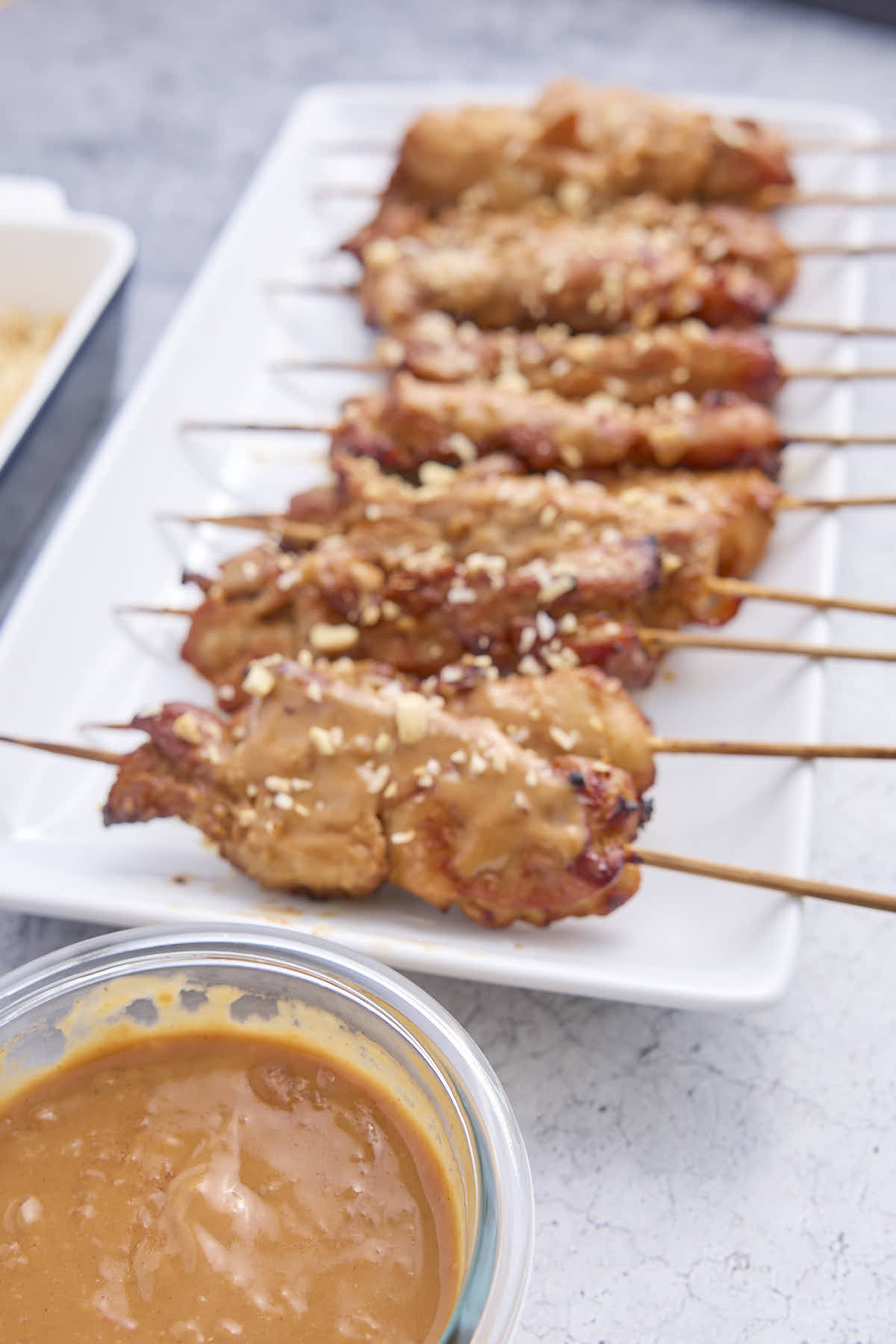
Table of contents
Where Dutch Peanut Satay Sauce Comes From
This peanut sauce started in Indonesia, where it is called bumbu kacang. The traditional version starts with raw peanuts fried or roasted in oil, then ground with aromatics in a mortar and pestle. Kecap manis, tamarind, garlic, and chiles give it flavor. Java’s version runs sweeter, and Bali’s runs spicier. It goes on satay and on gado-gado, an Indonesian vegetable dish.
The sauce reached the Netherlands through Dutch colonization of the East Indies. The Dutch call it satésaus or pindasaus, and a typical version is slightly sweet and slightly spicy. Ground roasted peanuts are the traditional base, and peanut butter can act as a substitute. That swap trimmed the work, and the aromatics shrank with it. A basic Dutch recipe simmers peanut butter with coconut milk, ketjap manis, and sambal oelek, along with shallot, garlic, and ginger.
Our version follows that lead. Fresh ginger and garlic keep the aromatics simple, and sambal keeps the heat gentle.
How Dutch Peanut Sauce Differs From Thai Peanut Sauce
Thai-style satay sauce starts with red curry paste and coconut milk. Many versions add fish sauce and oyster sauce on top of the curry paste. The Dutch sauce skips both. Its savory side comes from soy sauce, and its sweetness stays moderate.
Why Make Your Own Instead of Buying It
Sugar and soybean oil are the two reasons we make our own. On the Thai Kitchen jar, water, coconut milk, sugar, and soybean oil all come before the peanuts. A 2-tablespoon serving has 5 grams of added sugar. The American Heart Association recommends limiting added sugar to about 36 grams a day for most men and 25 grams for most women. That adds up fast when a sauce goes on everything. Here the sweetness comes from allulose.
Soybean oil is also high in omega-6 linoleic acid. It supplies about 45 percent of the linoleic acid in the American diet, and that share grew as it became a main additive in processed foods. Researchers still debate what that much omega-6 does to health, and we don’t need to settle it to make the call. This sauce already gets its fat from peanut butter and coconut milk, so a jar’s soybean oil has no job to do here.
Why Allulose and Soy Sauce Replace Ketjap Manis
Ketjap manis is soy sauce sweetened with palm sugar, and it can contain up to 50 percent palm sugar. It does the work of a soy sauce and a sweetener in one bottle.
This recipe skips the bottle. Cooks have long swapped regular soy sauce and brown sugar for ketjap manis, and allulose makes the same swap without the sugar. Regular soy sauce supplies the salt and fermented depth. Brown-sugar-style allulose supplies the sweetness and a dark caramel note. Both go straight into the sauce, with no separate syrup to cook.
Ingredients for Peanut Satay Sauce
Peanut butter, coconut milk, and soy sauce make up the base. Fresh aromatics and sambal add the flavor, and everything goes in one saucepan.
- Avocado oil or refined coconut oil
- Shallot (or fine-minced onion)
- Garlic cloves
- Fresh ginger
- Natural smooth peanut butter
- Full-fat coconut milk
- Water
- Regular soy sauce
- Brown-sugar-style allulose
- Sambal oelek
- Lime juice
- Salt
See the recipe card below for amounts.
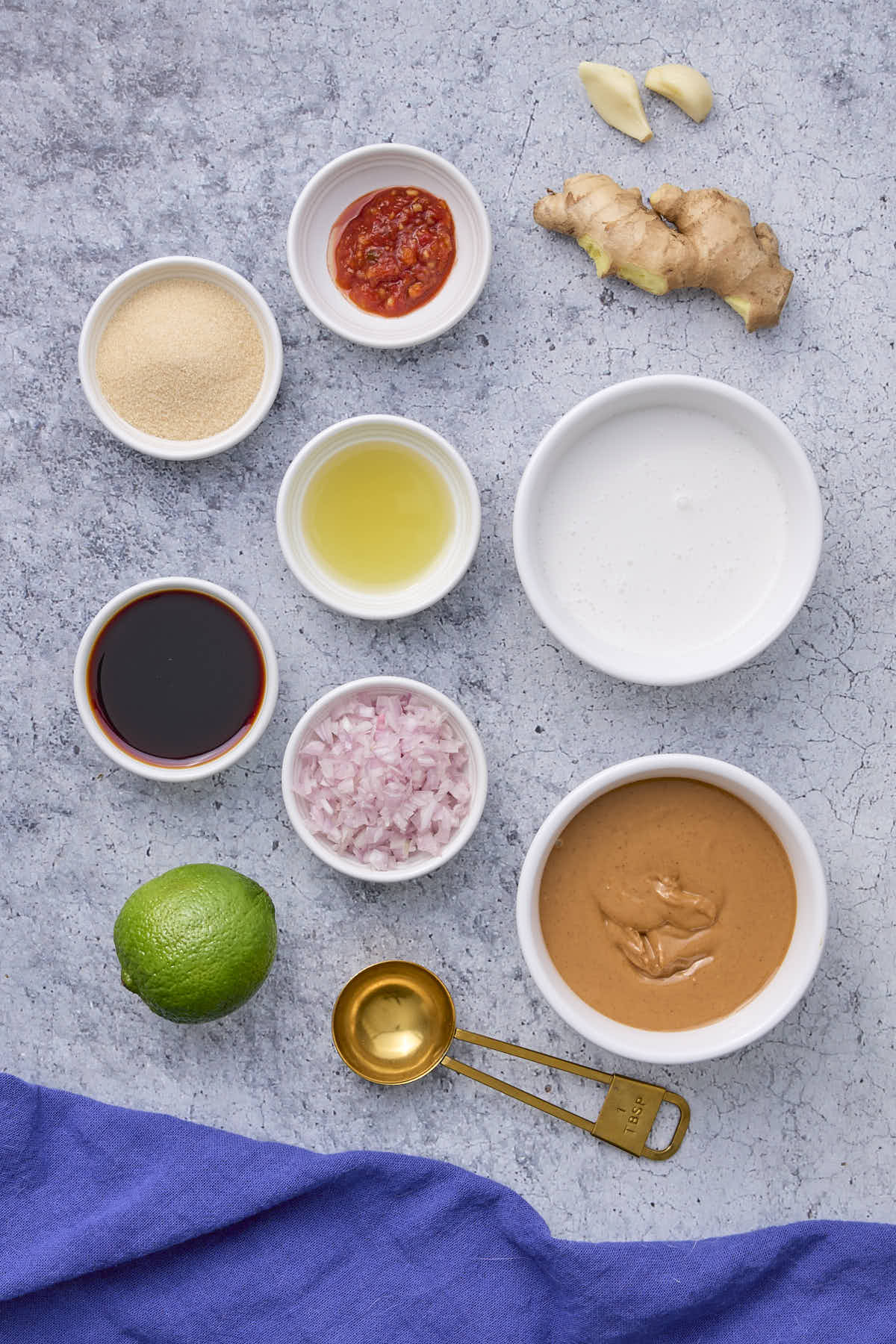
Ingredient Notes
Peanut butter: Natural, with peanuts and salt as the only ingredients. Sweetened peanut butter brings added sugars that we are avoiding on a GLP-1 diet.
Oil: Avocado oil is neutral. Refined coconut oil has no coconut flavor, which leaves the coconut milk as the only coconut note.
Soy sauce: Regular, not low-sodium. The salt carries the sauce.
Brown allulose: Start with the lower amount on the recipe card and taste it. The sauce should read savory first. Add more only if you want it sweeter.
Sambal oelek: The recipe card gives an amount for a mild sauce, you can add more to your liking.
Coconut milk: Full-fat from the can. Shake the can before opening.
Water: Add it a splash at a time. The recipe card amount is the starting point. Thin further once warm, to the texture you want.
Ginger and garlic: Fresh and grated fine. It melts into the sauce.
How to Make Peanut Satay Sauce
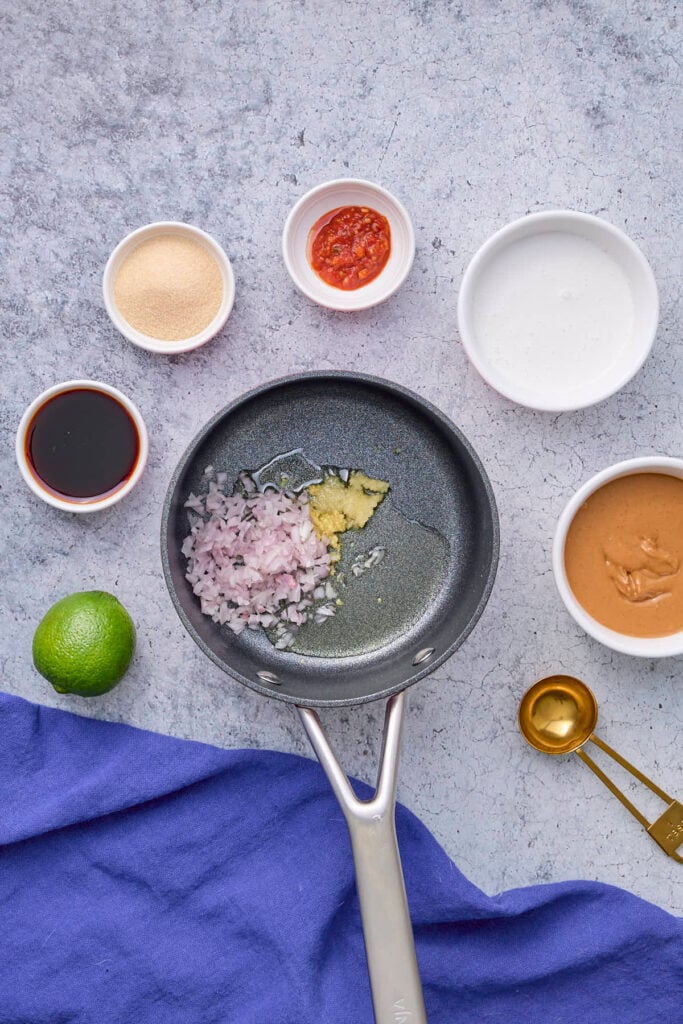
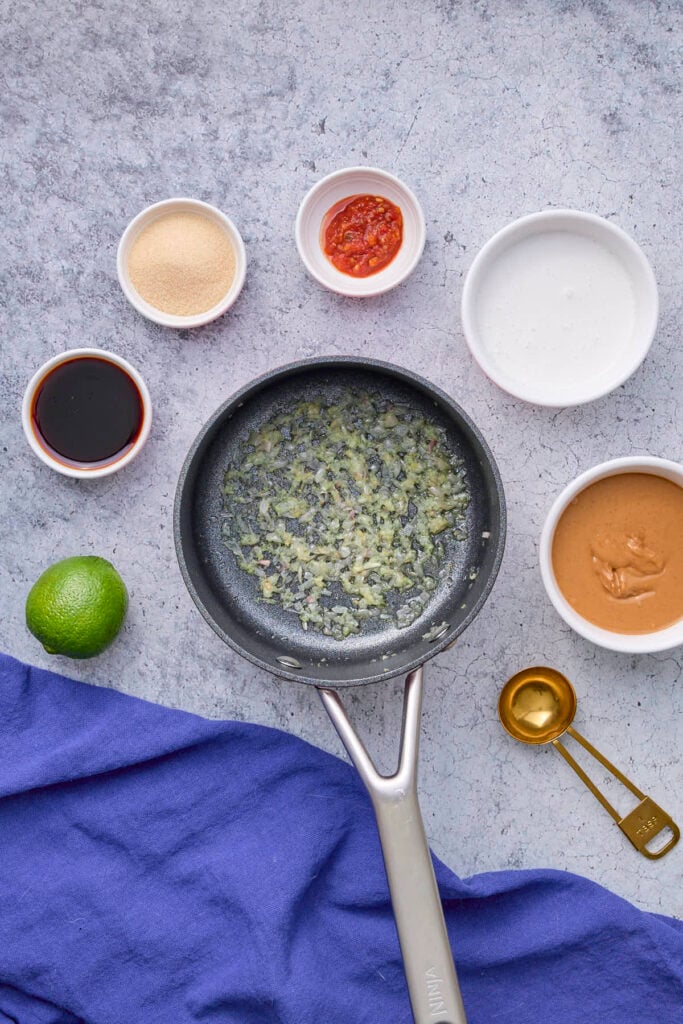
- Sauté the aromatics. Heat the oil in a heavy saucepan over medium-low. Cook the finely diced shallot, and the grated ginger and garlic until slightly translucent.
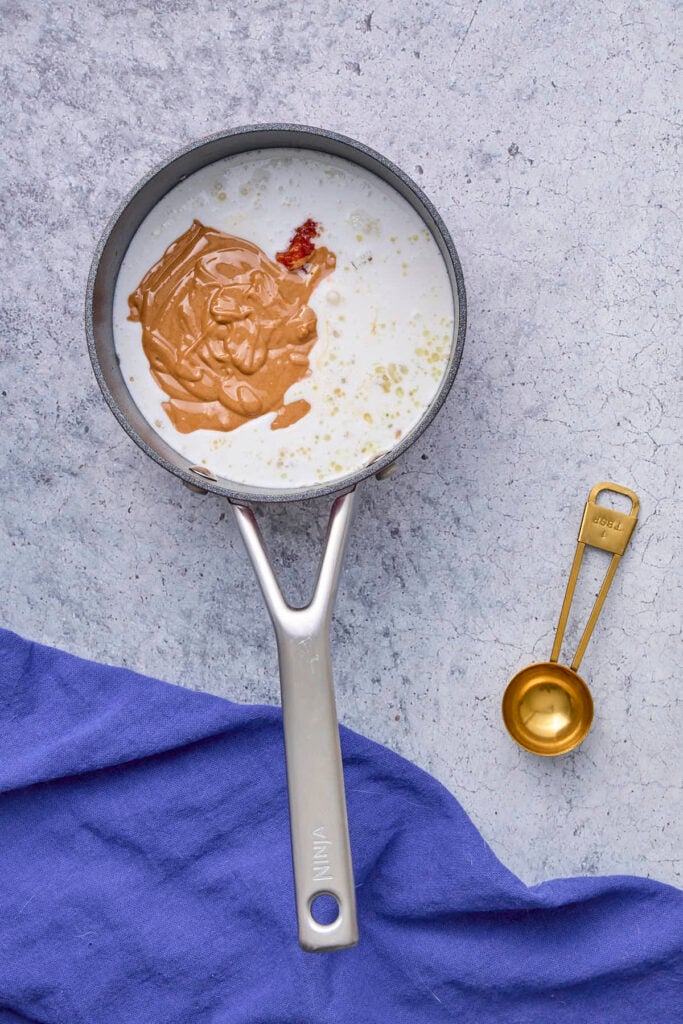
- Add the peanut butter, coconut milk, water, soy sauce, allulose, and sambal oelek all at once. Whisk to break up the peanut butter.
- Warm over low heat, whisking often, for 3 to 5 minutes. The peanut butter melts in, the allulose dissolves, and the sauce thickens. Keep it below a boil, since allulose browns quickly and a hard boil can split the peanut oil.
- Take the pan off the heat and stir in the lime juice. Taste, and add salt only if it needs it.
- The sauce should coat a spoon but still drip from it, and it will firm up as it cools. If it’s too thick, whisk in warm water a splash at a time.
Variations
Leaner, no coconut milk: Replace the coconut milk with water, added gradually until the texture matches.
Hotter: Add more sambal, or stir in a thinly sliced fresh chile at the end.
Crunchy: Use crunchy natural peanut butter. Albert Heijn’s base recipe calls for peanut butter with nut pieces.
Serving and Storage
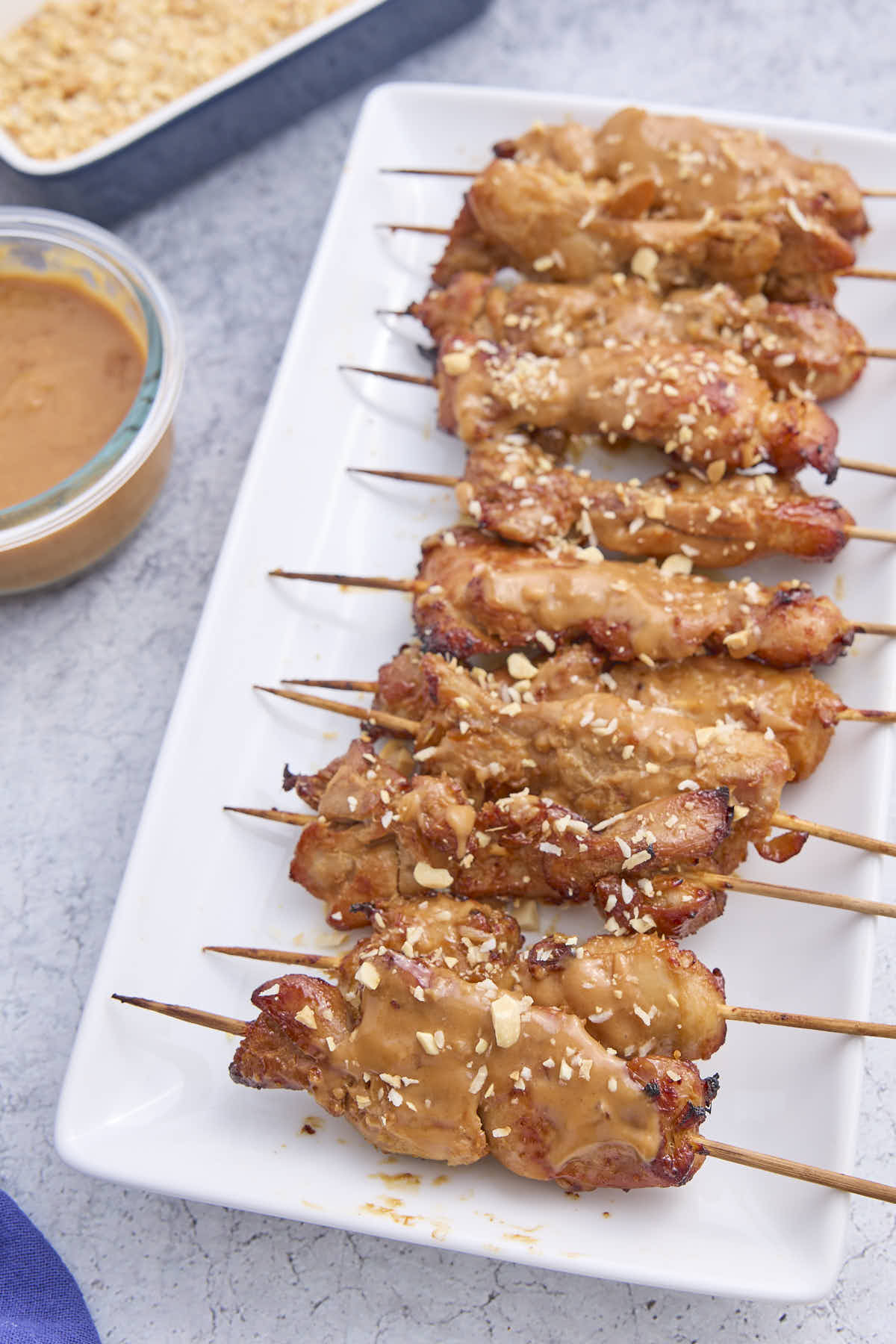
Chicken satay skewers are the traditional match. Albert Heijn also suggests the sauce with grilled pork chops and roasted chicken drumsticks, or as a dip for cucumber and celery sticks. Dutch cooks serve it with nasi and bami, or as a dip for kroepoek.
Refrigerate the sauce within 2 hours of cooking. USDA says cooked leftovers keep 3 to 4 days in the fridge and should be reheated to 165°F. The sauce sets up cold, so warm it in a saucepan with a splash of water, stirring, until it loosens. Leftovers can also be frozen.
Can You Eat Peanut Satay Sauce on a GLP-1 Diet?
Satay sauce makes plain grilled chicken or shrimp easier to finish, and that matters when protein is the priority. Used as a sauce over protein and vegetables, with real peanuts supplying the fat, this one fits a GLP-1 diet. Your prescriber or dietitian can help with portions that fit your plan.
Final Thoughts
This sauce comes from the Indonesian flavors that made their way into Dutch kitchens: peanut, ginger, garlic, soy, and a little heat from sambal oelek. The Dutch toned the original down, so satésaus and pindasaus are milder than the Indonesian versions. It works on my low-carb Dutch chicken satay skewers, grilled meat, and raw vegetables.
If you make it, leave a star rating and a comment below and tell me what you served it with.
Dutch Peanut Satay Sauce (Low-Carb Satésaus)
Ingredients
- ½ cup creamy natural peanut butter peanuts and salt only
- ½ cup full-fat coconut milk shake or stir the can first
- 2 tbsp water
- 2 medium shallots minced fine
- 2 cloves garlic grated
- 1 tsp fresh ginger grated
- 2 tbsp soy sauce
- 1 tbsp brown allulose substitute
- 2 tsp sambal oelek
- 1 tbsp avocado oil or refined coconut oil
- 1 tbsp lime juice stirred in at the end
Instructions
- Sauté the aromatics. Heat the oil in a heavy saucepan over medium-low. Cook the finely diced shallot, and the grated ginger and garlic until slightly translucent.
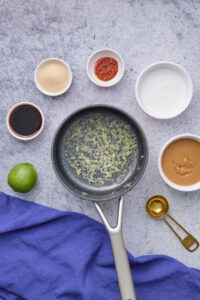
- Add the peanut butter, coconut milk, water, soy sauce, allulose, and sambal oelek all at once. Whisk to break up the peanut butter.

- Warm over low heat, whisking often, for 3 to 5 minutes. The peanut butter melts in, the allulose dissolves, and the sauce thickens. Keep it below a boil, since allulose browns quickly and a hard boil can split the peanut oil.
- Take the pan off the heat and stir in the lime juice. Taste, and add salt only if it needs it.
- The sauce should coat a spoon but still drip from it, and it will firm up as it cools. If it’s too thick, whisk in warm water a splash at a time.