Slow Cooker Chicken Stock for Weekly GLP-1 Diet Meal Prep
Savory, gelatinous slow cooker chicken stock from a raw or rotisserie chicken. A weekly meal prep must for soups and sauces on a GLP-1 diet.
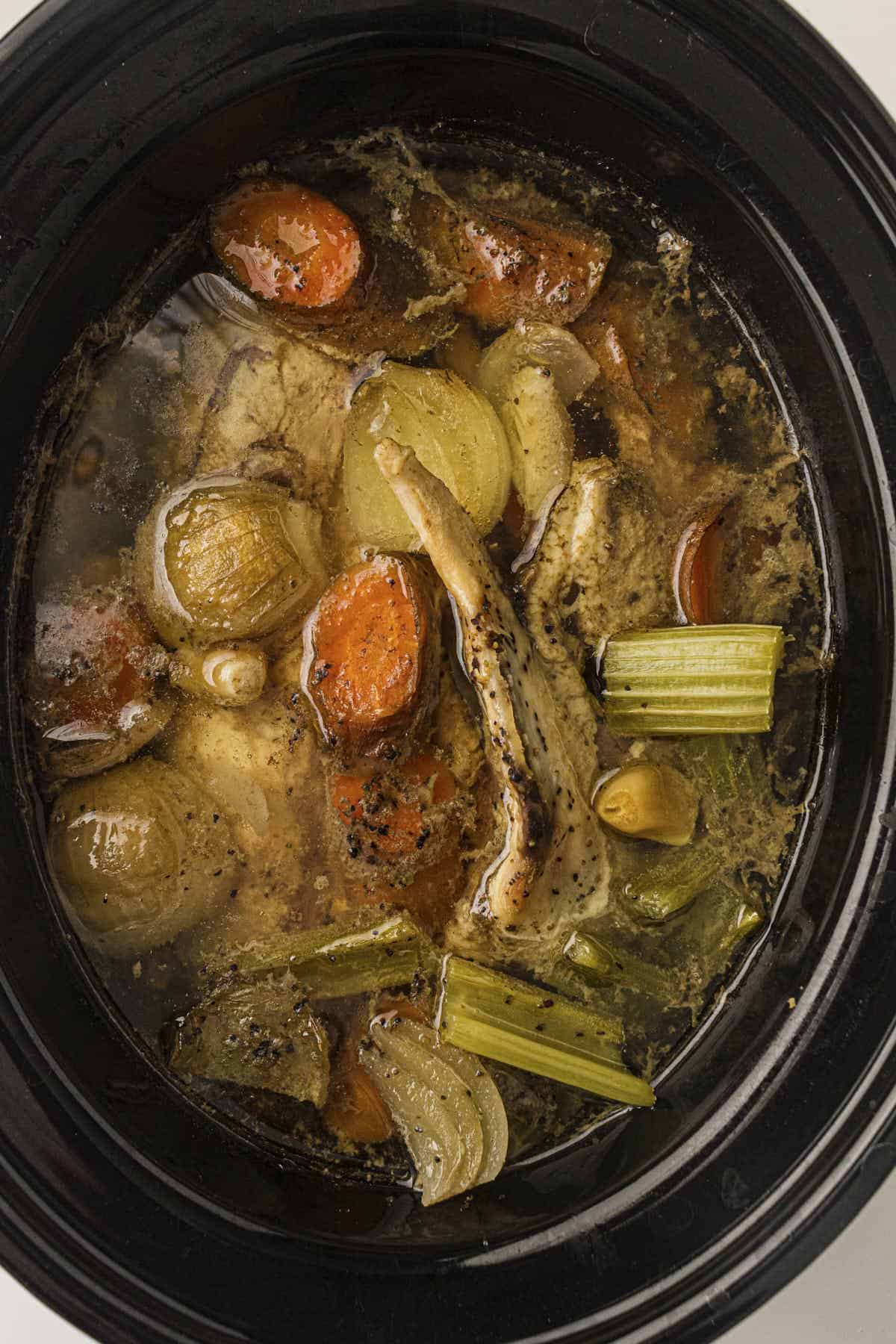
Table of contents
- One Chicken for Meat and Stock
- The Rotisserie Chicken Version
- Roasted or Raw Bones? Why I Stopped Worrying About It
- Why It Has to Be a Slow Cooker
- The Acid is Doing Real Chemistry
- Why This is the Pillar of My GLP-1 Meal Prep
- Ingredients for Slow Cooker Chicken Stock
- How to Make Slow Cooker Chicken Stock
- What I Actually Do With Stock All Week
- Soup is a Non-Negotiable on a GLP-1
- If Your Stock Does Not Gel
- How to Portion and Store it For the Week
- Frequently Asked Questions
- More Meal Prep Recipes and GLP-1 Reading
- Final Thoughts
One day a week, a whole chicken goes in the slow cooker. That is the entire plan.
By the next morning I have two quarts of stock that sets like jelly in the refrigerator. I also have a container of pulled chicken sitting next to it. That is most of my protein for the week, already done.
One bird. One appliance. No pot to watch.
I have made this every single week since I started on Wegovy. It has done more for how I actually eat than any other habit I picked up. Not because it is clever. Because it is the thing that makes the rest of the week possible.
Here is what I mean by that. When you are eating a third of what you used to eat, every bite has to earn its place. Plain steamed broccoli is a waste of a small appetite. Broccoli finished in real stock is something you will actually want to eat.
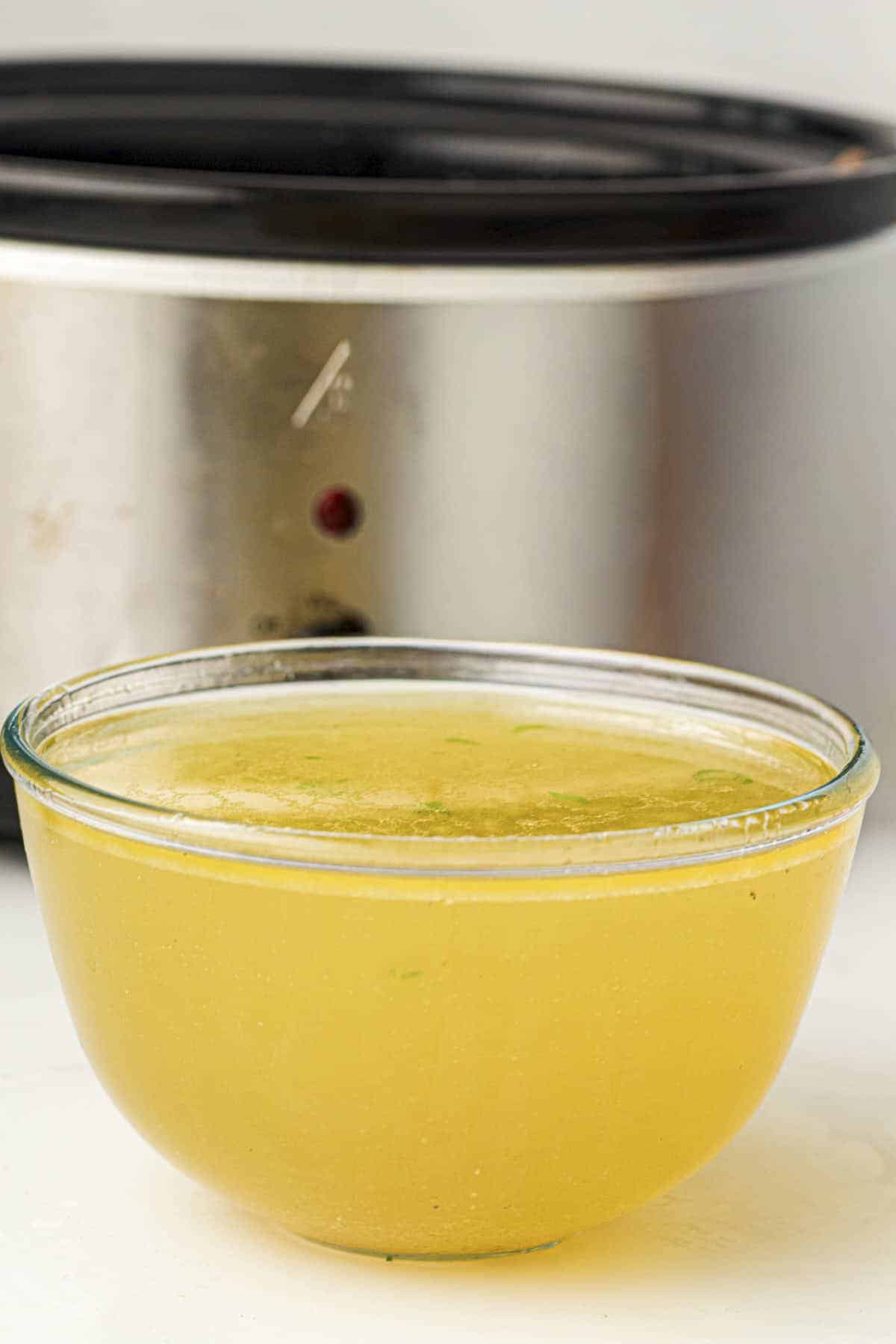
A gelatinous stock is the whole point. It means the collagen came out of the bones and into the liquid. That is the difference between real stock and the salty brown water sold in cartons.
And on the bad days, the days when food is genuinely hard, a hot mug of salted stock goes down when nothing else will.
One Chicken for Meat and Stock
Most stock recipes start with bones you already used for something else. Mine starts with the whole raw bird, because I want the meat too.
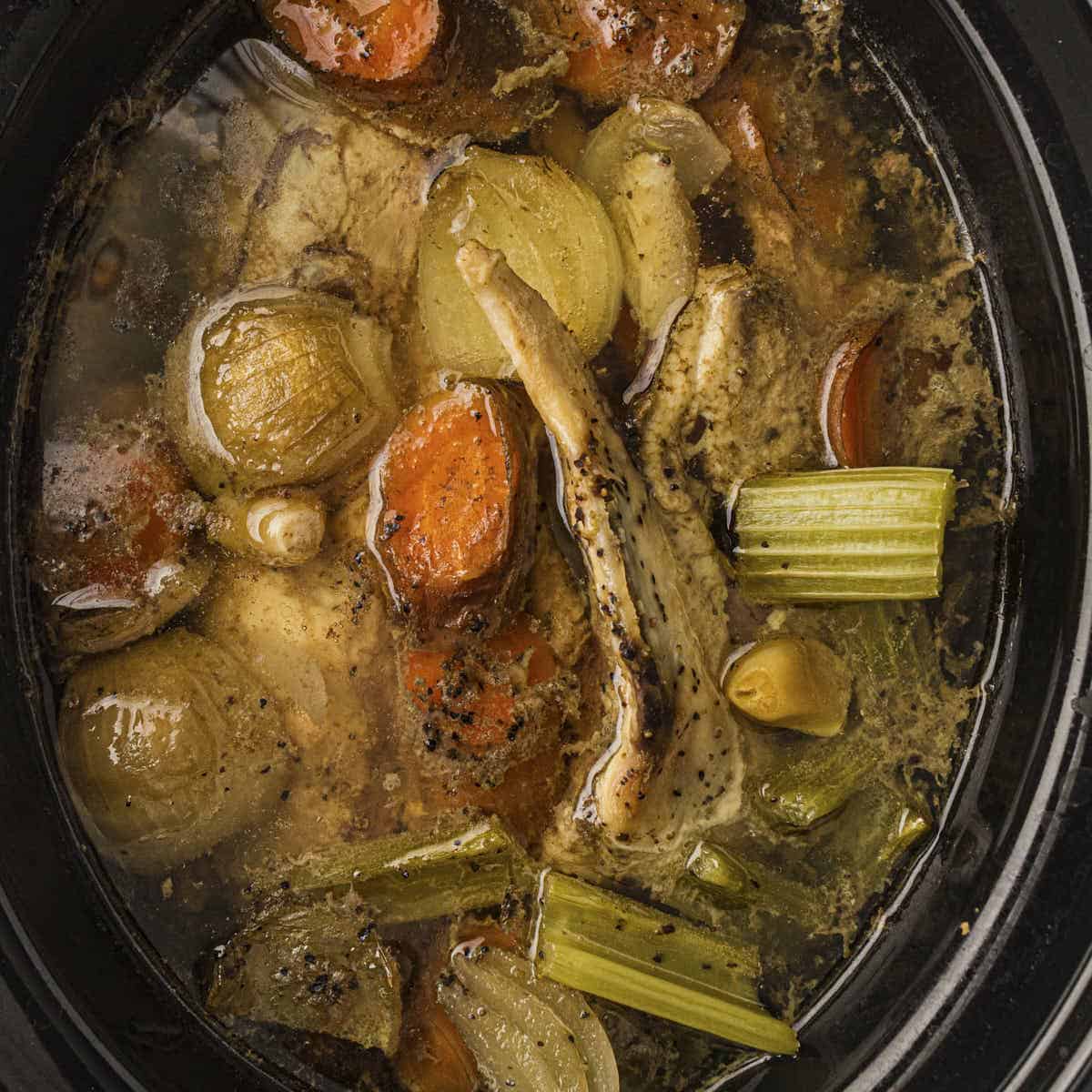
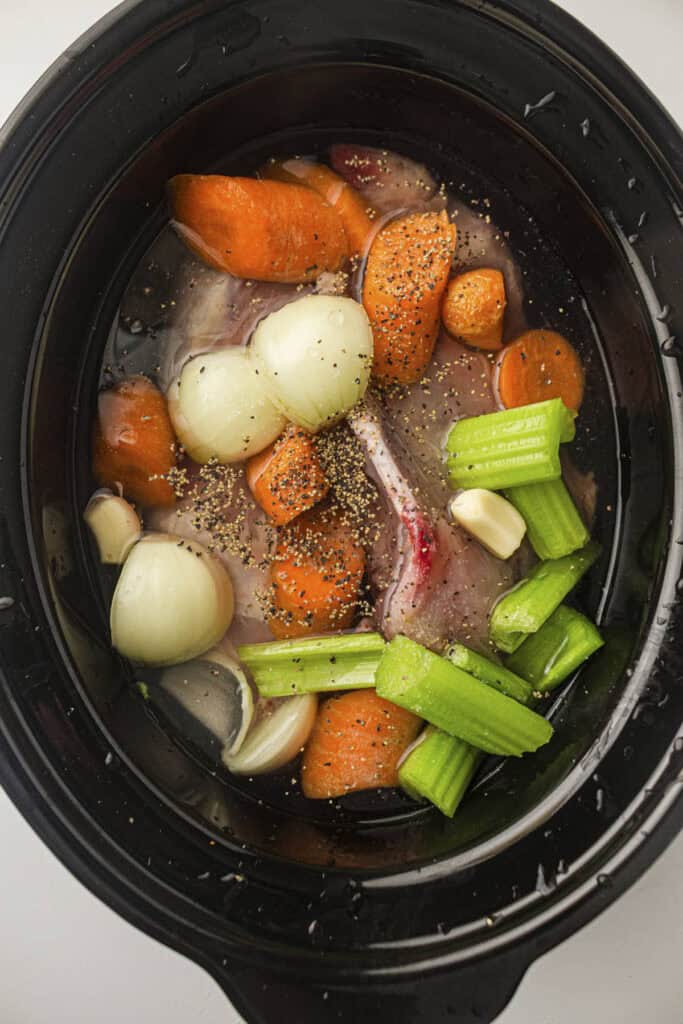
Put a whole chicken in the slow cooker. Add the vegetables, the vinegar, and enough water to cover it by an inch.
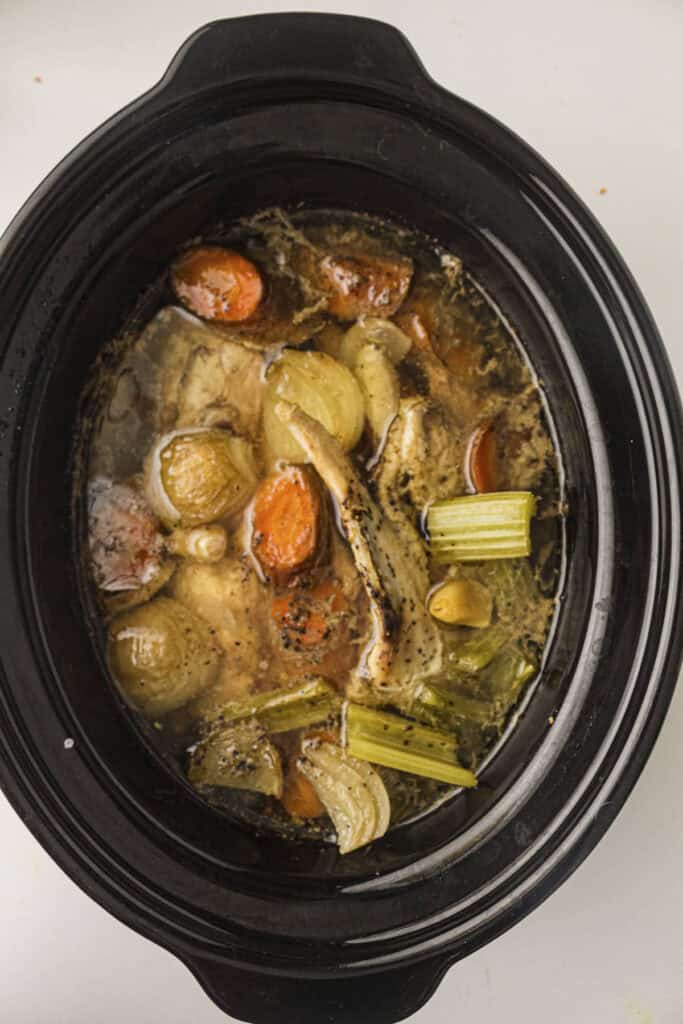
Cook on low for four to six hours. Lift the bird out onto a sheet pan and let it cool enough to handle.
The meat comes off in sheets. Pull all of it, put it in a container, and refrigerate it. Your week’s protein is finished and you have not started the stock yet.
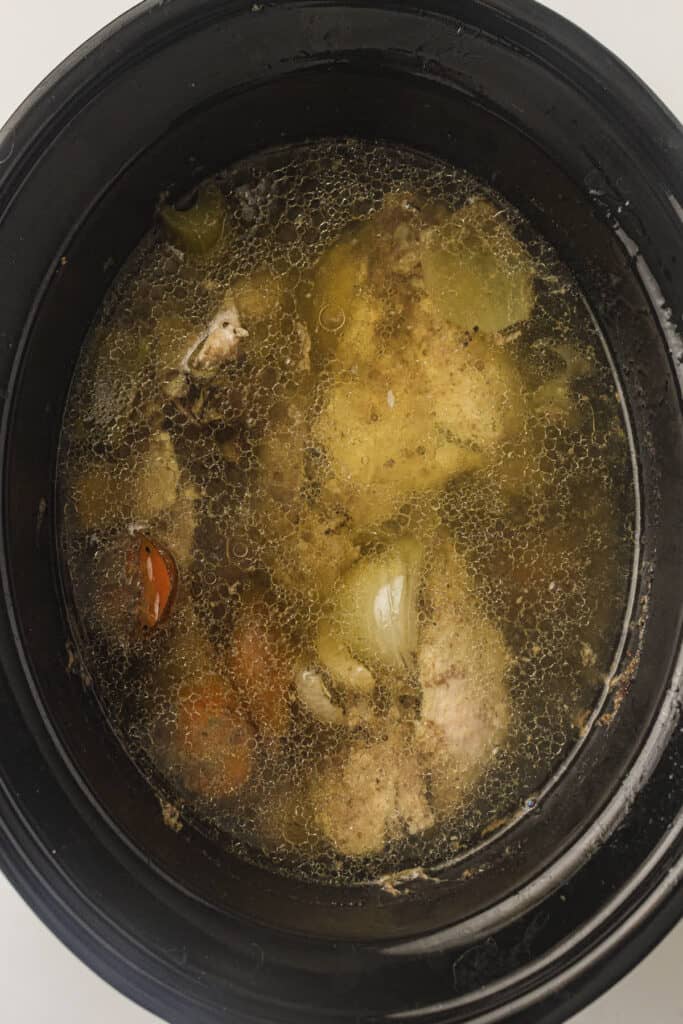
Then every bone, every scrap of cartilage, and the whole picked-over frame goes straight back into the same liquid. Lid on, low, another eight to twelve hours.
Stage one cooks your dinner. Stage two builds the stock.
Do not skip the pull and just run a whole bird for eighteen hours. You can, and the stock will be fine. But the meat turns to grey mush and tastes like nothing, and you just threw away four pounds of protein to save ten minutes of work.
The Rotisserie Chicken Version
Some weeks I do not cook a bird at all. I buy a rotisserie chicken on the way home and that is dinner.
That carcass makes excellent stock. Better in one way, because the bird was already roasted, and roasting has run the Maillard reaction across all that surface area before the bones ever hit water.
Strip the meat off for the week. Put the bare carcass in the slow cooker and skip stage one entirely. Twelve to eighteen hours on low and you are done.
Two things to know before you do it.
Cut the salt. Rotisserie birds are heavily salted and a lot of that comes out into the stock. Start with a half teaspoon instead of a full one, and salt to taste at the end instead of the beginning.
Read the rub. Most grocery store rotisserie chickens carry sugar and some carry maltodextrin. Spread across ten cups of water over twelve hours it is a rounding error, and I am not going to pretend otherwise. But you should know what you bought.
The skin can go in the pot. It just means a thicker fat cap to lift off later, and that fat is the good part.
Roasted or Raw Bones? Why I Stopped Worrying About It
Both work. This is the thing people get most precious about and it matters least.
Raw bones give you a pale, clean, delicate stock. Roasted bones give you a darker and deeper one. Neither one fails.
What actually determines whether your stock is good is the ratio of bone to water and the amount of joint in the pot. Roasting is a flavor decision. Collagen is a structural one.
So use whatever bird you have. A whole raw chicken on Sunday, a rotisserie carcass on Wednesday, or the frame from classic roast chicken if that is what you made.
I also keep a freezer bag going for the odds and ends. Bones from air fryer chicken thighs and air fryer chicken drumsticks go in there. Drumstick ends are the most collagen dense part of the whole bird, and they cost nothing.
Throw a handful of that bag into any batch and it will gel harder.
Why It Has to Be a Slow Cooker
Because twelve to eighteen hours on a stove is not something a person actually does.
You would have to be home all day, watching it, topping up water, keeping it below a boil. A slow cooker on low sits at around 200 degrees, which is exactly where you want it. It holds that overnight without you in the room.
A hard boil is the enemy. Boiling emulsifies the fat into the liquid and gives you cloudy, greasy stock. Low and slow gives you clear stock with the fat sitting on top where you can lift it off in one piece.
This is also the entire reason it survives as a weekly habit. Start it after dinner, strain it before work. It costs you about fifteen minutes of attention spread across two days.
Anything that costs more than that does not survive contact with a real week.
The Acid is Doing Real Chemistry
One tablespoon of apple cider vinegar in the whole pot.
You will not taste it. What it does is lower the pH of the water enough to help pull minerals and collagen out of the bone matrix. Collagen breaks down into gelatin, and gelatin is what makes the stock set when it goes cold.
One tablespoon is enough. More does not extract more, and it does start to taste sour.
Why This is the Pillar of My GLP-1 Meal Prep
Everything else I prep in a given week hangs off this one pot. Three reasons, and the third is the one nobody talks about.
Protein you can drink. On a day when eating is genuinely hard, a mug of stock is real protein and it goes down when solid food will not. The protein anchor covers why hitting the total matters so much on these medications.
Electrolytes and fluid, which is where most people are short. A reduced appetite means reduced fluid and reduced sodium, and almost nobody accounts for that. A lot of what gets described as Ozempic fatigue is plain dehydration and low electrolytes. Salted stock handles both at once and it is a far better tool than a sports drink full of sugar.
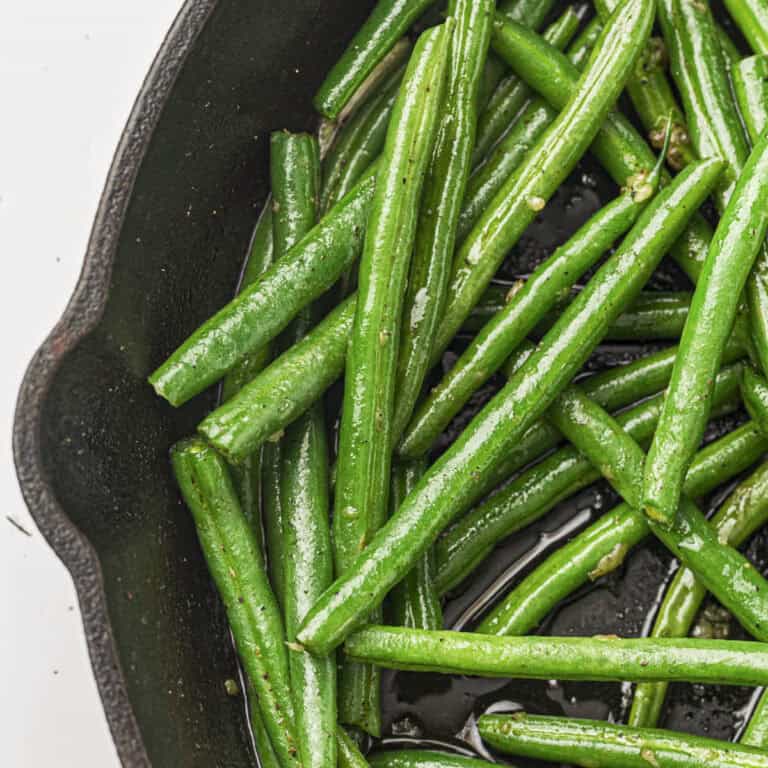
It makes vegetables worth eating. This is the quiet one. Cook anything in real stock instead of water and it tastes like something. That is how you actually get vegetables into a small appetite, rather than staring at a plate of plain green beans and skipping them. More on the framework in what is a GLP-1 diet.
Two quarts is roughly enough for a week. That is not an accident, it is why I make this much.
Ingredients for Slow Cooker Chicken Stock
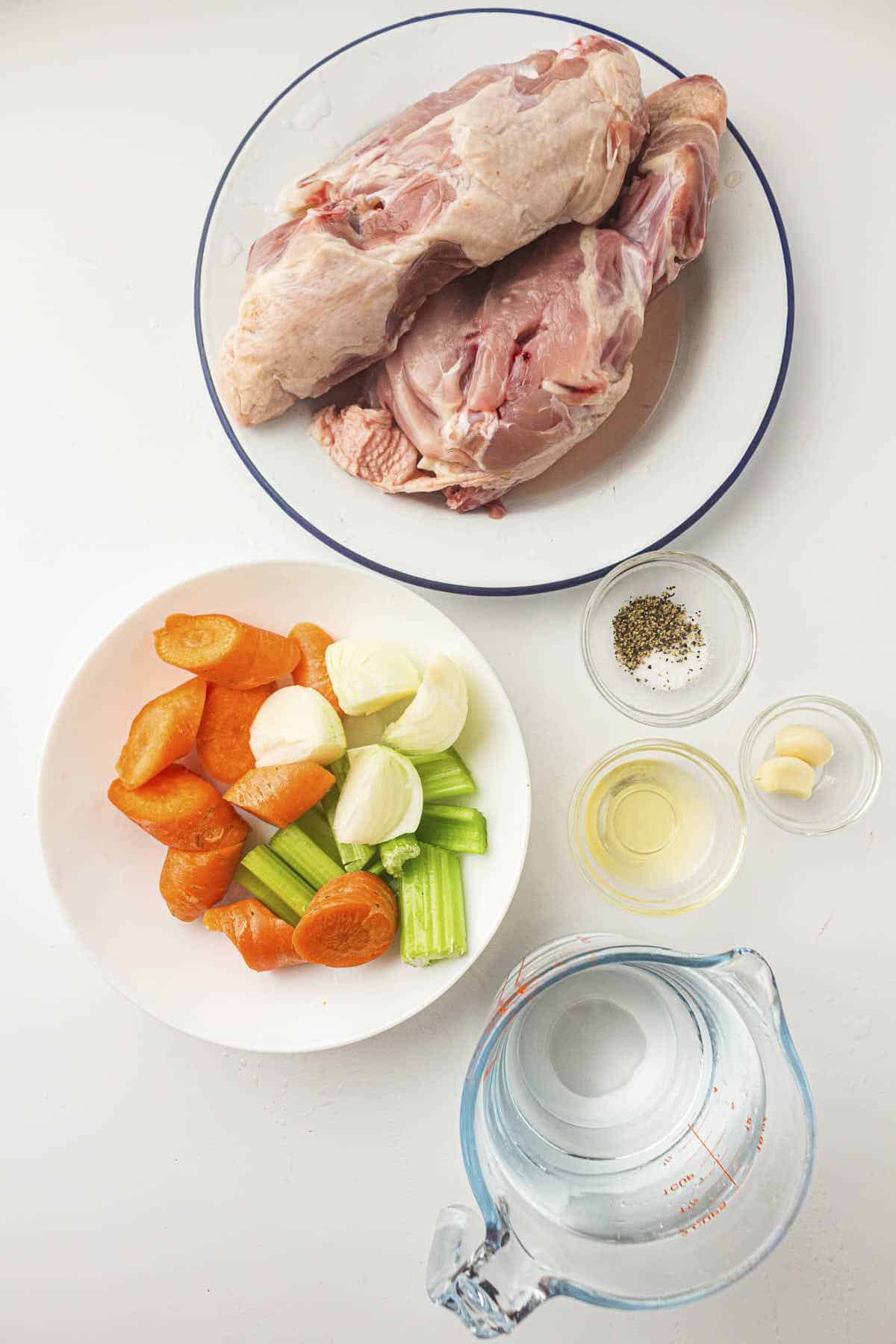
- 1 whole raw chicken, or a stripped rotisserie carcass
- 1 onion, quartered
- 2 carrots, broken in half
- 2 celery stalks, snapped
- 2 cloves garlic, smashed
- 1 tablespoon apple cider vinegar
- 8 cups water, enough to cover by an inch
- 1 teaspoon salt, omit with a rotisserie bird
- 1/2 teaspoon black pepper
That is the whole list. Only two things on it are not negotiable, and those are the bones and the vinegar.
The chicken. A five to eight pound, organic free-range bird is my default. It is what the grocery store stocks and it feeds the two stage method well. A rotisserie bird is the same thing with the work already done. You can skip the whole bird entirely too. Four to six pounds of bone-in thighs, drumsticks, or wings does the same job. Wings and feet are the gel champions if you can find them.
The seasoning, or the lack of it. This is a base ingredient, not a finished dish, and that is why I keep it this plain. Every herb you add here decides something for you three days early. A stock that tastes like thyme and bay only wants to be one kind of soup. So I salt it lightly, pepper it, and stop. Season it later, when you know what it is becoming.
When I do want to push it in a direction, I do it in a thought out motif for the week. Ginger, scallion, and a splash of tamari if the week’s menu is headed somewhere Asian. Poultry seasoning, parsley stems, or an herb seasoning for something classic.
Two things stay out of my pot. Nothing cruciferous, because cabbage and broccoli stems turn sulfurous over twelve hours. And nothing starchy, because potato and rice cloud it and add nothing.
How to Make Slow Cooker Chicken Stock
Instructions
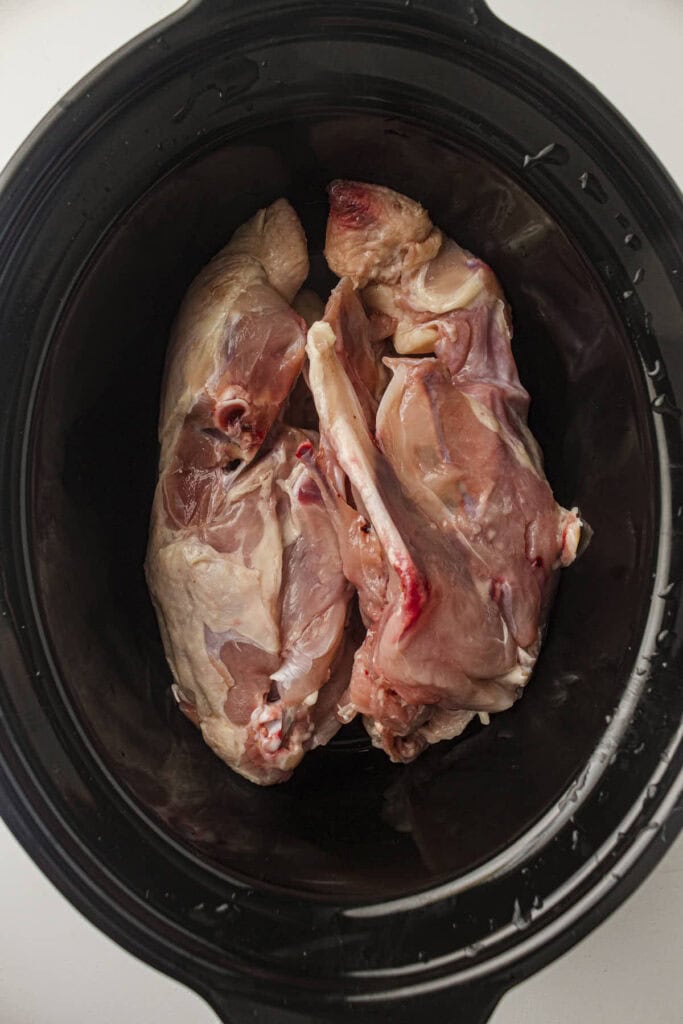
- Put the whole chicken in the slow cooker.
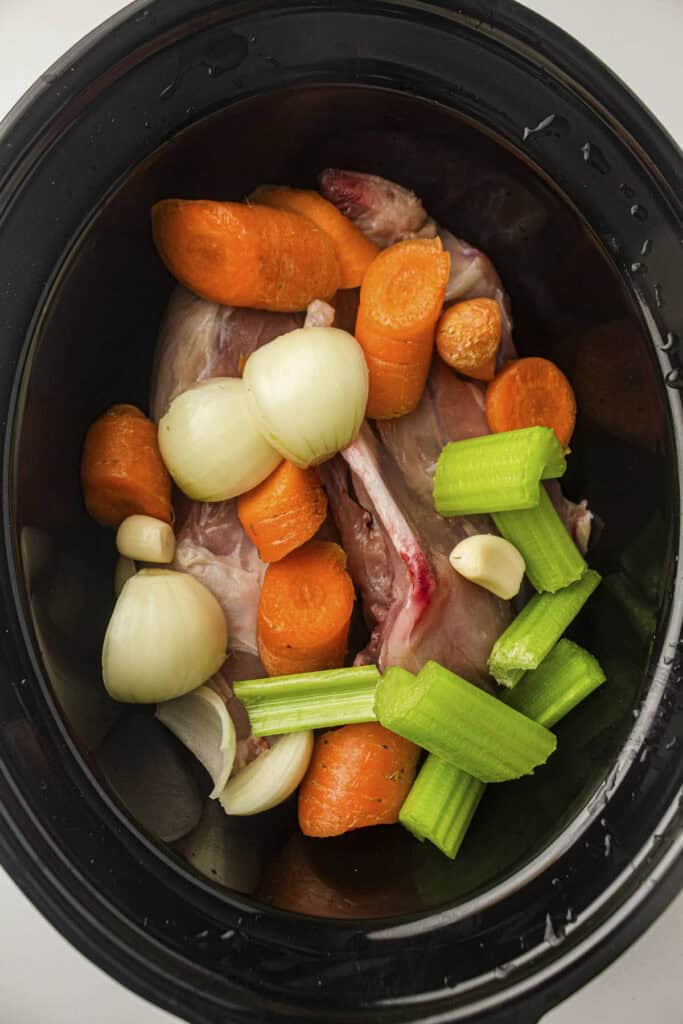
- Add the onion, carrots, celery, and garlic around it.
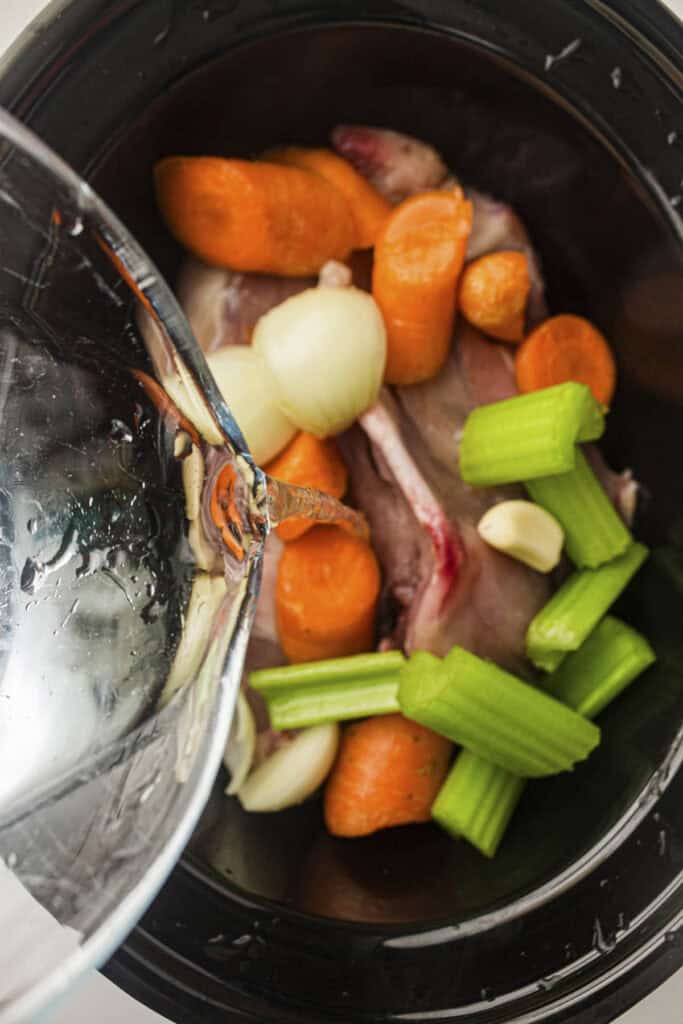
- Pour in the apple cider vinegar and enough water to cover by an inch.
- Add the salt and black pepper.
- Cover and cook on LOW for 4 to 6 hours. Do not use HIGH.
- Lift the chicken out onto a sheet pan and let it cool enough to handle.
- Pull all the meat off and refrigerate it. This is your week’s protein.
- Return every bone, joint, and scrap of cartilage to the slow cooker.
- Cover and cook on LOW for a further 8 to 12 hours.
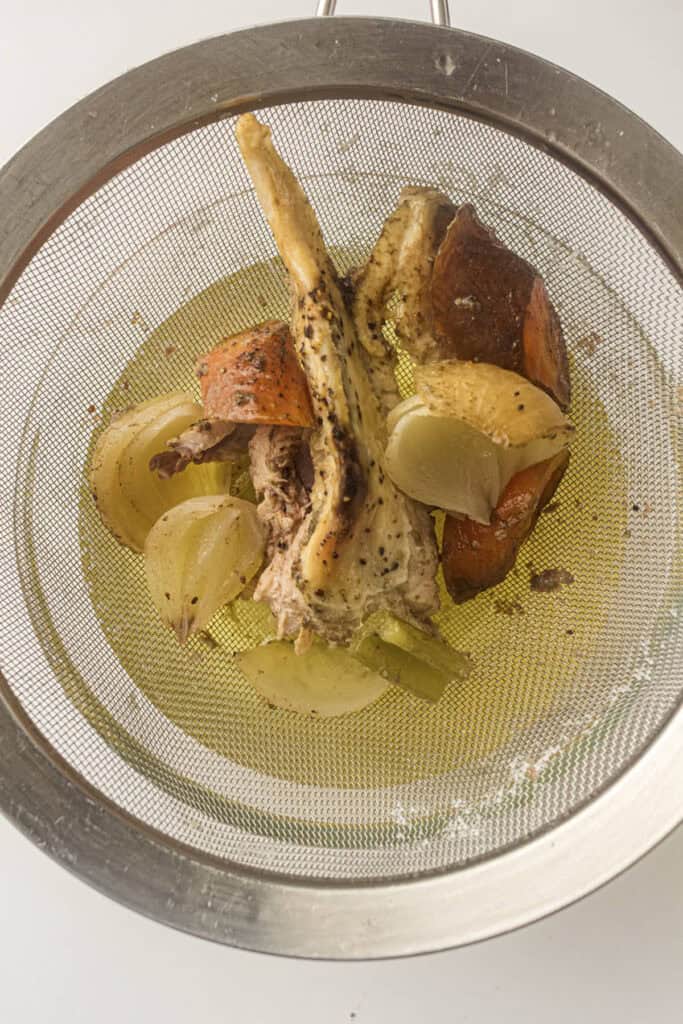
- Strain through a fine sieve and discard the solids.
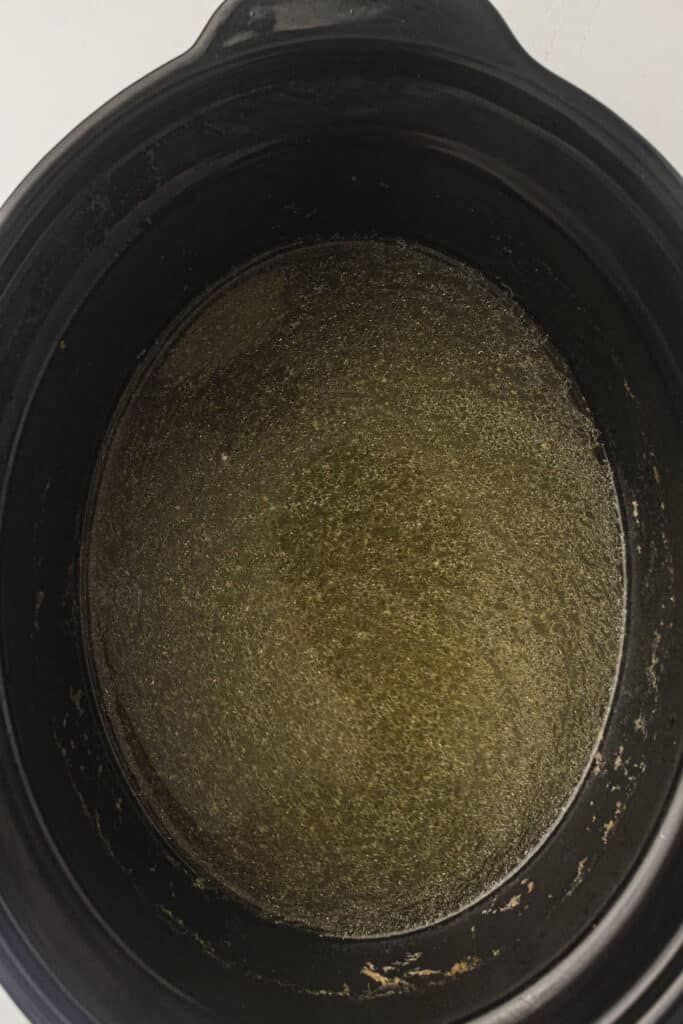
- Cool, then refrigerate overnight.Lift the set fat cap off the top and keep it for cooking.
What I Actually Do With Stock All Week
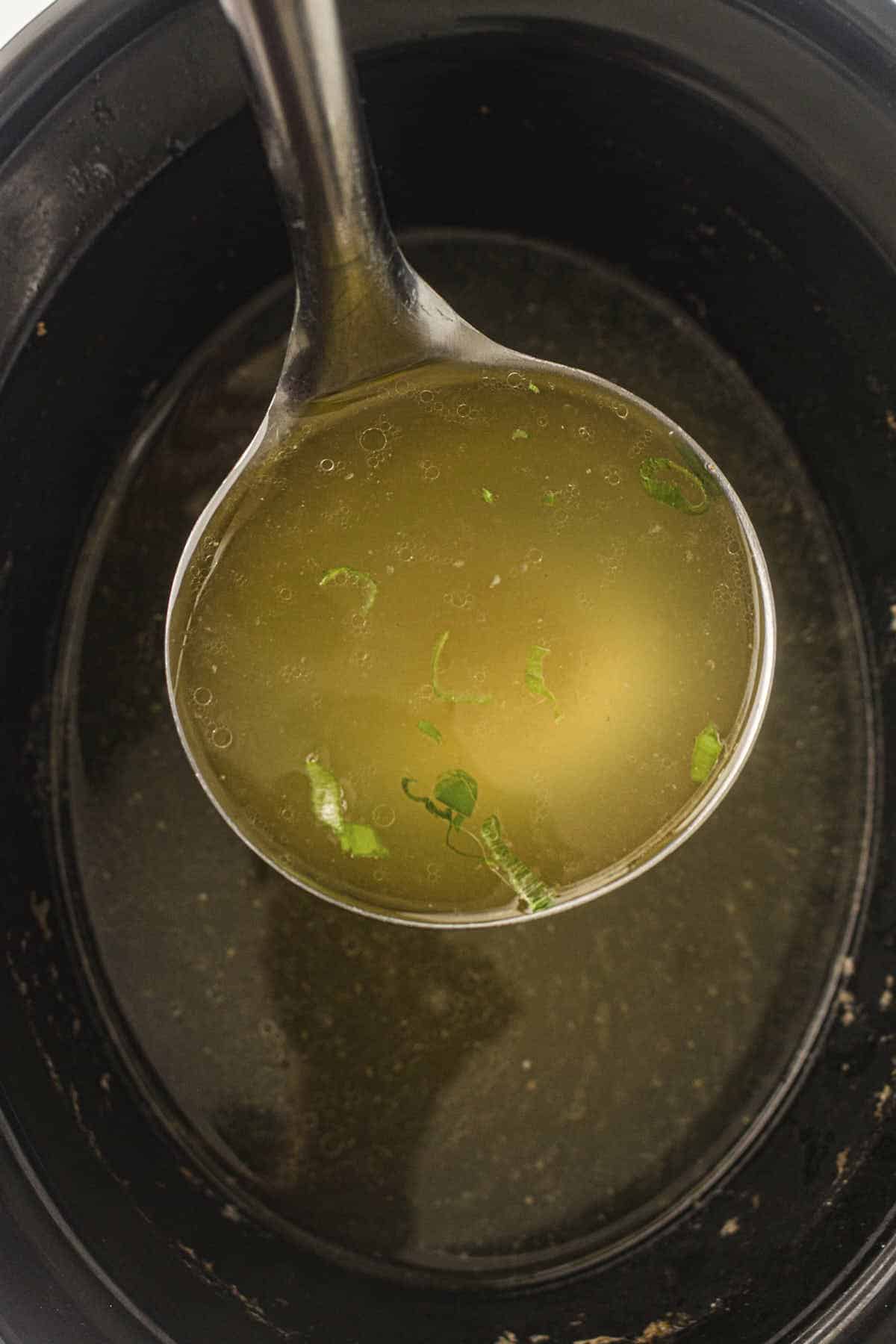
The stock is not a lost project. It is a food service container of flavor sitting in the door of my refrigerator, and I use it every day.
Vegetables. A quarter cup in the pan instead of water. Green beans, cabbage, broccoli, mushrooms, anything. It reduces down and coats them. This is what turns a pan of garlic butter green beans into something with an actual sauce.
Pan sauces. Cook a piece of protein, take it out, deglaze with stock, reduce it by half, finish with a knob of butter. Thirty seconds of work and dinner tastes deliberate. Gelled stock is what makes this work, because the gelatin gives the sauce body without any flour or cornstarch.
Reheating. Two tablespoons of stock over leftover chicken before it goes in the microwave. It is the difference between leftovers and dry leftovers.
Grains and legumes. Anything you would cook in water cooks better in stock.
Ice cube tray. Freeze a tray of it. Two cubes is exactly the amount you want for any of the above, and it means you never break into a full container for a splash.
Soup is a Non-Negotiable on a GLP-1
Soup is the format that works when nothing else does.
Nausea, early fullness, food aversion, the flat days where the idea of chewing is too much. These are the ordinary side effects of Wegovy, Ozempic, Mounjaro, and Zepbound, and they are the reason people stall out on meal prep entirely.
A bowl of soup built on real stock solves several problems at once. It is warm, it is hydrating, it is salted, and it carries protein without asking much of you. You can drink it out of a mug standing at the counter if that is where you are that day.
Having good stock in the refrigerator means soup is thirty minutes away, not a trip to the store.
Instant pot chicken noodle soup is the obvious one, and it is better than it has any right to be with real stock and the chicken you already pulled. Potato soup and lentil soup both improve more from real stock than from any other single change you could make.
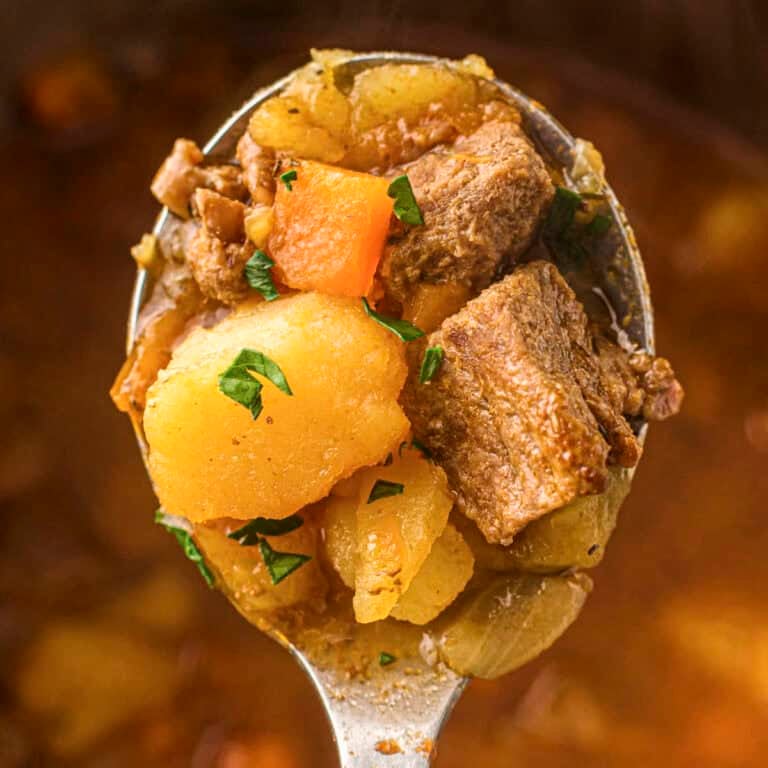
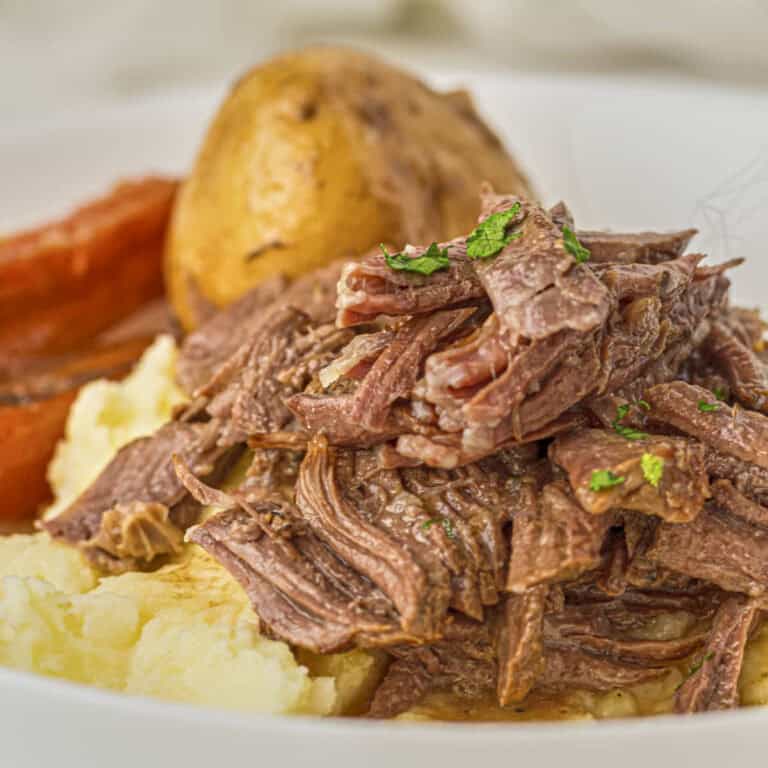
It works in beef dishes too. Instant pot beef stew and pot roast both take chicken stock happily and nobody has ever noticed.
If Your Stock Does Not Gel
It still tastes fine and it is still stock. But if you want the gel, there are three usual reasons you did not get it.
Not enough bone per water. You want around two and a half to three pounds of bone to eight or ten cups of water. If you covered one small carcass with three quarts, you diluted it.
Not enough joint. Collagen lives in cartilage and connective tissue, not in the dense parts of the bone. Feet, wings, necks, and drumstick ends are what make a stock gel. A stripped breast plate will not do it alone.
Not long enough. Twelve hours is the minimum for stage two. Eighteen is better.
A stock that did not gel is a stock you can reduce. Simmer it down by a third on the stove and check it again cold.
How to Portion and Store it For the Week
Chill the strained stock overnight. The fat rises and sets into a solid white cap that lifts off in one piece.
Do not throw that away. That is schmaltz, and it is a genuinely good cooking fat that cost you nothing. It keeps a month in the refrigerator and it beats most things you would buy for roasting vegetables.
The stock keeps four days refrigerated and three months frozen. I portion it three ways and it has never failed me:
- One quart jar in the door. This is the working jar for vegetables, sauces, and reheating.
- Two cup containers in the freezer. That is what a soup recipe usually asks for.
- One ice cube tray, then bagged. For splashes.
The pulled chicken keeps four days refrigerated. Portion it the day you make it, not the day you need it.
Frequently Asked Questions
Yes, if you pull it early. Cook the whole bird on low for four to six hours, take the meat off, then return the bones for another eight to twelve hours. If you leave the meat in for the full cook it will be edible but grey and flavorless.
Yes, and it is what I do most weeks. Strip the meat off, put the bare carcass in with the vegetables and vinegar, and cook on low for twelve to eighteen hours. Cut the added salt in half, because rotisserie birds are already heavily salted.
It lowers the pH enough to help pull collagen and minerals out of the bones. One tablespoon in the whole pot is plenty and you will not taste it.
Usually too much water for the amount of bone, not enough joint and cartilage in the mix, or not enough time. Twelve hours is the minimum for the bone stage. You can also reduce a weak stock by a third to concentrate it.
It is one of the more useful things you can keep on hand. This delivers fluid, sodium, and protein in a form that goes down on a nausea day, and it makes a fast soup base when solid food is unappealing. It is not a treatment for anything, it is just food that works when other food does not.
Mostly marketing. Both are bones simmered in water. A long cooked stock like this one, made with joints and cartilage until it gels, is what people mean when they say bone broth.
Refrigerate it overnight. The fat sets into a solid cap on top and lifts off in one piece. Keep it, because that is schmaltz and it is excellent for cooking.
More Meal Prep Recipes and GLP-1 Reading
- Lentil soup built on this stock, for fiber and easier digestion
- Keto beef stew with turnip instead of potatoes
- Chuckwagon chili with stew meat instead of ground beef
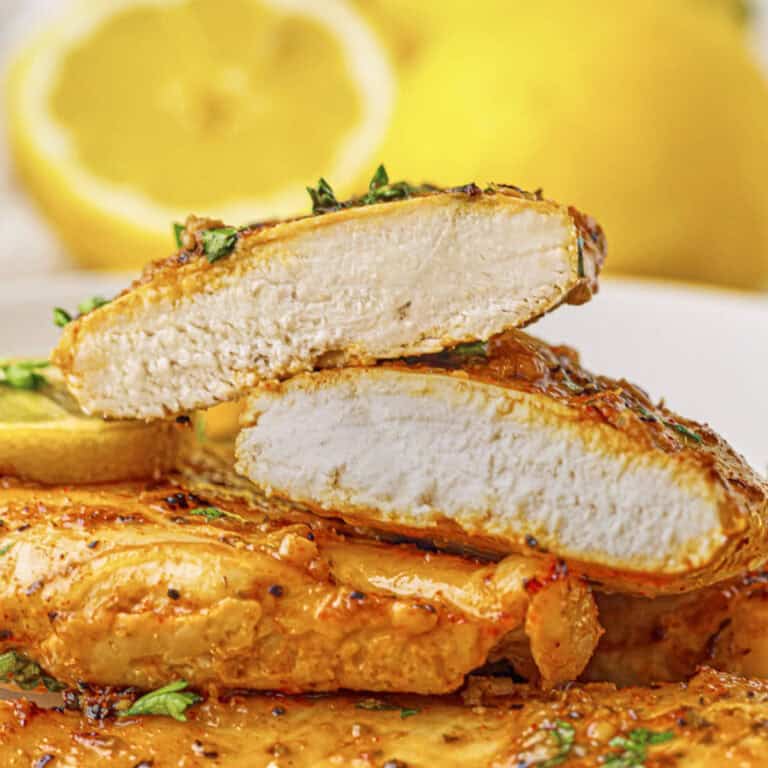
- Baked lemon chicken breasts, 35 minutes start to finish
- French onion quinoa that uses this stock instead of a boxed mix
- The protein anchor: why 30g at breakfast
- What is a GLP-1 diet?
Final Thoughts
I have a lot of recipes to post on this site. If I had to keep one, it would be this one.
Not because it is impressive. It is a chicken and some water.
It is because everything else got easier once this was always in the refrigerator. Vegetables stopped being a chore. Soup stopped being a project. The hard days had something in them I could actually get down.
That is what a staple is. Not the best thing you make all week. The thing that makes the rest of the week work.
One bird, once a week. Start there and let it become a habit.
Slow Cooker Chicken Stock for Weekly GLP-1 Diet Meal Prep
Equipment
- 1 Slow Cooker
Ingredients
- 1 whole raw chicken or a stripped rotisserie chicken
- 1 whole onion quartered
- 2 whole celery stalks snapped
- 2 cloves garlic smashed
- 1 tbsp apple cider vinegar or lemon juice
- 8 cups water
- 1 tsp salt omit with rotisserie chicken
- ½ tsp black pepper
Instructions
- Put the whole chicken in the slow cooker.
- Add the onion, carrots, celery, and garlic around it.
- Pour in the apple cider vinegar and enough water to cover by an inch.
- Add the salt and black pepper.
- Cover and cook on LOW for 4 to 6 hours. Do not use HIGH.
- Lift the chicken out onto a sheet pan and let it cool enough to handle.
- Pull all the meat off and refrigerate it. This is your week's protein.
- Return every bone, joint, and scrap of cartilage to the slow cooker.
- Cover and cook on LOW for a further 8 to 12 hours.
- Strain through a fine sieve and discard the solids.
- Cool, then refrigerate overnight.
- Lift the set fat cap off the top and keep it for cooking.
Notes
- Rotisserie shortcut. Strip the meat off a rotisserie chicken, put the bare carcass in, and skip steps 5 through 8. Cook on LOW 12 to 18 hours. Cut the salt and season at the end.
- Do not run a whole raw bird the full 18 hours. The meat turns to mush and you lose it.
- Wings, necks, feet, and drumstick ends are the parts that make a stock gel. Keep a freezer bag going.
- If it does not gel, reduce it by a third on the stove.
- Do not let it boil. A boil emulsifies the fat and clouds the stock.