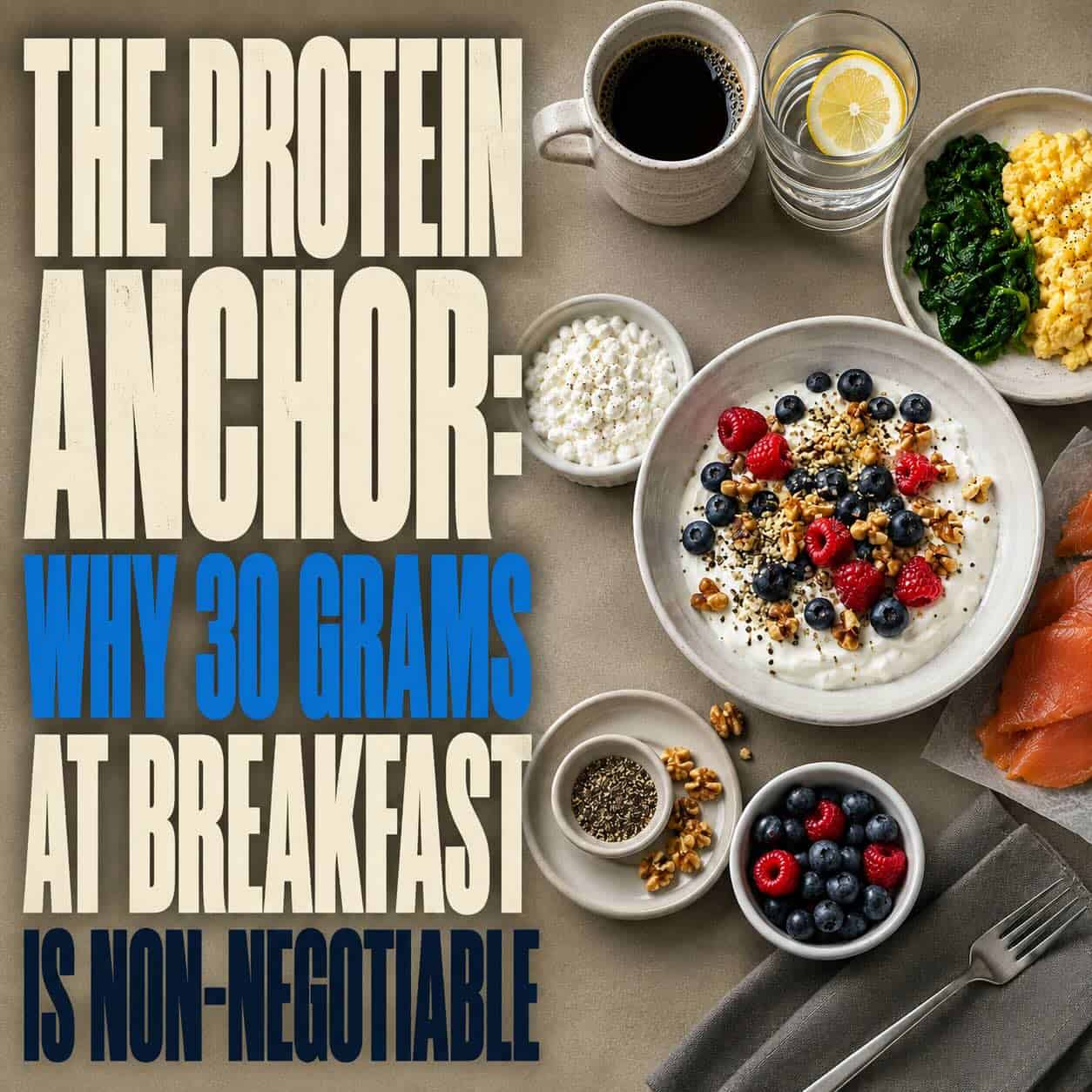
The Protein Anchor: Why 30g at Breakfast is Non-Negotiable
Discover why 30g protein at breakfast is the ultimate GLP-1 support strategy, with practical ideas to build your protein anchor every morning.
Table of Contents
- What Is a Protein Anchor (and Why GLP-1 Users Need One)?
- The Science Behind 30g: Why That Number Specifically?
- What Does 30g of Protein at Breakfast Actually Look Like?
- GLP-1 Breakfast Ideas That Hit the Protein Anchor
- Common Protein Anchor Mistakes (and How to Avoid Them)
- Building the Habit: How to Make Your Protein Anchor Stick
- High Protein Recipes for the Rest of the Day
- Frequently Asked Questions About the Protein Anchor
- The Bottom Line
Most people on a GLP-1 medication nail the medication part — and completely underestimate the GLP-1 support diet part. The protein anchor, a deliberate 30-gram dose of protein at your first meal, is the single most impactful nutrition habit to fight metabolic resistance that you can build on this journey. And most people aren’t doing it.
By 3 p.m., you feel it. If you have not eaten properly and have relied on processed foods, fatigue creeps in. Cravings return. Dinner becomes harder to navigate than it should be.
That afternoon crash almost always traces back to the same place: your morning.
When appetite suppression is working overtime, it’s easy to undereat at breakfast — or skip it entirely. But here’s the problem: GLP-1 medications reduce your total daily food intake, which means fewer opportunities throughout the day to hit your protein targets. Miss the morning window, and you’re playing catch-up against a hunger signal that’s been chemically quieted. You won’t win that game.
The protein anchor fixes this. By front-loading at least 30 grams of protein at breakfast, you protect your muscle mass, stabilize blood sugar, and keep your GLP-1-assisted satiety working for you — not against you — all day long.
This isn’t theory. It’s what the research supports, and it’s what GLP-1 users who are seeing real, lasting results are actually doing. Let’s break down exactly why it works — and how to build it starting tomorrow.
What Is a Protein Anchor (and Why GLP-1 Users Need One)?
The term protein anchor refers to a high-protein first meal that “anchors” your nutrition for the rest of the day. Think of it as the nutritional foundation everything else stacks on top of.
For most people, 20 grams of protein at breakfast is considered decent. But for GLP-1 users — people taking medications like semaglutide (Ozempic, Wegovy) or tirzepatide (Mounjaro, Zepbound) — the stakes are higher.
Here’s why: GLP-1 medications significantly reduce appetite and total food intake. That’s the whole point. But when you eat less overall, you have fewer opportunities throughout the day to hit your protein targets. If you skip or shortchange breakfast, you’re already playing catch-up — and on a reduced appetite, catching up is nearly impossible.
The downstream effects of under-eating protein on GLP-1 therapy include:
- Muscle loss (the weight you want to keep)
- Increased fatigue and brain fog
- Rebound hunger later in the day
- Slower metabolism over time
- Difficulty maintaining weight loss long-term
A protein anchor at breakfast isn’t a nice-to-have. For GLP-1 users, it’s genuinely non-negotiable.
The Science Behind 30g: Why That Number Specifically?
You’ll see different protein recommendations floating around, so let’s be direct about where 30 grams comes from.
Research on muscle protein synthesis — the process your body uses to build and maintain muscle — shows that there’s a threshold dose of protein required to meaningfully trigger it. That threshold is generally accepted to be around 25–40 grams of high-quality protein per meal, with 30 grams landing right in the middle of the effective range.
Eating less than this, say 10–15 grams, may not be enough to flip the muscle-building switch, especially as we age. And on GLP-1 therapy, where overall calorie intake is lower, every meal needs to be pulling its weight.
There’s also the satiety angle. Protein is the most satiating macronutrient — it takes longer to digest, suppresses hunger hormones more effectively than carbs or fat, and supports stable blood sugar. Starting your day with 30g of protein means:
- Fewer cravings before lunch
- Better appetite regulation all day long
- Steadier energy without the mid-morning slump
- Less risk of overeating at your next meal
For GLP-1 users who may already be eating only two meals per day due to reduced appetite, hitting 30g at breakfast becomes even more critical to reaching daily protein goals (typically 80–120g+ per day, depending on body weight and activity level).
What Does 30g of Protein at Breakfast Actually Look Like?
This is where things get practical. 30g of protein at breakfast sounds like a lot until you know what to reach for.Here are some easy-to-build combinations:
High-Protein Breakfast Anchors (30g+):
- Greek yogurt parfait: 1 cup full-fat Greek yogurt (17–20g) + 2 hard-boiled eggs (12g) = ~30g
- Cottage cheese bowl: 1 cup cottage cheese (24g) + ¼ cup hemp seeds (10g) = ~34g
- Egg scramble: 3 whole eggs (18g) + 2 oz turkey sausage (12g) + spinach = ~30g
- Protein smoothie: 1 scoop whey or pea protein (20–25g) + ½ cup Greek yogurt (10g) + berries = ~30–35g
- Smoked salmon plate: 3 oz smoked salmon (17g) + 2 eggs (12g) + avocado = ~29–32g
Pro tip for GLP-1 users: If your appetite is very low in the morning, liquid or soft-texture options (smoothies, yogurt bowls, cottage cheese) are often easier to tolerate than heavier cooked meals. You don’t have to force volume — you just need smart, protein-dense choices.
GLP-1 Breakfast Ideas That Hit the Protein Anchor
Let’s talk about some specific GLP-1 breakfast ideas that make the 30g goal feel natural — not like a chore.
1. The Greek Yogurt Power Bowl Combine 1 cup plain full-fat Greek yogurt with ¼ cup granola (look for low-sugar options), a handful of berries, and 2 tablespoons of nut butter. Top with hemp seeds. This comes in around 30–35g of protein, with healthy fats to slow digestion and keep you full.
2. Savory Egg and Veggie Scramble Three eggs scrambled with a handful of baby spinach, ¼ cup diced bell pepper, and 2 oz of chicken sausage. Add a sprinkle of feta for extra flavor. Simple, fast, and hits 30g without breaking a sweat.
3. The High-Protein Smoothie Blend 1 scoop of unflavored or vanilla protein powder with ½ cup cottage cheese, 1 cup unsweetened almond milk, frozen berries, and a tablespoon of chia seeds. This is especially useful for GLP-1 users with morning nausea or very low appetite.
4. Smoked Salmon and Egg Plate Slice 3 oz of smoked salmon alongside 2 fried or poached eggs, a few cucumber rounds, and a small handful of walnuts. No cooking skills required. No excuses.
5. Cottage Cheese Pancakes Blend ½ cup cottage cheese, 2 eggs, ½ cup oats, and a pinch of cinnamon. Cook like regular pancakes. Top with fresh fruit instead of syrup. Around 28–32g of protein, and it genuinely feels like a treat.
The key with all of these? Protein first, carbs second. Build the meal around your protein source, then fill in the rest.
Common Protein Anchor Mistakes (and How to Avoid Them)
Even when people understand why protein matters, they still fall into patterns that undermine their progress. Here are the most common pitfalls:
Mistake #1: Relying on protein bars as your only source Many protein bars contain 10–15g of protein and a significant amount of sugar or sugar alcohols. They’re fine as a supplement to a real meal, but shouldn’t be your entire anchor.
Mistake #2: Drinking calories without tracking protein A latte, a smoothie from a café, and a piece of toast might feel like a real breakfast — but could easily come in under 10g of protein. Always check.
Mistake #3: Skipping breakfast because you’re “not hungry” GLP-1 medications can suppress morning appetite significantly. But skipping breakfast and trying to back-load your protein is harder to execute and less effective for muscle preservation. Eat a small, protein-dense breakfast even when you’re not very hungry.
Mistake #4: Counting cheese and milk as “high protein” Dairy has protein, but not as much as people assume. One slice of cheese has 4–6g. A splash of milk in your coffee has maybe 2g. Anchor proteins are foods like eggs, Greek yogurt, cottage cheese, fish, lean meat, and protein powder.
Building the Habit: How to Make Your Protein Anchor Stick
Knowing what to eat is only half the battle. Building the habit is where the real work happens. Here’s how to make your 30g protein breakfast a consistent, automatic part of your routine:
Prep in advance. Hard-boil a batch of eggs on Sunday. Keep a container of Greek yogurt in the front of the fridge. Portion out smoothie ingredients in freezer bags. Reduce the friction between waking up and hitting your target.
Keep it simple on low-effort days. Not every breakfast needs to be a recipe. On hard mornings, two eggs + a scoop of cottage cheese on the side = done. Simple is sustainable.
Pair it with your medication routine. Many GLP-1 users already have a morning ritual around their medication. Attach your protein anchor habit to that same window.
Track for 2 weeks, then trust the habit. Using a free app like Cronometer or MyFitnessPal to log protein for two weeks builds an intuition that stays with you even after you stop tracking obsessively.
Don’t aim for perfect — aim for consistent. A 25g morning beats a skipped breakfast every single time. Progress over perfection, always.
High Protein Recipes for the Rest of the Day
- Baked lemon chicken breasts, high-protein and keto
- Grilled pork tenderloin with a low-carb BBQ sauce
- The high protein pasta salad I eat on a low carb GLP-1 diet
- Chuckwagon chili with stew meat instead of ground beef
- Keto pot roast: no potatoes, no flavor packet
Frequently Asked Questions About the Protein Anchor
You can, and many people do. But for GLP-1 users specifically, appetite suppression often means eating less overall as the day progresses. Front-loading protein at breakfast protects against under-eating protein later in the day when hunger signals are hardest to read.
You don’t have to eat a full meal if your appetite is suppressed (especially common on GLP-1 medications). Instead, aim for a small, protein-dense option you can consume within an hour or two of waking. A Greek yogurt cup, a protein shake, or even just cottage cheese with fruit takes less than five minutes to put together. Start small, build the habit, and your hunger cues will often adapt over time.
For muscle protein synthesis, complete proteins (those containing all essential amino acids) are most effective. Animal proteins like eggs, dairy, fish, and meat are complete by nature. Plant proteins can absolutely work, but you’ll often need to combine sources (like rice and pea protein) or eat slightly higher amounts to get the same muscle-building effect. Many plant-based protein powders are now formulated with complete amino acid profiles, which makes this much easier.
The Bottom Line
The protein anchor isn’t a hack or a trend. It’s a fundamental strategy for getting the most out of your GLP-1 journey — protecting the muscle you’re working to keep, stabilizing your energy and hunger, and making every reduced-calorie day actually count.
Thirty grams at breakfast. Every day. Non-negotiable.
You don’t need fancy ingredients, elaborate recipes, or hours in the kitchen. You need a clear target, a few go-to options, and the consistency to show up for yourself in the morning — even when the medication has quieted your appetite almost completely.
Start tomorrow. Pick one of the GLP-1 breakfast ideas from this post, prep it the night before if you need to, and anchor your morning. Your afternoon self — the one who normally hits a wall around 3 p.m. — will thank you.
Looking for more support on your GLP-1 nutrition journey? Explore our full library of clean-eating, GLP-1-friendly recipes and guides designed specifically for your goals.