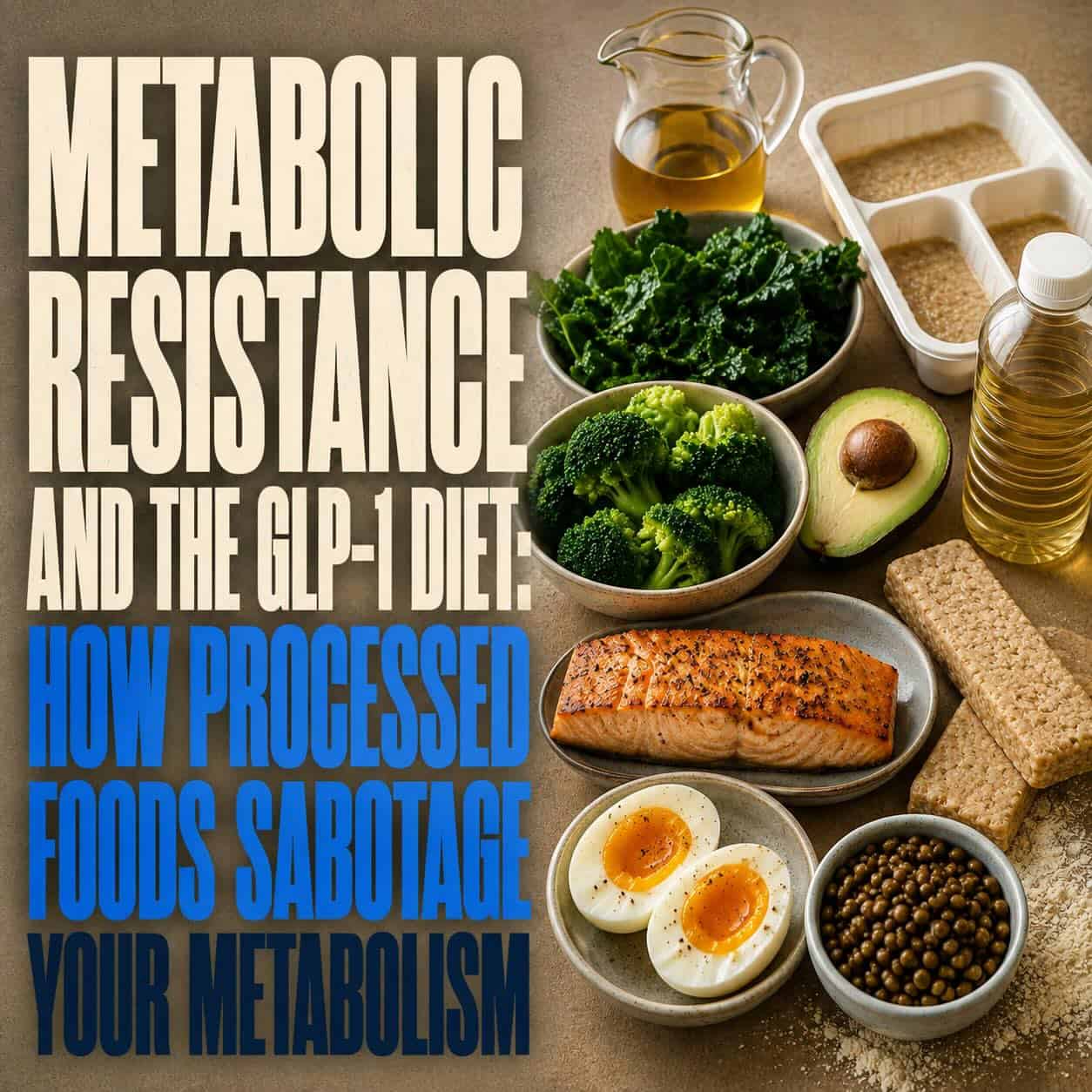
Metabolic Resistance and the GLP-1 Diet: Why Weight Loss Stalls
Learn how metabolic resistance develops, why processed foods make weight loss harder, and how a GLP-1 support diet can restore metabolic health.
Table of Contents
- The Processed Food Trap
- What Is Metabolic Resistance?
- Metabolic Resistance Symptoms Checklist
- How GLP-1 Medications Help Restore Metabolic Signals
- The Problem With Seed Oils and Metabolic Health
- What Is a GLP-1 Support Diet?
- GLP-1 Diet Foods List
- Why Cooking Matters More Than Ever
- Taking Back Control of Your Metabolic Health
- The Mission here at Lizard Bites
- Reading and Recipes That Put This Into Practice
- Frequently Asked Questions
If you’ve ever felt like your metabolism is working against you, you’re not imagining it.
Millions of people are doing everything they were told should work—eating less, exercising more, counting calories—yet the scale barely moves. Meanwhile, grocery store shelves are packed with food engineered for convenience, long shelf life, and irresistible flavor.
That combination has created something many people are now confronting: metabolic resistance.
It’s the frustrating reality that your body no longer responds normally to diet and lifestyle changes. Instead of burning stored energy efficiently, your metabolism becomes sluggish, insulin signaling becomes impaired, appetite hormones go haywire, and weight loss becomes dramatically harder.
If you’ve read my earlier posts about My GLP-1 Journey or What Is a GLP-1 Diet?, you already know that medications can help restore some of the signals that regulate appetite and metabolism.
But medication alone isn’t the whole story.
At Lizard Bites, the focus is on combining GLP-1 medications with a GLP-1 support diet that eliminates seed oils, heavily processed ingredients, and empty calorie additives. The goal isn’t just weight loss—it’s rebuilding metabolic health.
Because the truth is simple: modern food isn’t just convenient. Much of it is engineered in ways that actively work against our metabolism.
And if we want our health back, we may have to start by stepping away from the system that created the problem.
The Processed Food Trap
Walk through almost any supermarket and you’ll notice a pattern. Many foods lining the shelves are built around the same formula: ultra-refined carbohydrates, industrial seed oils, chemical preservatives, artificial flavor enhancers, and heavily processed corn and soy derivatives.
These ingredients make food cheap to produce, easy to transport, and extremely shelf stable. They also make food incredibly addictive.
But nutritionally, they often provide large amounts of calories without the fiber, protein, and micronutrients our metabolism actually needs.
Some people have started calling this category of food something more blunt: slop.
Not because it tastes bad. In fact, it usually tastes great. These products are engineered by food scientists to hit the perfect combination of sugar, fat, and salt.
But when you read the ingredient lists, you often see things like:
- Maltodextrin
- Dextrose
- Hydrolyzed corn protein
- Soy isolates
- Refined vegetable oils
- Artificial stabilizers
- Chemical preservatives
These ingredients show up everywhere—from frozen dinners to protein bars to salad dressings.
The result is a food environment where calories are incredibly easy to overconsume while nutrients become harder to find. Over time, that imbalance can lead directly to metabolic dysfunction.
What Is Metabolic Resistance?
Metabolic resistance is a condition where the body becomes less responsive to the signals that normally regulate hunger, blood sugar, and energy balance.
Instead of efficiently burning stored energy, the body becomes more efficient at storing calories as fat.
Several biological systems contribute to this process.
Insulin Resistance
Insulin is responsible for moving glucose from the bloodstream into cells where it can be used for energy.
When diets are consistently high in refined carbohydrates and added sugars, insulin levels remain elevated for long periods of time. Over time, cells become less responsive to insulin signals.
This leads to higher blood sugar levels, increased fat storage, and stronger hunger signals.
Appetite Hormone Dysregulation
Hormones that regulate hunger and fullness—including GLP-1, leptin, and ghrelin—can become disrupted by long-term dietary patterns dominated by ultra-processed foods.
This leads to reduced feelings of fullness after meals and increased cravings for calorie-dense foods.
Slower Energy Expenditure
When metabolism becomes resistant, the body adapts by reducing energy expenditure. This means fewer calories burned at rest and greater efficiency at storing energy as fat.
For many people struggling with weight loss, this metabolic slowdown is one of the most frustrating aspects of metabolic resistance.
Metabolic Resistance Symptoms Checklist
Many people experiencing metabolic resistance notice several symptoms at the same time. If you recognize multiple items on this list, it may indicate that your metabolism has become resistant to traditional dieting approaches.
Common signs of metabolic resistance include:
- Difficulty losing weight despite dieting
- Constant hunger or cravings
- Fatigue after eating carbohydrate-heavy meals
- Blood sugar swings or energy crashes
- Increased belly fat accumulation
- Plateauing weight loss despite calorie restriction
- Slow metabolism or low resting energy levels
- Brain fog or low mental energy
- Increased reliance on caffeine or sugar for energy
These symptoms often develop gradually over many years of exposure to highly processed foods and sedentary lifestyles.
The encouraging news is that metabolic resistance can improve when diet, hormones, and metabolic signals begin working together again.
How GLP-1 Medications Help Restore Metabolic Signals
GLP-1 medications work by mimicking a hormone naturally produced in the gut called glucagon-like peptide-1.
This hormone plays a major role in regulating appetite, digestion, and blood sugar control.
GLP-1 medications help by:
- Slowing stomach emptying
- Reducing appetite
- Improving insulin response
- Stabilizing blood sugar levels
For people experiencing metabolic resistance, these medications can restore signals that the body has lost.
That’s why many people who struggled with weight loss for years finally see meaningful progress when they begin GLP-1 therapy.
However, medication works best when it’s paired with dietary habits that support metabolic recovery rather than undermining it.
The Problem With Seed Oils and Metabolic Health
Industrial seed oils have become one of the most common ingredients in modern processed foods.
These oils include:
- Soybean oil
- Corn oil
- Canola oil
- Cottonseed oil
- Sunflower oil
They are inexpensive, highly refined, and extremely stable for large-scale food manufacturing.
Because they are so cheap and versatile, they appear in an enormous number of packaged foods, fast foods, and restaurant meals.
Avoiding seed oils often has an unexpected side effect: it naturally reduces the amount of ultra-processed food in the diet.
When people begin cooking with simpler ingredients and healthier fats, they often see improvements in digestion, energy levels, and metabolic health.
What Is a GLP-1 Support Diet?
A GLP-1 support diet is designed to work with GLP-1 medications while restoring metabolic balance.
Instead of relying on heavily processed convenience foods, this approach focuses on simple ingredients that stabilize blood sugar and support appetite regulation.
One of the biggest changes involves eliminating ultra-processed carbohydrate additives.
Ingredients like maltodextrin, dextrose, corn syrup solids, modified starches, and hydrolyzed corn or soy proteins appear in countless packaged foods. These ingredients digest rapidly and spike blood sugar without providing meaningful nutrition.
Another major shift is removing industrial seed oils and processed food additives.
A GLP-1 support diet also prioritizes two nutrients that become especially important when appetite decreases.
Protein helps preserve muscle mass and prevents metabolic slowdown during weight loss.
Fiber supports gut health, improves blood sugar control, and helps prevent one of the most common GLP-1 side effects—constipation.
GLP-1 Diet Foods List
A GLP-1 support diet focuses on nutrient-dense foods that support metabolism while working with reduced appetite.
Common foods that fit well into a GLP-1 diet include:
High-protein foods
- Eggs
- Chicken
- Fish
- Lean beef
- Greek yogurt
- Tofu and legumes
High-fiber foods
- Leafy greens
- Broccoli
- Zucchini
- Cauliflower
- Beans and lentils
Healthy fats
- Olive oil
- Avocados
- Nuts and seeds
Whole food carbohydrates
- Sweet potatoes
- Quinoa
- Oats
- Fresh fruit
These foods provide the protein, fiber, and micronutrients needed to support metabolic recovery.
Why Cooking Matters More Than Ever
One uncomfortable truth about the modern food environment is that convenience foods often rely on the very ingredients that undermine metabolic health.
The more processed a food is, the more likely it contains refined carbohydrates, industrial oils, artificial stabilizers, and synthetic flavor enhancers.
Learning to cook—even just a handful of simple meals—becomes one of the most powerful ways to escape that system.
Cooking doesn’t have to be complicated or time consuming. Many of the recipes on Lizard Bites are intentionally simple and designed for people with reduced appetites.
They focus on high-protein, high-fiber meals built from recognizable ingredients.
These meals are designed to support GLP-1 therapy instead of sabotaging it.
Taking Back Control of Your Metabolic Health
More people are beginning to notice a strange pattern in the modern economy.
The companies that sell the most processed food products often operate within the same financial ecosystem as the industries that profit from treating chronic disease.
Whether you look at it through a public health lens, an economic lens, or simply as an individual trying to regain control of your health, one thing becomes clear.
Our food system is incredibly efficient at producing cheap, highly processed calories.
It is far less effective at producing metabolic health.
The good news is that we don’t have to solve the entire system to improve our own lives.
Sometimes the most effective response is surprisingly simple.
Eat real food.
Avoid ultra-processed ingredients.
Support your metabolism.
Learn a few simple recipes.
Give your body the chance to recover.
GLP-1 medications can restore signals that regulate appetite and blood sugar.
But food still matters.
And if the goal is long-term health—not just short-term weight loss—building a diet around simple, nutrient-dense meals may be one of the most powerful steps you can take.
The Mission here at Lizard Bites
Lizard Bites exists to make that transition easier.
The recipes here are designed to support GLP-1 therapy while avoiding seed oils and heavily processed ingredients.
They focus on high-protein, high-fiber meals made from real foods that help rebuild metabolic health.
You don’t need to become a professional chef to take control of your diet.
You just need a few reliable meals that help you step outside the processed convenience food system.
That’s what Lizard Bites is here to provide.
Reading and Recipes That Put This Into Practice
- Hidden sugar in foods and metabolic resistance
- Why can’t I stop eating carbs on a GLP-1 diet
- What you need to know about carbs on a GLP-1 diet
- The protein anchor: why 30g at breakfast
- Keto pot roast, built without the flavor packet
- Keto beef stew with no starch slurry and no potato
- Grilled pork tenderloin with a BBQ sauce that has no added sugar
- French onion quinoa that replaces the boxed rice mix
Frequently Asked Questions
Metabolic resistance is a condition where the body becomes less responsive to signals that regulate hunger, blood sugar, and energy use. It can make weight loss significantly harder even when calorie intake is reduced.
GLP-1 medications mimic a natural hormone that helps regulate appetite, slow digestion, and improve insulin response. This can restore metabolic signals disrupted in people with insulin resistance or obesity.
A GLP-1 support diet typically avoids ultra-processed foods, industrial seed oils, and refined carbohydrate additives such as maltodextrin, dextrose, corn syrup solids, and highly processed corn or soy derivatives.
Because GLP-1 medications reduce appetite, meals need to provide strong nutritional value. Protein helps preserve muscle mass during weight loss, while fiber supports gut health and stabilizes blood sugar.
Yes. Reducing ultra-processed foods while increasing protein, fiber, and whole ingredients can improve insulin sensitivity, support gut health, and help restore metabolic flexibility over time.