Grilled Pork Tenderloin with a Low-Carb BBQ Sauce for a GLP-1 Diet
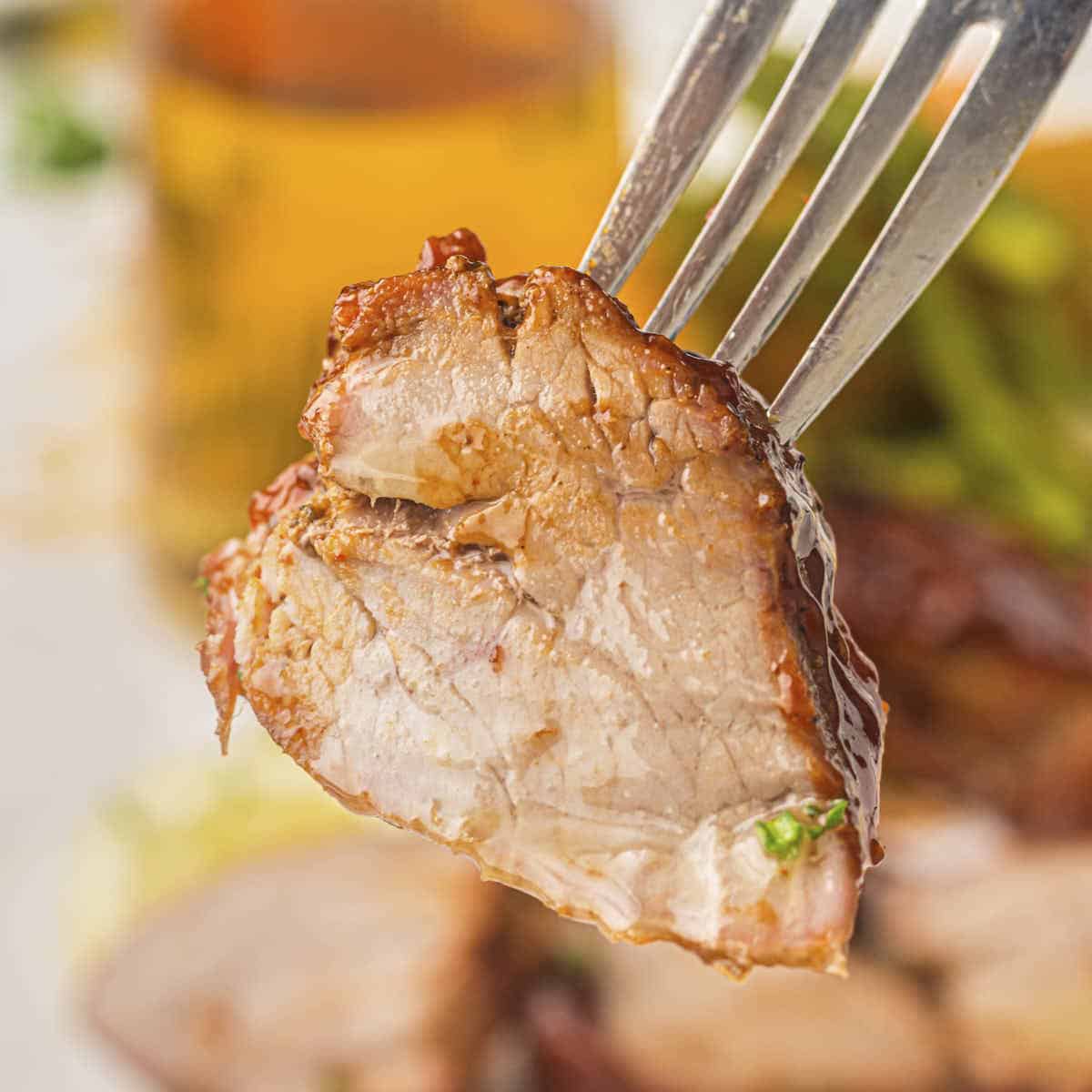
Grilled pork tenderloin, seared hot and finished slow, with a homemade low-carb BBQ sauce. Lean, high-protein, and built for a GLP-1 diet.
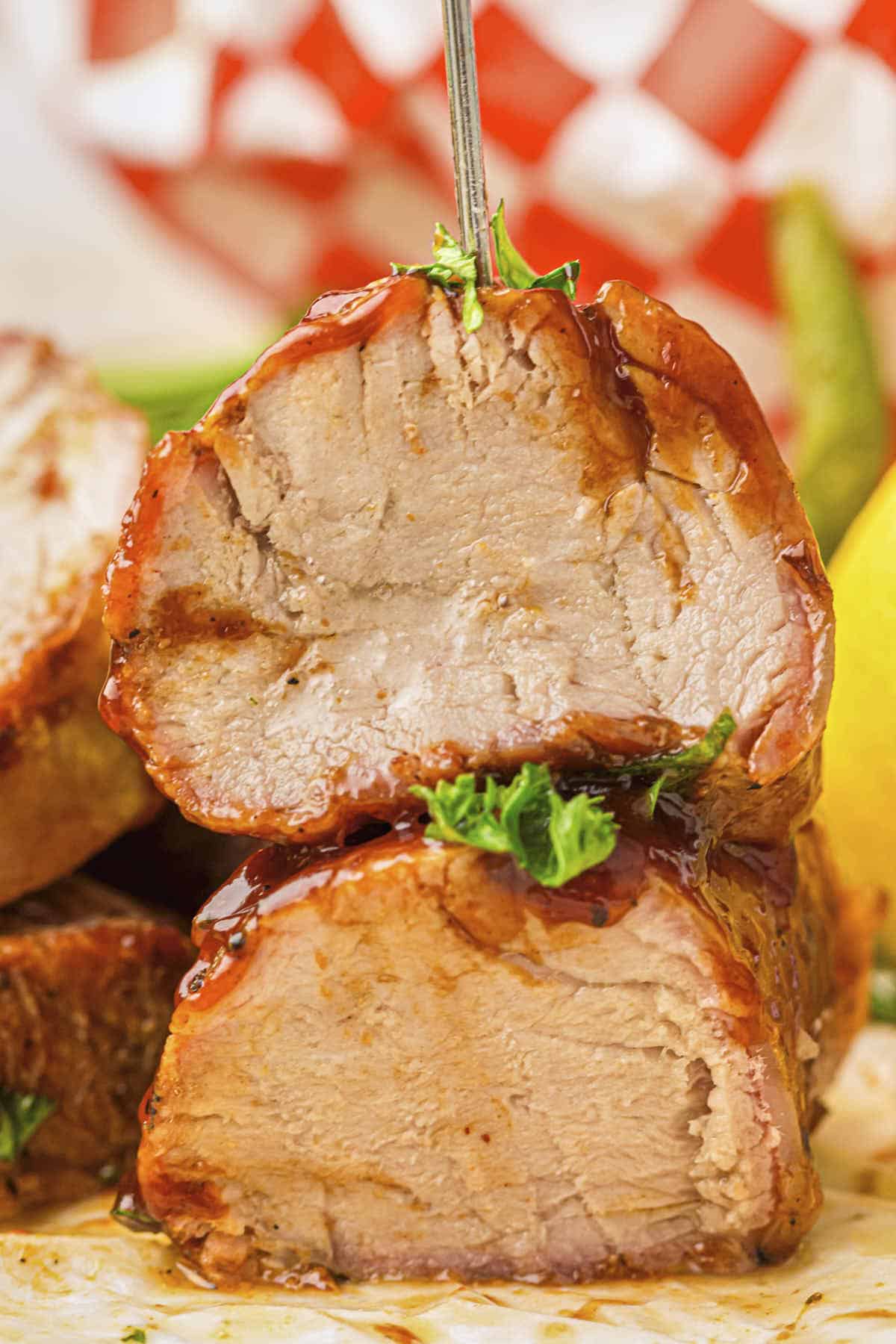
Table of contents
- Why This Grilled Pork Tenderloin Works for GLP-1 and Low-Carb Diets
- Pork Tenderloin Is Not Pork Loin
- Why Grilled Pork Tenderloin Comes Out Dry
- Skip the Sugary Sauce
- Ingredients – Grilled Pork Tenderloin
- How to Make Grilled Pork Tenderloin
- Can You Eat Grilled Pork Tenderloin on a GLP-1 Diet?
- More GLP-1 Diet Recipes and Information
- Final Thoughts
- Frequently Asked Questions
Pork tenderloin has a reputation for coming off the grill dry and tough, and most people cover that up with a thick coat of bottled BBQ sauce. My recipe fixes both of those.
Store-bought barbecue sauce is one of the worst offenders in the condiment aisle. High fructose corn syrup is usually the first or second ingredient, and it’s rarely the only sweetener on the label. I’ve written before about how hidden sugar stacks up under different names, and BBQ sauce is a textbook case. The sodium runs high, a preservative keeps it shelf-stable, and the “sugar-free” bottles lean on sucralose. A GLP-1 diet demands the same scrutiny on the sauce as on the carb count. That means going off road and making our own.
This recipe does that. My sauce keeps the tomato, tang, smoke, and sweetness you want from barbecue, and I sweeten it with allulose or a monk fruit and allulose blend. The pork gets a simple spice rub, a hard sear, and a gentle finish with the lid down. Dinner is ready in about 30 minutes, and the sauce simmers on the stove while the grill heats up.
The short version of why I cook this way is in my GLP-1 journey.
Why This Grilled Pork Tenderloin Works for GLP-1 and Low-Carb Diets
- 37 grams of protein per serving – pork tenderloin is nearly as lean as chicken breast
- 25 minutes on the grill – sear hot, finish cool, rest five minutes
- Homemade low-carb BBQ sauce – no corn syrup, sucralose, or preservatives
- Zero carbs before the sauce – your carb budget goes where you choose
- Slices cold for meal prep – wraps, salads, and lunches through the week
Pork Tenderloin Is Not Pork Loin
Buy the wrong one and this recipe won’t work. The two sit side by side in the meat case, and the names are one word apart.
Pork tenderloin is a long, thin muscle, about a pound to a pound and a quarter. It’s often sold two to a package. Think of the shape of a thick baguette.
Pork loin is a wide roast, three to five pounds, shaped like a brick. It needs an hour or more.
Check the weight. Anything over two pounds is a loin.
Why Grilled Pork Tenderloin Comes Out Dry
Three mistakes cause almost every dry, tough tenderloin. This recipe fixes each one.
Cooking to 160°F. That old number is why a whole generation thinks pork is dry. The current USDA guideline for whole cuts of pork is 145°F with a three-minute rest. The center stays faintly pink and juicy, and that’s correct.
Searing last. A lean cut dries out while the outside catches up. Sear first over direct heat, then move it to the cool side. The crust is already built, and the inside finishes gently.
Sauce on too early. Anything sweet burns before the pork is done. Allulose starts browning at a lower temperature than table sugar, so a sauce made with it scorches even faster. Brush it on over the cool side in the last two to three minutes only.
Skip the Sugary Sauce
Buying a bottle. Read the sweetener line first. Look for monk fruit or allulose and pass on sucralose or aspartame. A short label you can read out loud is the one to buy.
Making your own. This sauce takes 5 minutes on the stove and keeps two weeks in the fridge. Tomato paste replaces the ketchup base, since ketchup brings its own sugar. Cider vinegar, mustard, smoked paprika, and a little liquid smoke do the rest. The sweetness comes from an allulose or monkfruit with allulose sweetener. Some people like their barbecue sauce sweeter, and allulose lets you get there without paying for it in carbs.
The recipe makes about a cup and a half. You’ll need a half cup for the pork. The rest works on chicken, ribs, and pulled pork.
Ingredients – Grilled Pork Tenderloin
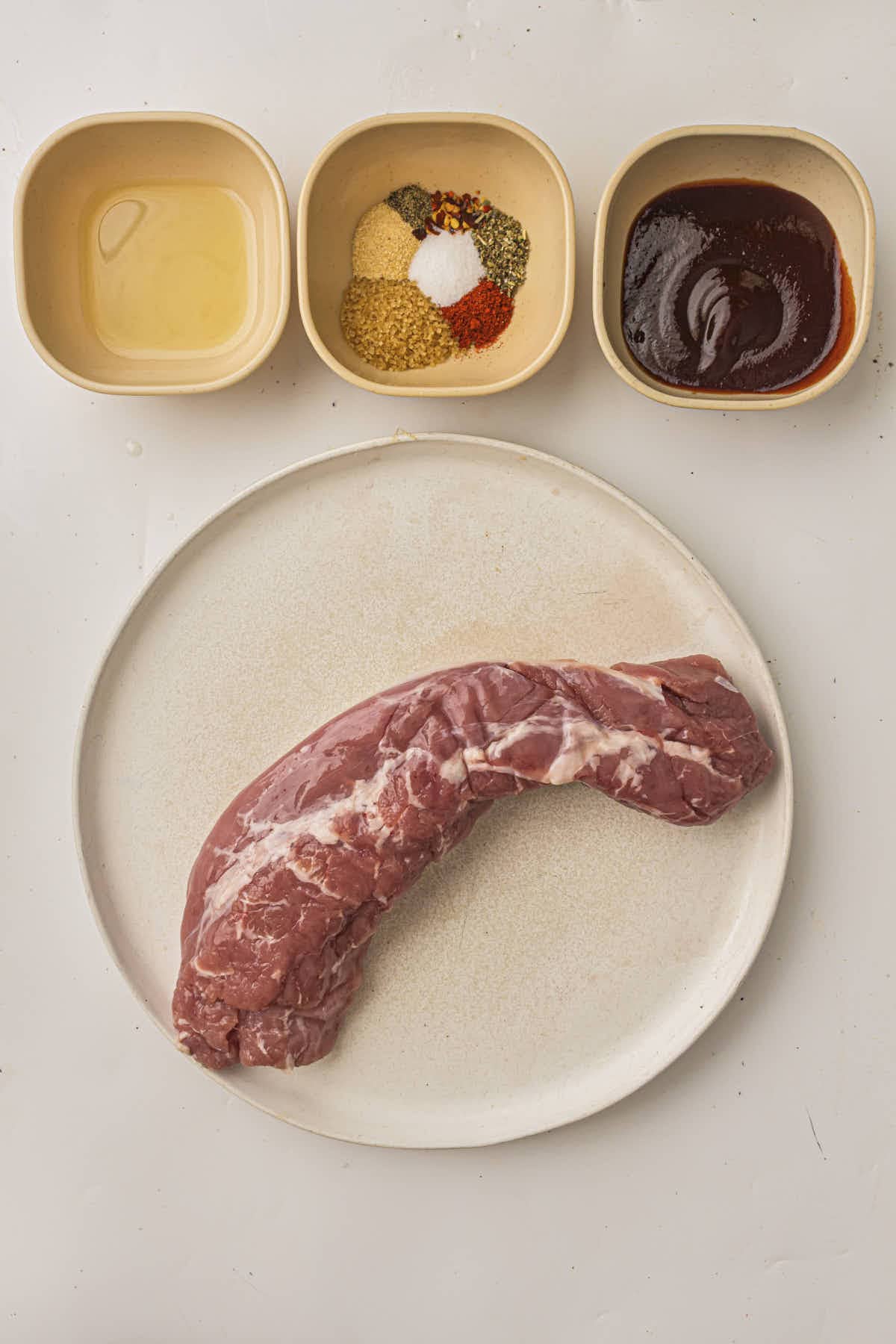
For the pork:
- 1 pork tenderloin, 1 to 1 1/4 lbs
- 1 tbsp olive oil
For the dry rub:
- 1 tsp smoked paprika
- 1 tsp garlic powder
- 1 tsp onion powder
- 1 tsp chili powder
- 1 tsp salt
- 1/2 tsp black pepper
- 1/2 tsp dried thyme
- 1/4 tsp ground cumin
For the homemade low-carb BBQ sauce:
- 1 can (6 oz) tomato paste
- 3/4 cup water
- 3 tbsp apple cider vinegar
- 3 tbsp allulose, or a monk fruit and allulose blend
- 1 tbsp yellow mustard
- 1 tsp smoked paprika
- 1 tsp garlic powder
- 1 tsp onion powder
- 1/2 tsp chili powder
- 1/2 tsp salt
- 1/2 tsp black pepper
- 1/4 tsp liquid smoke (optional)
- Pinch of cayenne (optional)
Ingredient Notes
The sweetener. Allulose is the first choice for the sauce. It tastes like sugar, and it isn’t metabolized as a carbohydrate. Many monk fruit sweeteners on the shelf are cut with erythritol, which can leave a cooling aftertaste. If you go the monk fruit route, find a blend cut with allulose. A brown-sugar-style allulose gives the sauce a deeper flavor, if you can find one.
No sweetener in the rub. Allulose starts browning around 212°F to 230°F, well below table sugar. A two-minute sear over direct heat runs far hotter than that. In a rub it would char black before the crust formed. The spices and the sear build the crust on their own, and the sauce brings the sweetness at the end.
The tomato paste. This is the body of the sauce. Check the label for one ingredient: tomatoes. Some brands add salt, and that’s fine. Skip any with added sugar.
The liquid smoke. Optional on the grill, where the pork gets real smoke. Worth adding if you make the sauce for oven or slow cooker dishes. A little goes a long way.
The tenderloin. Trim the silverskin, the thin shiny membrane on one side. It won’t render on the grill and turns chewy. Slide a thin knife under one end and run it along the length, blade angled up.
How to Make Grilled Pork Tenderloin
- Make the sauce first. Whisk all the sauce ingredients in a small saucepan. Bring to a simmer over medium heat, then drop to low. Simmer 5 minutes, stirring often, until it coats a spoon. Tomato paste and allulose both scorch easily, so keep the heat low.
- Taste and adjust the sauce. More allulose for sweeter, more vinegar for tangier, more cayenne for heat. Set aside to cool slightly.
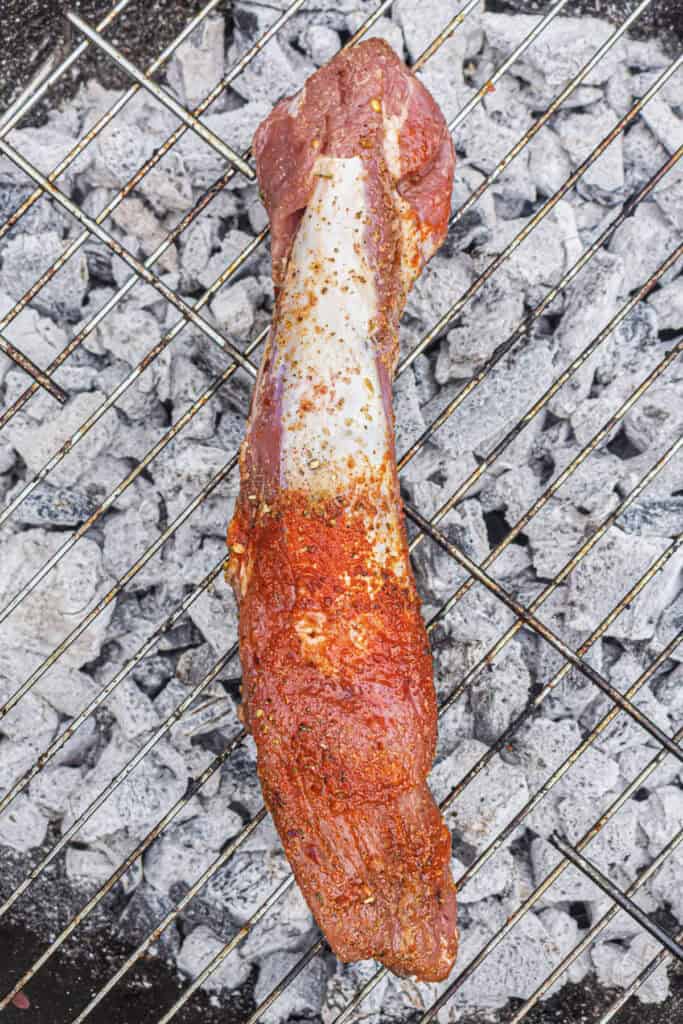
- Set up two zones on the grill. One side on high, one side off. Gas grill: burners on one side only. Charcoal: coals banked to one side. The cool side works as an oven once the lid is down.
- Prep the pork. Pat the tenderloin dry and trim the silverskin. Dry meat sears. Wet meat steams.
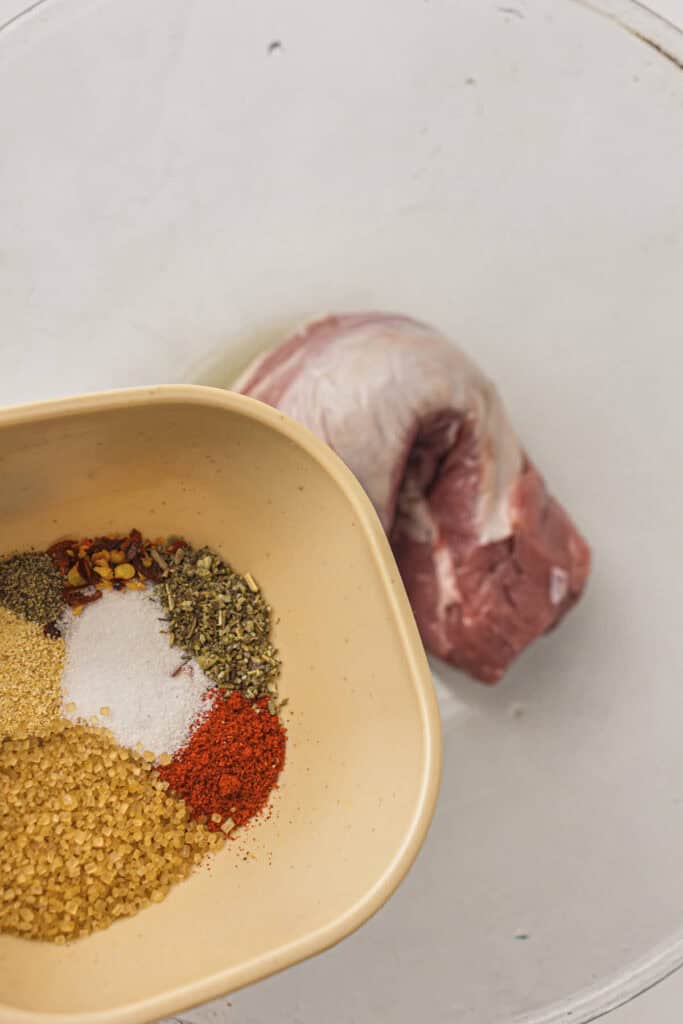
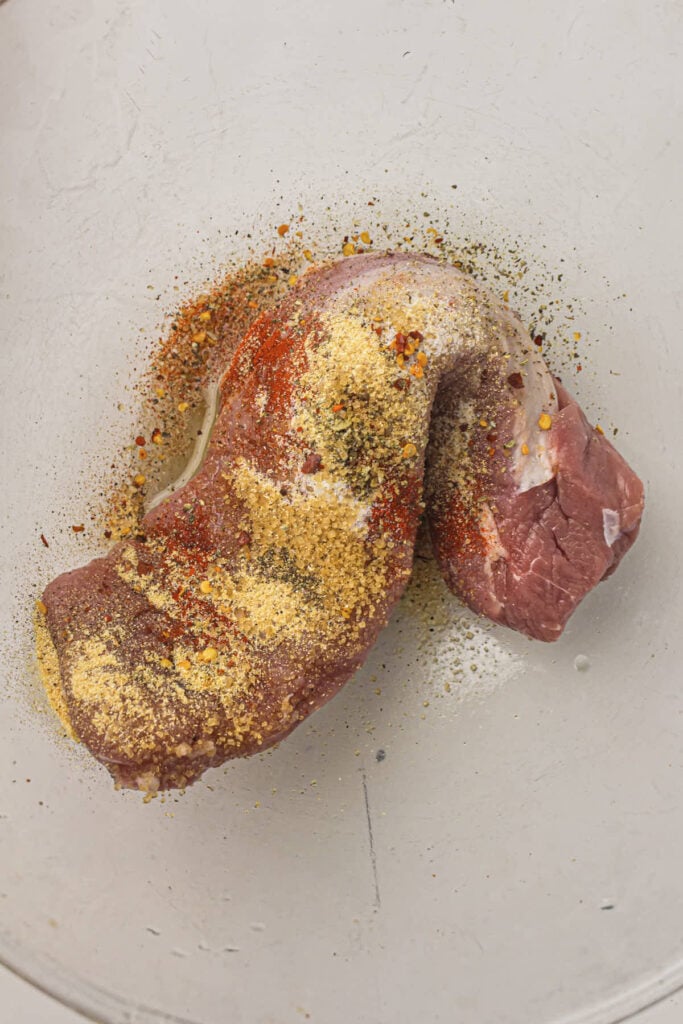
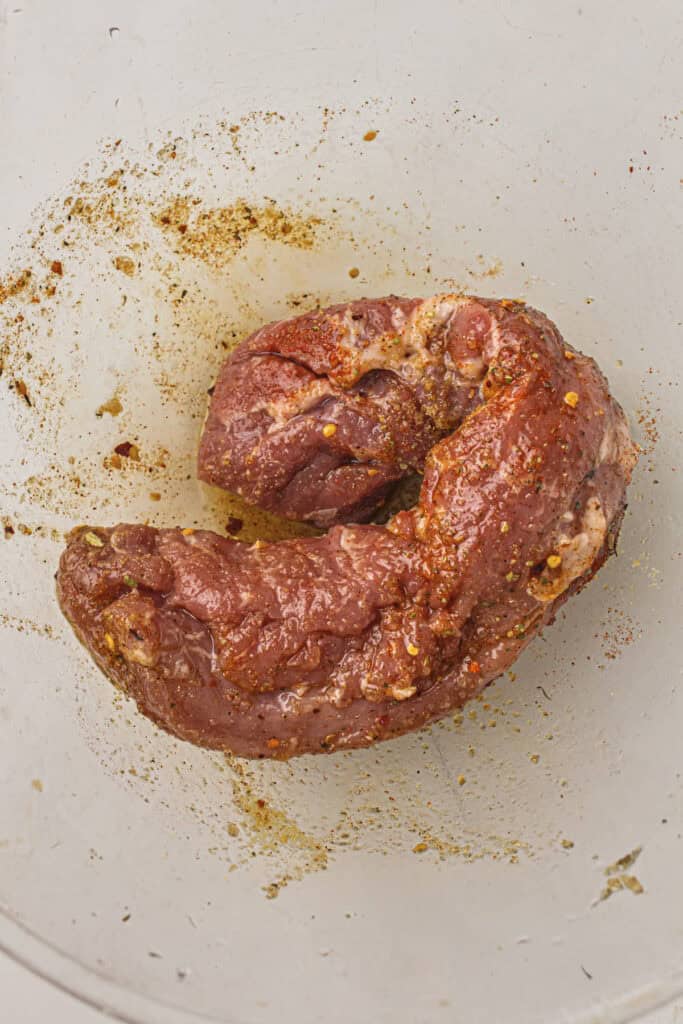
- Oil and rub. Coat the tenderloin in olive oil. Mix the rub spices and press them evenly over the whole surface.
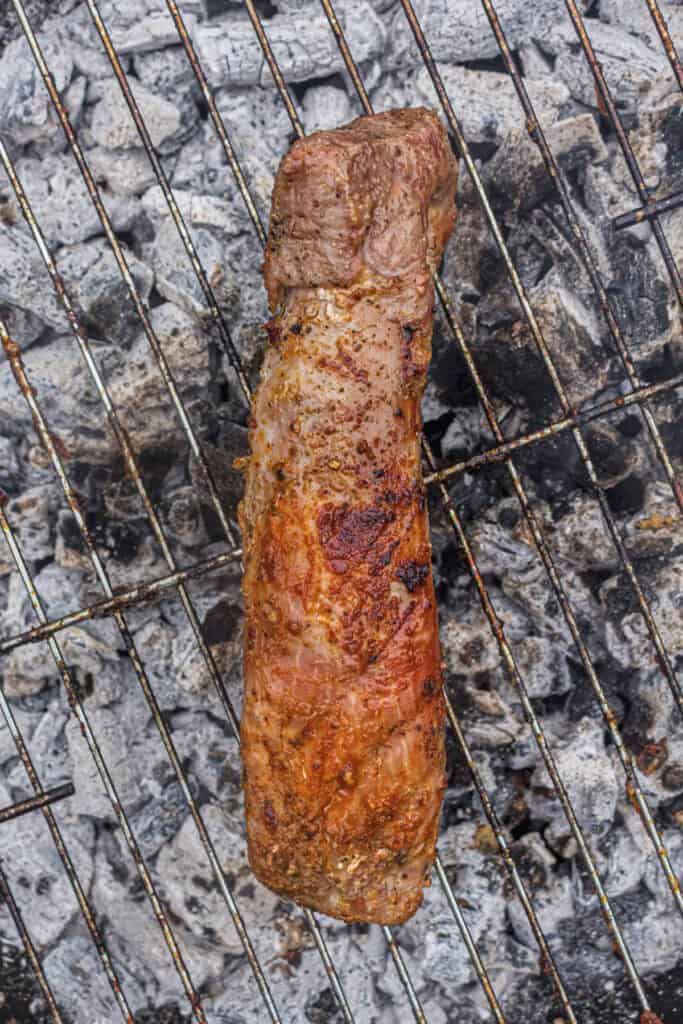
- Sear over direct heat, 2 minutes per side. Four sides, about 8 minutes total. You’re building crust here, not cooking it through.
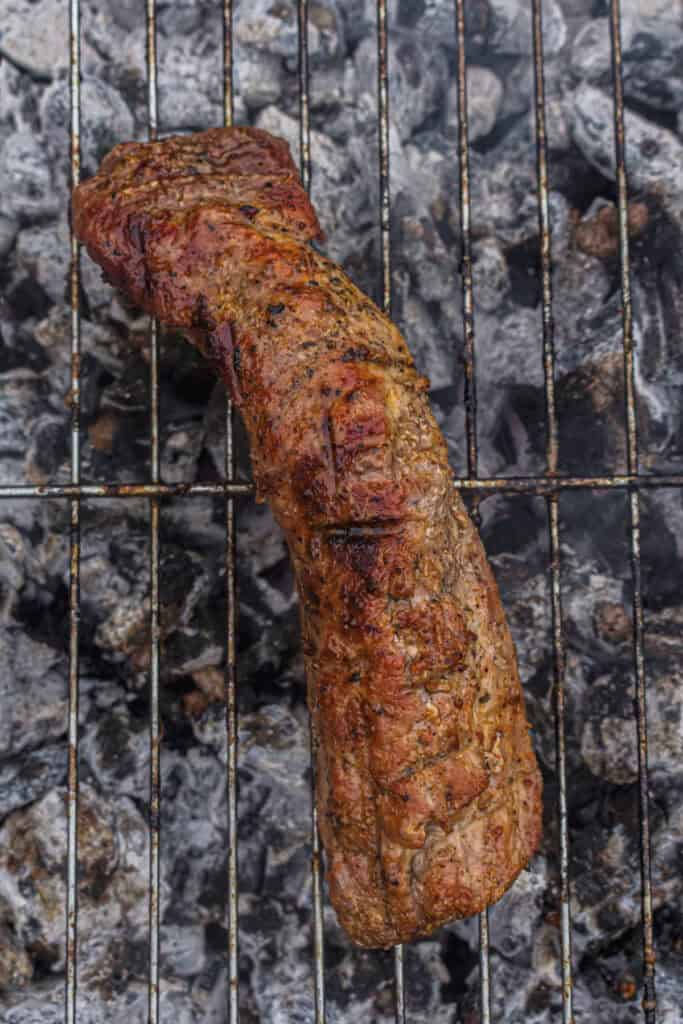
- Move to the cool side and close the lid. Cook 12 to 18 minutes, turning once halfway.
- Sauce in the last 2 to 3 minutes, on the cool side. Brush a light coat on all sides and close the lid. Direct heat will burn it.
- Pull at 145°F. Check at the thickest point.
- Rest 5 minutes, then slice. Carryover heat finishes the job, and the juices stay in the meat instead of on the board. Cut into thick medallions and serve with extra sauce on the side.
Variations
Dry rub only. Skip the sauce entirely. The rub carries this recipe on its own.
Spicy. Add 1/2 tsp chipotle powder to the rub and a full 1/4 tsp cayenne to the sauce.
Herb crust. Replace the chili powder and paprika with rosemary and extra thyme, then skip the sauce.
Can You Eat Grilled Pork Tenderloin on a GLP-1 Diet?
- Yes, and it’s one of the leanest cuts in the meat case. Pork tenderloin delivers protein close to chicken breast without the heavy fat that can sit badly on slower digestion. It’s a welcome break for anyone getting tired of chicken.
- The sauce decides the carb count. Bottled barbecue sauce can add more sugar than the rest of the plate combined. The homemade version keeps the flavor and drops the corn syrup.
- Portion by your own appetite, not the recipe’s serving size. A reduced appetite may make one tenderloin last three or four meals. The leftovers are good cold, so the second round is no chore.
Talk to your prescriber if you have questions about how a specific meal fits your treatment. They know your situation better than any recipe blog can.
More GLP-1 Diet Recipes and Information
- Baked Lemon Chicken Breasts (High-Protein, Keto, GLP-1)
- Air Fryer Chicken Fajitas
- Keto pot roast: no potatoes, no flavor packet
- Slow cooker chicken stock for weekly meal prep
- The high protein pasta salad I eat on a low carb GLP-1 diet
- The Protein Anchor: Why 30g at Breakfast
- Hidden Sugar in Foods and Metabolic Resistance
- What Is a GLP-1 Diet?
Final Thoughts
Pork tenderloin earns its bad name from two habits. It gets cooked to an outdated temperature, and then it gets buried in cheap bottled BBQ sauce. That bottle is corn syrup with a smoke flavor, or a “sugar-free” version propped up with sucralose and preservatives. Neither belongs on a GLP-1 diet.
Five minutes at the stove gets you a sauce that tastes like real barbecue and keeps the plate low-carb. Make a jar this weekend, and it covers every grill night for the next two weeks.
Frequently Asked Questions
About 22 minutes. Eight minutes searing over direct heat, then 12 to 18 over indirect heat with the lid closed.
Pull it at 145°F and rest it before slicing. That’s the USDA guideline for whole cuts of pork, and it leaves a faintly pink, juicy center.
Yes. It keeps 3 to 4 days in the fridge. Slice it cold for wraps and salads. To warm it, use a pan with a splash of chicken stock over low heat. The microwave will push it past done in seconds.
Yes. Look for bottles sweetened with monk fruit or allulose, or make the homemade version in this post. It takes 15 minutes and keeps two weeks.
Yes. Pick a monk fruit blend cut with allulose rather than erythritol for the best flavor. Pure monk fruit extract is very concentrated, so start with a small pinch and taste.
Up to two weeks in a sealed jar in the fridge. It has no preservatives, so it won’t last like a bottle does. It freezes well in small portions.
Grilled Pork Tenderloin with a Low-Carb BBQ Sauce for a GLP-1 Diet
Ingredients
For the pork:
- 1 whole pork tenderloin about 20-24oz
- 1 tbsp olive oil
For the dry rub:
- 1 tsp smoked paprika
- 1 tsp garlic powder
- 1 tsp onion powder
- 1 tsp chili powder
- 1 tsp salt
- ½ tsp black pepper
- ½ tsp dried thyme
- ¼ tsp ground cumin
For the homemade low-carb BBQ sauce:
- 1 6oz can tomato paste
- ¾ cup water
- 3 tbsp apple cider vinegar
- 3 tbsp allulose sweetener or monkfruit with allulose blend
- 1 tbsp yellow mustard
- 1 tsp smoked paprika
- 1 tsp garlic powder
- 1 tsp onion powder
- ½ tsp chili powder
- ½ tsp salt
- ½ tsp black pepper
- ¼ tsp liquid smoke optional
- 1 pinch cayenne pepper optional
Instructions
- Make the sauce first. Whisk all the sauce ingredients in a small saucepan. Bring to a simmer over medium heat, then drop to low. Simmer 5 minutes, stirring often, until it coats a spoon. Tomato paste and allulose both scorch easily, so keep the heat low.
- Taste and adjust the sauce. More allulose for sweeter, more vinegar for tangier, more cayenne for heat. Set aside to cool slightly.
- Set up two zones on the grill. One side on high, one side off. Gas grill: burners on one side only. Charcoal: coals banked to one side. The cool side works as an oven once the lid is down.
- Prep the pork. Pat the tenderloin dry and trim the silverskin. Dry meat sears. Wet meat steams.
- Oil and rub. Coat the tenderloin in olive oil. Mix the rub spices and press them evenly over the whole surface.
- Sear over direct heat, 2 minutes per side. Four sides, about 8 minutes total. You're building crust here, not cooking it through.
- Move to the cool side and close the lid. Cook 12 to 18 minutes, turning once halfway.
- Sauce in the last 2 to 3 minutes, on the cool side. Brush a light coat on all sides and close the lid. Direct heat will burn it.
- Pull at 145°F. Check at the thickest point.
- Rest 5 minutes, then slice. Carryover heat finishes the job, and the juices stay in the meat instead of on the board. Cut into thick medallions and serve with extra sauce on the side.