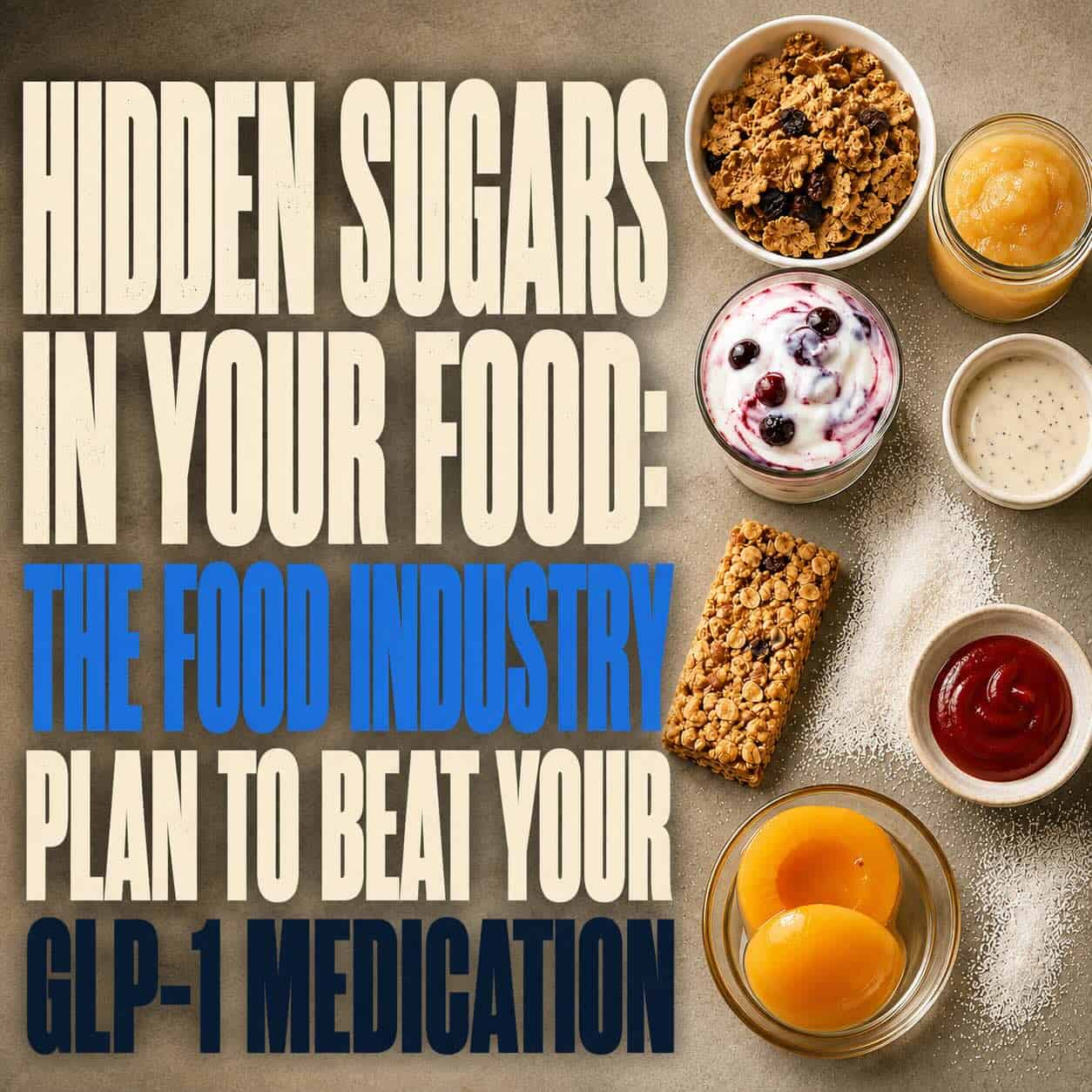
Hidden Sugars in Your Food: The Food Industry Plan To Beat Your GLP-1 Medication
Hidden sugar in foods is being added under many names to fight metabolic resistance. Here’s what the Food Giants don’t want you to know.
Table of Contents
- Behind the Scenes: What Food Giants Are Actually Doing
- The Bliss Point: How Foods Are Engineered to Override Your Fullness
- The Specific Tricks Being Used Right Now
- The Worst Offenders: Foods Loaded With Hidden Sugar
- How to Find Hidden Sugar in Foods Before It Finds You
- More GLP-1 Reading and Recipes
- Final Thoughts
The food industry is adding hidden sugar in foods under many names to fight metabolic resistance. Here’s what the Food Giants don’t want you to know.
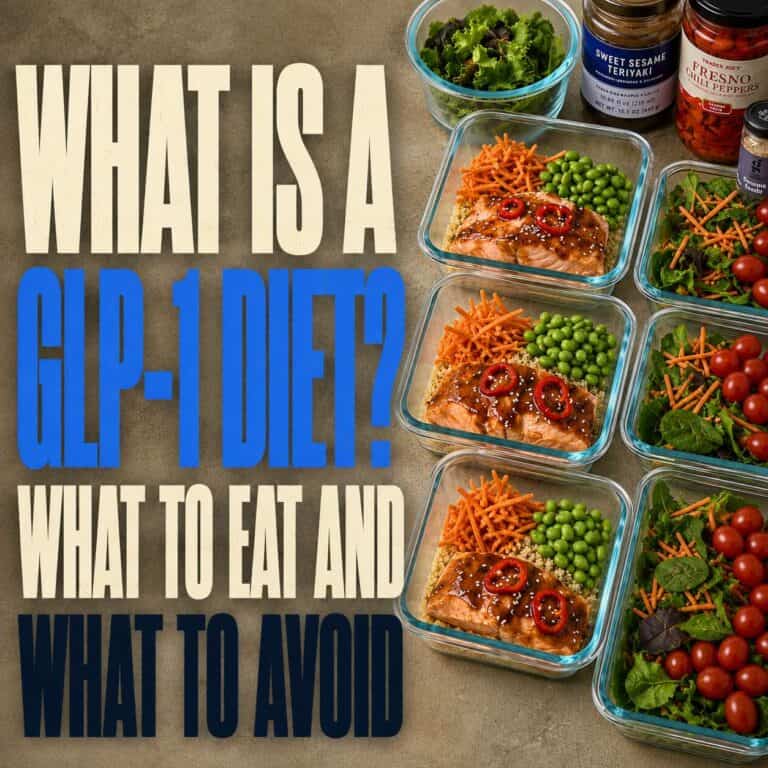
If you are taking Ozempic, Wegovy, or any other GLP-1 medication, the food industry is not cheering for your success. It is studying you, and it is studying the answers to questions such as What Is A GLP-1 Diet? to better use that information against you. About one in eight American adults now take a GLP-1 drug. Grocery spending in those households has dropped by roughly 6% within the first six months of starting the medication. For companies like PepsiCo, Mondelez, and General Mills, that is not a wellness trend. It is an existential financial threat worth billions of dollars. (Food Dive, February 2026)
The industry weapon of choice is hidden sugar in foods, distributed across dozens of legal aliases. Combined with engineered textures and sensory formulation tricks designed to keep you eating, even when your medication is working hard to tell you to stop. Understanding how these tactics work is one of the most useful things you can do to protect your progress.
GLP-1 drugs work by mimicking a hormone your gut naturally produces when you eat. That hormone tells your brain, in chemical shorthand, that you have had enough. People on these medications often describe more than weight loss. They describe a mental shift where food no longer occupies constant space in their thoughts and cravings go quiet. For those who have battled compulsive eating for decades, it can feel like being freed from a hold they never chose. The packaged food industry has been watching that shift very carefully, and it is responding.
Behind the Scenes: What Food Giants Are Actually Doing
Two stories are being told right now about how the packaged food industry is responding to GLP-1 drugs, and only one of them is making headlines.
The public-facing story sounds responsible. General Mills is talking about smaller portions. Conagra has slapped a “GLP-1 friendly” label on more than two dozen Healthy Choice frozen meals. Nestle launched a new line called Vital Pursuit specifically targeting GLP-1 users. Reformulation, better-for-you products, high-protein options. All of this is real. (Food Dive, February 2025)
The less-discussed story involves hidden sugar in foods, engineered cravability, and formulation tricks that never make it onto press releases. As one British Columbia Medical Journal editorial put it bluntly: will the packaged food industry find ways to make ultra-processed foods even more irresistible? Over the years, salt has become saltier, crunch more exaggerated, and aromas more engineered and provocative. If food giants intensify these tactics, they could potentially blunt the effectiveness of GLP-1 medications by working around satiety cues entirely. (BC Medical Journal, February 2026)
That is not a fringe conspiracy. It is a documented industry pattern, and the science behind it is well established.
The Bliss Point: How Foods Are Engineered to Override Your Fullness
To understand what is happening, you need to understand the “bliss point,” a term coined by psychophysicist Howard Moskowitz. It refers to the precise ratio of fat, sugar, and salt that maximizes pleasure and bypasses natural satiety. Food scientists use it to calibrate products so they hit your brain’s reward system hard enough to keep you eating. Measured carefully to not be so hard that you feel aversed and stop.
Research has defined hyperpalatable foods with specific thresholds: blends providing more than 25% of calories from fat paired with at least 0.30% sodium by weight, over 20% of calories from fat combined with over 20% from simple sugars, or more than 40% of calories from carbohydrates with at least 0.20% sodium by weight. These ratios activate neural reward circuitry more potently than any isolated ingredient alone. (Grokipedia, December 2025)
GLP-1 drugs short-circuit this system by turning the satiety volume back up to maximum. This is exactly why people on these medications stop craving chips and cookies almost immediately. The drugs are 1,000 times more potent at triggering satiety hormones than food ever could be. That is the metabolic resistance food giants are working to overcome. Adding hidden sugar in foods is central to that strategy.
The Specific Tricks Being Used Right Now
Hidden Sugar in Foods That Hijacks the Brain Without Triggering Fullness
This is one of the more sophisticated moves happening in food labs right now. The newest generation of high-intensity sweeteners, including allulose, sucralose, and certain synthetic flavor enhancers, are appearing in products positioned as healthier options for GLP-1 users. The reason is calculated: these ingredients activate the brain’s reward pathways with far fewer calories than traditional sugar. The sensory hit still registers, but without the calorie load that would normally contribute to satiety. (Michele Gargiulo, August 2025)
Your brain gets the dopamine signal that says something delicious just happened. Your body does not receive the corresponding fullness cue. You stay in a loop. These sweeteners often appear under unfamiliar names. Hidden sugar in foods functions in plain sight on the very labels consumers think they are reading carefully.
Mouthfeel Engineering to Trigger Eating by Sensation Rather Than Hunger
Mouthfeel is not about taste. It is about the physical experience of eating. The buttery crumble of a shortbread cookie. The way a chip dissolves on your tongue. The cool snap of a soda can opening. Food scientists engineer these sensory details deliberately because they can drive eating behavior completely independently of hunger signals.
With GLP-1 users eating less overall, snack and beverage makers are increasingly reformulating around textural and sensory cues. Food manufacturers are targeting ingrained habits and emotional associations rather than hunger hormones. The goal is to maintain appeal for a consumer whose appetite has been chemically reduced. (Michele Gargiulo, August 2025)
Rapid Oral Dissolution to Beat the Gut-Brain Lag
Your gut and brain do not communicate instantly. There is a measurable delay between when you start eating and when fullness signals arrive in the brain. Hyperpalatable foods exploit this lag by dissolving rapidly in the mouth, packing in enormous caloric density before your body has time to register that you have had enough. This is not accidental engineering. It is the mechanism that drives volume consumption, which is the single most important metric for packaged food company profitability.
Health-Washing the Same Formulas Under New Labels
Perhaps the most cynical play in the current era is repackaging the same engineered cravability under wellness language. Products that are labeled high-protein, low-sugar, keto-friendly, and even “GLP-1 supportive” can still carry hidden sugar in foods and employ identical sensory engineering techniques beneath the label. The ingredients responsible for the manipulation often hide behind broad terms like “natural flavors” or “texture enhancers,” which reveal nothing about the specific strategies being deployed. (Michele Gargiulo, August 2025)
One expert summarized it plainly: “How many things do you see in the grocery store that say high-protein or low-carb but are still ultra-processed? That is not nutrition. That is marketing.” (Fox News, June 2025)
The Hidden Sugar Label Split
This is one of the oldest tricks in the packaged food playbook and one of the most effective at keeping consumers in the dark about how much sugar they are actually consuming. Because the FDA requires ingredients to be listed in descending order by weight, a product with 35 grams of added sugar from six different sweetener sources can list each one separately, far down the ingredient list, where each individual entry looks small and insignificant in isolation. The hidden sugar in foods is all there. It is simply distributed across enough aliases that no single one triggers concern.
There are at least 61 different names for sugar that legally appear on food labels. These include sucrose, high-fructose corn syrup, barley malt, dextrose, maltose, rice syrup, evaporated cane juice, fruit juice concentrate, corn syrup solids, and many more. While labels list total sugar content, manufacturers are not required to clearly distinguish added sugar from naturally occurring sugar, making the full picture nearly impossible to reconstruct at a glance. (UCSF SugarScience)
The Worst Offenders: Foods Loaded With Hidden Sugar
Sweetened Breakfast Cereals
Cereals are among the most egregious examples of hidden sugar in foods. A single product may list sugar, corn syrup, honey, molasses, and brown sugar all separately, meaning the combined sweetener load dominates the formulation in practice while no single entry appears alarming on the label. Even cereals marketed to children with claims like “whole grain” or “made with real fruit” routinely carry 20 or more grams of sugar per serving. A single cup of bran cereal with raisins, from a box advertising “no high-fructose corn syrup,” has been documented to contain 20 grams of sugar per serving. (UCSF SugarScience)
Flavored Yogurts
Yogurt sits in a particularly deceptive category because its base form is genuinely nutritious and the product is marketed heavily as a health food. But flavored and fruit yogurts are routinely loaded with hidden sugar including high-fructose corn syrup and multiple additional sweeteners to enhance taste and texture. The protein and probiotic content on the front label does a reliable job of drawing the eye away from what is actually in the ingredient list. (Sudev International)
Granola Bars
Granola bars occupy some of the most misleading real estate in the grocery store. Marketed as a health-forward snack built around oats and nuts, most major brands are held together with a sticky combination of multiple hidden sugars, seed oils, and emulsifiers. The result is a product that hits the hyperpalatable sweet spot just as effectively as candy, dressed in packaging that actively suggests the opposite. (TREVBI, July 2025)
Salad Dressings and Condiments
Salad dressings, particularly creamy and fruit-flavored varieties, are one of the most reliable hidden sugar delivery systems in the American diet and one of the least suspected. Many contain not just high-fructose corn syrup but also multiple additional sweeteners including dextrose, corn syrup solids, and fruit juice concentrate, all listed separately. Ketchup, barbecue sauce, and teriyaki sauce fall into the same category. The savory framing of these products makes consumers far less likely to look for sweetener content at all. (HealthCentral, August 2023)
Applesauce
Few products better illustrate the gap between healthy perception and actual formulation than applesauce. It carries an unambiguous health halo. It is fruit, in a jar. But many major commercial brands layer high-fructose corn syrup on top of the natural sugars already present in the apples, creating a hidden sugar problem in a product most consumers never think to question. (Healthline)
Canned Fruit in Syrup
Canned fruit follows identical logic. The fruit itself is real. The syrup it sits in is a separate hidden sugar delivery system that most shoppers mentally discount entirely. Many canned fruit products use a combination of HFCS and regular corn syrup in that syrup base, meaning a product that looks like a healthy choice is delivering two or three forms of added sugar simultaneously. (HealthCentral)
Packaged Snack Cakes and Shelf-Stable Baked Goods
Products like Hostess Twinkies, Little Debbie snack cakes, and similar shelf-stable baked goods are formulated to hit almost every hyperpalatable threshold at once. They dissolve rapidly in the mouth, they carry the fat-sugar combination that maximizes reward signaling, and their ingredient lists read as a comprehensive catalog of hidden sugar aliases. Corn syrup, high-fructose corn syrup, sugar, dextrose, and maltodextrin often appear in the same product within the first ten ingredients. The extraordinary shelf life of these products is itself a byproduct of that heavy sweetener load.
Sports Drinks and Sweetened Beverages
A 20-ounce bottle of Coca-Cola contains 65 grams of added sugar. A 12-ounce PowerAde contains 21 grams. Both use HFCS as a primary sweetener. What makes sweetened beverages particularly effective at undermining metabolic resistance is the liquid format, which bypasses chewing-based satiety cues almost entirely and moves through the stomach faster than solid food. Your brain registers the pleasure of all that hidden sugar in the drink before it has any chance to signal that you are full. (HealthCentral)
How to Find Hidden Sugar in Foods Before It Finds You
The most practical thing you can do is stop reading the front of the package entirely and go straight to the ingredient list. Spotting hidden sugar in foods comes down to one key pattern: multiple sweeteners appearing in the same product under different names. If you see any combination of sugar, high-fructose corn syrup, corn syrup, dextrose, maltodextrin, molasses, honey, agave, evaporated cane juice, brown rice syrup, or fruit juice concentrate in the same ingredient list, that product is using the label-splitting technique to conceal its true sweetener load.
A reliable rough rule is this: ingredients higher on the list represent a larger proportion of the product by weight. If two or more sweetener aliases appear within the first five ingredients, that product is built around hidden sugar regardless of what the front label claims.
More GLP-1 Reading and Recipes
- Metabolic resistance and the GLP-1 diet
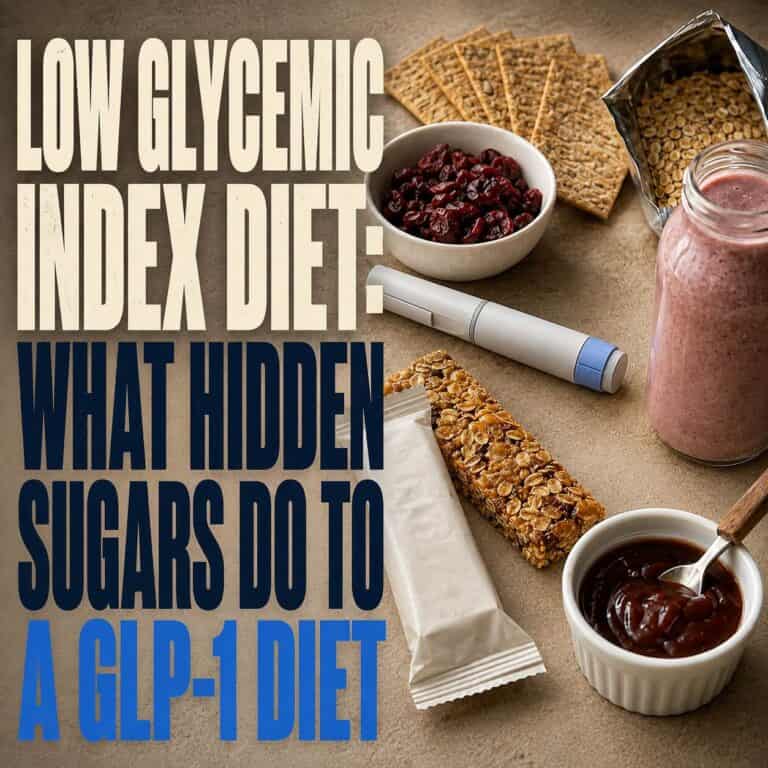
- Low glycemic index diet: what hidden sugars mean
- Why can’t I stop eating carbs on a GLP-1 diet
- Fake avocado oil and what else is in your pantry
- Slow cooker chicken stock, what I use instead of bouillon
- Keto pot roast with no flavor packet
Final Thoughts
The broader picture matters too. The packaged food industry is not monolithic. Some companies are genuinely pivoting toward more honest, nutritionally sound formulations in response to GLP-1 adoption. But the structural incentive to maintain consumption volume is enormous. By 2030, households with at least one GLP-1 user are projected to account for 35% of all food and beverage units sold in the United States, a market food giants will not cede without a fight. (Food Dive, November 2025)
The stakes are especially high for younger consumers. More than 60% of total energy intake for American youth already comes from ultra-processed foods, and those consumers are particularly vulnerable to the kind of health-washed marketing that wraps hidden sugar in foods inside wellness language and protein claims. (BC Medical Journal, February 2026)
GLP-1 medications have given millions of people access to the satiety signals that heavily engineered food was designed to suppress. Knowing where the hidden sugar in foods is, what it is called, and how it is being used against your metabolic progress is not optional reading. It is part of the work.