Cherry Tomato Feta Orzo (Easy One-Pot Recipe)
This one-pot cherry tomato feta orzo puts a GLP-1 friendly spin on the viral baked feta pasta trend — easy, creamy, and full of protein.
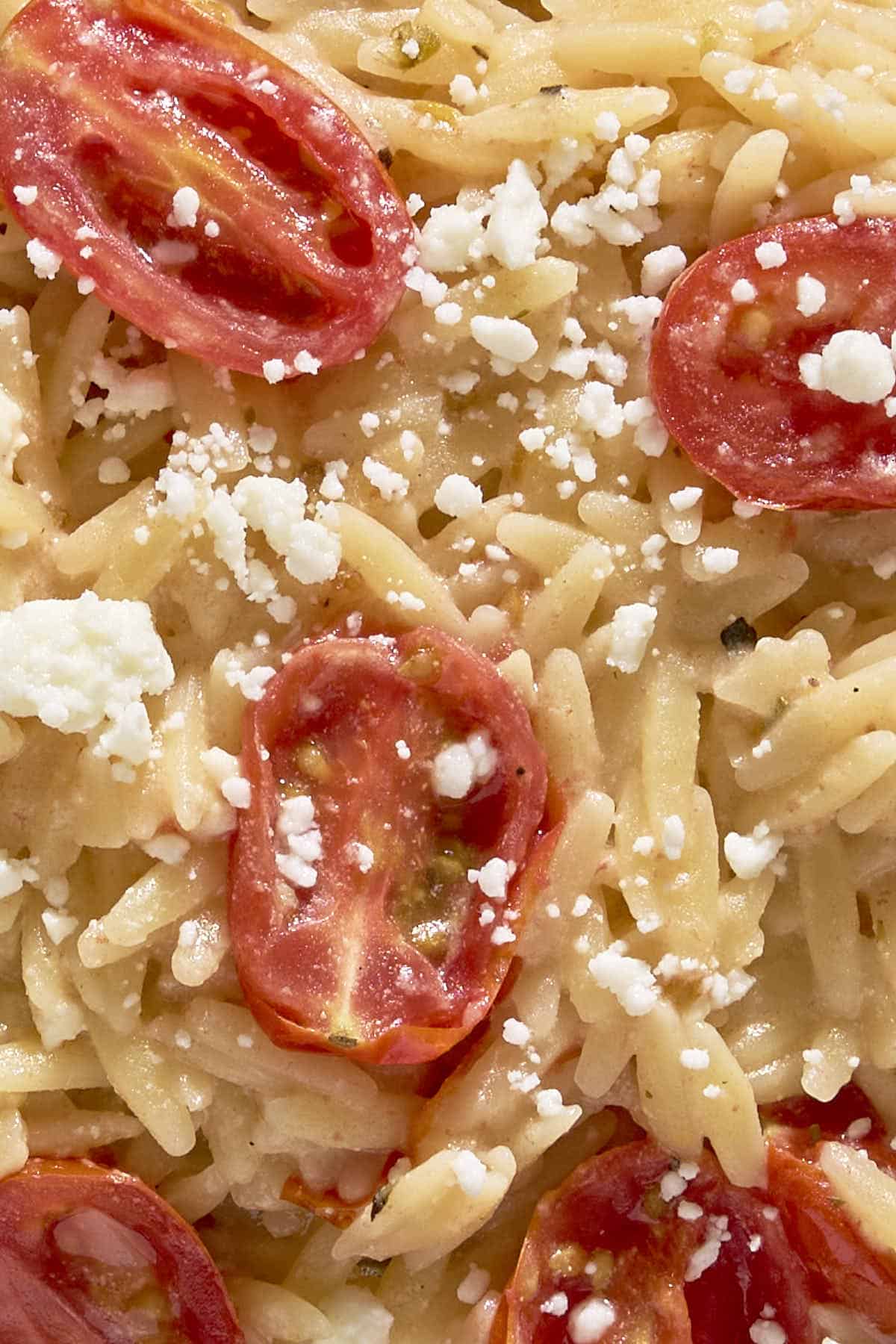
Table of Contents
- Why This Works Better Than the Viral Baked Version
- Why Orzo Is a Smart Choice for GLP-1 Support Diets
- Why Feta Is a GLP-1 Friendly Cheese
- Ingredients
- How to Make One-Pot Cherry Tomato Feta Orzo
- What Does Cherry Tomato Feta Orzo Taste Like?
- Why This Recipe Supports Metabolic Health
- The One-Pot Method Makes This Nearly Effortless
- Serving Ideas
- Storage and Meal Prep
- More One-Pot Recipes and GLP-1 Reading
- Frequently Asked Questions
- Final Thoughts
By now you have almost certainly seen the viral baked feta pasta trend that took over the internet a few years ago and still lives rent-free on every recipe board and food social feed today.
The concept is genuinely delicious — a block of feta and a pile of cherry tomatoes roasted in the oven until they collapse into a creamy, jammy sauce that gets tossed with pasta. It’s comfort food that feels effortless, and for good reason.
But here’s the honest reality if you’re eating on a GLP-1 support diet or for a metabolic health goal: the original recipe has a few friction points.
The original viral recipe uses a full pound of pasta. It requires preheating the oven and waiting 35 to 40 minutes for the roasting to happen. It dirties a baking dish and a pasta pot. And traditional pasta, while not off the table, doesn’t bring a lot of nutritional value to a meal where every bite needs to count.
This version fixes all of that.
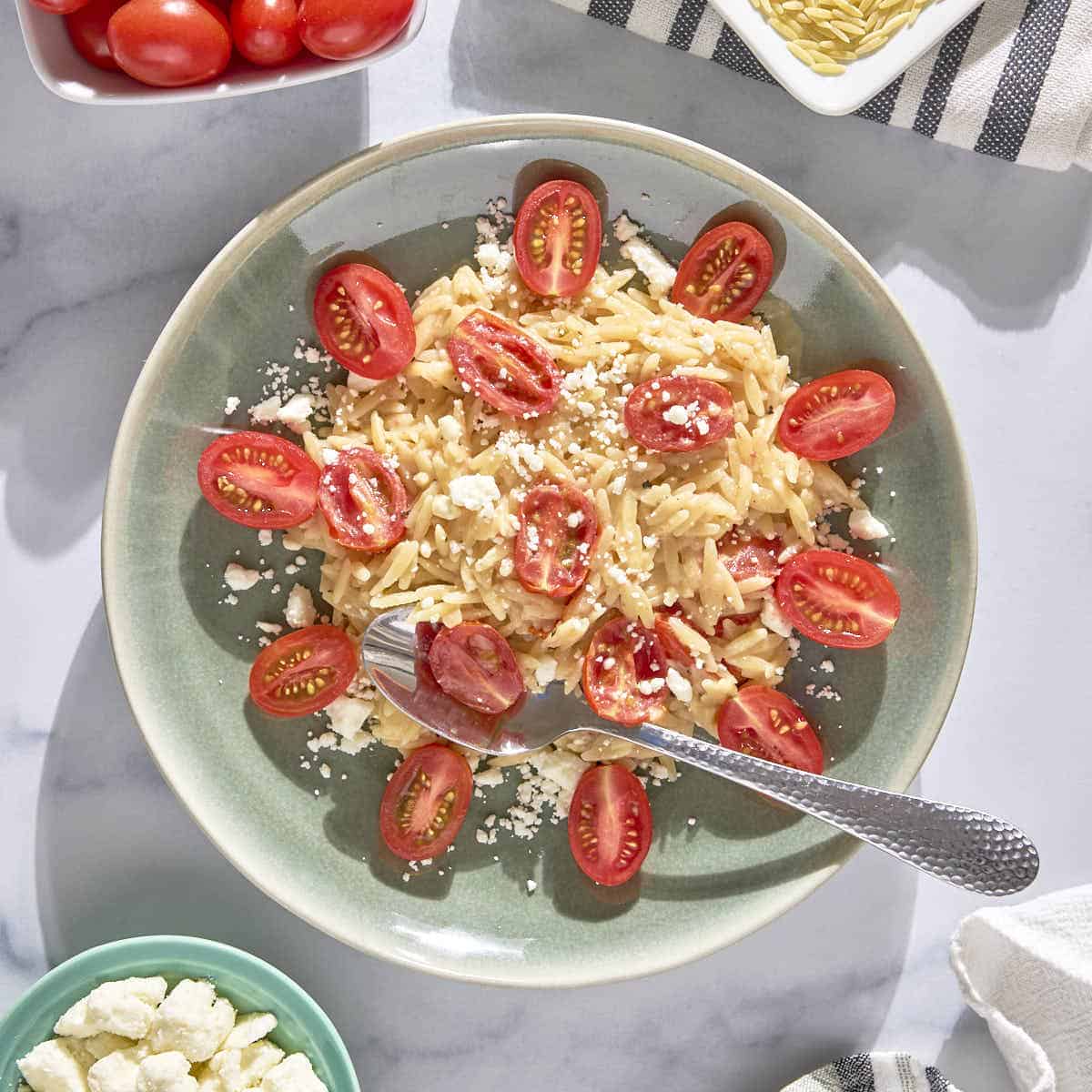
This one-pot stovetop cherry tomato feta orzo captures every bit of that creamy, briny, tomatoey magic in a single pot on your stove in under 30 minutes. Instead of traditional pasta, we use orzo — a small rice-shaped pasta that absorbs the cooking liquid and transforms into a rich, almost risotto-like dish that is deeply satisfying in small portions.
It’s the viral recipe, adapted for the way GLP-1 patients actually eat.
Why This Works Better Than the Viral Baked Version
The original baked feta pasta is beloved, and there’s nothing wrong with it as an occasional meal. But when you’re following a GLP-1 support diet, a few things matter a lot more than they might otherwise.
Portion density matters. When your appetite is significantly reduced, a plate of long pasta is hard to navigate. Orzo is small, spoonable, and easy to eat in a satisfying small portion without it feeling like you’re fighting with your food.
Fewer dishes lowers the barrier to cooking at home. When you’re tired or your appetite is suppressed, the last thing you want is a sink full of pots and a hot oven. One pot. One burner. Done.
Faster cooking time means you eat. At 30 minutes start to finish, this recipe is fast enough that you’ll actually make it instead of reaching for something less nourishing when hunger finally does show up.
Cook-in liquid means more flavor per bite. Because the orzo absorbs the tomato-feta liquid directly as it cooks, every grain is saturated with flavor. There’s no draining, no hoping the sauce clings. The flavor is baked right in.
Why Orzo Is a Smart Choice for GLP-1 Support Diets
Orzo is technically a pasta, but its small, rice-like shape changes the eating experience significantly — and in ways that work well for GLP-1 patients.
First, portion sizing is intuitive. A half-cup serving of cooked orzo looks and feels like a satisfying amount of food in a bowl when paired with protein and fat from the feta. You don’t need a large volume of food to feel like you’ve eaten a real meal.
Second, orzo absorbs cooking liquid beautifully. In this recipe, that means the orzo soaks up tomato juice, broth, and melting feta as it cooks, creating a finished dish that is creamy and cohesive rather than just pasta sitting in sauce. The texture is closer to a risotto or a creamy rice dish than traditional pasta, which makes it more satisfying in smaller amounts.
Third, orzo is easy to digest. For GLP-1 patients who sometimes experience nausea or digestive sensitivity, lighter pasta shapes tend to be gentler than heavier or thicker cuts.
That said, if you want to reduce the carbohydrate content further, orzo made from chickpea flour or lentil flour is widely available now and substitutes beautifully in this recipe while adding more protein and fiber.
Why Feta Is a GLP-1 Friendly Cheese
Not all cheeses are created equal when you’re focused on metabolic health and eating to support a GLP-1 medication.
Feta punches above its weight for a few reasons.
It’s naturally lower in fat than many hard cheeses and aged varieties, while still delivering a rich, salty flavor that makes food deeply satisfying. When you’re eating smaller portions, flavor intensity matters enormously. A modest amount of feta adds far more flavor impact than the same amount of mild mozzarella or cheddar.
Feta is also a good source of protein and calcium, two nutrients that GLP-1 patients need to prioritize since lower food volume means fewer opportunities to hit daily targets.
The brininess of feta also acts as a natural flavor amplifier for the tomatoes, requiring less added salt overall — a useful feature in a recipe with minimal added seasonings.
Ingredients
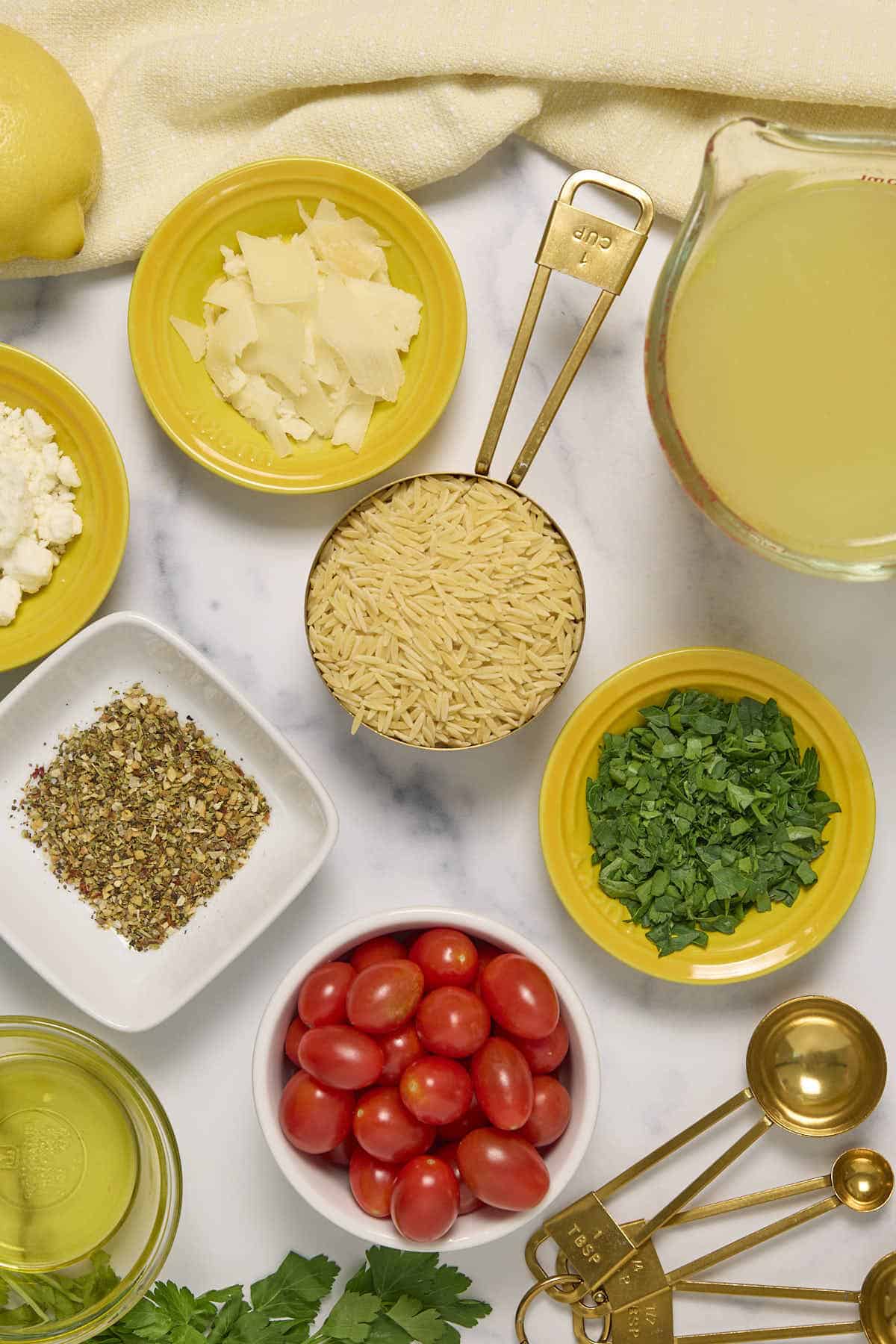
Base recipe ingredients:
- 1 pint cherry tomatoes (about 2 cups), halved if large
- 3 oz feta cheese (about half of a block), crumbled
- 1 cup dry orzo pasta
- 2 cups chicken or vegetable stock
- 2 tablespoons olive oil
- 1 tablespoon Greek seasoning blend
Optional additions:
- A handful of baby spinach or arugula stirred in at the end or served on top
- Use the lemon zest in the recipe and the juice of the lemon to finish
- Crushed pine nuts or pistachios for added protein and crunch
- Sprinkle of shaved Parmesan cheese
How to Make One-Pot Cherry Tomato Feta Orzo
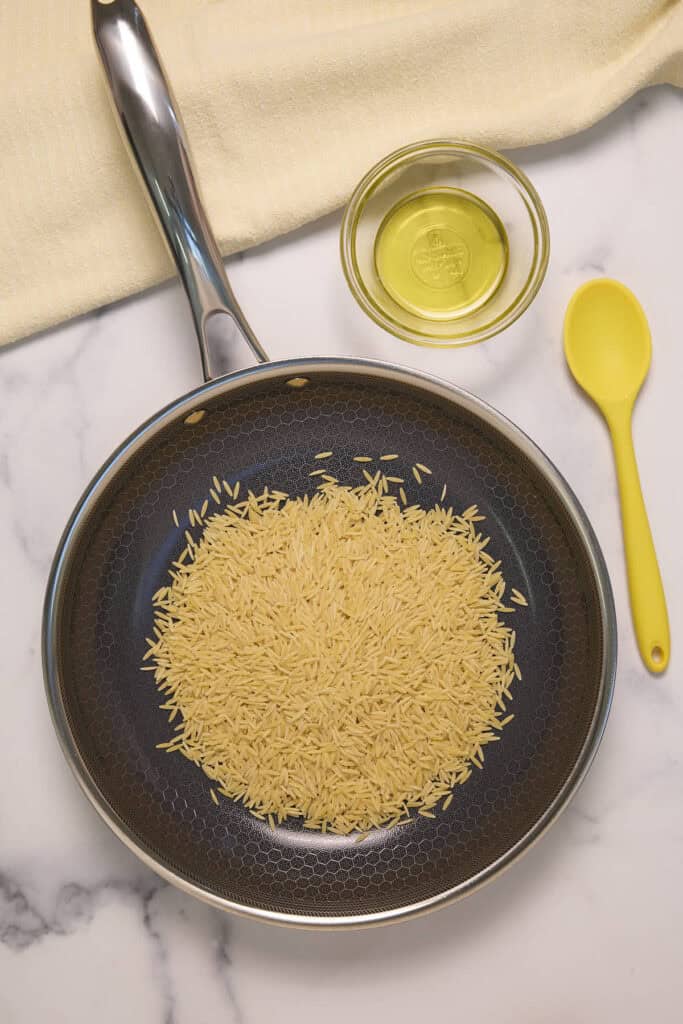
- Add the orzo and the olive oil to a skillet and mix to coat.
- Turn the stove to low heat, and stir occasionally until the orzo begins to brown.
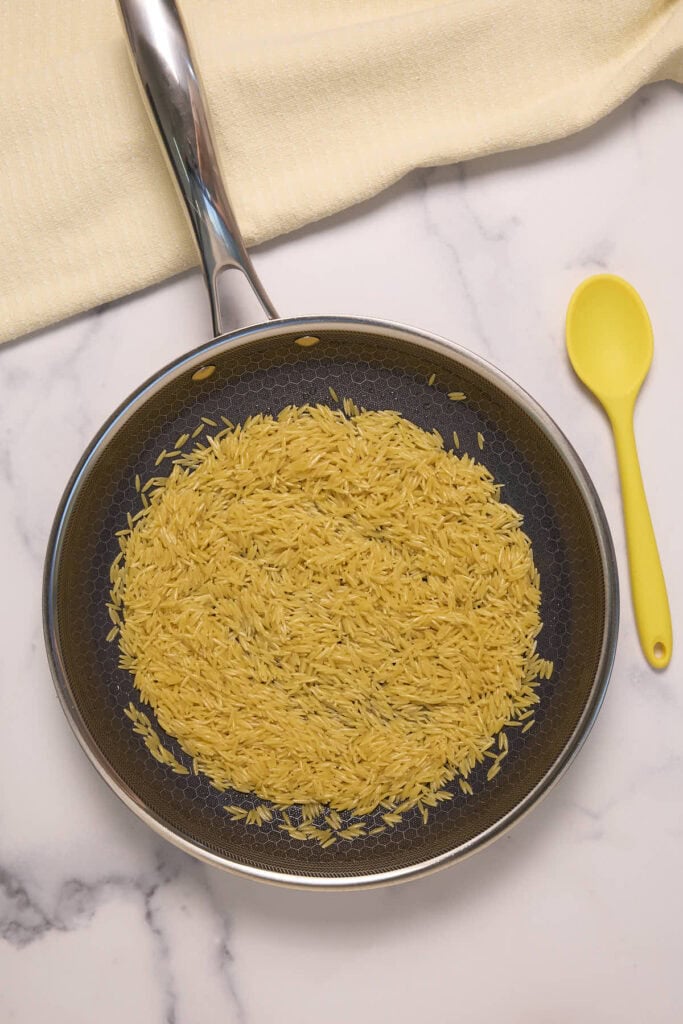
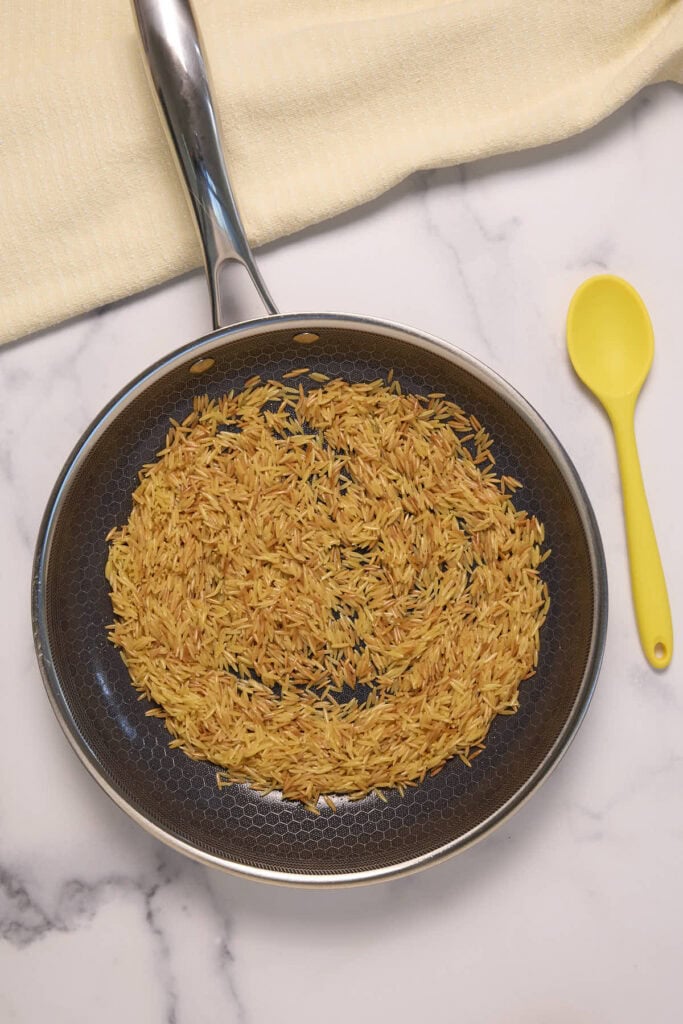
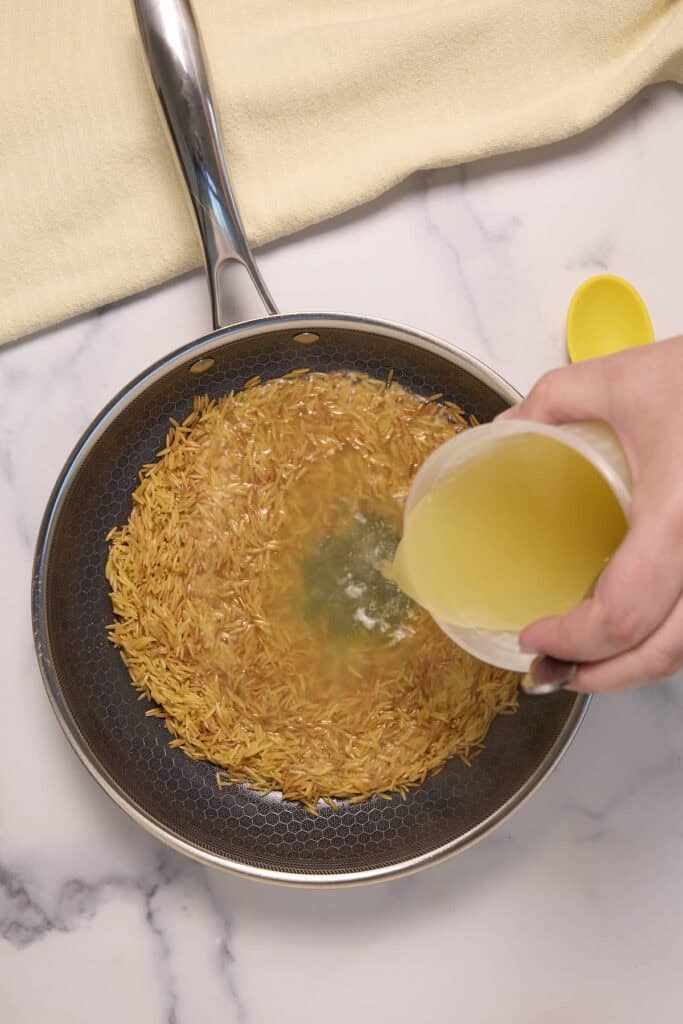
- As the orzo begins to toast, stir more frequently and adjust the heat if needed to ensure that it does not burn.
- When the orzo has toasted to a golden brown color, add the chicken stock to the pan and stir to ensure that the orzo does not clump together as it begins to cook.
- Add the Greek seasoning blend, or any other seasonings of your choice, stir and allow the pan to come to a simmer.
- Continue to cook for 8-10 minutes until the orzo is al dente and is beginning to absorb the rest of the stock.
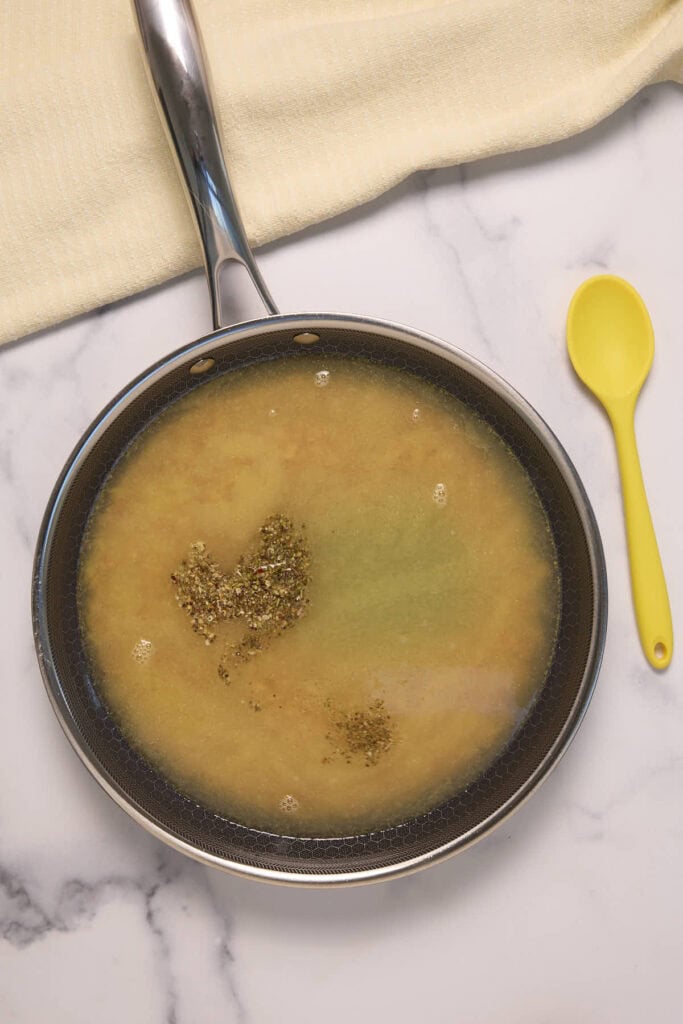
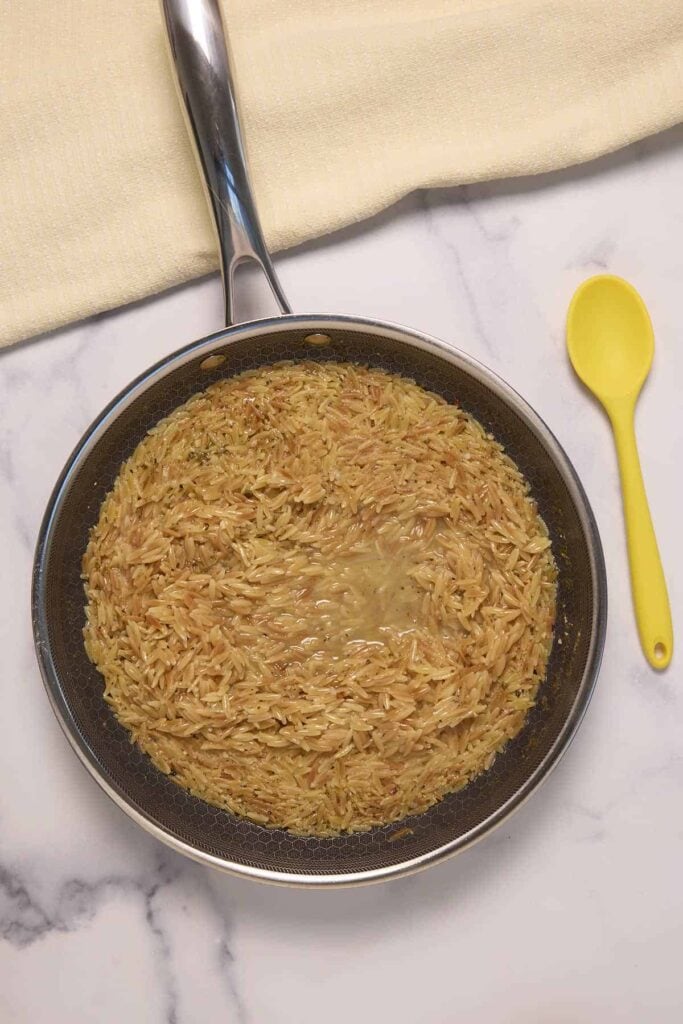
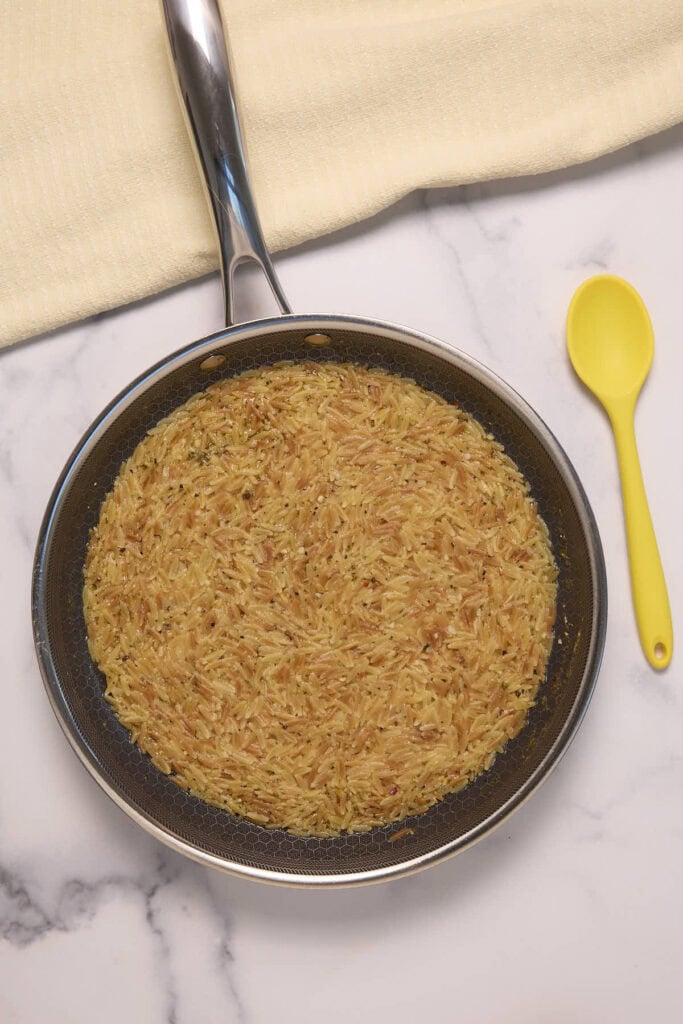
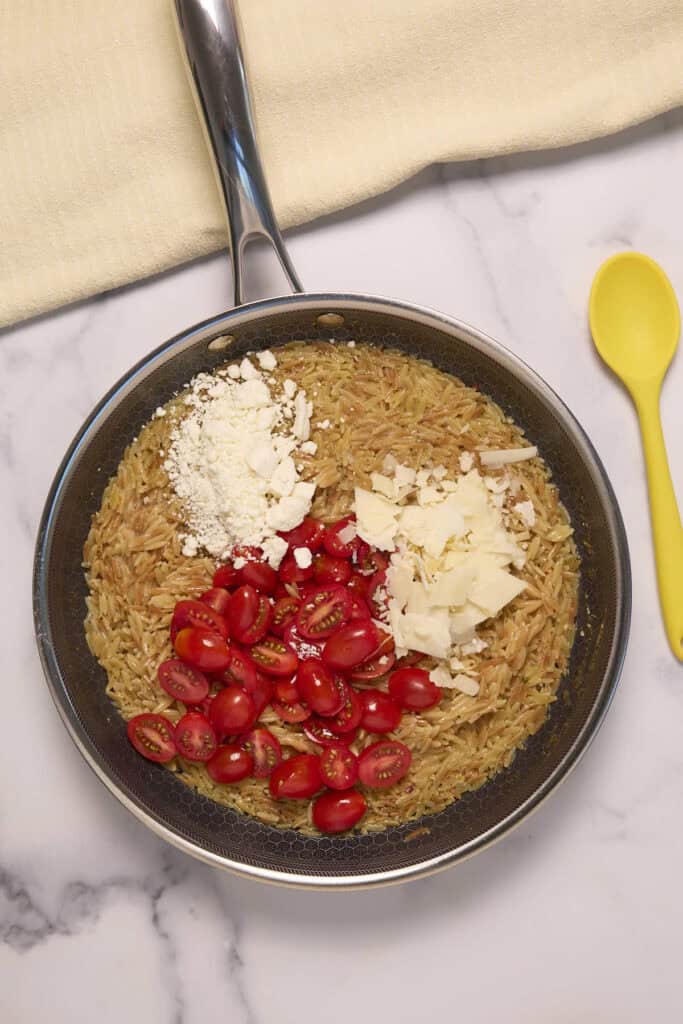
- If you like a more cooked tomato and creamy cheese sauce, add the remaining ingredients now to continue to cook, and stir occasionally until the desired doneness is achieved.
- For a more firm dish that photographs a bit better, cook the orzo until further along before adding the remaining ingredients. Cook for a briefer period until the desired doneness is achieved.
What Does Cherry Tomato Feta Orzo Taste Like?
If you’ve had the viral baked version, this one tastes remarkably similar — maybe even more intensely flavored because the orzo has been cooking directly in the tomato-broth liquid the entire time.
The tomatoes become jammy and sweet with concentrated savory depth. The feta provides a creamy, salty counterpoint that keeps every bite interesting. The orzo absorbs all of it and delivers that flavor in a satisfying, spoonable texture that sits somewhere between pasta and risotto.
It’s rich without feeling heavy. Salty and tangy from the feta. Bright from the tomatoes. And deeply comforting in a way that feels like a proper meal even in a modest portion.
Why This Recipe Supports Metabolic Health
When appetite is suppressed by GLP-1 medications, the quality of what you eat becomes more important than the quantity.
This recipe delivers meaningful nutrition in a modest portion.
The feta provides protein and calcium. The olive oil provides heart-healthy monounsaturated fat that helps with absorption of fat-soluble nutrients. The cherry tomatoes are rich in lycopene and vitamin C. And the orzo provides energy in the form of carbohydrate that, when paired with protein and fat in the same dish, digests more gradually than it would alone.
For anyone following a GLP-1 supportive eating approach, the goal isn’t restriction for its own sake. It’s building meals where every ingredient contributes — flavor, nutrition, and satisfaction together.
The other practical win is that this is a recipe you will actually make. The ingredients are pantry and fridge staples. And because everything cooks in one pot in under 30 minutes, the barrier to choosing it over something less nourishing is very low.
The One-Pot Method Makes This Nearly Effortless
The original baked feta pasta has great flavor, but it asks more from you than this version does.
Preheat the oven. Find a baking dish. Boil a separate pot of water. Wait 35 to 40 minutes for the tomatoes and feta to roast. Drain the pasta. Combine everything in a separate bowl.
By the time the original recipe is done, you’ve used multiple dishes and spent close to an hour.
This stovetop version uses one pan. Everything cooks together. The cleanup is minimal. And the total time from start to eating is under 30 minutes.
For GLP-1 patients especially, that simplicity matters. When your appetite finally shows up, you want to eat. Not wait.
Serving Ideas
This orzo is complete as a standalone dish, which makes it an excellent quick weeknight dinner with nothing else required.
For a more substantial meal, pair it with a simple protein alongside — grilled chicken thighs, seared shrimp, or baked salmon all work beautifully. The briny, creamy flavor of the orzo complements fish especially well.
It also works as a warm grain bowl base. Spoon the orzo into a bowl and top with arugula, a soft-boiled egg, and a drizzle of good olive oil for a well-rounded meal that covers protein, fat, and carbohydrate in one bowl.
Storage and Meal Prep
This recipe stores very well and reheats beautifully, which makes it a genuinely useful meal prep recipe for GLP-1 patients who want ready-made nourishing meals available through the week.
Store leftovers in an airtight container in the refrigerator for up to four days.
The orzo will absorb more liquid as it sits and the dish will thicken considerably overnight. When reheating, add a splash of broth or water and stir over low heat until loosened and warmed through. You can also reheat individual portions in the microwave with a small splash of liquid and a damp paper towel over the top to keep the texture from drying out.
This recipe does not freeze especially well because the orzo becomes very soft after freezing and thawing. It’s best made and eaten within the four-day refrigerator window.
More One-Pot Recipes and GLP-1 Reading
- French onion quinoa, sheet pan and rice cooker
- The high protein pasta salad I eat on a low carb GLP-1 diet
- Garlic butter green beans, low-carb veggies for a GLP-1 diet
- Lentil soup for a GLP-1 diet
- What you need to know about carbs on a GLP-1 diet
- What is a GLP-1 diet?
Frequently Asked Questions
Feta contains a moderate amount of protein — roughly 4 grams per ounce — along with calcium and healthy fat. It’s not a high-protein food on its own, but in the context of a dish that also pairs well with chicken, shrimp, or eggs, it contributes meaningfully to overall protein intake.
Absolutely. Chickpea orzo has become widely available at most grocery stores and substitutes directly in this recipe without changing the method. It typically contains about double the protein and significantly more fiber than traditional orzo, making it an even better fit for a GLP-1 support diet.
You can use a dairy-free feta-style block cheese, which has become much more available in recent years. The result will have a slightly different but still satisfying flavor. You can also omit the feta entirely and finish with a drizzle of good olive oil.
This recipe tends to be easy to tolerate because the portions are naturally small and satisfying, the texture is soft and smooth, and the ingredients are simple. That said, individual tolerance varies. If tomatoes or acidic foods are a trigger for you personally, you may want to reduce the amount or balance with a small touch of honey to offset the acidity.
Final Thoughts
The viral baked feta pasta trend became popular for a reason — the flavor combination of burst cherry tomatoes, melting feta, and garlic is genuinely exceptional and endlessly craveable.
This one-pot stovetop orzo adaptation keeps everything that made the original great and makes it work better for real life — and specifically for the realities of eating on a GLP-1 support diet.
Smaller, more satisfying portions. One pot. Faster to the table. Packed with the flavor that makes you actually want to eat it.
If you’re building a rotation of GLP-1 friendly meals that are nourishing, flavorful, and actually practical to make on an everyday basis, this recipe belongs in that rotation.
Explore more clean ingredient, real food recipes here on Lizard Bites where every recipe is designed to be both genuinely delicious and supportive of long-term metabolic health.

Cherry Tomato Feta Orzo (Easy One-Pot Recipe)
Ingredients
- 1 pint cherry tomatoes halved
- 3 oz feta crumbled
- 1 cup orzo
- 2 cups chicken stock
- 2 tbsp olive oil
- 1 tbsp Greek seasoning blend
Instructions
- Add the orzo and the olive oil to a skillet and mix to coat.
- Turn the stove to low heat, and stir occasionally until the orzo begins to brown.
- As the orzo begins to toast, stir more frequently and adjust the heat if needed to ensure that it does not burn.
- When the orzo has toasted to a golden brown color, add the chicken stock to the pan and stir to ensure that the orzo does not clump together as it begins to cook.
- Add the Greek seasoning blend, or any other seasonings of your choice, stir and allow the pan to come to a simmer.
- Continue to cook for 8-10 minutes until the orzo is al dente and is beginning to absorb the rest of the stock.
- If you like a more cooked tomato and creamy cheese sauce, add the remaining ingredients now to continue to cook, and stir occasionally until the desired doneness is achieved.
- For a more firm dish that photographs a bit better, cook the orzo until further along before adding the remaining ingredients. Cook for a briefer period until the desired doneness is achieved.